 Vietnamnet.vn

 Podcast



The cannons are currently preserved and displayed at the Ha Tinh Museum on Nguyen Huy Tu Street in Thanh Sen ward. One is placed prominently at the entrance, while the other two are stored in the museum’s archive. Few know that their return from the seabed began with a chance discovery by a group of fishermen more than two decades ago.

In late August 2003, about 35 nautical miles off the coast of Ha Tinh, near Mat Island and the Nhuong estuary, local fishermen diving for scallops stumbled upon traces of a sunken ship.
At a depth of around 30 meters, the wreck lay buried under thick layers of sand. Cao Xuan Duc and his companions ventured down, weighing themselves with lead and breathing through air tubes as they navigated the cold, dark waters.
Initially, they recovered small items such as incense burners. Sensing the presence of something more valuable, they continued their search.
On the second day, as sand around the wreck was cleared, a large metal object gradually emerged. After days of excavation, they identified it as a massive ancient cannon, its surface encrusted with marine organisms.
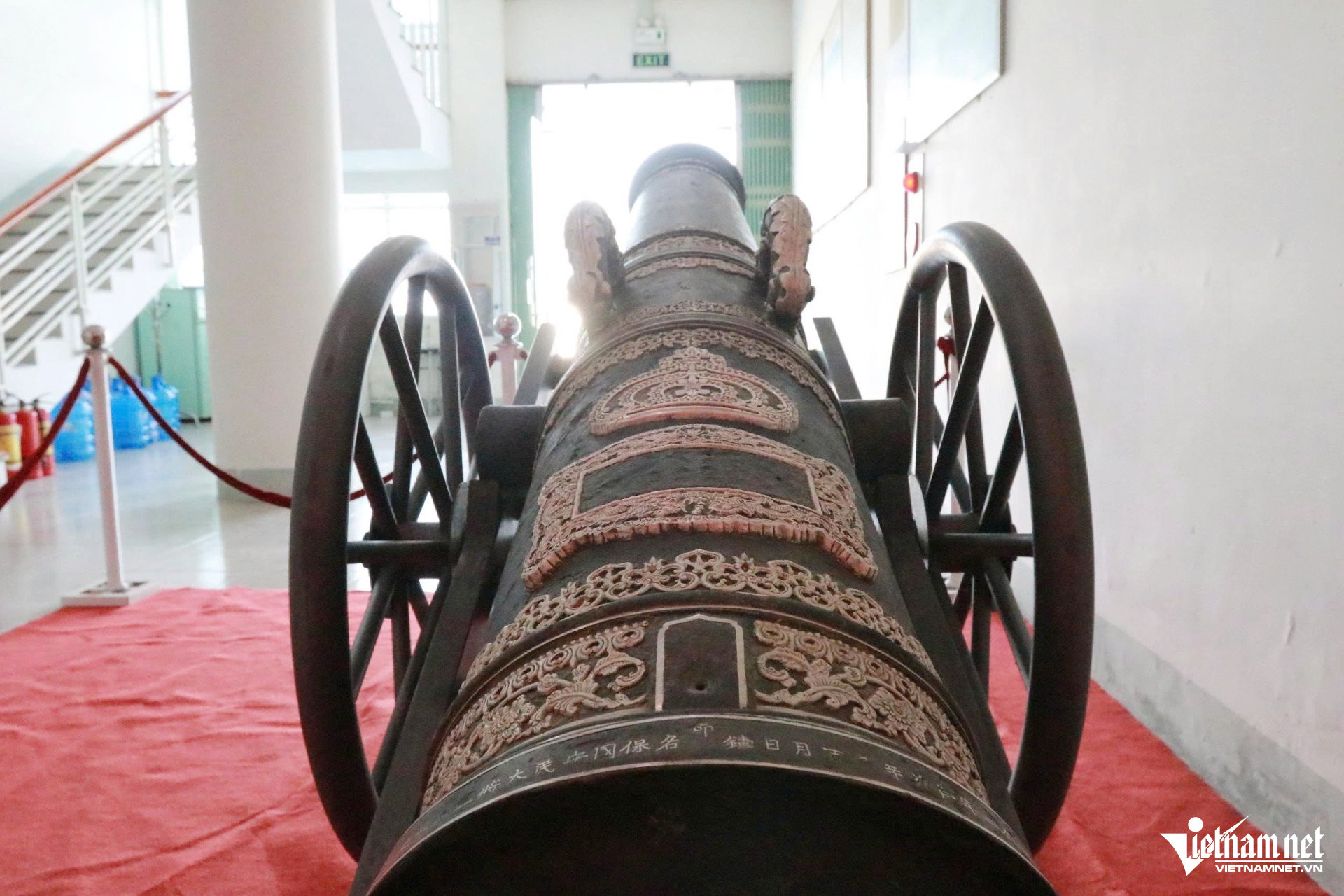
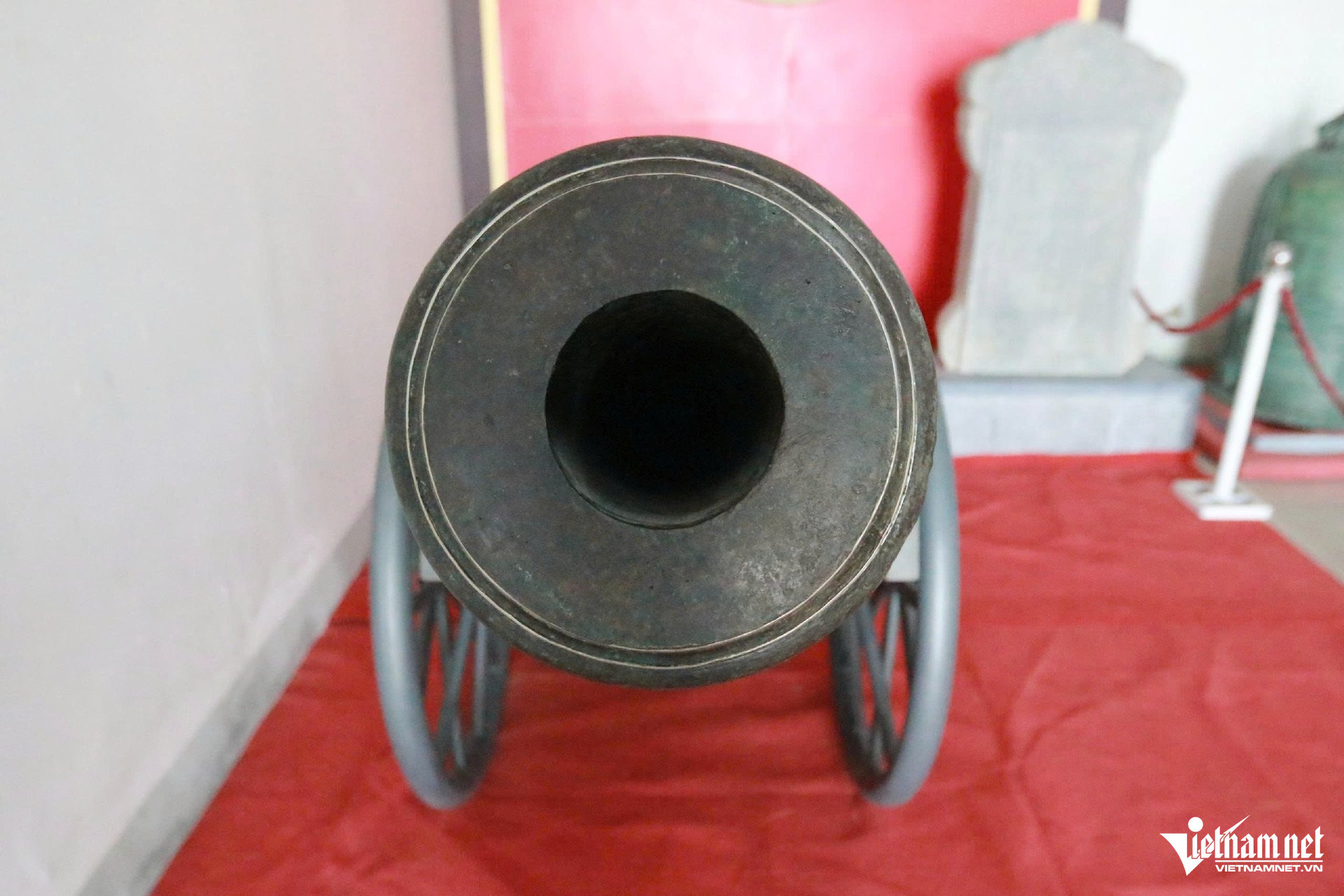
Encouraged by the find, the fishermen expanded their search area. Over the following week, they discovered two more cannons scattered around the wreck site.
Raising the heavy metal objects, each weighing over a ton, proved extremely challenging. After several failed attempts, the group returned to shore and hired a larger vessel from Thach Kim port for assistance.
After more than two weeks of effort, all three cannons were brought to the surface. To compensate the support crew, the fishermen gave away one cannon, while the remaining two were taken home and stored behind a garden.
News of the discovery quickly spread. Although offered high prices, the fishermen refused to sell. However, the cannon that had been given away was later sold to traders and nearly smuggled abroad.
Authorities intervened during its transport and seized the artifact. Further investigation led to the recovery of the remaining two cannons in Cam Linh commune.
Officials from the Ha Tinh Museum subsequently worked to retrieve all three artifacts, which were then conserved and restored.

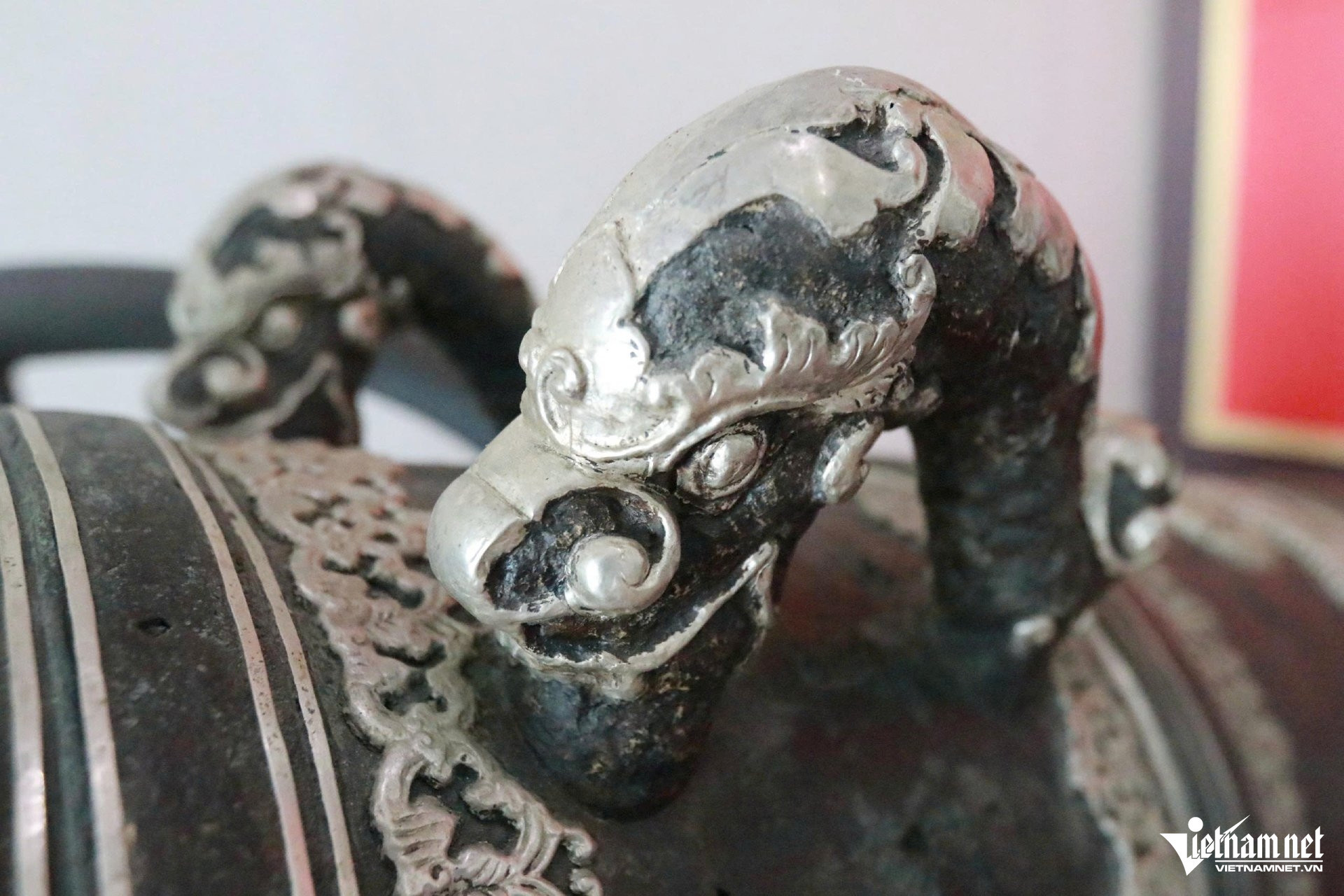
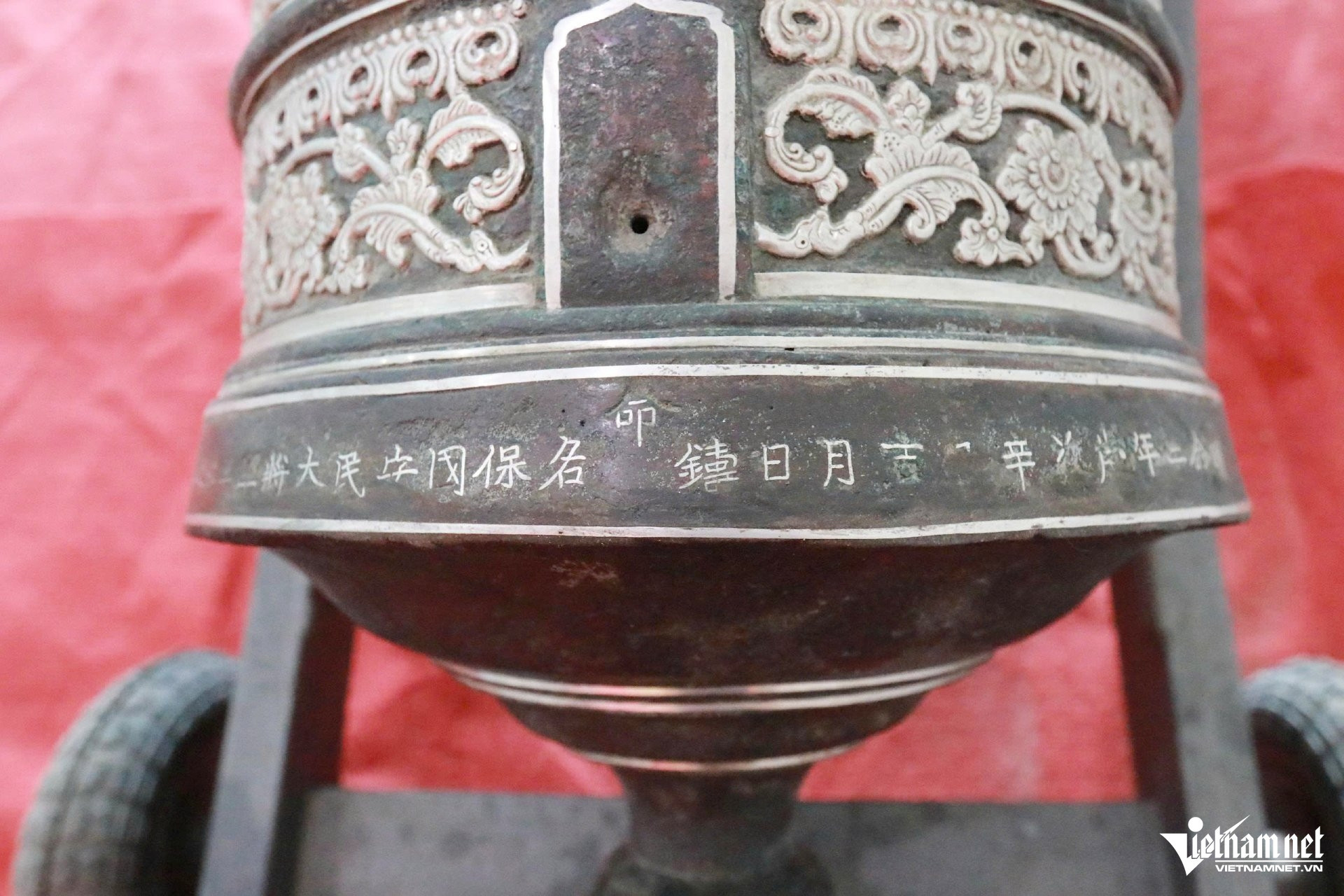

The restoration process was meticulous and prolonged. The cannons were repeatedly washed and treated with chemicals to remove layers of marine encrustation. As the outer layers were cleared, intricate decorative patterns and raised inscriptions gradually reappeared.
All three cannons are cast entirely in bronze and share nearly identical dimensions: each measures 243cm in length and weighs more than 1.2 tons. The cylindrical bodies taper toward the muzzle, with handles shaped like dragon heads. The surfaces are adorned with elaborate motifs inlaid with silver, remarkably well preserved despite years underwater.
Research identified the cannons as a set named Bao quoc An dan Dai tuong quan tam vi chi nhat, chi nhi and chi tam, cast in the spring of 1821 under Emperor Minh Mang in Hue. The work was carried out under the direction of Tran Dang Long, an official of the royal armory.
Unlike weapons used in warfare, these cannons were symbolic, representing royal authority and the aspiration for national peace and prosperity. They also reflect the high level of bronze casting and metallurgical techniques achieved in Vietnam in the early 19th century.
Recognizing their historical, cultural and artistic value, the three cannons were officially designated as national treasures on December 30, 2013.
According to Tran Phi Cong, Deputy Director of the Ha Tinh Museum, the journey of these cannons before they came to rest on the seabed remains an unsolved mystery.
He noted that it is still unclear when or why the ship carrying them sank. Subsequent surveys have uncovered only limited additional traces, insufficient to reconstruct the full story.
Cong added that in 2003, the fishermen first encountered the cannons when their fishing nets became entangled with them. While diving to free the nets, they discovered and later recovered the artifacts, which were eventually transferred to the museum for preservation.
He also revealed that authorities had once collaborated with a team of South Korean experts to survey the wreck site. Although they found metal fittings and ropes believed to belong to the ship, the evidence has not been enough to determine the timing or cause of the sinking.
Thien Luong
.svg)
