 Vietnamnet.vn

 Podcast



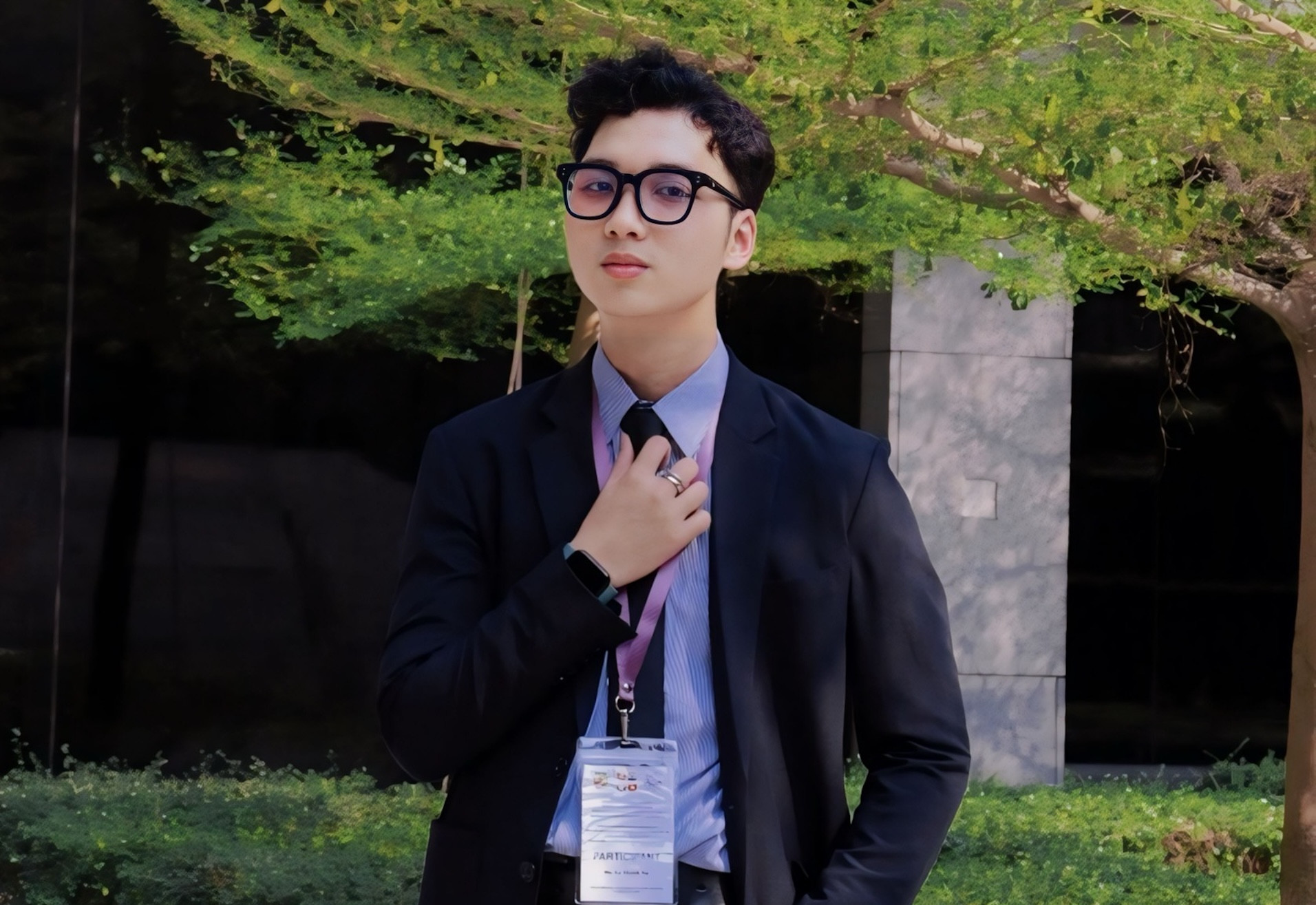
Five years earlier, Tai’s choice of major was driven by two reasons. First was the appeal of an interdisciplinary field combining chemistry, physics, mechanics, and engineering, opening pathways to core technologies such as energy storage, two-dimensional materials, and semiconductor devices.
Second was the PFIEV program itself, which blends Vietnam’s disciplined foundation with France’s experimental training standards, emphasizing engineering thinking, self-directed learning, and early exposure to research.
From a young age, Tai showed a strong curiosity for science, often dismantling toys to explore how they worked. Upon entering university, he realized it was the ideal environment to nurture that curiosity.
From his first year, he volunteered to assist senior graduate students in the laboratory. Starting early helped him quickly build habits of self-study: reading original papers, iterating through trial and error in the lab, asking questions, and seeking answers independently before turning to instructors.
Tai also observed strict study discipline, planning weekly schedules and allocating time across classes, lab work, self-study, and systematic note-taking for experiments and lectures. The combination of curiosity, initiative, and discipline enabled him to sustain top grades while pursuing in-depth research from the early years of university.
Throughout five years of study and PhD preparation, Tai rarely gave up. He held a consistent view: if something is worth liking, it is worth seeing through. and every difficulty is not failure, but a sign that more effort is needed.
An academic journey across eight countries
From 2023 to 2025, Tai participated in academic and research programs across eight countries in Asia and Europe, including Taiwan, Thailand, Indonesia, Myanmar, South Korea, Italy, the Netherlands, and France.
These activities ranged from project-based learning (PBL), international conferences, and semiconductor–energy summer schools to research internships and academic exchanges under Erasmus+.
Among these, his internship at National Chung Cheng University in Taiwan marked a pivotal turning point. Tai worked closely with professors in energy materials, learning how to frame scientific questions, design experiments, and analyze data to international standards. Each technical discussion and lab measurement led to rigorous research thinking and a professional work style.
Studying in multicultural environments posed challenges in language, work methods, and research standards. Yet adapting to these differences strengthened Tai’s independence, academic communication, and ability to sustain research effectiveness in international settings.
Frequent movement across countries brought hurdles such as cultural differences, and high-discipline, fast-paced work styles. Each laboratory had distinct procedures, safety standards, and data management practices, requiring rapid adaptation to keep pace with research.
Soft skills honed during his time at HCMC University of Technology—self-directed learning, teamwork, scientific communication, and independent research—proved essential anchors.
Tai reviewed literature, formed hypotheses, designed experiments, and solved problems independently, while learning to ask clear questions, and communicate transparently with professors, with respect to cultural differences. As a result, his research productivity remained stable.
After graduation, Tai secured a PhD study opportunity at the University of Bordeaux in France, a strong research environment for semiconductor materials, electrochemistry, and sustainable energy. His research focuses on metal–organic frameworks (MOFs) and semiconducting MOF derivatives.
Tai is pursuing two main application directions: applying MOFs in wastewater treatment via electrochemistry and developing electrodes for green hydrogen production.
The decision to skip the Master's level to directly pursue a PhD program is a step that requires confidence and thorough preparation. For Tai, the important foundation came from the PFIEV program, designed according to European standards and recognized as equivalent to the Diplôme d’Ingénieur (BAC+5), which is equivalent to a Master's degree in the French education system.
Additionally, there was a professional preparation process lasting many years, such as participating in research since the first year and conducting experiments at international laboratories in Taiwan, Italy, and France, plus accumulating independent research thinking, experimental design, and data processing skills.
Having Q1 international publications, conference reports, and an academic network with many professors in the materials-energy field created a solid foundation for Tai to be recommended for the PhD program.
For Le Thanh Tai, choosing to go straight to a PhD was not a risky move, but the result of a methodically prepared journey, from a high-quality engineering foundation and international research experience to the aspiration to pursue materials and energy science.
Thuy Nga
.svg)
