 Vietnamnet.vn

 Podcast



In past years, the thick layer of straw left behind after harvest made plowing difficult for the next crop. The most common solution was to burn it directly in the fields. While convenient, this method caused thick smoke, environmental pollution, and safety hazards - especially on fields near major roads.
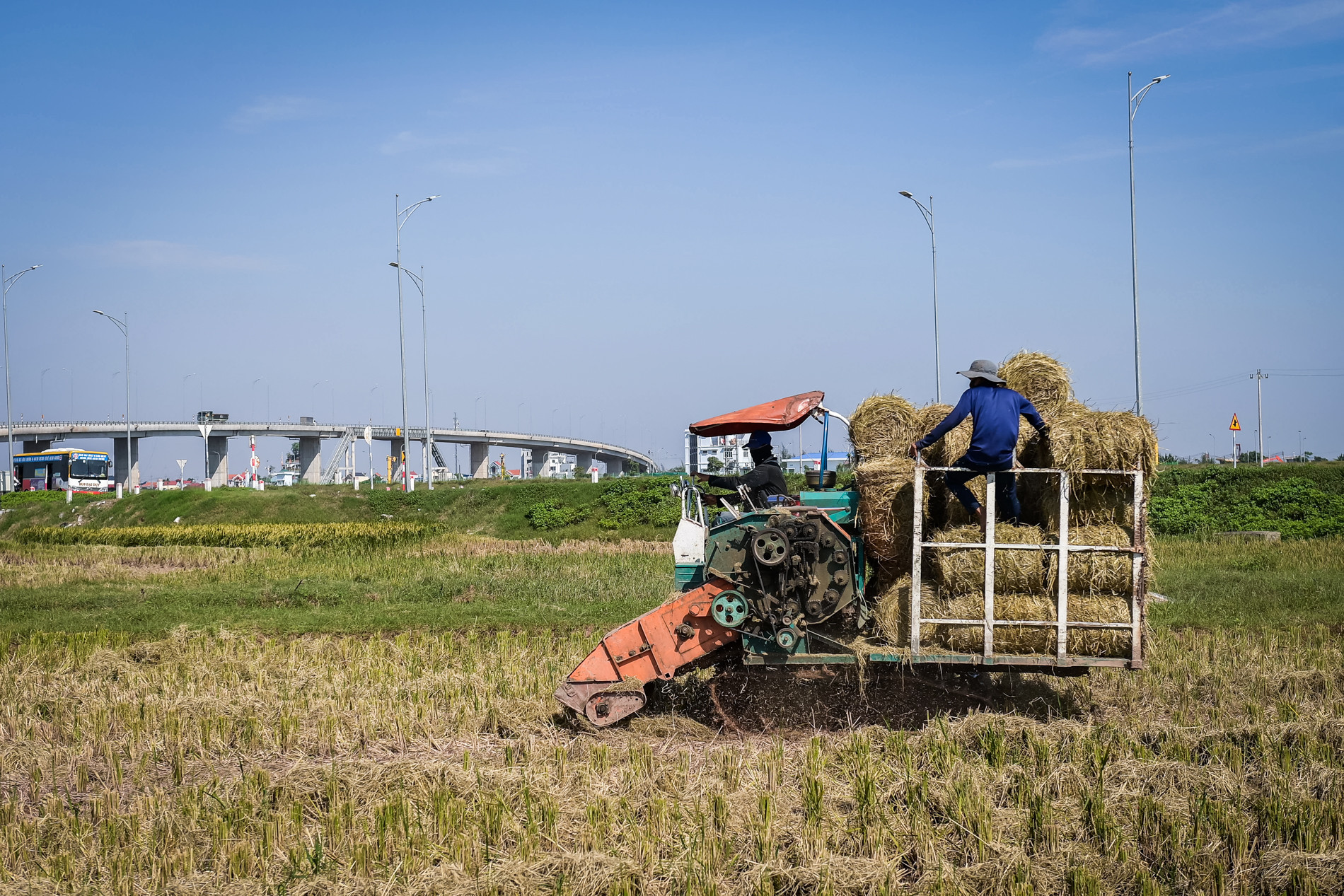
Straw baling machines neatly compress rice straw for easier collection and transport. Photo: Trong Tung
To address the problem, local authorities launched campaigns urging farmers to stop burning straw and instead repurpose it. The straw can be used for mushroom cultivation, livestock feed, vegetable bed mulching, or organic compost.
What was once seen as agricultural waste is now considered “post-harvest gold.” Many farmers have begun investing in straw baling machines, allowing them to clear their fields and generate income at the same time.
Five years ago, Tran Van Dien, a farmer in Nghia Son commune, borrowed money to buy a straw baling machine worth over 400 million VND (about 16,400 USD).
“I saw how effective the straw collection model was in the southern provinces - both economically and environmentally - and realized there was demand for straw in farming and livestock,” he explained.
Each machine can process around 1,000 bales of straw per day. With selling prices ranging from 15,000 to 30,000 VND (0.60–1.20 USD) per bale depending on quality, Dien can earn more than 15 million VND (around 615 USD) on a good day. However, the work can only proceed in dry weather - rainy days mean waiting for the straw to dry out again.
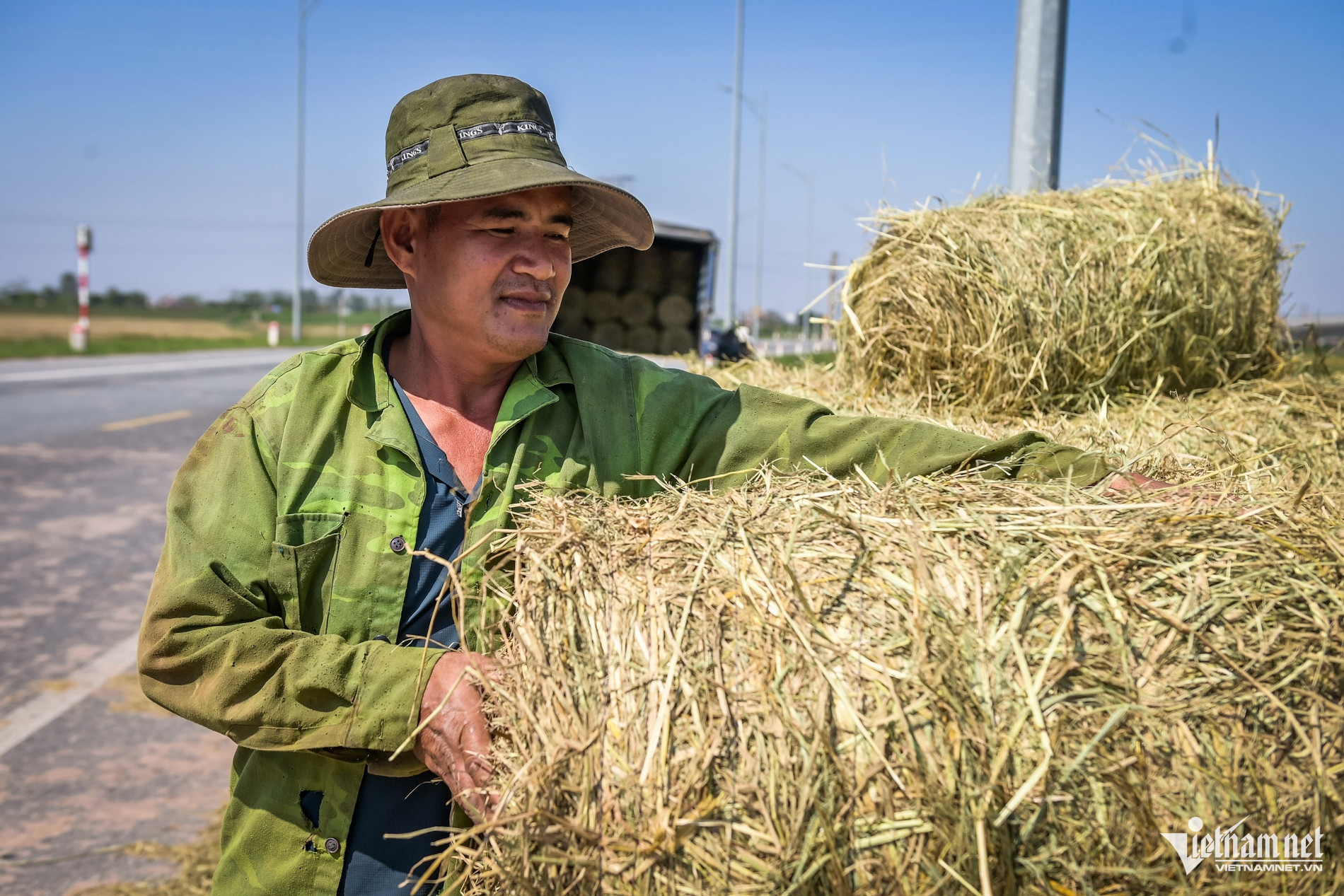
Tran Van Dien loads straw onto a truck for buyers. Photo: Trong Tung
Each harvest season lasts less than two months, and Dien hires two operators from the Mekong Delta to help bale straw in surrounding communes. His family also helps with loading the bales onto trucks for buyers.
“We rush to the fields right after harvest if the weather’s good. If everything goes smoothly, I make about 100 million VND (4,100 USD) per season after expenses,” Dien shared.
Similarly, Le Van Hien from Nghia Hung commune has been running a straw baling business for three years. His family’s investment paid off quickly.
“The demand is high - buyers come right to the fields. It creates income for my family and helps reduce pollution from straw burning,” Hien said.
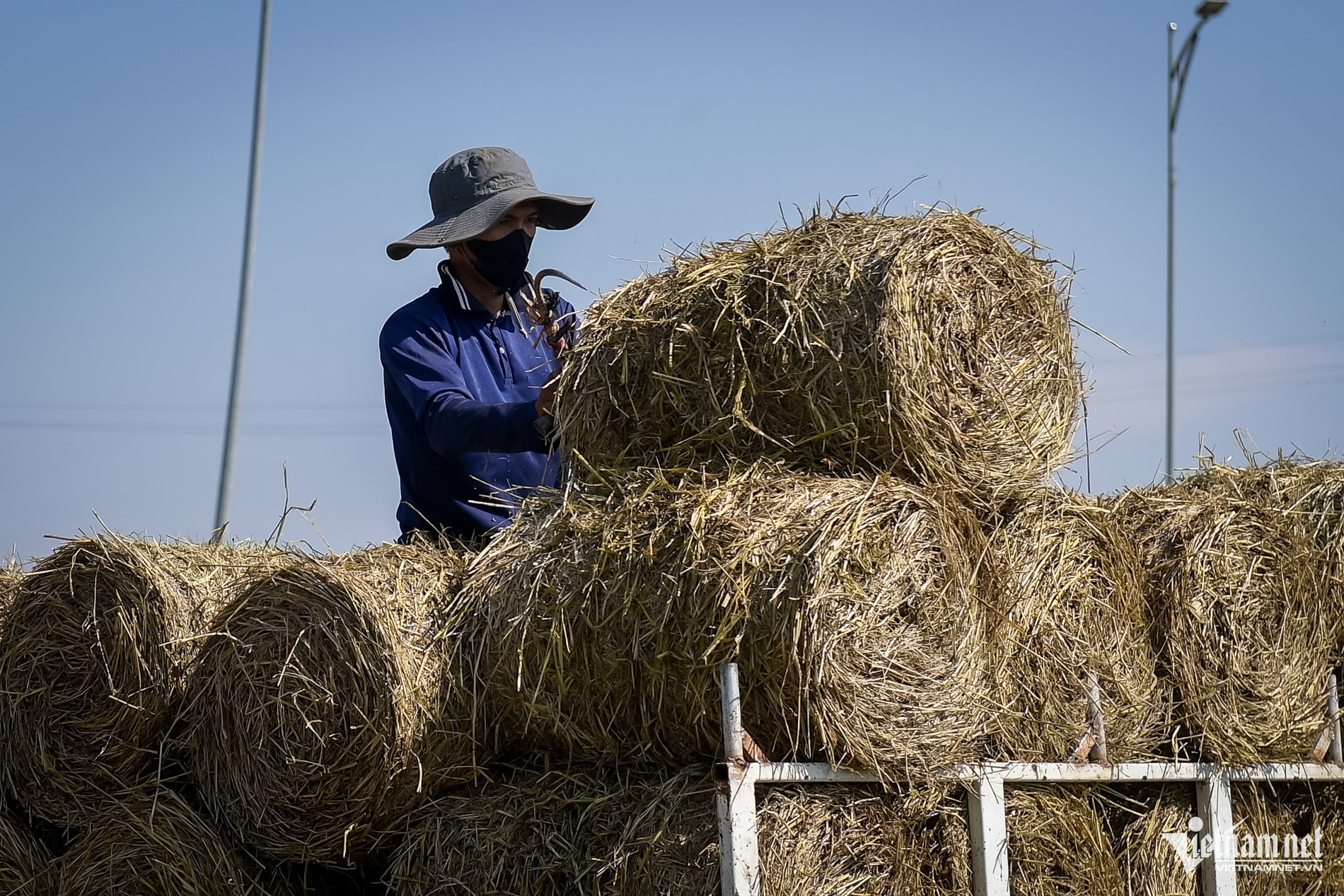
Straw is sold for mulching fields and feeding livestock. Green straw commands a higher price. Photo: Trong Tung
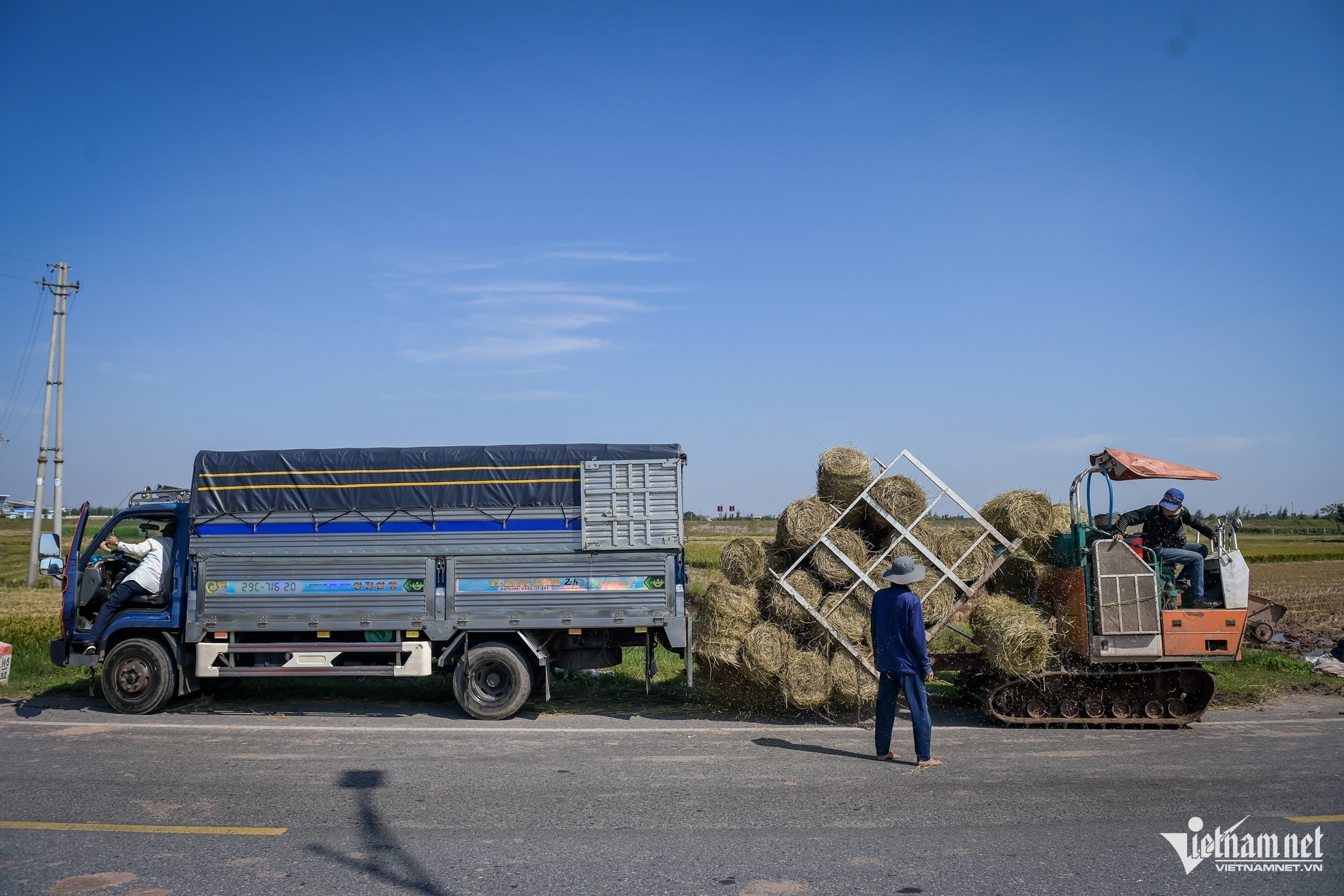
Baled straw is sold for various purposes, including mulching to prevent weeds and retain moisture. Green straw fetches a higher price, as it’s suitable for feeding cattle.
Some farmers were initially skeptical, believing burned straw enriched the soil. But now, most support the baling method - it cleans the fields and generates income.
“The job is exhausting - I carry tons of straw every day. But it’s worth it. I earn around 100 million VND per season. After just three seasons, I recovered the machine’s cost. I’m planning to invest in another one,” Hien said.
For smallholders like Vu Thi Lam, who owns only a few plots of rice paddies, baling is a win-win.
“Selling straw doesn't bring in much, and burning creates too much smoke. So we’re happy to let baling operators collect it. We get clean fields for the next crop, and they make money,” she said.
Trong Tung
.svg)
