 Vietnamnet.vn

 Podcast



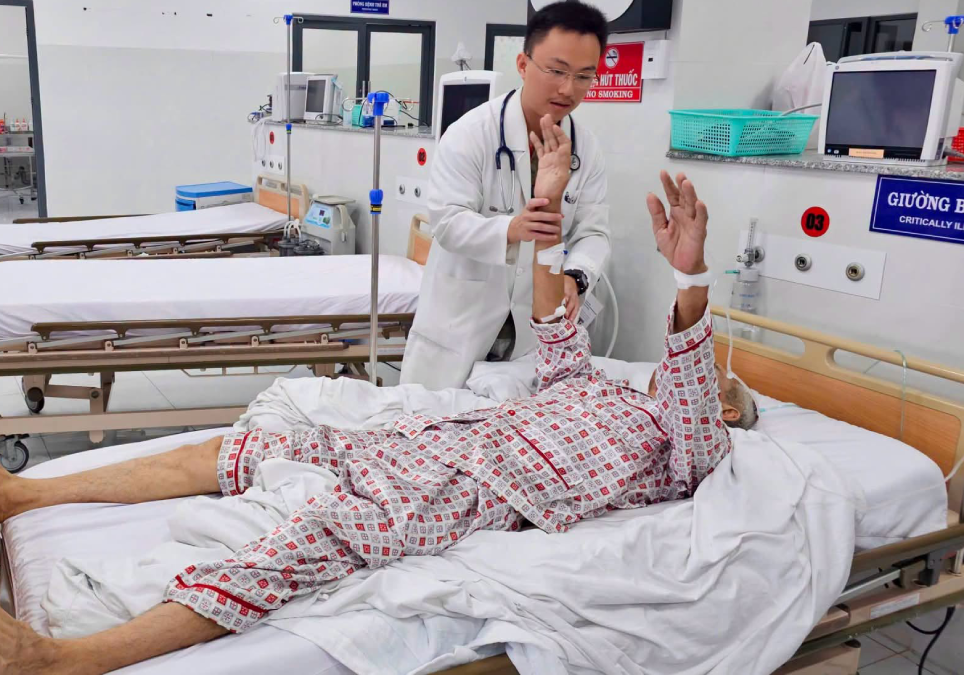
What brought you to the stroke specialty?
When I graduated from university, there were virtually no experts or deep subspecialties in stroke in Vietnam.
Chance came when I received a stroke scholarship from the National University of Singapore in 2005. After that, I continued my stroke training at the University of Alabama (US) under the guidance of a leading professor. That was the first time I was exposed to this specialty in a true sense.
I realized this was a field with great potential. More importantly, I clearly saw that a doctor's role could change a patient's outcome very quickly.
Before 1995, the ability to treat stroke globally was very limited. The advent of thrombolytic drugs (1996) and mechanical thrombectomy techniques (2015) transformed the fate of stroke patients.
Could you share the obstacles when bringing these techniques to Vietnam?
Thrombolytic drugs or mechanical thrombectomy are very effective; however, implementing these techniques is not simple. Acute treatment methods are like a double-edged sword. On one hand, they can save a patient's life and reduce the risk of disability; on the other hand, they can cause bleeding events or mortality. If doctors are not thoroughly trained and lack a standardized protocol, treatment can become unsafe.
The first cases I witnessed were truly miraculous. A patient with hemiplegia, after receiving medication, was able to move again just 20 to 30 minutes later.
What drove you to spend many years traveling to numerous provinces and cities to build a stroke network?
I want to affirm that stroke is a treatable disease if the patient reaches the hospital early. I remember the first young patients (38–39 years old) who recovered after receiving this injection, were able to walk and work normally, and currently continue to attend follow-up visits.
At People's Hospital 115, over 2,000 acute cases can be treated each year using techniques such as intravenous thrombolysis and mechanical thrombectomy.
If all patients had to crowd into a few major centers, the volume would cause severe overload. Patients living far away are at a greater disadvantage, which is why we need to bring these techniques to provinces and cities across the country.
In stroke treatment, time affects the brain. Therefore, the earlier a patient receives treatment, the better their chance of preserving brain function.
From zero, the network of stroke treatment units in Vietnam has now grown to nearly 200, including some at local healthcare levels. How do you evaluate this process?
I view it as a monumental leap forward, but it is still not enough. Each year, Vietnam records over 200,000 new stroke cases. According to international guidelines, the number of stroke centers in Vietnam needs to be at least double what it is now. That means we may need to aim for 400 to 500 stroke centers and units.
However, quantity is only the first step. What I need to focus on now is that treatment quality remains uneven across centers. Some patients still try to travel very far to reach a hospital they trust instead of going to the nearest facility. This shows that we have not yet gained their trust.
In your view, what is the most critical link that needs improvement right now?
After expanding in quantity, we must raise quality and, more importantly, connect the centers into a unified network. If centers do not communicate with each other, we cannot provide professional support, hold consultations for difficult cases, or transfer patients appropriately.
There are cases where patients at a center capable of treating them still bypass local care and travel several extra hours to go elsewhere. Conversely, some patients exceed a facility's treatment capabilities but are not transferred where necessary. A unified network can resolve these issues.
Looking back on a journey of nearly 20 years, what makes you most proud?
What I am most proud of is the rapid development of the stroke specialty in Vietnam. Twenty years ago, our country started virtually from zero in stroke treatment.
To date, advanced treatment techniques have allowed Vietnam to stand on par with many countries in the region, even surpassing Malaysia, the Philippines, and Indonesia, and potentially equaling or slightly edging out Thailand in certain areas. An increasing number of scientific works and studies are being conducted and published from Vietnam, contributing to elevating the nation's medical standing globally.
Phuong Thuy
.svg)
