 Vietnamnet.vn

 Podcast



These artifacts hold exceptional historical, cultural and artistic value, reflecting the spiritual life of coastal communities in northern Vietnam over many centuries.
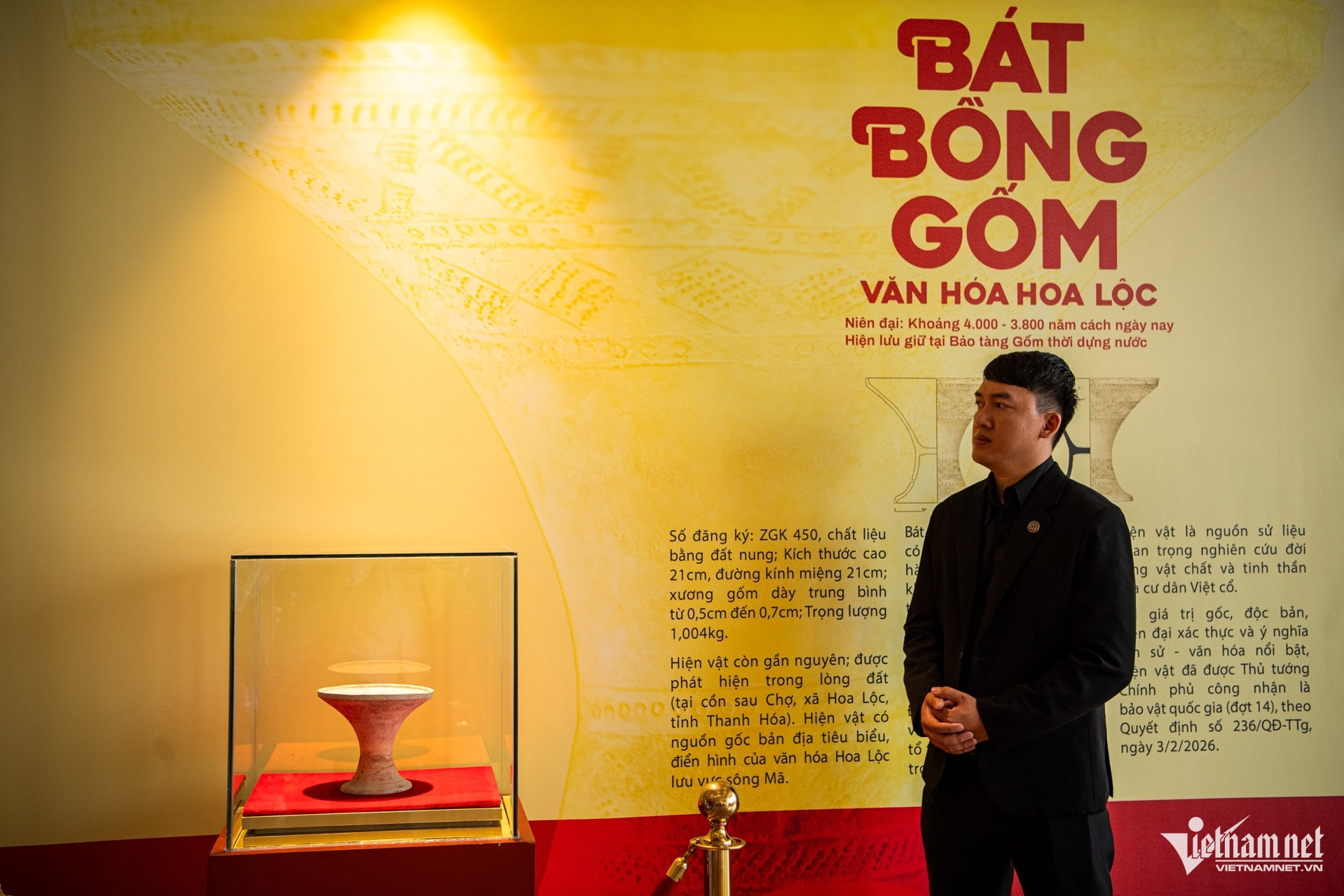
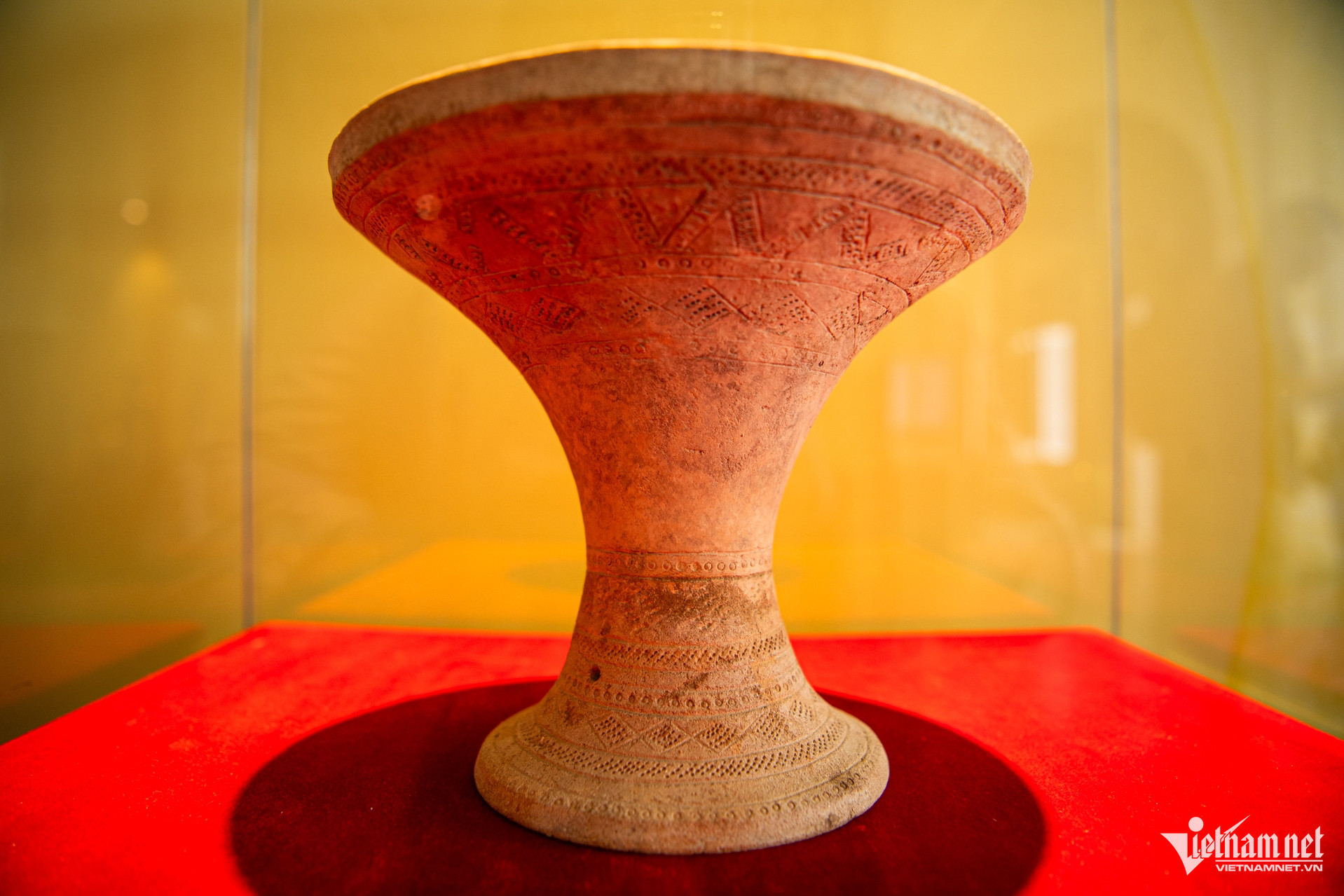
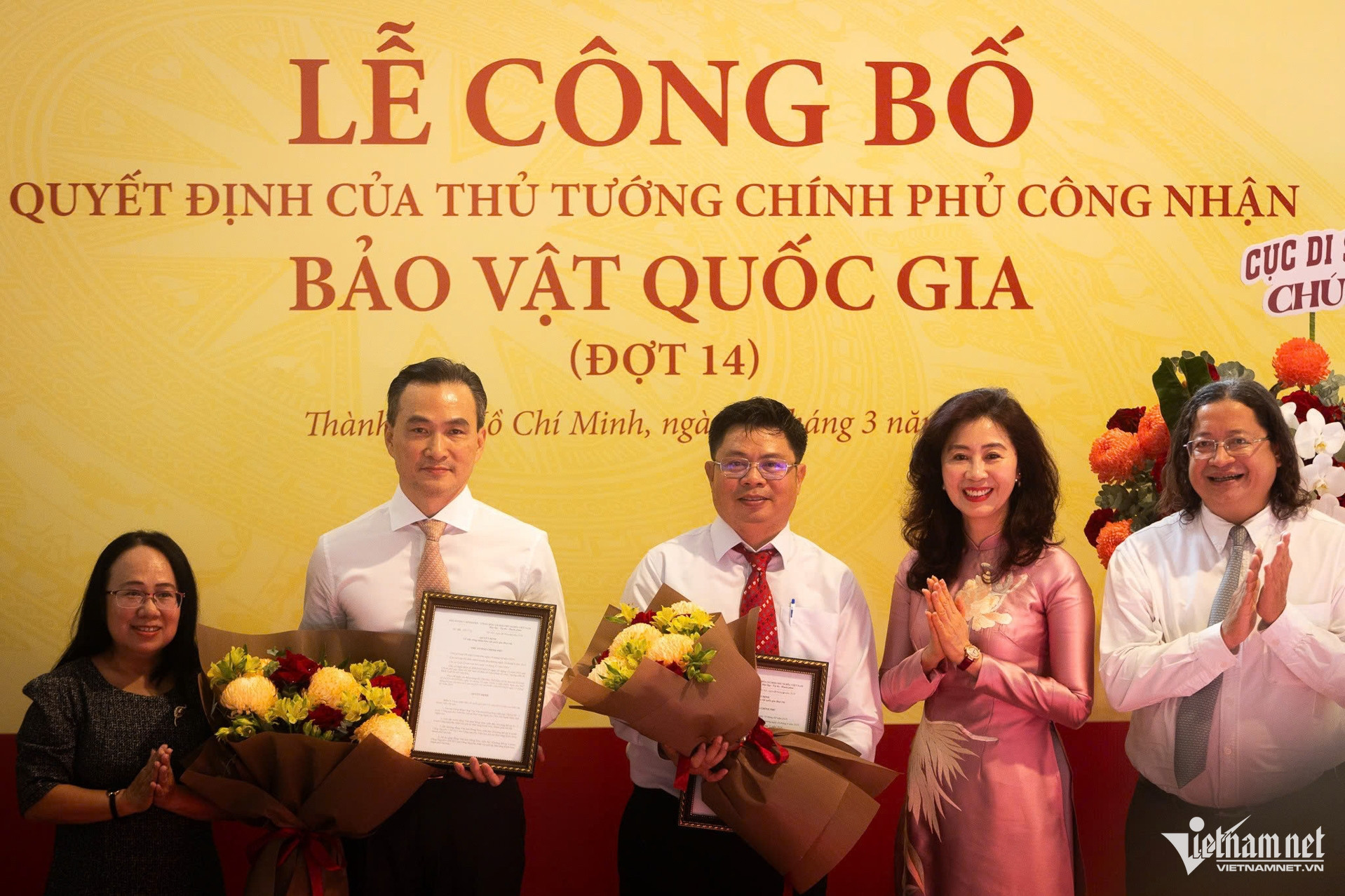
Under Decision No. 236/QD-TTg dated December 31, 2025, the Hoa Loc culture pedestal bowl preserved at the Ho Chi Minh City Museum was recognized as a national treasure, becoming the 14th such artifact within the city’s museum system.
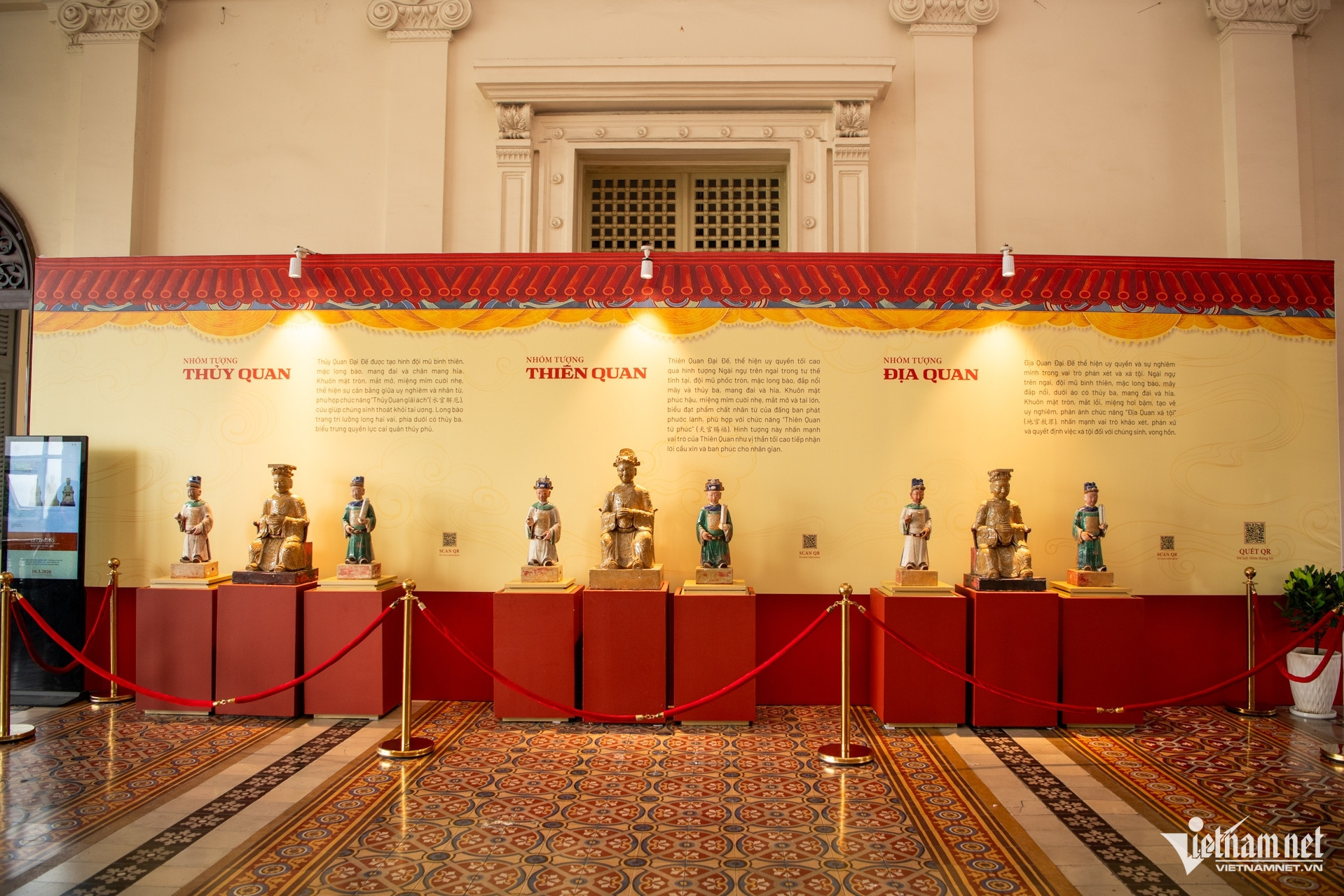
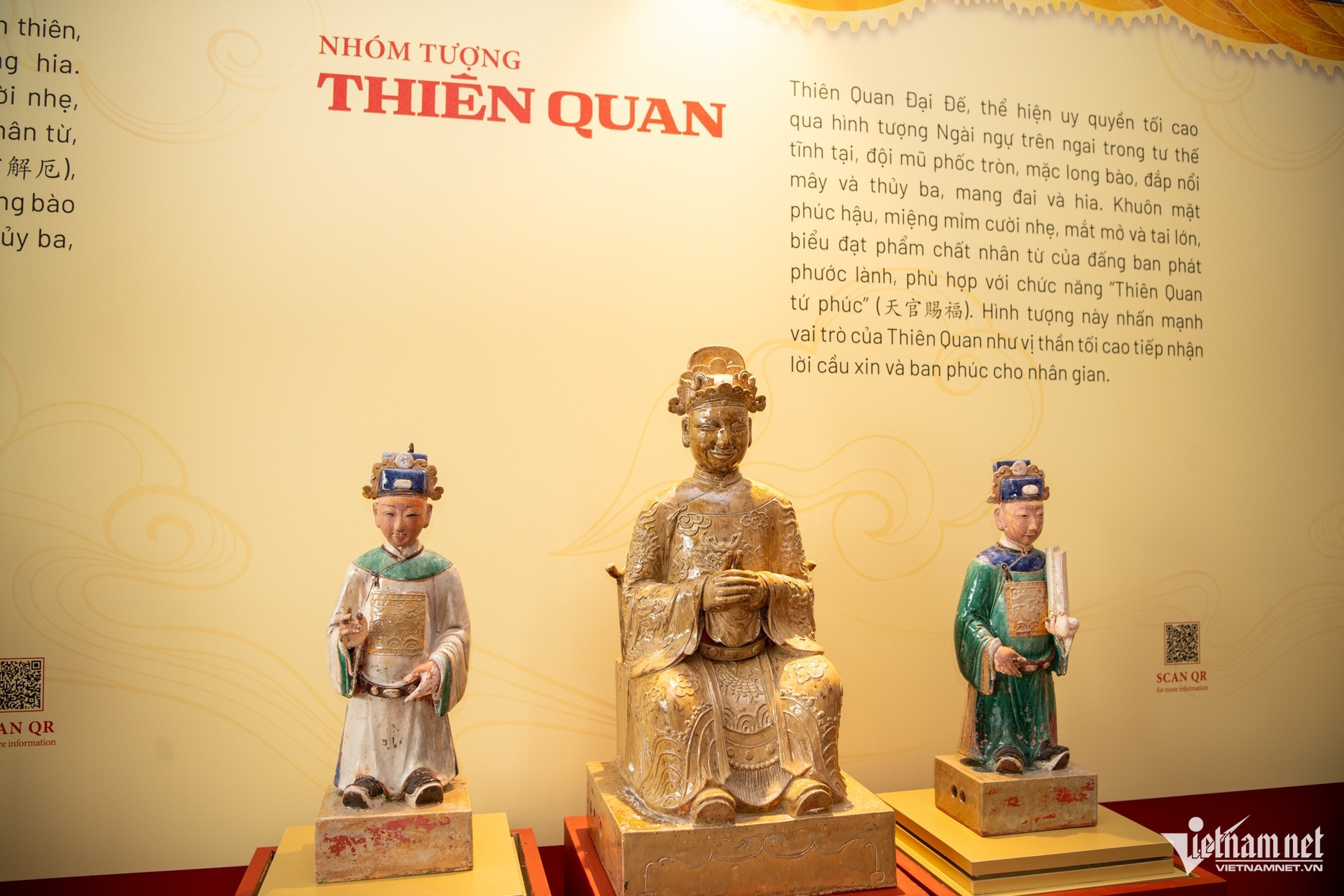
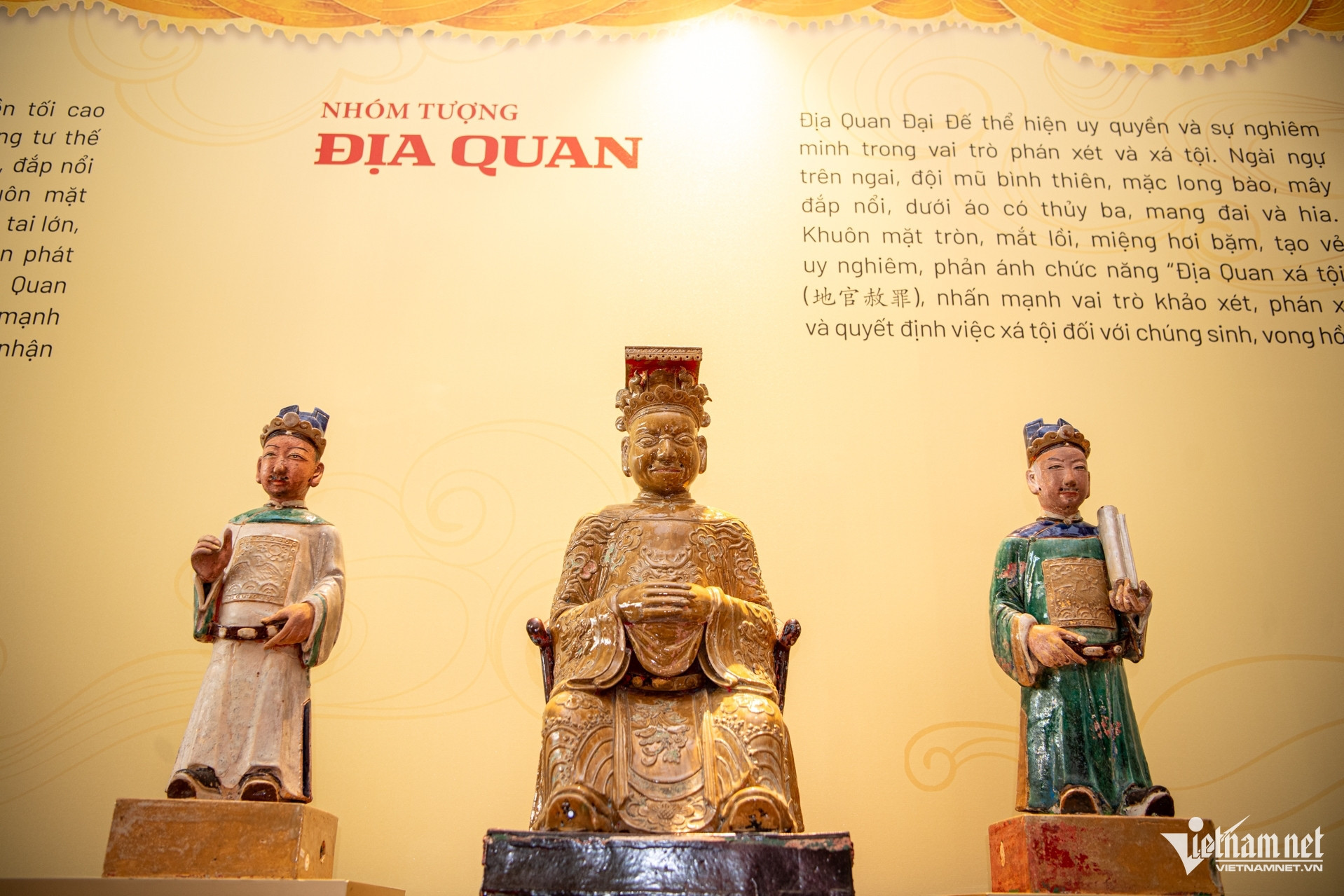
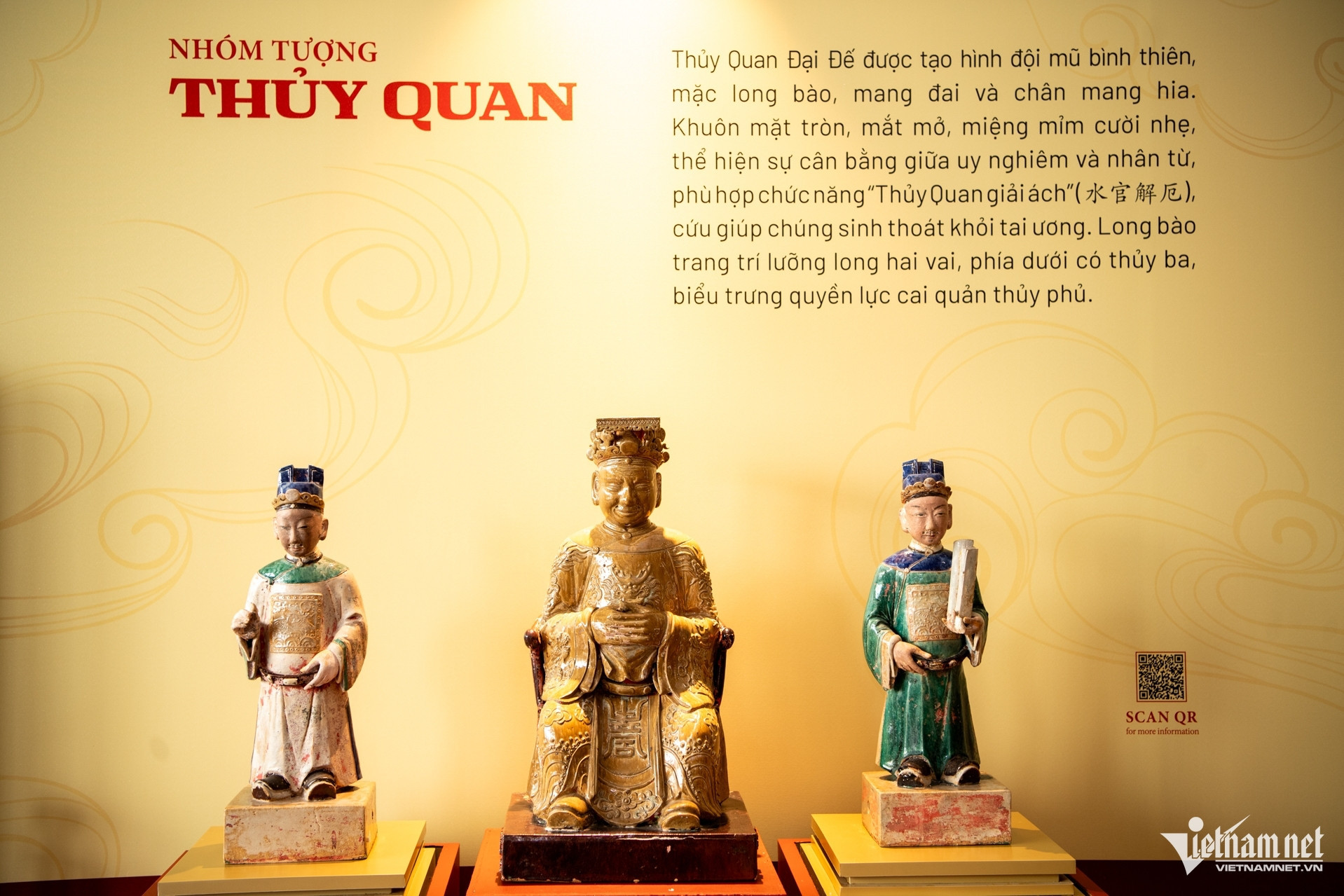
The Tam Quan Dai De statue set consists of nine statues divided into three groups representing the three deities: Thuy Quan, Thien Quan and Dia Quan, along with attendant figures.
Thuy Quan Dai De, standing 78.2 cm tall, wears a flat-topped crown and a dragon robe with a belt and boots. His round face and gentle smile convey both authority and compassion, associated with the role of “Thuy Quan giai ach” - relieving misfortune. The robe is decorated with paired dragons on the shoulders and wave motifs below, symbolizing authority over the water realm.
Thien Quan Dai De, measuring 90 cm in height and 38 cm in width, is the largest statue in the set and is depicted seated on a throne. He wears a rounded crown and a dragon robe decorated with clouds and wave motifs, along with a belt and boots. His benevolent face and gentle smile symbolize the deity who bestows blessings according to the concept of “Thien Quan tu phuc”.
Dia Quan Dai De, 77.5 cm tall and 38 cm wide, conveys solemn authority in his role of judging and granting amnesty. Seated on a throne, he wears a flat crown and a dragon robe adorned with raised cloud motifs and wave patterns. His serious expression reflects the function of “Dia Quan xa toi” - examining and granting forgiveness to souls.
The pedestal bowl dates back approximately 4,000 to 3,800 years, belonging to the prehistoric period of ancient inhabitants. Made of fired clay, the artifact features a tall pedestal base, a wide bowl body and a flared rim.
According to researchers, the bowl’s structure is divided into clearly defined sections, demonstrating the technical skill and aesthetic sensibility of ancient craftsmen. Its surface bears a distinctive pinkish-gray coating typical of fired ceramics, indicating sophisticated manufacturing techniques.
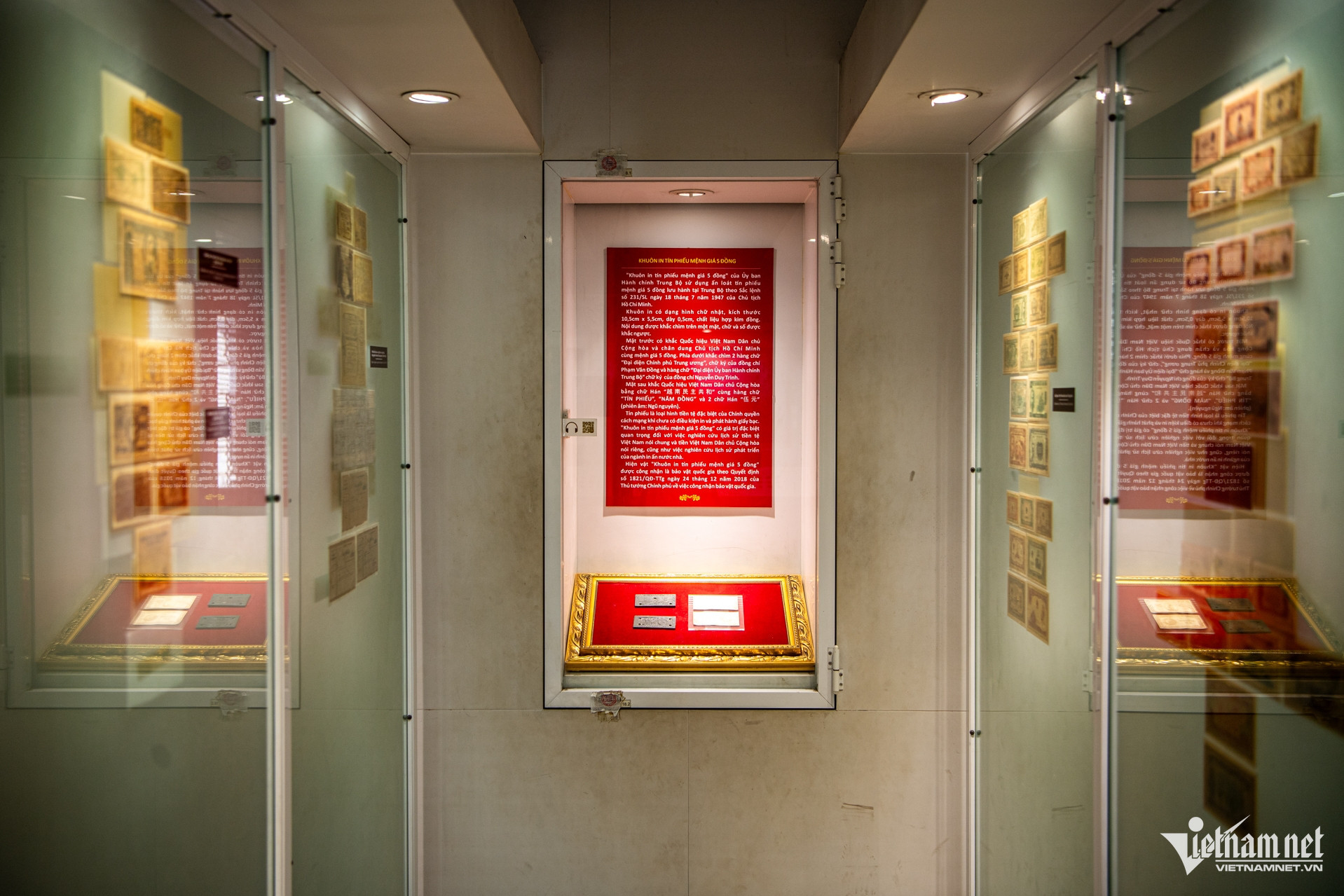
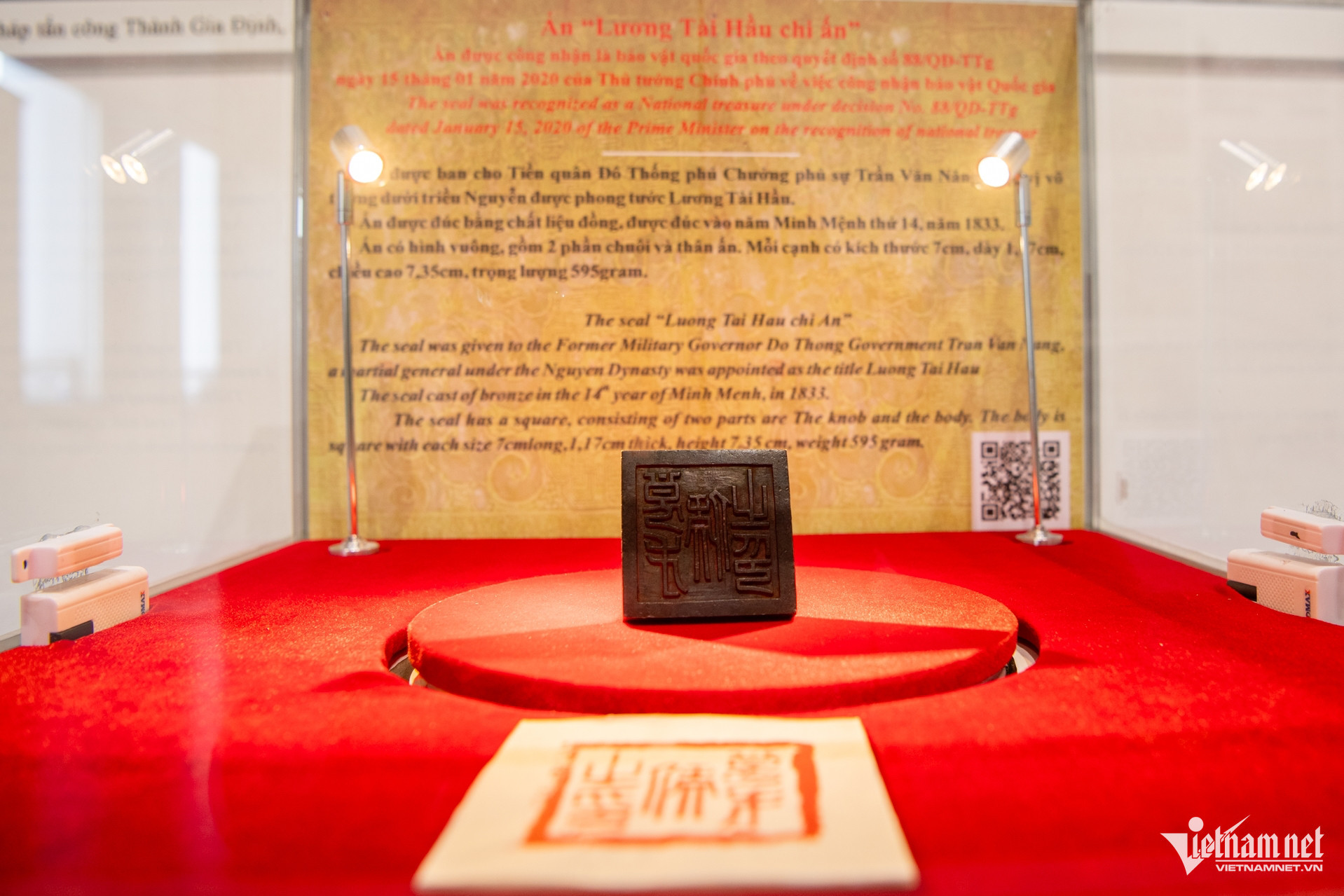
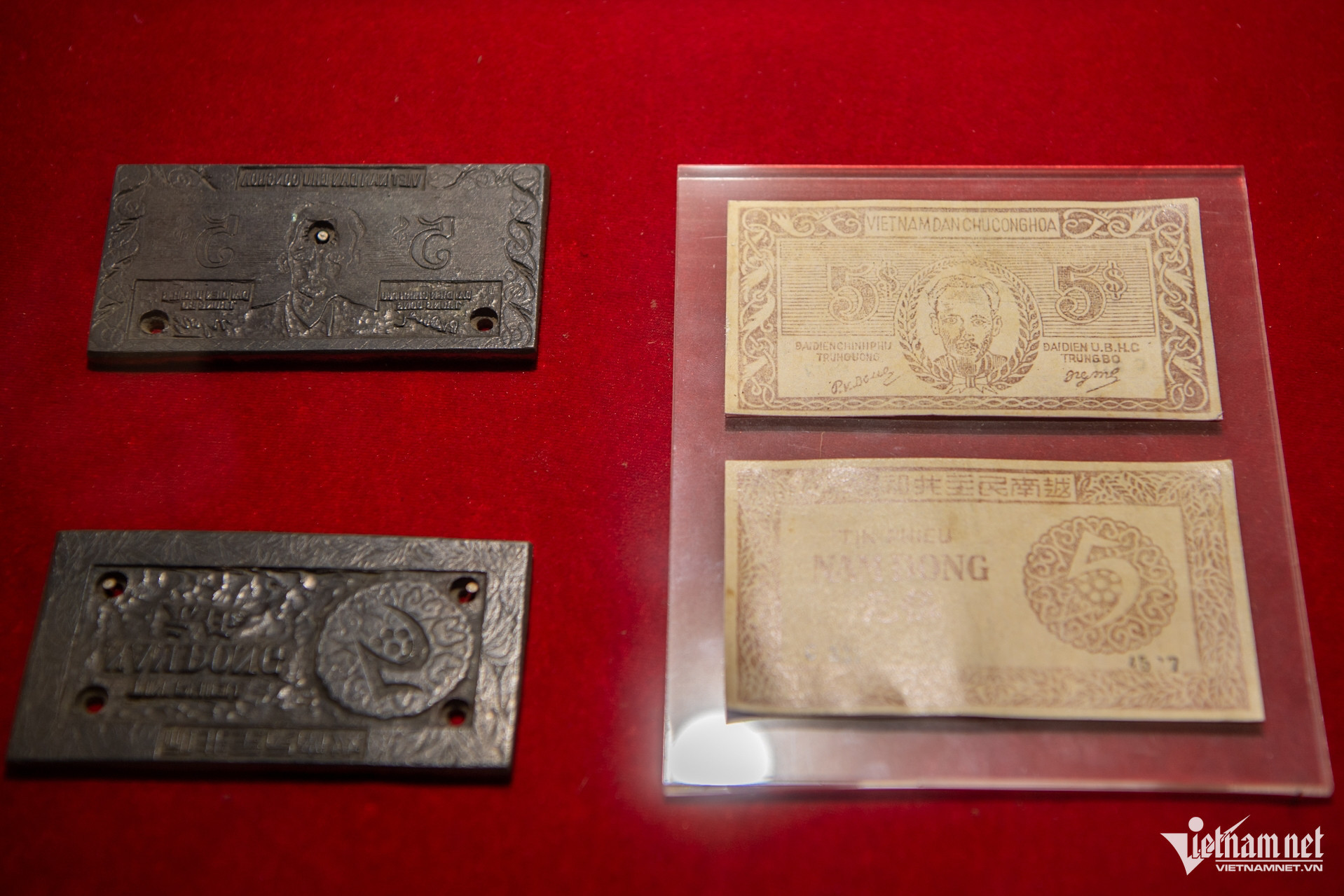
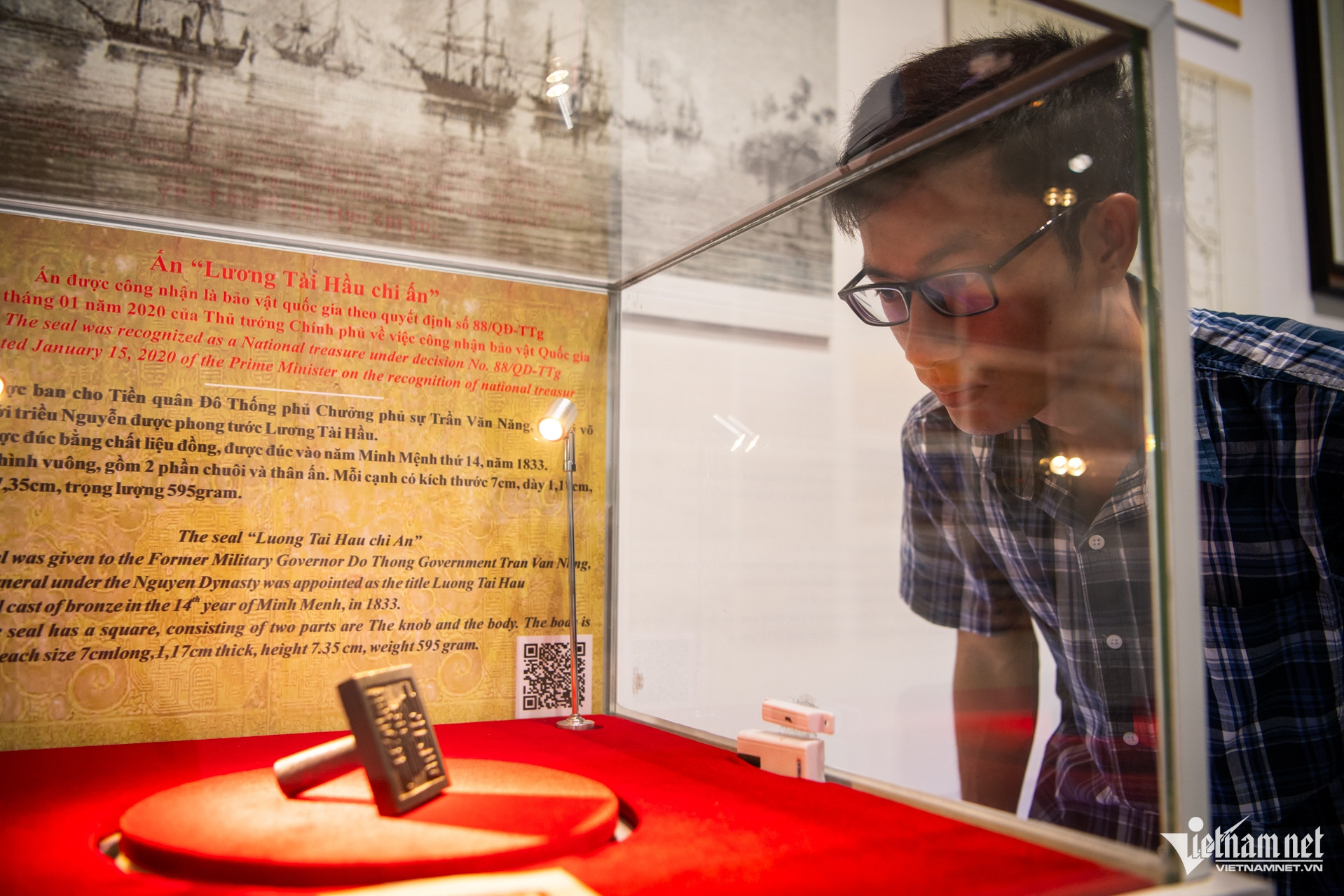
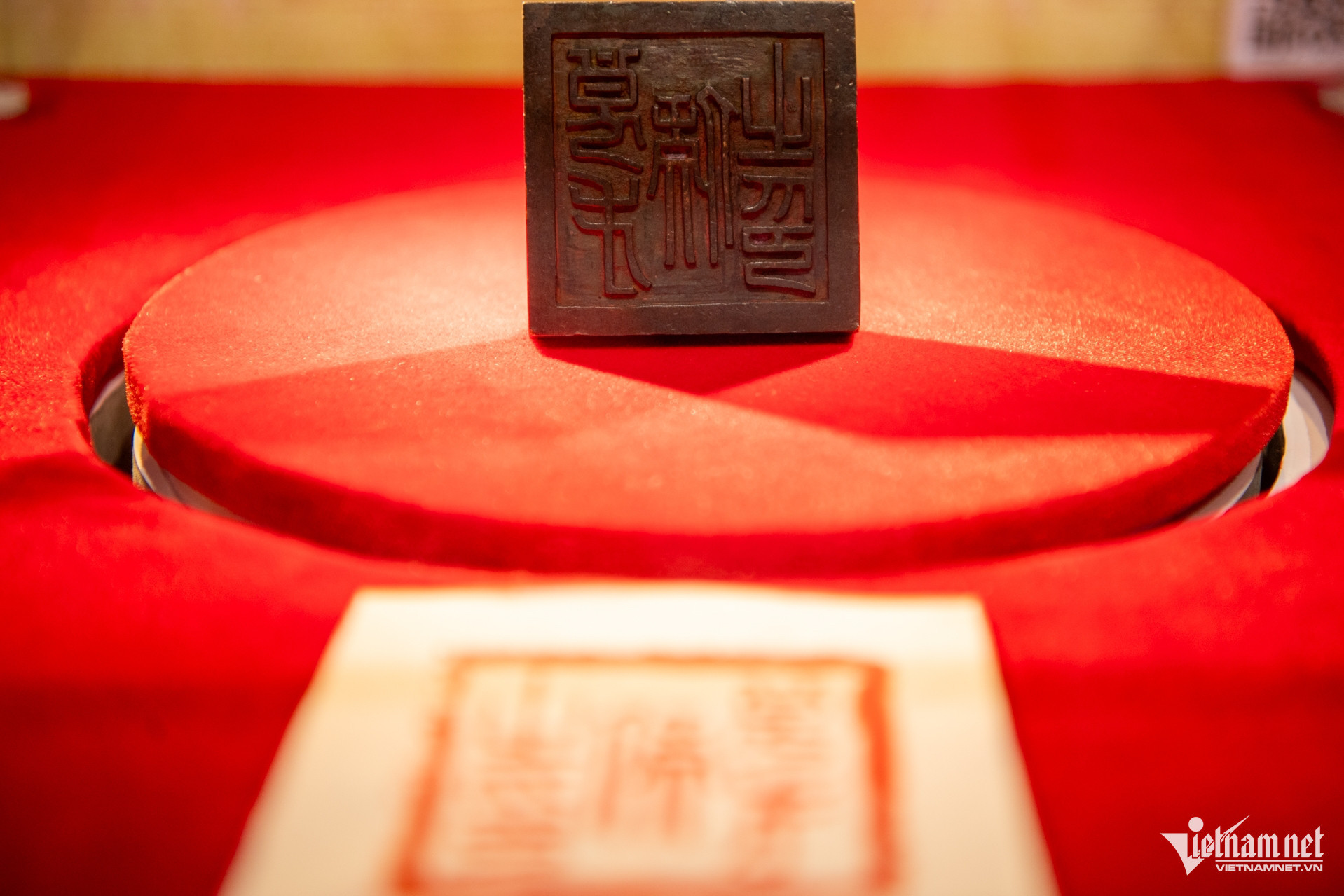
In addition to the two newly announced national treasures, the Ho Chi Minh City Museum also preserves two other national treasures: a printing plate used for five-dong promissory notes and the seal known as Luong Tai Hau Chi An.
The printing plate, also called a cliché, was used by the Central Administrative Committee to print five-dong promissory notes circulated in central Vietnam under Decree 231/SL issued on July 18, 1947 by Ho Chi Minh.
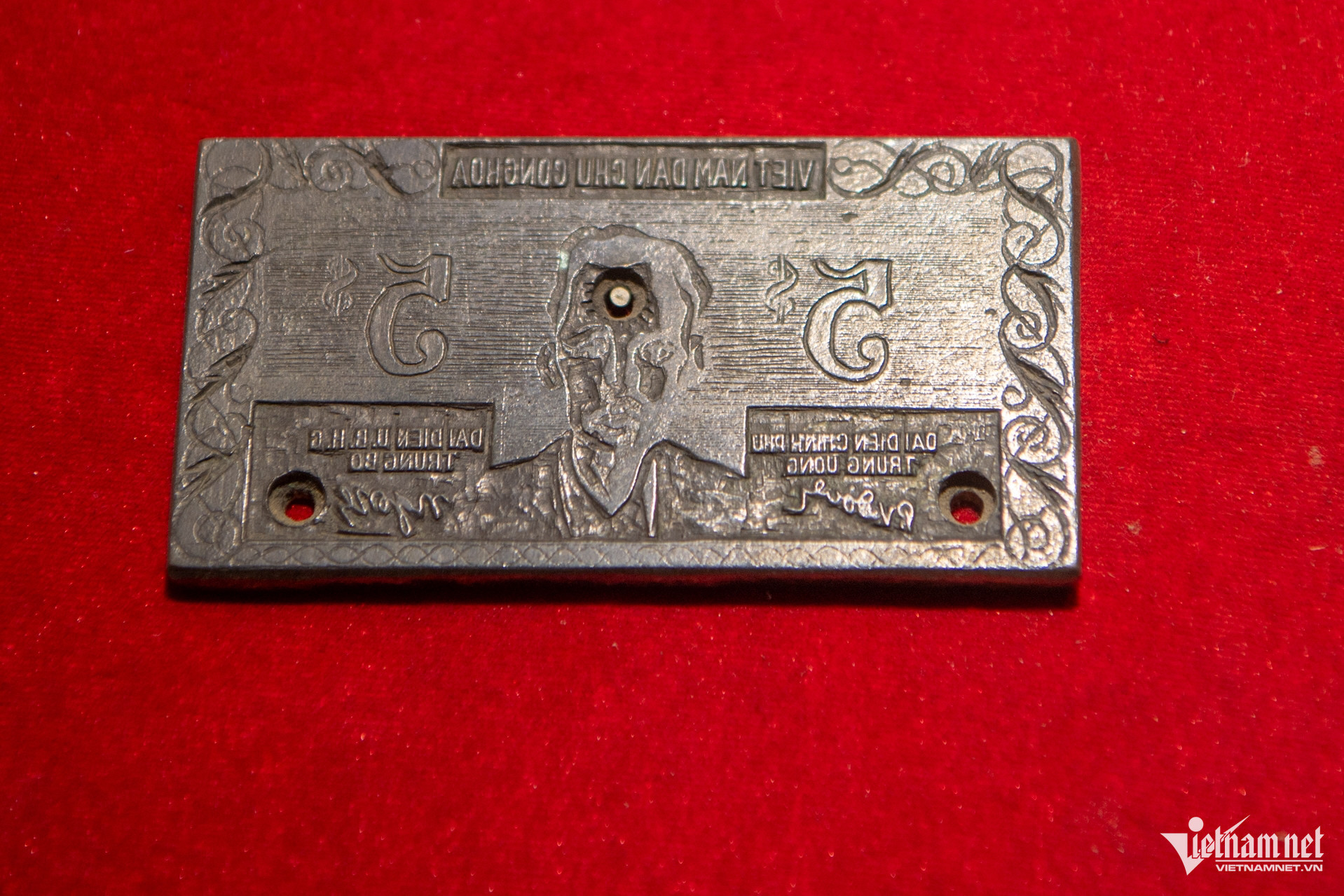
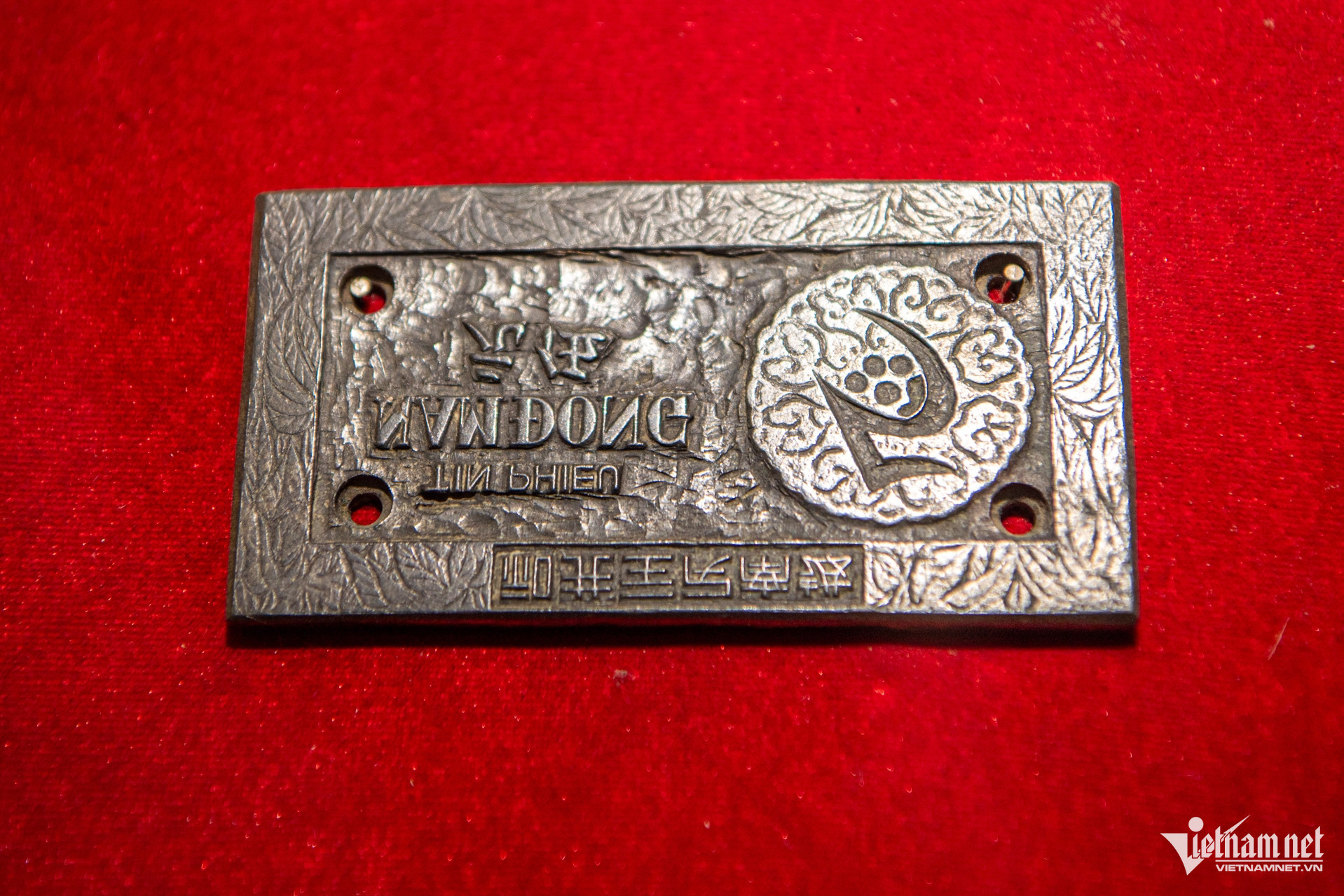
The artifact has a rectangular shape measuring 10.5 by 5.5 cm and 0.5 cm thick, made from a copper alloy. Its content is engraved in reverse on one side, consisting of two parts: printing plates for the front and back of the note.
The front printing plate features a rectangular layout with a portrait of Ho Chi Minh at the center. Above it is the inscription “Viet Nam Dan Chu Cong Hoa” within a rectangular frame. On both sides of the portrait are the denomination “5” and the dollar symbol, set against a background of horizontal lines.
Below the denomination are two engraved rectangular panels: one reading “Representative of the Central Government” with the signature of Pham Van Dong, and the other reading “Representative of the Central Administrative Committee” with the signature of Nguyen Duy Trinh. The lower edge is decorated with wave motifs, while the sides feature stylized floral patterns.
The reverse printing plate also has a rectangular shape. At the top are six Chinese characters “越 南 民 主 共 和” (Viet Nam Dan Chu Cong Hoa) within a rectangular frame. On the right are the words “Tin Phieu”, “Nam Dong” and the Chinese characters “伍元” (Ngu Nguyen). On the left appears a stylized circular floral motif containing the denomination “5”, surrounded by decorative vine patterns.
The front plate contains three small circular holes and the reverse plate four holes for fastening screws during the printing process. The artifact demonstrates refined craftsmanship and harmonious composition while affirming Vietnam’s national identity and spirit of independence through its engraved content and decorative details.
Nguyen Van Trung, a resident of Binh Trung Ward, said he visited the museum after hearing about the announcement of the two new national treasures. He was particularly impressed by the seal Luong Tai Hau Chi An, which he saw in person for the first time.
The seal was cast in the spring of the 14th year of the Minh Mang reign (1833) from bronze, standing 7.35 cm tall with a square seal face measuring 7 by 7 cm.
It belonged to Tran Van Nang, who served as commander of the Tien Quan Do Thong Phu and was one of the three leading officials commanding the major military divisions of the time - the Front Army, Central Army and Rear Army - and was granted the noble title of marquis.
The recognition of the two artifacts raises the total number of national treasures in Ho Chi Minh City to 25 as of 2026.
The event not only acknowledges the exceptional historical, cultural and artistic value of these artifacts but also affirms the role of museums and individuals in collecting, preserving and researching Vietnam’s cultural heritage.
According to Article 41a of the Law on Cultural Heritage 2001 (amended in 2009), a national treasure must be an original and unique artifact with distinctive form and exceptional value in history, culture, art, science or nature. Such objects may be associated with major historical events, national heroes, notable figures, or represent outstanding works, inventions or specimens of a particular era.
National treasures must be registered with cultural authorities, and any transfer of ownership must be reported within 15 days. These artifacts are subject to special protection and preservation measures. Official recognition is decided by the Prime Minister after evaluation by the National Cultural Heritage Council.
Tuan Hung
.svg)
