 Vietnamnet.vn

 Podcast



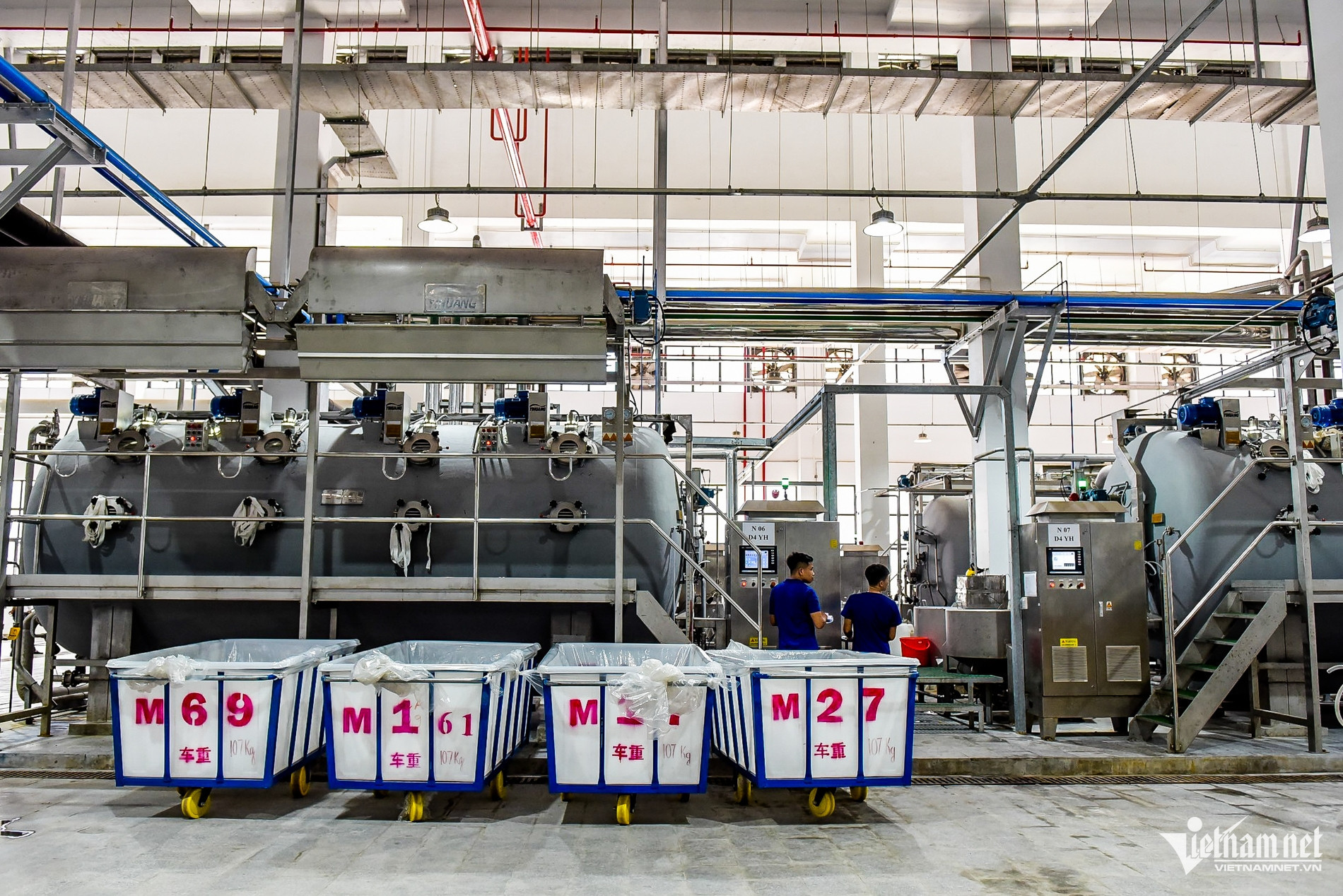
The new Ninh Binh stands as a clear example of this policy, with a GRDP exceeding VND342,000 billion, up 10.65 percent, driven by spatial unlocking and infrastructure development.
The Nam Dinh – Lac Quan – Coastal Road, officially put into operation in 2025, has infused fresh air into the entire region. The route stretches over 32 km, passing through 12 wards and communes in Ninh Binh province. It starts at the intersection of Tran Bich San and Song Hao streets (Nam Dinh ward) and ends at the junction with National Highway 37B connecting to the coastal road (Giao Ninh commune).
With total investment of nearly VND9,100 billion, featuring eight lanes and a design speed of 100 km/h, this smooth asphalt corridor directly links urban centers with the coastal economic zone.
At the same time, on September 27, 2025, the Phu Thu interchange, costing nearly VND1,400 billion, was inaugurated. In the future, it will complete Ring Roads 4 and 5 and connect with the Cau Gie – Ninh Binh Expressway.
These projects have reshaped the region’s logistics network. Such key corridors and interchanges play a vital role in regulating traffic flows, enhancing regional connectivity, linking national transport systems with the under-construction Ninh Binh – Hai Phong Expressway and the planned Phu Ly – Nam Dinh Expressway.
They directly reduce pressure on existing roads and create momentum to attract investment in urban, industrial, and tourism development.
This is the new Ninh Binh, formed through the merger of Ha Nam, Nam Dinh, and Ninh Binh.
This historic event is not merely an administrative consolidation, but the operation of a unified institutional system under a two-tier local government model. The new structure has quickly proven effective, eliminating long-standing boundary-related barriers.
By the end of 2025, Ninh Binh’s public investment disbursement had reached 144 percent of the Prime Minister’s assigned plan (VND46,270 billion). On the Ninh Binh – Hai Phong Expressway, a 25 km section within the province, with a total investment of VND6,865 billion, is being constructed across seven work fronts, with disbursement exceeding 27 percent of contract value. As a result, the construction sector recorded nearly 10 percent growth.
From an industrial spatial management perspective, Nguyen Hoang Anh, head of the Ninh Binh Economic Zone and Industrial Parks Authority, emphasized that removing infrastructure and land bottlenecks is a top priority.
Thr current administrative apparatus is “closely coordinating with departments, agencies, and localities to promptly resolve issues related to investment procedures, construction, environment, and land; while accelerating site clearance and completing technical infrastructure in industrial parks.” This decisive approach lays the groundwork for key projects such as Hai Long Industrial Park (VSIP Nam Dinh) to be rapidly implemented and ready to welcome FDI inflows.
The improved connectivity and infrastructure have quickly translated into clear statistical results. According to the 2025 socio-economic report from the Ninh Binh Statistics Office, the province’s GRDP at current prices reached VND342,812 billion, with a growth rate of 10.65 percent.
This double-digit growth is not merely a sum of the three former localities. In the first two months of 2026, industrial production continued to post strong gains, with the Index of Industrial Production (IIP) rising by more than 36 percent year-on-year.
Rising production capacity is also reflected in trade and fiscal data. In 2025, total import-export turnover reached $51.36 billion (up 78.2 percent), generating a trade surplus of $2.44 billion. State budget revenue totaled VND78,369 billion, exceeding 104.19 percent of the estimate and ranking seventh nationwide.
A regional value chain
To fully leverage its expanded economic scale, Ninh Binh has reorganized its development space to complement each area’s strengths. The new economic map defines a north–south growth axis, three core urban centers, and five economic corridors.
This structure creates a clear regional linkage: Phu Ly serves as a launchpad for high-tech industry and northern gateway logistics; Hoa Lu functions as the administrative and heritage urban center; and Nam Dinh takes on the role of developing the marine economy.
The new spatial structure effectively resolves historical weaknesses. Previously, Ha Nam had a young labor force but lacked sea access; Nam Dinh had abundant labor and a coastline but lacked national-level connectivity; and the former Ninh Binh was strong in heavy industry but short on land resources. The integration of these three components forms a complementary economic system, completing supply chains within the province.
Doan Bong - Trong Tung
.svg)
