 Vietnamnet.vn

 Podcast



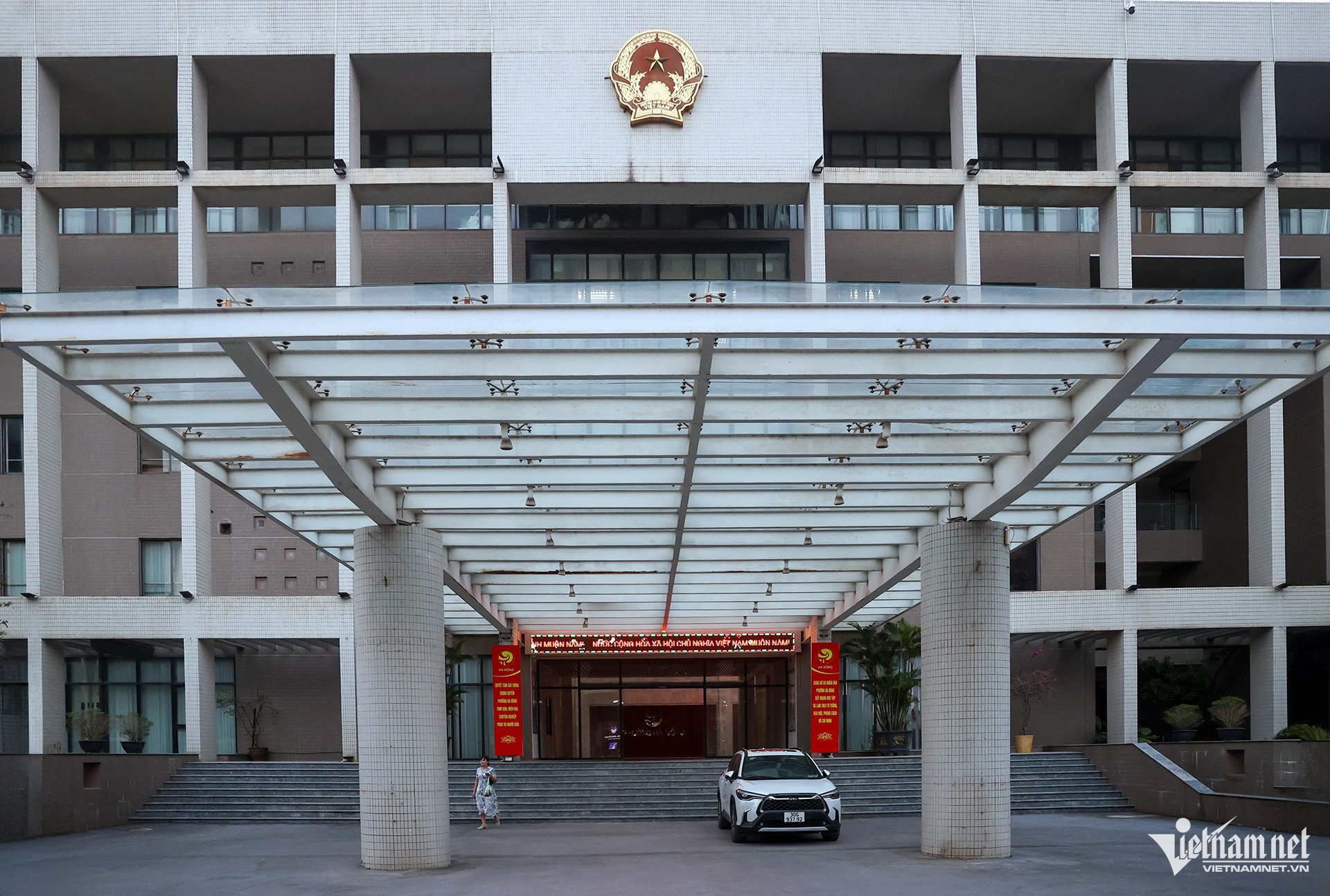
Thousands of day-to-day tasks for residents are being handled by 77 civil servants.
It was 7pm. At the headquarters of the Ha Dong Ward People’s Committee, the hallway lights were partly turned off. Behind half-closed doors, light still shone out. In one room, a female officer quickly ate a boiled egg she had brought from the morning to keep working. The other room was still nearly full. Everyone tried to keep silent so work could be finished and they could return home early.
Ha Dong is currently the most populous ward in Hanoi with more than 225,000 residents. 77 civil servants are handling thousands of tasks in this "super ward".
"Residents benefit from the two-tier local government model because many procedures that previously required a trip to the district-level government can now be completed directly at the ward office. That also means the workload for grassroots officials has increased significantly," said Nguyen Thi Thu, Deputy Chief of Office of the Ha Dong Ward People's Committee.
Before the administrative restructuring, each ward had at least one civil servant responsible for civil status registration. Now, though the ward is much larger, the combined workload is handled by just two people.
Applications no longer have to go through multiple layers
After nearly a year of operating under the two-tier local government model, Ha Dong's leaders say the most noticeable change is that the distance between government and residents has narrowed.
"I see strong public support. Many administrative procedures are being processed much faster," Tran Thi Luong An, chair of Ha Dong Ward People’s Committee, said.
The change is particularly evident in land-related procedures, traditionally regarded as among the most complicated and time-consuming.
Previously, first-time land-use right certificates had to pass through multiple administrative levels.
"The two-tier local government model has changed that. Once the ward determines that all requirements have been met, we can resolve the application immediately without sending it through multiple levels as before," An said.
Beyond land procedures, services such as notarization and business registration are also handled directly at the ward level, saving residents time and reducing administrative layers.
The phone call on the second day of Lunar New Year
While figures such as 225,000 residents and 77 civil servants illustrate the scale of the pressure, a phone call during a holiday reveals how that pressure plays out in reality.
Nguyen Thi Thu recounted the work of what colleagues informally call the "holiday death registration team."
"Families need death certificates so they can arrange funerals, cremation contracts and other final arrangements. There is no regulation requiring us to work on holidays, but when residents need help, we do our best to support them. That's why we created the holiday death registration team," Thu said.
On the morning of the second day of Lunar New Year, while many people were visiting relatives or celebrating with family, a notification appeared in the group's work chat.
A resident reported a death in the family and requested urgent registration procedures.
Within minutes, an official opened a computer, processed the application, transferred the file and contacted ward leaders for signatures.
How to retain officers?
At a recent meeting to assign responsibilities, a civil servant overseeing healthcare affairs in Ha Dong submitted a written request declining additional duties.
"I currently work 14-15 hours a day just to keep up with my existing responsibilities," he wrote in a report to ward leaders.
An said: "I deeply sympathize with my colleagues and understand the challenges they face. But the system must continue operating smoothly to serve residents."
Instead of maintaining the traditional model in which each person handled a separate area of responsibility, Ha Dong has reorganized work into teams, encouraging greater collaboration and mutual support among officials.
An stated that every transformation bears a time lag to adapt. The new apparatus requires time to consolidate personnel, perfect workflows, and shape its operation. When implementing the two-tier local government model, officials are forced to pioneer new solutions to offer better counsel and serve citizens faster.
One of the most critical pathways currently is accelerating digital transformation in state management operations, utilizing AI applications in counseling and resolving administrative procedures.
Another solution identified by Ha Dong is amplifying the role of the grassroots political system. With 115 residential clusters, over 15,700 party members, alongside a widespread network of fronts and mass organizations covering the area, the ward government expects that many tasks will be executed right from the community roots.
Thanh Hue
.svg)
