 Vietnamnet.vn

 Podcast



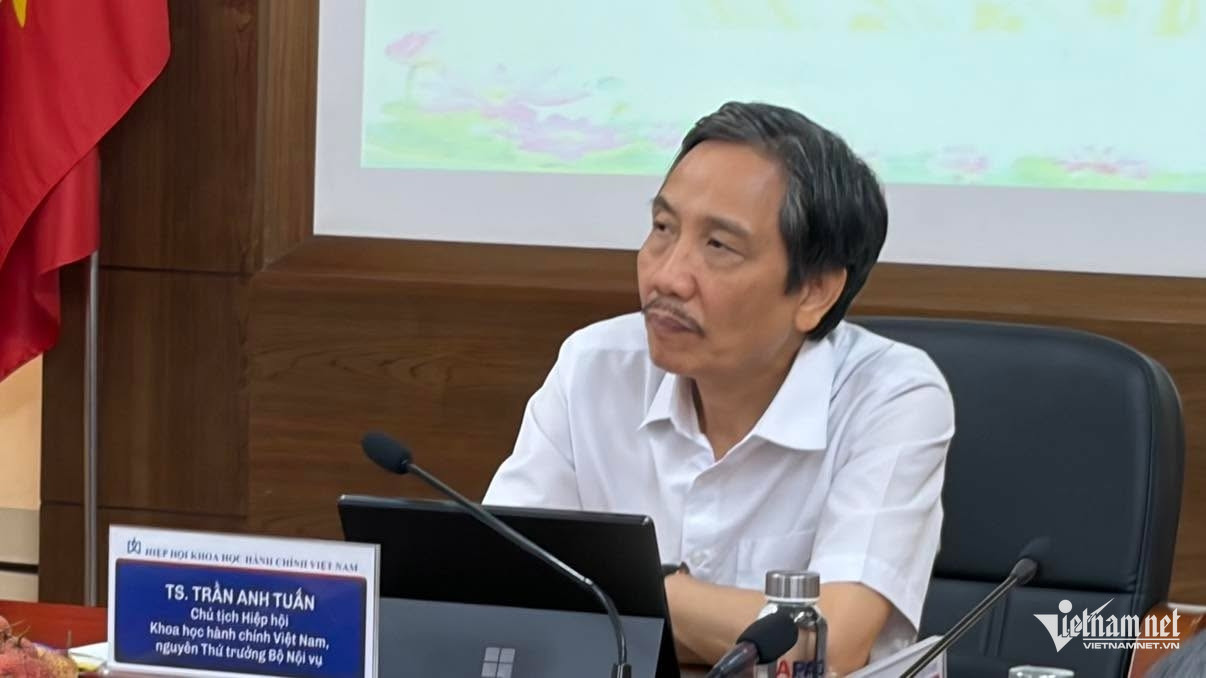
At the workshop titled "Properly Positioning Two-Tier Local Government and Emerging Issues" organized by the Vietnam Association of Administrative Sciences on June 9, participants raised questions about the current organizational structure at the commune level.
Tran Van Hai, standing vice chair of the People's Committee of An Phong Ward, Hai Phong City, said many officials are now required to handle workloads spanning multiple professional fields, including land administration, planning, urban management, finance and information technology.
In some cases, commune and ward leaders are signing land-related or planning-adjustment documents for the first time, creating hesitation, fear of making mistakes and fear of responsibility.
Nguyen Thanh Binh, secretary of the Party Committee of Hoai Duc Commune, Hanoi, said commune-level authorities currently perform nearly 1,000 tasks and handle hundreds of administrative procedures. The heavy workload often forces officials to work overtime to meet deadlines.
Sharing experience in reducing workloads at the grassroots level, Co Nhu Dung, chair of the People's Committee of Giang Vo Ward, Hanoi, argued that data must become the foundation of local governance in the new era.
Building a shared database and an intelligent operations center has significantly reduced paperwork and improved management efficiency.
Giang Vo Ward has established an Operations and Data Analysis Center (IOC) at the ward level, digitizing information ranging from population data, age demographics, health records and vaccination status to business activities of individual households.
The system allows local leaders to monitor work progress in real time. Through the operations dashboard, the ward chairman can instantly track daily tax collections, identify tax categories falling behind target and monitor disbursement progress for specific public investment projects.
All information is displayed through visual charts and dashboards, nearly eliminating the need for weekly and monthly paper reports and significantly reducing administrative pressure on professional staff.
Much work remains to be done
Prof. Dr. Phan Trung Ly, former chair of the National Assembly's Committee for Legal Affairs, said substantial work remains to achieve the Party's goal of creating a government that is closer and more responsive to the people.
One reason the two-tier local government model has not operated smoothly is that the institutional framework still contains shortcomings. Legal regulations need to be reviewed, while decentralization and delegation of authority must be clarified.
Arguing that the "concept of decentralization and delegation of power is currently being abused," he said that decentralization could be a hiding place for shifting responsibility and obscuring accountability.
He called for more delegation of authority between the central government and local administrations. This issue should be considered when amending the Constitution and laws governing local government organization.
Assoc. Prof. Dr. Nguyen Van Hau, chief of Office of the Party Committee at the Ho Chi Minh National Academy of Politics, said: "It seems the province is now becoming an intermediate tier. They are doing the routine tasks of the former district, leaving no time to focus on focus on strategic development for large provinces.”
Referring to General Secretary and State President To Lam’s call to identify bottlenecks, Hau suggested developing a set of criteria to assess the effectiveness of the three levels of government - central, provincial and commune.
The specific indicators needed to address current governance challenges should be clearly defined.
He also warned of the risk of “unofficial intermediary layers” emerging. Commune cadres are few, take on multiple roles, and carry heavy responsibilities, leading to a fear of responsibility. This leads to the formation of advisory groups and assistant boards for the province and commune, inadvertently creating an intermediate tier that bears no official accountability.
Another issue Hau raised is a new governance model operating with an old mindset. Provincial cadres returning to work at the commune level still bring a leadership mindset rather than a service-oriented mindset.
Dr. Tran Anh Tuan, Chair of the Vietnam Association of Administrative Sciences and former Deputy Minister of Home Affairs, one of the issues that must be resolved currently is properly positioning the two-tier local government model, particularly the commune level, to ensure correct perception.
After one year of organizing and launching the two-tier local government system, there is still a trend of viewing it as a mechanical subtraction of the three-tier system - simply removing the district level so only the provincial and commune levels remain.
Tran Thuong
.svg)
