 Vietnamnet.vn

 Podcast



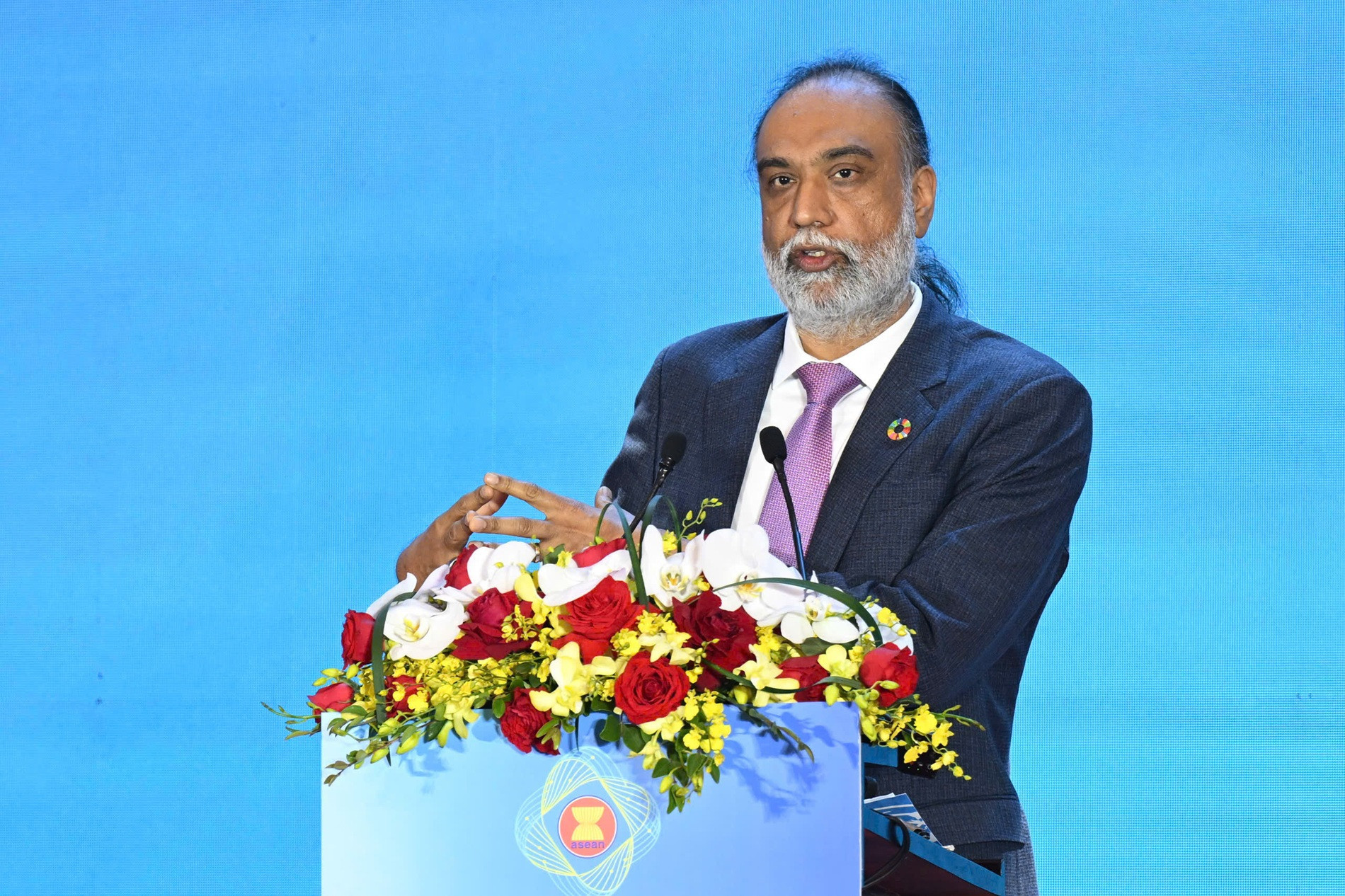
According to Amandeep Singh Gill, United Nations Under-Secretary-General and Tech Envoy, Vietnam is now among the countries leading global digital transformation, with its digital economy growing two to three times faster than the rest of its economy.
At the 6th ASEAN Digital Ministers’ Meeting (ADGMIN) held in Hanoi, Mr. Gill offered insightful remarks on Vietnam’s standing in the global digital landscape.
He stated that Vietnam is not only a leader within ASEAN, but also globally when it comes to digital transformation.
Data shows that the digital economy component of Vietnam's GDP is expanding at a pace two to three times faster than other sectors, placing the country at the forefront of digital economic development.
Of course, challenges remain - common across the region - such as uneven development and limited interoperability among digital infrastructures. However, Mr. Gill was encouraged to see ASEAN Digital Ministers actively addressing these issues through the ASEAN Digital Master Plan.
A strategic focus on AI
When asked about Vietnam’s positioning of artificial intelligence (AI) as a strategic priority, Mr. Gill affirmed the approach.
“It is absolutely the right direction. You cannot overlook AI in any serious national strategy for socio-economic transformation,” he said.
He expressed admiration for how Vietnam's Resolution 57 is being likened to the landmark ‘Khoán 10’ reform in agriculture decades ago. If ‘Khoán 10’ liberated labor and boosted food security, Resolution 57 now aims to unleash the creative potential of the Vietnamese people.
He emphasized that where national leaders are personally invested in digital transformation, progress is far more rapid. Without becoming a top government priority, such transitions are unlikely to succeed.
Building a human-centered digital ecosystem
Vietnam is mobilizing its entire political system to build the institutional and infrastructural foundations of a humane, people-centered digital ecosystem.
“That is the right approach,” said Mr. Gill. “A development-friendly path that centers on people and prioritizes infrastructure is the only viable starting point.”
He noted that if AI developers lack access to sufficient computing power and adequate data center capacity for inference tasks, the technology cannot truly function.
That’s why prioritizing infrastructure, cultivating talent, and building high-quality training datasets are all critical.
He also highlighted energy infrastructure as an equally important factor, with power availability now one of the biggest barriers to running AI systems.
“It’s encouraging to see all forms of energy being prioritized, including nuclear,” Mr. Gill said. “From the UN’s perspective, we encourage the use of renewable energy over fossil fuels to support the expansion of this field.”
Responsible AI for all
When asked how to ensure AI development remains human-centered and responsible, Mr. Gill acknowledged the dual nature of AI's power.
“It can do enormous good, but also be misused,” he cautioned. “It can negatively impact human agency and control.”
Hence, a human-centered approach is essential - one that prioritizes individual rights and benefits, while protecting privacy and data.
AI must not lead to a new concentration of wealth and power. It must not disempower communities or leave individuals behind.
“If we bring everyone along, if we develop trustworthy models that respect data and human rights, AI can unlock far greater potential for social and economic transformation,” he explained.
This is the global experience the UN observes, and one that must be reflected in every region and nation.
“At the UN, our stance is that AI must serve all of humanity, not just a privileged few. It must empower people - not strip them of power. It must boost creativity, self-expression, and productivity - not marginalize anyone.”
“In the future economy, there are hopeful signals. There is still much work to be done, but I’m always inspired when visiting Vietnam. I believe the country is well on its way.”
Strengthening cooperation between Vietnam and the UN
Mr. Gill confirmed that the UN has recently established global mechanisms for AI governance, and all member states - including Vietnam - have pledged commitments under the Global Digital Compact and are actively involved in shaping global AI policy.
The first mechanism is the Global Dialogue on AI Governance, an annual forum that will convene in Geneva this year and New York the next. Vietnam’s experiences in AI governance and recent legal frameworks will offer valuable insights to share with other countries.
“Others can learn from Vietnam’s best practices, and avoid missteps,” he noted.
Just as important is the work of the UN’s International Scientific Advisory Council on AI. Vietnamese scientists are advancing cutting-edge AI technologies, and their participation in global dialogues on AI development and impact is another vital part of this partnership.
Du Lam
.svg)
