 Vietnamnet.vn

 Podcast



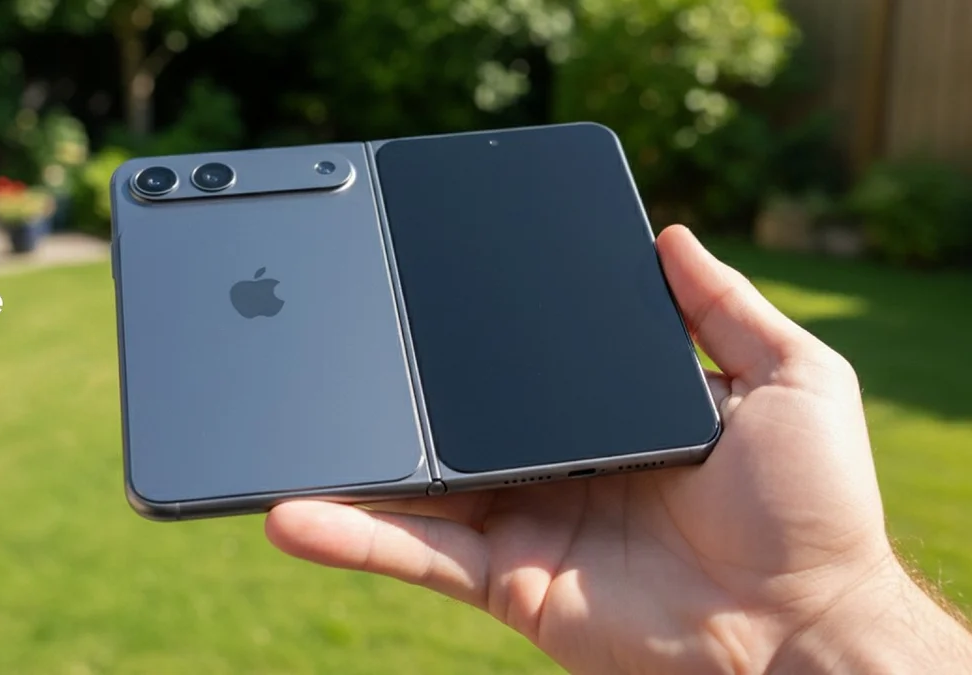
The long-anticipated foldable iPhone remains one of the most closely watched products in recent years. Yet as Apple pushes forward with its ambitious device, the project is encountering significant headwinds ahead of its expected debut.
Bringing an entirely new product category to market has never been straightforward, and Apple appears to be feeling that pressure with its first foldable iPhone, widely rumoured to carry names such as iPhone Fold or iPhone Ultra.
According to industry sources, the development process has run into a series of obstacles, raising fresh questions about both the timeline and the company’s broader production strategy.
A recent report from DigiTimes indicates that progress has slowed considerably, with the production schedule slipping by around two months compared to initial plans. While Apple has not officially communicated any delay to its supply chain partners, the adjustment signals mounting complexity behind the scenes.
The company had originally targeted June 2026 for mass production. That milestone is now expected to move to early August, largely due to technical challenges emerging during the final stages of development.
At present, the device is undergoing Engineering Validation Testing (EVT), a critical phase designed to ensure hardware and design stability before scaling up manufacturing. Known for its meticulous development standards, Apple is reportedly facing a more demanding EVT process than anticipated this time.
While these issues are not yet believed to threaten the entire project, they are clearly adding pressure to an already ambitious timeline.
Uncertainty over the launch date has also intensified. Nikkei Asia previously suggested Apple could push the debut to 2027. That view, however, was quickly challenged by Mark Gurman of Bloomberg, who maintains the device is likely to arrive alongside the iPhone 18 Pro lineup or shortly thereafter.
In reality, the schedule remains fluid. Before entering mass production, the foldable iPhone must still pass through key stages such as Design Validation Testing (DVT) and Production Validation Testing (PVT). Any disruption during these phases could further alter the timeline.
If delays persist, supply constraints at launch appear increasingly likely. This would not be unfamiliar territory for Apple, whose new products often face strong demand that outpaces early production capacity.
Complicating matters further are conflicting reports about initial production volumes. Some sources suggest Apple is preparing as many as 11 million units, while others estimate a far more conservative figure of around 3 million. The disparity points to ongoing internal deliberation over how aggressively the company should scale its first foldable offering.
Meanwhile, competition is intensifying. Huawei has already unveiled the Huawei Pura X Max, and Samsung is expected to introduce a Galaxy Z Wide Fold model, both adopting wide-format foldable designs similar to Apple’s rumoured approach.
In this increasingly crowded landscape, pricing could prove decisive. If Apple positions the device at around US$2,000, it may achieve strong demand. But should the price climb closer to US$2,500, its appeal could weaken, particularly as consumers gain access to a broader range of alternatives.
The foldable iPhone remains one of Apple’s most ambitious undertakings in years. Yet the challenges emerging during its development underline a broader reality: even a company of Apple’s scale cannot avoid turbulence when entering an entirely new segment.
Whether the device ultimately arrives in 2026 or is delayed in pursuit of perfection remains uncertain. What is clear, however, is that the race in foldable smartphones is entering a far more competitive and unforgiving phase.
Hai Phong
.svg)
