 Vietnamnet.vn

 Podcast



The UNESCO Office in Vietnam has presented certificates of commendation to 41 traditional practitioners, spirit mediums and members of Ninh Binh’s association for safeguarding and promoting the worship of the Mother Goddesses of Three Realms.
The ceremony was held ahead of the International Day of the Intangible Cultural Heritage on October 17 and marked the 10th anniversary of the tradition’s inscription on UNESCO’s Representative List of the Intangible Cultural Heritage of Humanity.
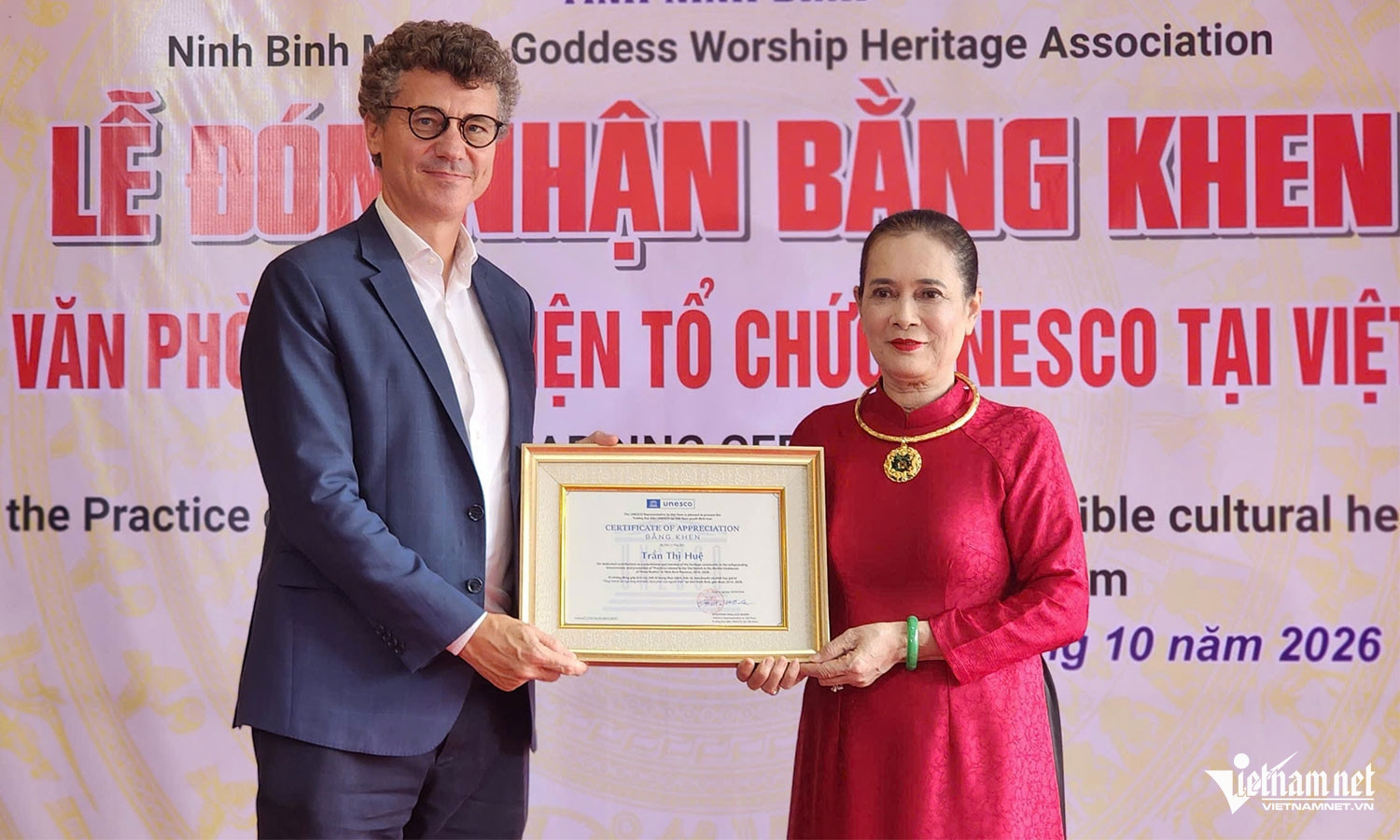
According to the office’s decision, the recipients were recognised for their sustained, practical contributions to maintaining traditional standards of practice, passing knowledge on to younger generations and guiding their communities in observing the faith’s customs.
Their work extends beyond preserving chau van, a form of ritual singing, along with music, costumes and folk knowledge. It also promotes respectful, economical observance while discouraging superstition and the commercialisation of the heritage.
Speaking at the ceremony, Jonathan Wallace Baker, UNESCO Representative to Vietnam, expressed deep appreciation for the community of heritage practitioners.
Safeguarding intangible cultural heritage is not simply about preserving traditions from the past, he said. At its heart is the responsibility to ensure those values remain meaningful in contemporary life and are passed on intact to future generations.
International recognition only has real value when heritage remains alive within its community, sustained by the dedication and knowledge of those who practise it.
Pham Thi Thanh Huong, head of the Culture Unit at UNESCO’s Hanoi office, echoed that view. She praised the Ninh Binh association’s role in connecting practitioners, sharing experience and supporting heritage safeguarding.
The commendations, she said, recognised a collective effort to preserve cultural identity and nurture a spirit of harmony, compassion and peace.
Speaking on behalf of the recipients, Tran Thi Hue, who holds Vietnam’s Meritorious Artisan title, expressed her emotion at UNESCO’s recognition of the community’s work over the past decade, from 2016 to 2026.
Hue is the chief custodian of the principal shrine at the Phu Day complex and chair of the provincial heritage association.
She said the certificate was not merely a personal honour, but an expression of respect for the entire community that sustains the tradition.
Maintaining rituals, customs and established practices, while teaching younger generations, is essential to keeping the heritage alive in everyday life, she said.
Hue added that practitioners saw the recognition as a reminder of their responsibility to keep the tradition’s flame burning, support its sustainable development and pass it on to generations to come.
Tinh Le
.svg)
