 Vietnamnet.vn

 Podcast



From traditional temples, shrines and worshipping communities to cultural spaces on digital platforms, Mother Goddess worship continues to evolve as it seeks to balance the preservation of its original values with the demands of modern life.
A decade of growing recognition for a living heritage
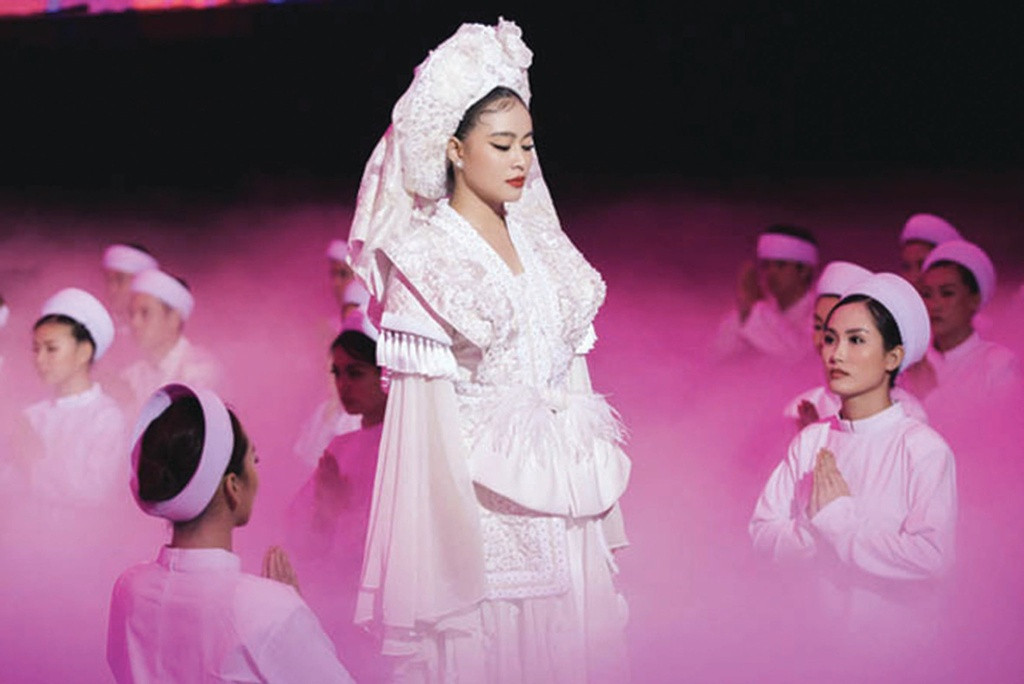
In 2016, UNESCO inscribed "Practices related to the Viet beliefs in the Mother Goddesses of Three Realms" on its Representative List of the Intangible Cultural Heritage of Humanity. A decade later, the tradition's growing reach and visibility are increasingly evident.
Once primarily associated with temples, shrines and traditional communities where rituals have been passed down through generations, Mother Goddess worship has gained a wider presence in academic research, media, cultural education and contemporary artistic expression.
People's Artist Vuong Duy Bien, president of the Vietnam Cultural Industries Development Association, said the tradition is far more than a distinctive form of folk religious practice. It embodies profound cultural and spiritual values, particularly the Vietnamese principle of remembering one's roots and honoring those who came before, respect for the role of women and a strong sense of community.
The former Nam Dinh area, now part of Ninh Binh Province, continues to hold a special place in the tradition. It is home to one of the most significant centers of Mother Goddess worship, the Phu Day temple complex, dedicated to Mother Goddess Lieu Hanh and associated with major festivals and religious ceremonies.
Such cultural spaces have played a vital role in keeping the heritage alive and ensuring its continuity within local communities.
Alongside these traditional settings, Mother Goddess worship has found new forms of expression in contemporary art in recent years. Elements of Dao Mau, the Vietnamese Mother Goddess belief system, have appeared in a range of creative works, bringing the tradition's imagery, music and symbolism closer to younger audiences.
Familiar productions such as "Co Doi Thuong Ngan," performed by traditional vocalist Kieu Anh, and singer Hoang Thuy Linh's music video "Tu Phu" have helped spark fresh conversations about the heritage in popular culture.
Through music, visual storytelling and contemporary artistic expression, elements once closely associated with temple rituals, including chau van ceremonial singing, traditional costumes and representations of the Mother Goddesses, are being experienced from new perspectives.
Beyond artistic productions, Mother Goddess worship is also becoming increasingly visible online, where social media has emerged as an important channel for younger generations to discover and engage with the tradition.
Preserving the identity behind the heritage
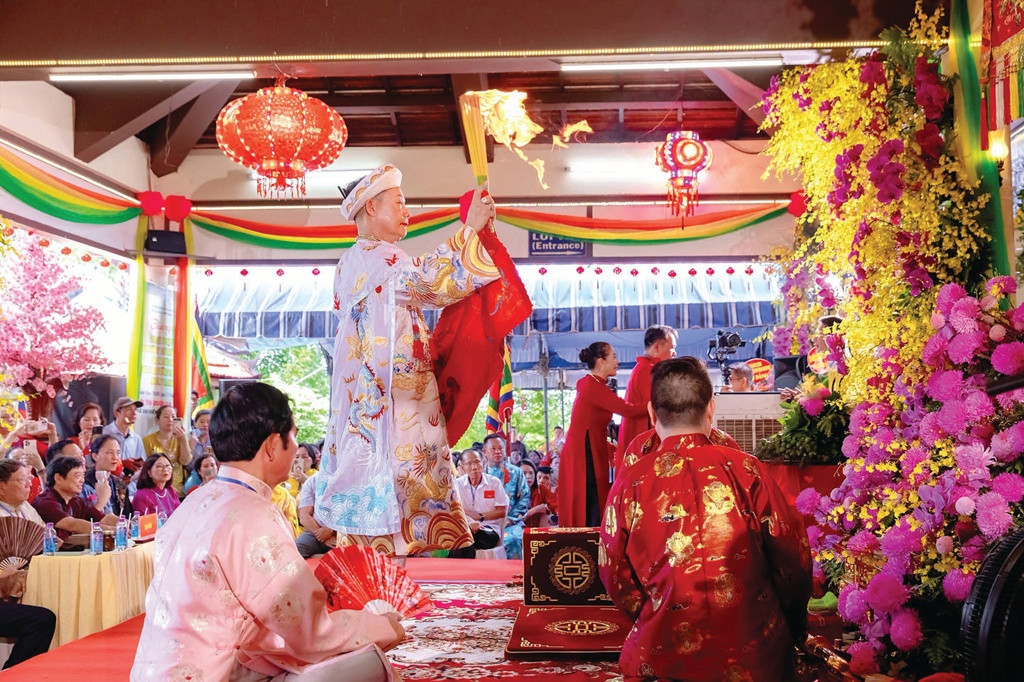
Growing public interest in the practices related to the Mother Goddesses of Three Realms reflects the vitality of a living heritage that continues to adapt within contemporary Vietnamese society.
According to Vuong Duy Bien, understanding the tradition requires a comprehensive perspective rather than reducing it to len dong, the spirit mediumship ritual most commonly associated with Mother Goddess worship.
Spirit mediumship is only one part of a much broader system of cultural practices. The tradition also encompasses costumes, music, chau van singing, festivals, sacred worship spaces and community customs deeply connected to the spiritual life of the Vietnamese people. Together, these elements give the heritage its distinctive identity.
As efforts to promote the tradition expand, the boundary between creative interpretation and the risks of theatricalization and commercialization has become an increasingly important concern.
Creative expression can be meaningful only when grounded in an understanding of and respect for the heritage's fundamental values. Innovation should not become a justification for distorting, oversimplifying or separating the tradition from the cultural settings in which it developed.
The rapid growth of digital platforms, in particular, has opened up an entirely new space for people to encounter this heritage. With just a few searches on social media, audiences can find images and videos featuring hau dong spirit mediumship ceremonies, chau van performances, ceremonial costumes and traditional temples.
This accessibility offers younger generations new opportunities to connect with Mother Goddess worship, but it also raises questions about how the tradition is presented and understood. There is a risk that its symbolic elements may be taken out of the cultural and historical contexts that give them meaning.
Online platforms tend to favor short, visually striking content that attracts immediate attention. Without sufficient context, audiences may come to know Mother Goddess worship primarily through its most colorful and spectacular images, without fully appreciating its history, cultural significance or the community values it represents.
For those directly involved in maintaining the tradition, safeguarding the heritage means more than protecting its rituals. It also requires preserving the knowledge, collective memory and methods of transmission that have sustained it across generations.
Artisans, spirit mediums, cung van ritual musicians and the communities that continue to practice Mother Goddess worship therefore remain essential custodians of the tradition, keeping alive the connection between its past and present.
Hong Phuc
.svg)
