 Vietnamnet.vn

 Podcast



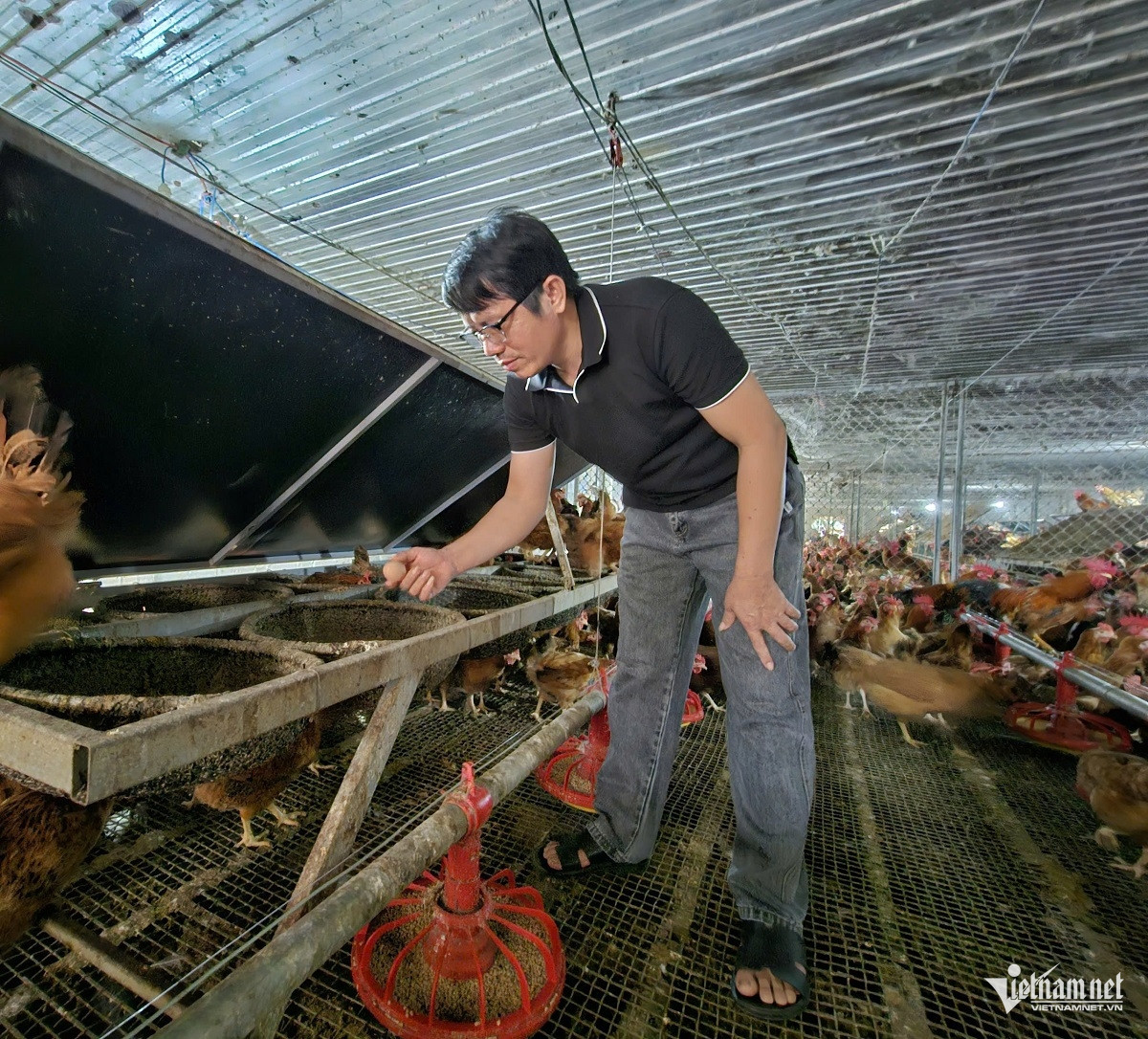
After graduating with a major in veterinary medicine in 2009, Ngoc (born in 1979), in Don village, Truong Ninh commune, Quang Tri province, went through many different jobs, from state agencies to foreign enterprises to animal feed companies.
During that time, he had the opportunity to travel to many localities to provide technical support for livestock, accumulating practical experience. Realizing the great potential of agriculture, especially local breeds, he nurtured the idea of starting a business and decided to make a turning point, focusing on developing a breeding chicken model in his hometown.
Starting his business in 2010 with about 1,000 meat chickens raised at home, he accumulated experience, applying professional knowledge to care and disease prevention processes. Realizing the potential of the local indigenous chicken breed, he focused on researching, selecting, and cross-breeding a variety suitable for local conditions and market demand.
In 2012, he leased land and spent nearly VND300 million to build a farm, a housing system, and a hatchery. Initially, the farm produced about 400 eggs per day, equivalent to more than 10,000 breeding chickens per month. With a selling price of about VND12,000 per bird, the model brought in revenue of more than VND1.4 billion/year, with a profit of nearly VND400 million.
“With the knowledge I learned along with perseverance, I cross-bred the variety based on the local free-range chicken foundation. When raised commercially, this chicken breed provides meat quality that is firm, fragrant, and characteristically sweet, so the selling price is always higher,” Ngoc said.
After many years of developing the farm, by 2017, while working for an enterprise with an income of nearly VND30 million/month, he decided to quit his job to focus entirely on the agricultural model.
As one of the pioneers in producing breeding chickens in the region from Nghe An to Quang Tri, Ngoc said: “Previously, breeding stock was mainly imported from the North; the long transport process caused high loss rates. I was determined to produce breeding stock on-site to take initiative in the supply source.”
After more than 15 years, his farm has been developed with capital of nearly VND8 billion, with a closed housing system and modern incubators on an area of nearly 1 hectare. The flock scale consists of about 9,000 laying hens and 6,000 pullets.
Each month, the farm supplies around 60,000 chicks to the market at an average price of VND13,000 per chick, generating nearly VND9 billion in annual revenue and about VND1.2 billion in profit.
To ensure quality, disease prevention process is strictly followed from parent stock to chicks. Parent chickens are fully vaccinated, eggs are carefully selected before incubation, and chicks are vaccinated against four diseases from day one before sale, helping survival rates reach up to 90 percent.
His crossbred chickens reach a market weight of about 1.6kg after four months and are favored by consumers.
Despite earning nearly VND9 billion annually, Ngoc noted that farming is not easy. Costs for feed, electricity, and vaccines are high, with vaccines alone costing over VND1 billion per year and electricity more than VND600 million.
“Agriculture does not bring high profit margins and requires persistence and attention. A small mistake can cause major losses, even billions of dong due to disease,” he said.
The farm currently provides stable jobs for about 10 local workers with monthly incomes of VND8–9 million, contributing to rural economic development.
A representative of the Truong Ninh Farmers’ Association said Ngoc’s chicken breeding model is one of the most effective production models in the locality. It not only generates high income for his family but also creates jobs for rural workers and supplies quality chicks to farmers within and beyond the province.
“We highly appreciate Ngoc’s initiative in researching and breeding native chickens suited to local conditions. This is a sustainable direction that should be replicated in the future,” the representative said.
Ha Nguyen
.svg)
