 Vietnamnet.vn

 Podcast



Many of the witnesses attending a recent workshop on locating and verifying mass graves of soldiers who died during the 1968 Tet Offensive shared a common feeling: the memories remain as vivid as if the events had happened yesterday.
Although they come from vastly different backgrounds, a former US serviceman, local residents and wartime witnesses all carry unforgettable recollections of burial trenches where hundreds of fallen soldiers were laid to rest.
An unanswered letter and a half-century journey
On April 5, 1967, US soldier Robert Ambrose Connor arrived in Vietnam believing he was carrying out an important mission. Yet what he witnessed on the battlefield soon led him to question the purpose of the war.
While serving along the eastern perimeter of Bien Hoa Air Base, he repeatedly found himself in dangerous situations. His perspective began to change after a mortar and rocket attack on the base on May 12, 1967.

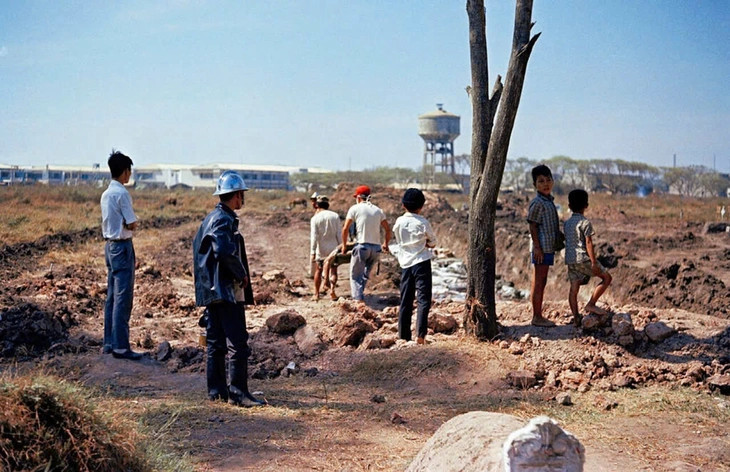
On the night of January 31, 1968, when the Tet Offensive erupted, Connor was assigned to a water tower at Bien Hoa Air Base, where he monitored and identified incoming artillery attacks. During more than 12 hours of fierce combat, two of his comrades were killed, including his commanding officer, who died beside him.
Watching opposing soldiers fight with extraordinary determination changed the way he viewed the conflict.
After leaving Vietnam in April 1968, Connor carried with him memories of several mass graves he had known about. At one point, he wrote a handwritten letter to the Vietnamese consulate in the United States, providing coordinates for a grave site in Bien Hoa. The letter received no response.
In October 2016, while helping his granddaughter prepare a school presentation about Vietnam, he revisited old locations using Google Earth and left a note containing the coordinates.
Just 10 days later, he received an email from Vietnam requesting additional information.
From that moment, he began working closely with veterans, witnesses and Vietnamese authorities in efforts to locate the remains of fallen soldiers.
Over the years, Connor quietly became an important source of information, helping authorities identify several mass burial sites across Vietnam.
On April 13, 2017, a mass grave in Bien Hoa was excavated at the exact coordinates he had provided. More than 80 sets of remains were recovered. Twelve soldiers were later identified through tattoos, personal belongings and letters that had survived decades underground.
“Their deaths were not in vain. They helped create the Vietnam of today,” Connor said emotionally.
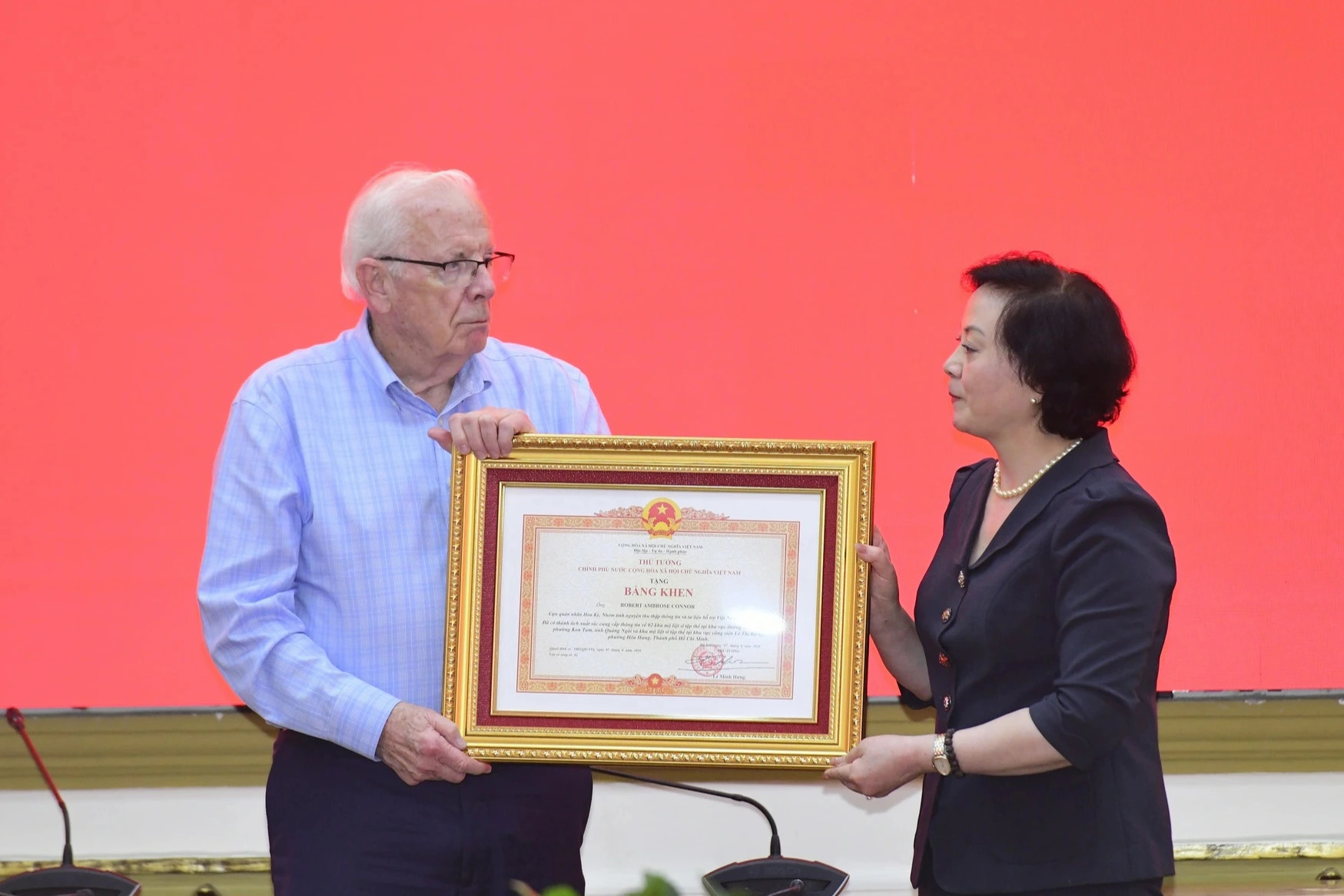
Nearly 60 years after first arriving in Vietnam as a US soldier, he has returned to help search for those who never came home.
The volunteer group he works with continues to investigate additional mass grave sites in Bien Hoa and other localities.
“Throughout this journey, I have realized that time itself is one of the greatest challenges. Historical witnesses are growing older and memories gradually fade,” Connor said.
Drawing from that experience, he called for greater use of modern science and technology in the search and identification process, as well as stronger international cooperation to ensure no remaining clues are overlooked.
“For the families, it is time for this to end - and to end properly. They deserve that,” the veteran said, struggling to hold back emotion.
The unforgettable memories of a 12-year-old boy and a cemetery caretaker
Although decades have passed, the memories remain deeply etched in the minds of those who once stood only a few steps away from the burial trenches.
One of them is Nguyen Thanh Phuoc, born in 1956 and currently living in Xuan Thoi Son Commune, Ho Chi Minh City.
Speaking with VietNamNet, Phuoc said he grew up in the Bac Hai residential area and later spent more than 20 years working at Le Thi Rieng Park after national reunification.
In 1968, he was only 12 years old.
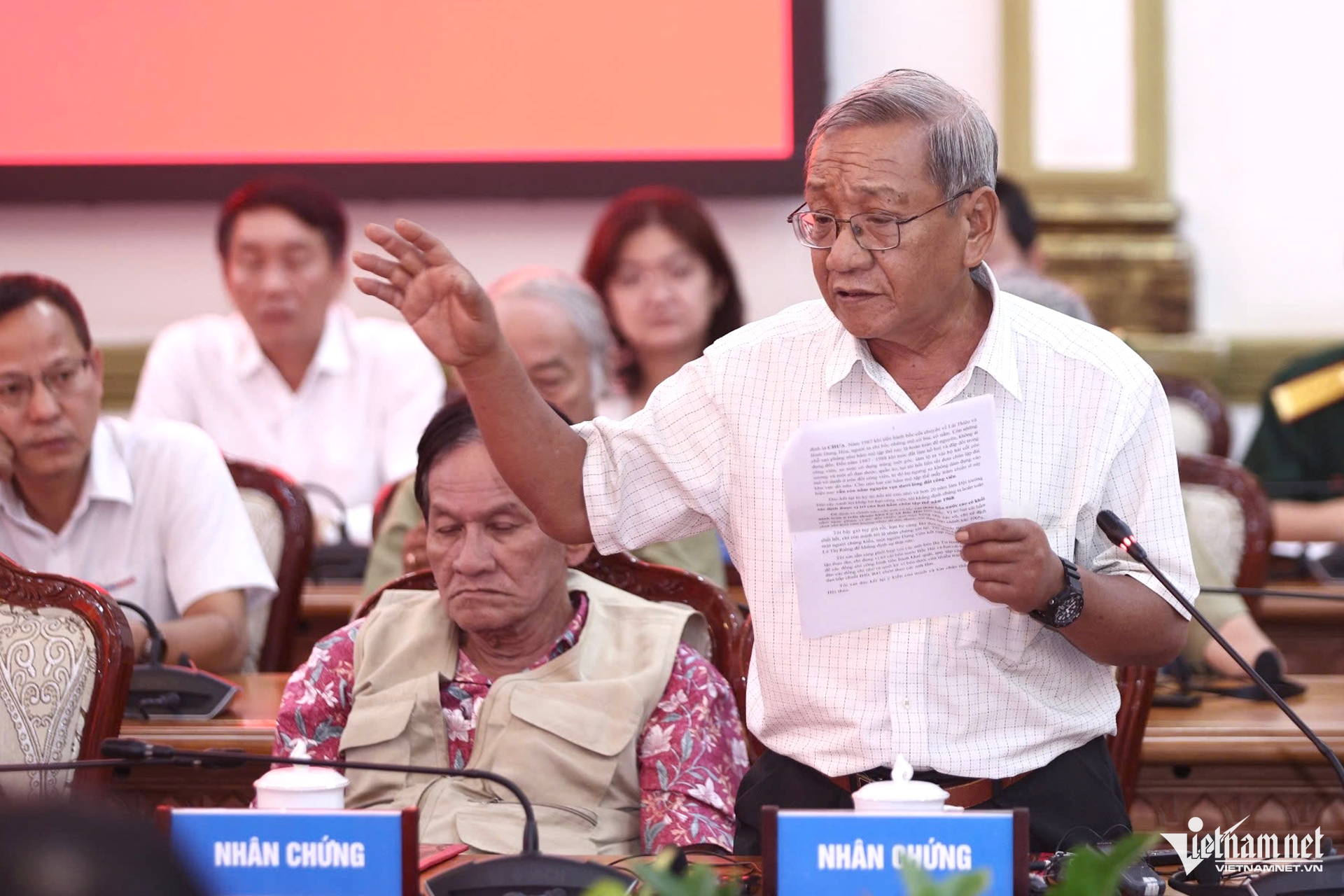
At around 9 or 10 a.m. on February 12, he and several neighborhood children went to play at Chi Hoa Cemetery, where they unexpectedly witnessed the mass burial of soldiers who had died during the Tet Offensive.
“The smell was impossible to describe. I had to cover my nose with my shirt,” he recalled. “I saw military engineers dig three large trenches. Bodies were transported by trucks and fire engines and buried in layers. Each trench was about four meters wide and 50 meters long. What stood out was that each layer of bodies was separated by wooden planks roughly two centimeters thick.”
According to information he later heard from cemetery staff, many of the bodies had been brought from battles around the Saigon Radio Station and the US Embassy area.
Some wore white shirts and black trousers and appeared to be very young.
Only two of the trenches were ultimately used for burials. The third remained empty and later filled with water, becoming a place where local children swam and caught fish and crabs.
During the clearance of Chi Hoa Cemetery in 1983, only marked graves were exhumed. The mass burial trenches, which had already been covered over, were left untouched.
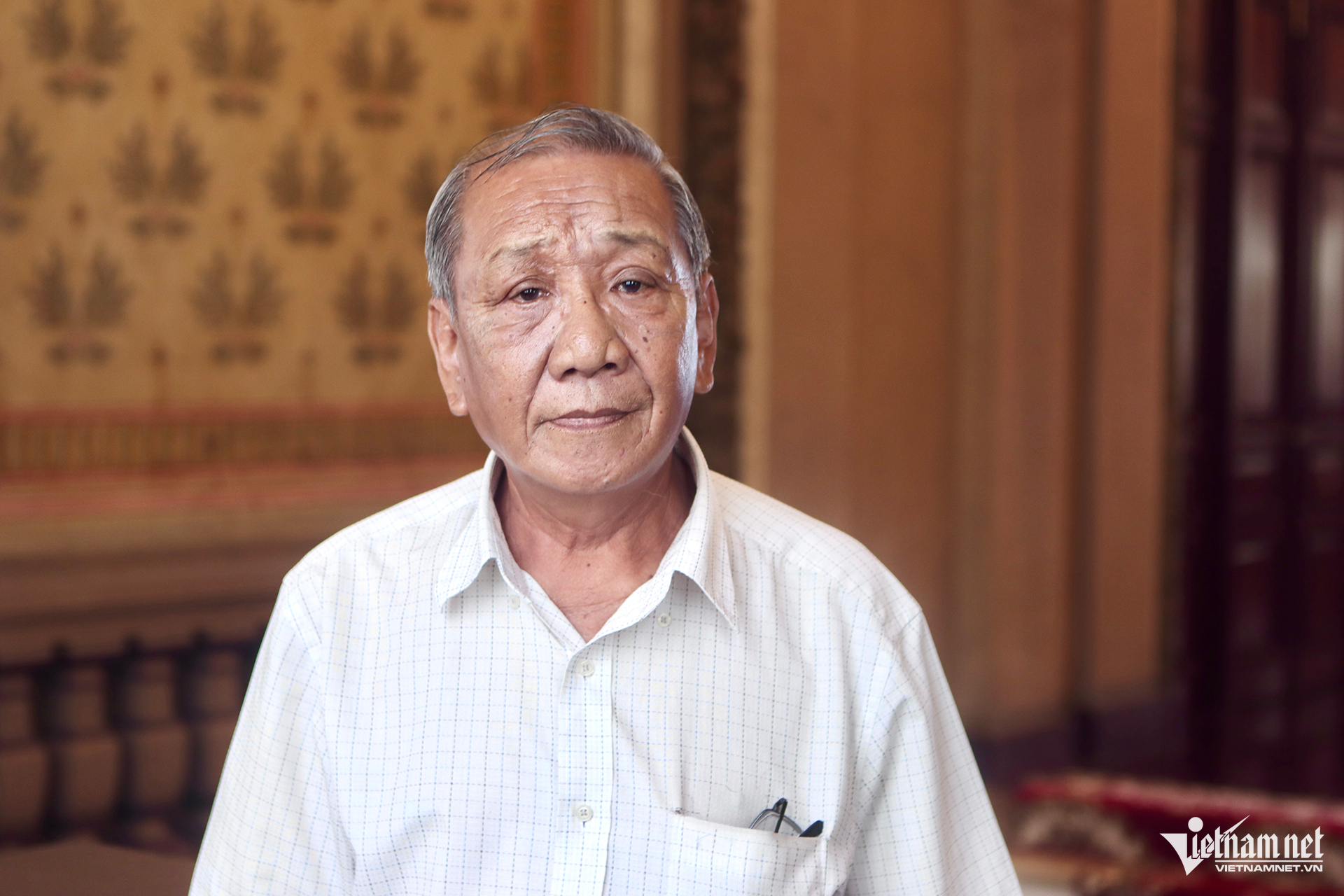
Another witness, Phan Van Mua, born in 1963 and a resident of Hoa Hung Ward, spent many years living near the former Chi Hoa - Cho Quan Cemetery.
During the early 1970s, he frequently played in the area and heard adults speak about a site near a water-filled pit where many people had been buried together.
In 1982, Mua entered military service. After returning home in 1985, he found that the cemetery had been completely cleared.
In 1987, he joined the urban services company of the former District 10 and worked as a security guard at the former cemetery site during construction of Le Thi Rieng Park.
“While workers were excavating the lake area, bulldozers exposed human remains, including bone fragments, clothing, ammunition belts, rubber sandals and even a grenade,” Mua recalled. “I personally helped collect and clean some of the remains that were discovered. Once the remains and unexploded ordnance were found, construction immediately stopped in that area.”
Around 1993, an overseas Vietnamese visitor came to the park and showed him a historical photograph depicting rows of bodies laid out inside a burial trench.
“He only said, ‘I want you to know the truth,’ and then put the photo away. He would not let me keep it. I still regret that today,” Mua said.
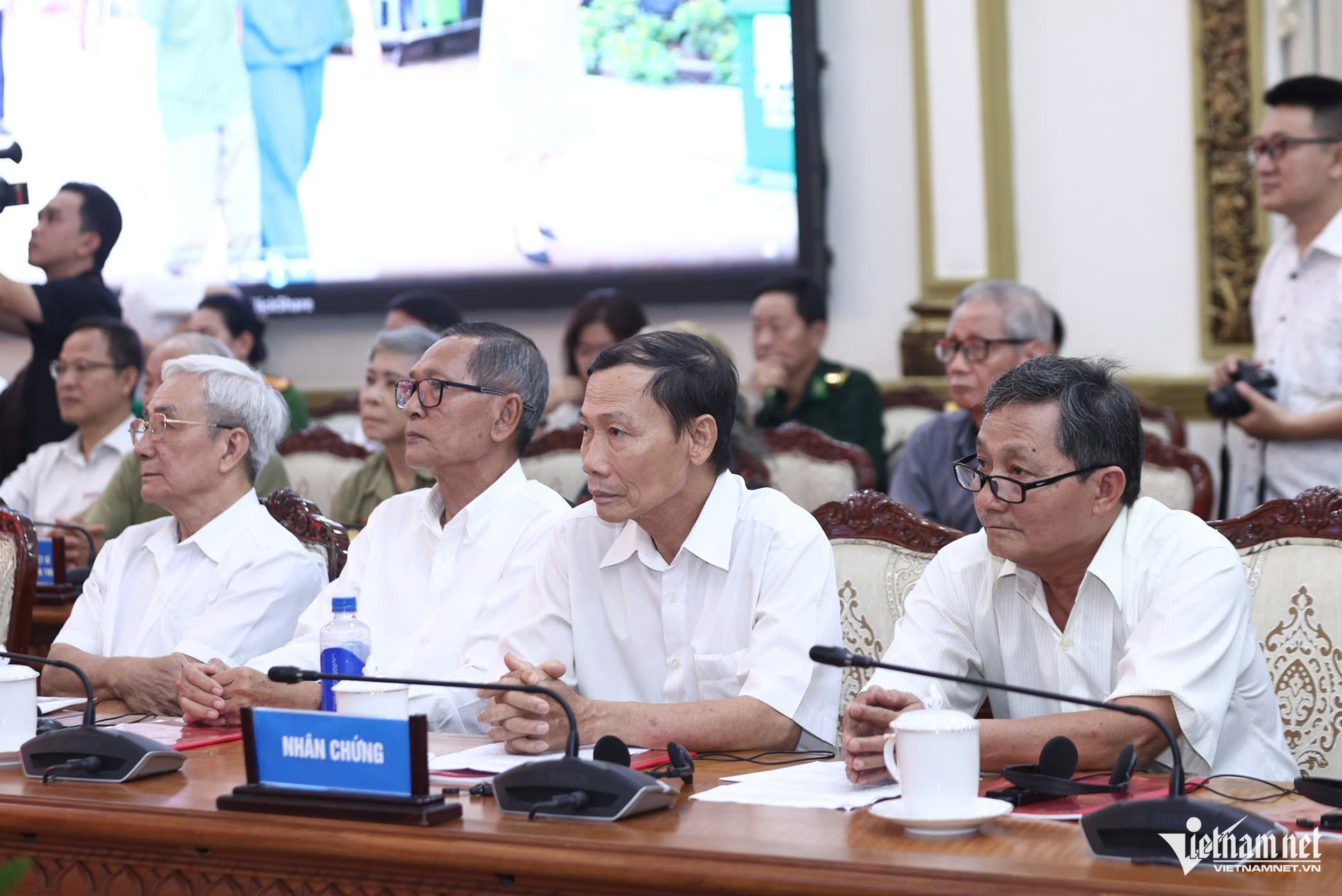
He also provided investigators with additional landmarks, including a large cross, a water tower, an alley connecting the cross to Bac Hai Street that still exists today, sections of an old wall and a large rain tree located behind the monument dedicated to former Party General Secretary Tran Phu.
Along with other witnesses, both Phuoc and Mua believe that most of the remains buried in the mass trenches from 1968 have yet to be recovered.
Though now advanced in age, they say they remain ready to accompany authorities to the sites and identify the locations they personally witnessed decades ago.
Their hope is that the fallen soldiers can finally return to their families and comrades after nearly 60 years beneath the earth.
Phuoc Sang
.svg)
