 Vietnamnet.vn

 Podcast


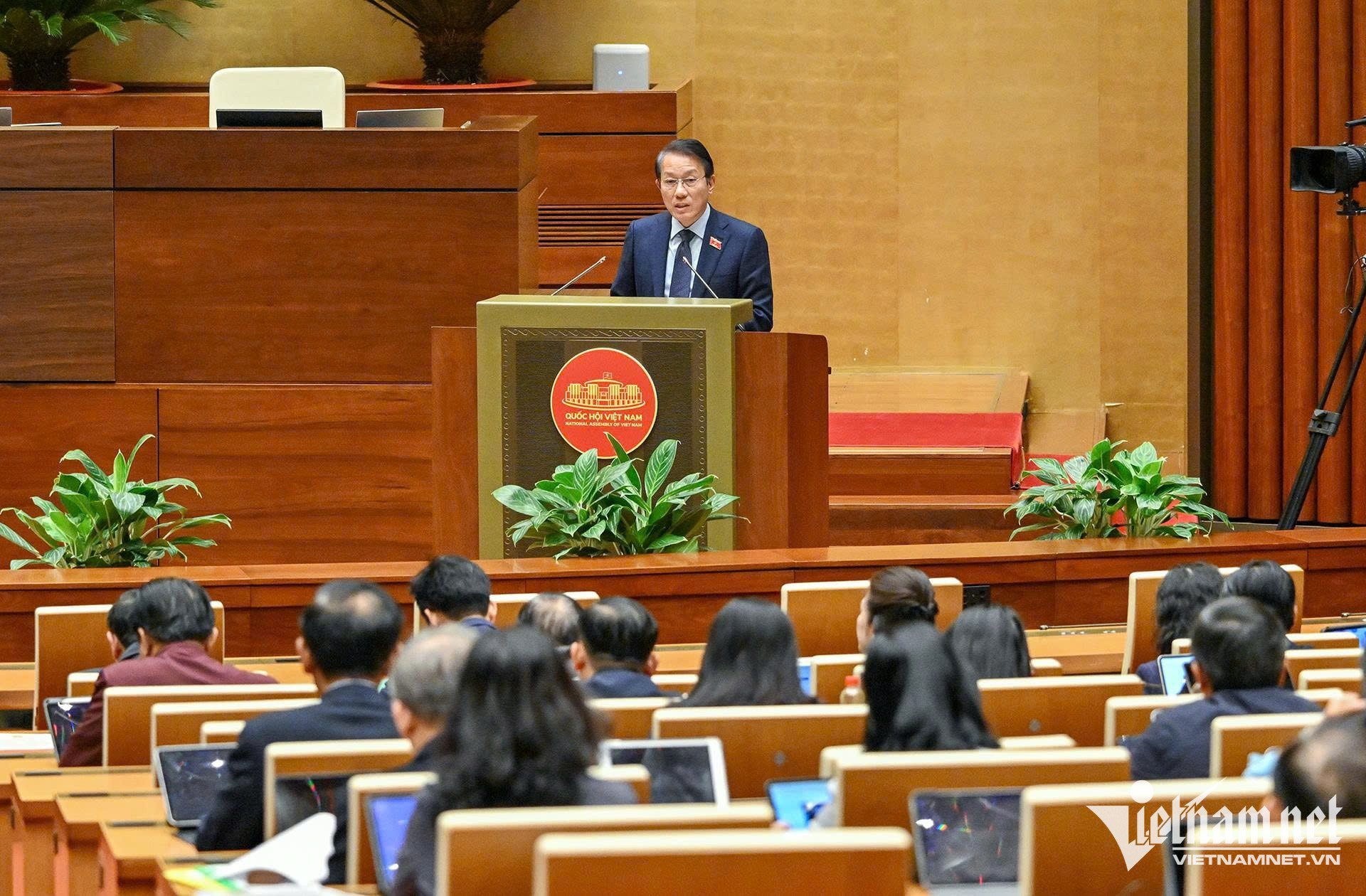
On November 20, the National Assembly passed the revised Law on the Organization of Criminal Investigation Agencies, with 458 of the 467 deputies present voting in favor. The law will take effect on March 1, 2027.
Under the revised law, Vietnam's criminal investigation system will comprise investigative agencies within the People's Public Security and the People's Army. Unlike the current legislation, it will no longer include an investigative agency under the Supreme People's Procuracy.
The law specifies that investigative agencies within the People's Public Security will include the Ministry of Public Security's Security Investigation Agency and Police Investigation Agency, along with security investigation agencies and police investigation agencies at the provincial level.
The Minister of Public Security will determine the organizational structure of these agencies.
Within the People's Army, investigative bodies will include the Ministry of National Defense's Security Investigation Agency, security investigation agencies at military-region level and equivalent units, the ministry's Criminal Investigation Agency, criminal investigation agencies at military-region level and equivalent units, and regional criminal investigation agencies.
The Minister of National Defense will determine the organizational structure of military investigative agencies.
Before the law was passed, the National Assembly's Committee for Legal and Judicial Affairs proposed more specific provisions setting maximum numbers for investigation departments, investigation divisions, specialized divisions, investigation teams, specialized teams and administrative support units within police and military investigative agencies.
No need to set limits on investigative units
In its report responding to lawmakers' comments, the government explained that, under Communist Party of Vietnam's regulations, the organizational structures of the Ministry of Public Security and the Ministry of National Defense must be submitted to the Politburo for consideration.
Based on the Politburo's conclusions, the government will issue decrees governing the organizational structures of the two ministries.
The Ministers of Public Security and National Defense will subsequently determine which units within their respective ministries are responsible for conducting criminal investigations.
The government therefore considers it unnecessary to specify maximum numbers of investigation departments and divisions within police and military investigative agencies.
The revised law also identifies agencies authorized to carry out certain investigative activities.
Within the Border Guard, these include the Reconnaissance Department, the Drug and Crime Prevention and Control Department, reconnaissance units, specialized drug and crime prevention units, Border Guard commands, border guard stations and border guard commands at port border gates.
For the Vietnam Coast Guard, authorized units include the Coast Guard Command, regional Coast Guard commands, the Operations and Legal Affairs Department, reconnaissance units, specialized anti-drug crime units, flotillas, squadrons and operational teams.
Within Customs, the authorized bodies include the Anti-Smuggling Investigation Sub-Department, the Post-Clearance Inspection Sub-Department, regional customs authorities and border-gate customs offices.
Forestry agencies authorized to conduct certain investigative activities include the Department of Forestry and Forest Protection, regional forest protection sub-departments, provincial forest protection sub-departments and district-level forest protection units.
In the fisheries sector, the Department of Fisheries and Fisheries Surveillance and regional fisheries surveillance sub-departments are also granted authority to conduct certain investigative activities.
Within the People's Public Security, the authorized bodies include the Cybersecurity Department, the Immigration Department and specialized security departments under the Ministry of Public Security.
At the provincial level, these include cybersecurity divisions, immigration divisions and other specialized security divisions.
Other authorized police units include the Traffic Police Department, the Fire Prevention, Fighting and Rescue Police Department, the Environmental Crime Prevention and Control Police Department, provincial traffic police divisions, provincial fire prevention, fighting and rescue police divisions, and prisons.
Within the People's Army, prisons and independent regimental-level units or equivalent formations are also authorized to carry out certain investigative activities.
Procuracies to oversee compliance with criminal investigation laws
Although the Supreme People's Procuracy will no longer have its own investigative agency, the revised law retains the procuracies' responsibility for supervising compliance with the law during criminal investigations.
This oversight is intended to ensure that investigative agencies and other bodies authorized to conduct certain investigative activities comply with the Criminal Procedure Code and the revised Law on the Organization of Criminal Investigation Agencies.
Procuracies must promptly identify violations during criminal investigations and issue requests or recommendations requiring the relevant investigative bodies to remedy them.
Investigative agencies and other authorized bodies must comply with procuracies' requests and decisions in accordance with the Criminal Procedure Code.
They must also consider, address and respond to recommendations from procuracies as required by law.
Tran Thuong

