 Vietnamnet.vn

 Podcast


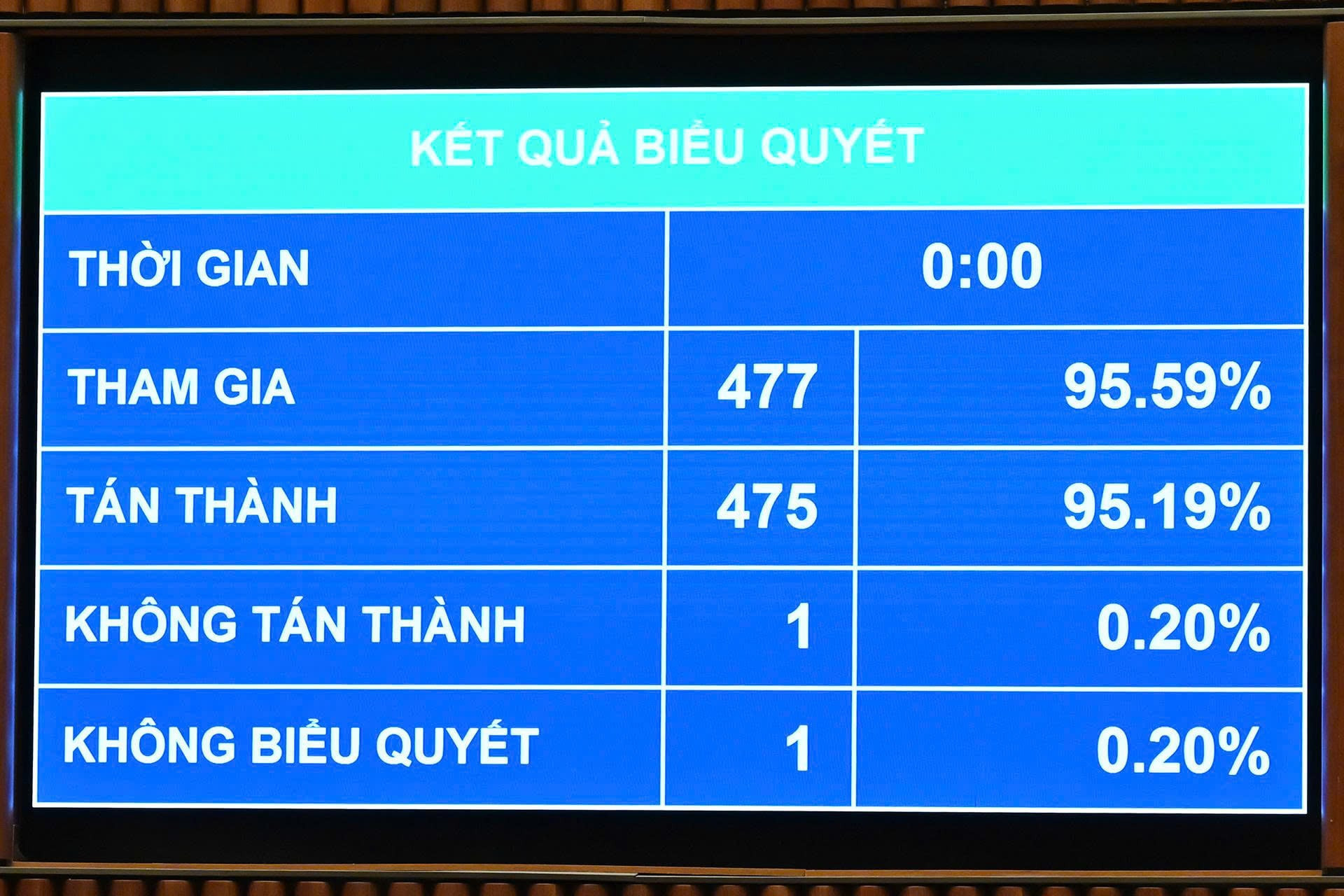
The amendments to the laws on corporate income tax, non-agricultural land use tax and personal income tax were approved by 475 of 477 National Assembly deputies, accounting for 95.19% of the total number of deputies.
Lawmakers also passed amendments to the Investment Law and the revised Law on International Agreements during the afternoon session.
Under the amended Law on Non-Agricultural Land Use Tax, abandoned land will be subject to a uniform tax rate of 0.2%, regardless of the area involved.
This means the entire area of land left unused or not brought into use within the required timeframe will be taxed at 0.2%, without benefiting from lower rates applicable to land within prescribed limits.
The classification of abandoned land will be determined in accordance with land legislation.
The amended law also introduces a 0.15% tax rate for land used for unauthorised purposes.
While the legislation will generally take effect on January 1, 2027, the provisions concerning abandoned land and land used for improper purposes will come into force on July 1, 2027.
Tax measures aimed at discouraging land abandonment
The Government said abandoning land is prohibited under Vietnam's land legislation and requires a coordinated response involving several policy instruments.
Land use taxation will serve as an independent financial measure alongside economic tools, such as additional land use fees and land rental charges, and administrative measures, including penalties and land recovery.
According to the Government, the new tax provisions are consistent with the existing legal framework governing land management and align with national policy objectives.
To ensure the measures can be implemented effectively, the Government said the draft amendments to the Land Law include provisions defining abandoned land and establishing the responsibilities of People's Committees at different administrative levels.
These authorities will be responsible for inspecting, identifying, preventing and addressing cases of land abandonment.
Under the proposed definition, abandoned land refers to land allocated or leased by the State that has not been brought into use or whose use has been continuously delayed for a specified period.
The Government also addressed the need to clarify assessment criteria, timeframes and competent authorities before July 1, 2027, while considering exemptions for cases involving force majeure or objective obstacles.
For land allocated to investment projects but left unused or brought into use behind schedule, the draft Land Law amendments propose additional land use fees or rental charges that increase progressively each year, on top of existing financial obligations.
If an investor fails to bring the land into use after more than 60 months, the State will recover the land.
Tax exemptions for meal providers at schools and hospitals
The newly approved tax amendments also introduce corporate and personal income tax exemptions for businesses and individuals providing meals to educational institutions and healthcare facilities.
Under the provisions, companies supplying meals to educational institutions and medical examination and treatment facilities will be exempt from corporate income tax on income generated from those services.
The exemptions apply to meal services provided to institutions operating under legislation governing general education, vocational education, higher education and medical examination and treatment.
Resident individuals earning income from businesses supplying meals to eligible educational and healthcare facilities will also be exempt from personal income tax on that income.
Tran Thuong

