 Vietnamnet.vn

 Podcast



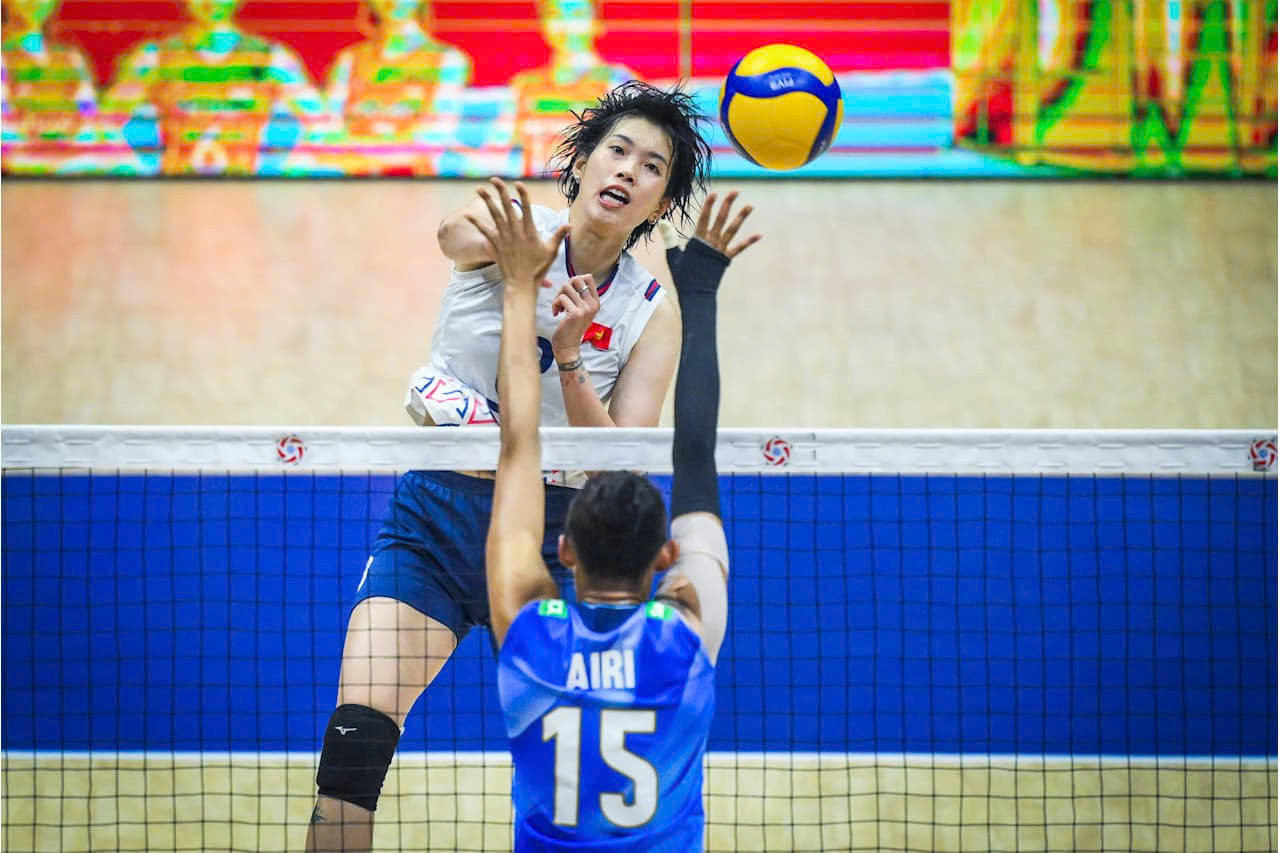
Vietnam entered the opening set with confidence, showing little hesitation against one of the leading contenders for the continental title. Thanh Thuy and Nhu Anh repeatedly found ways through the Japanese defense, helping their team stay close during an evenly contested start.
Japan gradually began to impose themselves and moved into a 17-13 lead, with their powerful serving putting considerable pressure on Vietnam’s reception. The Vietnamese players, however, refused to allow the four-point deficit to decide the set.
Thanh Thuy continued to lead from the front, while her teammates maintained their intensity in defense and at the net. Vietnam patiently worked their way back into contention and pushed Japan deep into the closing stages.
Facing set point, Vietnam showed remarkable persistence to save two opportunities for Japan to close out the set. Their comeback ultimately fell just short, however, as Japan held their nerve to win 25-23.
The narrow opening-set defeat nevertheless gave Vietnam encouragement. They had demonstrated that they could compete point for point with a technically accomplished Japanese side and, crucially, had already accumulated 23 points toward their qualification target.
Vietnam again made a positive start to the second set, with Thanh Thuy and Nhu Anh contributing important points as the team attempted to maintain the pressure established in the opener.
Japan soon responded by raising the tempo. Their serving became increasingly difficult for Vietnam to handle, while their disciplined defense repeatedly kept rallies alive and allowed them to turn defensive situations into attacking opportunities.
As the set progressed, Japan’s greater consistency began to tell. They opened up a significant advantage and prevented Vietnam from producing the kind of late comeback that had made the first set so close.
Vietnam continued to fight for every point, knowing that even in defeat, their overall points tally could determine whether they remained in the tournament. Japan eventually took the second set 25-17, leaving Vietnam with 40 points from the opening two sets.
That meant the third set carried significance far beyond the immediate scoreline. Vietnam needed only one more point to reach the required threshold and keep their quarterfinal hopes alive.
The decisive moment came almost immediately. Nhu Anh attacked off the Japanese block and sent the ball out of reach to score Vietnam’s opening point of the third set. It was Vietnam’s 41st point of the match and effectively secured their qualification for the quarterfinals.
With that milestone reached, Vietnam continued to compete rather than simply settle for qualification. Thanh Thuy and her teammates repeatedly troubled Japan and remained within striking distance as the set developed.
Japan, however, maintained the composure and stability that had carried them through the match. Their combination of effective serving, strong floor defense and controlled attacking allowed them to stay ahead when Vietnam threatened to close the gap.
Vietnam kept pushing until the final stages, with Thanh Thuy continuing to provide a focal point in attack. The Japanese side ultimately proved too consistent, taking the third set 25-21 and completing a 3-0 victory.
The straight-sets defeat did not fully reflect the resistance Vietnam offered, particularly in the opening and third sets. Against one of Asia’s strongest teams and a leading championship contender, Nguyen Tuan Kiet’s players forced Japan to work for the victory while collecting the points they needed for their own objective.
Vietnam finished the match with 61 points, comfortably surpassing the total required to remain ahead of their rivals in the race for a place among the tournament’s final eight.
Their qualification came after a closely contested battle among the third-placed teams. Kazakhstan’s performance against Thailand had increased the pressure on Vietnam ahead of their final group match, making the points ratio particularly important.
Before facing Japan, Vietnam still controlled their own destiny. Victory by any scoreline would have guaranteed progress, while taking one or two sets from Japan would also have left them in a strong position through the tournament’s tiebreak criteria.
Even a 3-0 defeat offered a route through, provided Vietnam could score enough points to finish ahead of Kazakhstan and Chinese Taipei on the relevant points ratio. That scenario ultimately unfolded.
Vietnam finished ahead of Kazakhstan to qualify as one of the two best third-placed teams, turning what could easily have been a disappointing straight-sets loss into a significant result for their championship campaign.
The achievement was particularly encouraging given the quality of the opposition. Japan entered the match as one of the strongest teams in the competition, renowned for their speed, disciplined defense and consistency.
Vietnam had come into the encounter with confidence after recording a 3-0 victory over Hong Kong, China. That result kept their hopes of progressing alive but left them facing a far more demanding challenge against Japan in their final group-stage appearance.
Coach Nguyen Tuan Kiet’s side knew they would have to minimize mistakes, maintain concentration and take advantage of every scoring opportunity. Against an opponent of Japan’s caliber, even short lapses could quickly translate into significant deficits.
Vietnam responded with the fighting spirit required. Although they were unable to take a set, the 23 points scored in the opener and 21 in the third illustrated their ability to remain competitive against a continental powerhouse.
Thanh Thuy once again played an important role as captain, contributing in attack and helping Vietnam repeatedly break Japan’s scoring runs. Nhu Anh was also influential, including with the third-set point that mathematically put Vietnam over the qualification threshold.
For Vietnam, the result therefore carried considerably more meaning than the 0-3 scoreline suggested. The immediate objective was not simply to defeat Japan but to do enough across the match to preserve their place in the tournament, and the team accomplished precisely that.
Reaching the quarterfinals represents an encouraging achievement for Nguyen Tuan Kiet and his players at this year’s Asian championship, particularly after navigating a group-stage campaign in which every set and ultimately every point carried significance.
The challenge will become even greater in the knockout stage. Vietnam are highly likely to face hosts China in the quarterfinals, setting up another demanding encounter against one of the continent’s leading volleyball nations.
Whatever awaits them in the next round, Vietnam’s performance against Japan demonstrated their willingness to compete under pressure. They may have left the court without a set victory, but they had achieved the result that mattered most: a place among Asia’s final eight.
Thien Binh
.svg)
