 Vietnamnet.vn

 Podcast



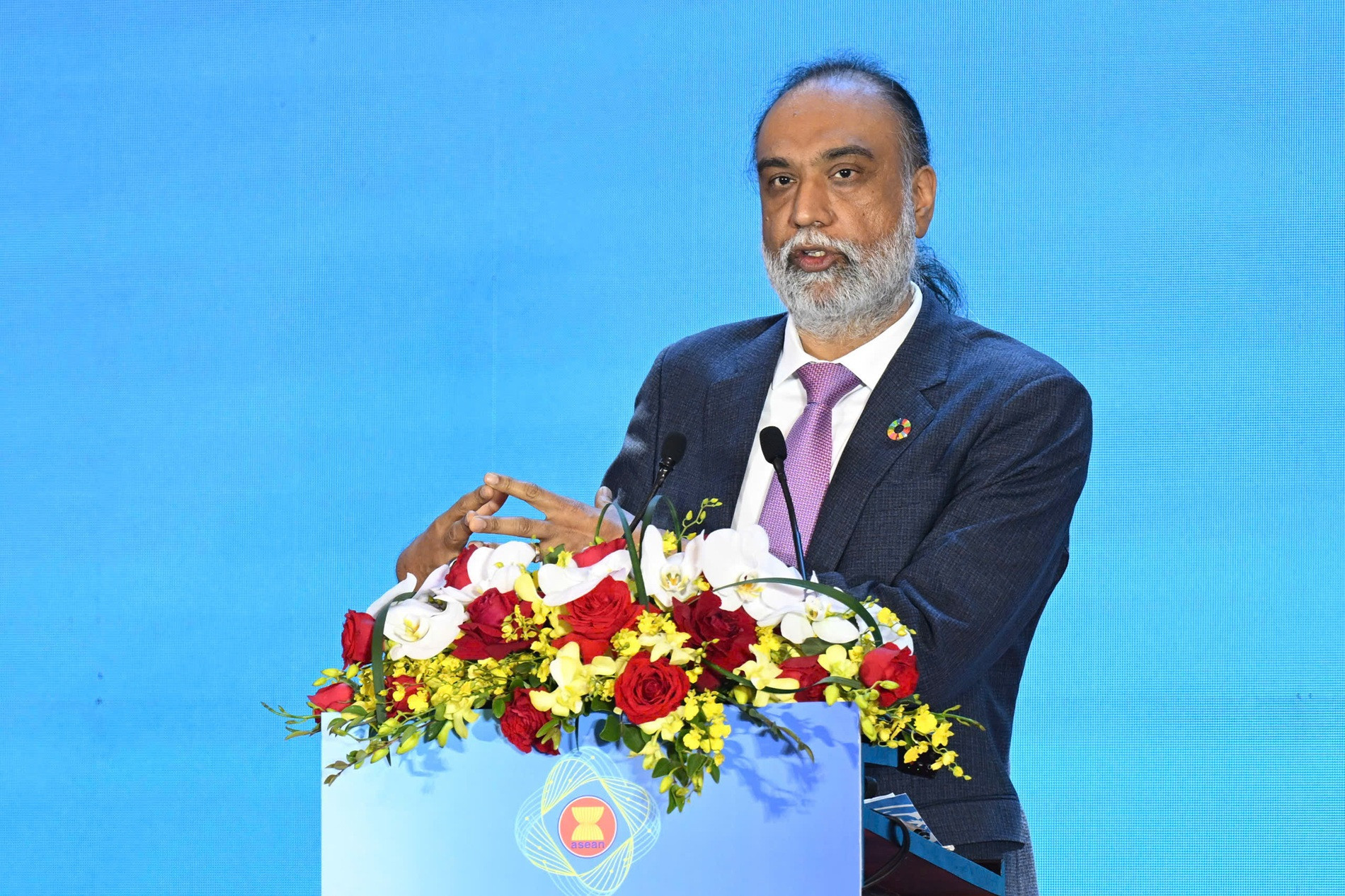
At the 6th ASEAN Digital Ministers' Meeting (ADGMIN) held in Hanoi, he provided insights into Vietnam's position on the world digital map. VietNamNet recorded Amandeep Singh Gill’s remarks to the press on the sidelines of the ADGMIN conference held some days ago:
In the context of strong global digital transformation, how do you assess Vietnam's position and development speed compared to other countries in the region and the world?
Vietnam is one of the leading countries in digital transformation, not only within the ASEAN region but also on a global scale. Data show that the digital economy component within Vietnam’s overall economy is growing two to three times faster than the rest.
Of course, there are still common regional challenges such as uneven development or the interoperability between digital infrastructures. However, I am very pleased to see these issues being prioritized by ASEAN Digital Ministers through the ASEAN Master Plan.
Vietnam identifies AI as one of the key strategic technologies. Do you have any comments on this strategy?
That is an entirely correct direction. We cannot ignore AI in any serious national strategy for socio-economic transformation. I am deeply impressed to hear the comparison of Resolution 57 to the previous "Khoan 10" (Contract 10) policy.
If "Khoan 10" liberated labor, boosted agricultural productivity, and ensured food security, Resolution 57 aims to unleash the immense creative potential of the Vietnamese people.
I have also said that wherever leaders pay close attention to digital transformation, progress happens much faster. If it does not become a government-level priority, transformation will be difficult to succeed.
Vietnam is mobilizing the entire political system to build the institutional and infrastructural foundations for a humanistic and human-centered digital ecosystem. How do you evaluate this approach?
This is a correct approach. A development-friendly, human-centered direction focused on infrastructure is a mandatory starting point.
This is because, if researchers and AI developers do not have enough computing power to train models, and if there is not enough data center capacity to operate those models, meaning the inference process to generate results, AI will not be able to operate.
Therefore, prioritizing infrastructure development, talent development, and the creation of datasets for AI training is the exact right approach.
Regarding infrastructure, an equally important factor is energy infrastructure, as energy is currently a major barrier to AI operational needs. It is good to see all forms of energy being prioritized, including nuclear energy. From the UN’s perspective, we always prioritize the use of renewable energy over fossil fuels to drive the expansion of this sector.
How can we ensure that AI development goes hand in hand with responsibility and remains human-centered?
This is a very important question. AI is a powerful technology. It has great potential to bring about good things, but it can also be misused. It can cause negative impacts, taking away human empowerment or control.
Therefore, as I said, a "human-centered" approach is paramount. In this approach, human rights and interests must be upheld; privacy and data security must be respected.
The development of AI must not lead to the concentration of new wealth and power. It must not diminish the empowerment of any communities or individuals, or leave them behind.
At the United Nations, our view is that AI must serve all of humanity, not just a few. It must empower people rather than strip them of power. It must increase human creative potential, self-expression, and productivity.
What specific cooperation will the UN and Vietnam have in this field in the coming time?
The United Nations has established new global mechanisms for AI governance, and all member states, including Vietnam, have made commitments under the Global Digital Compact and are participating in the global AI governance process.
The first mechanism is the Global Dialogue on AI Governance, which will take place annually. This year it is held in Geneva, next year in New York. Vietnam's national experience in AI governance and recent legal regulations on AI will be valuable contributions to share with other nations.
Equally important is the activity of the International Independent Scientific Panel on AI. Vietnamese scientists are developing advanced AI technology, so their participation in the global dialogue on the development and impact of this technology is another commitment we have with Vietnam.
Du Lam
.svg)
