 Vietnamnet.vn

 Podcast



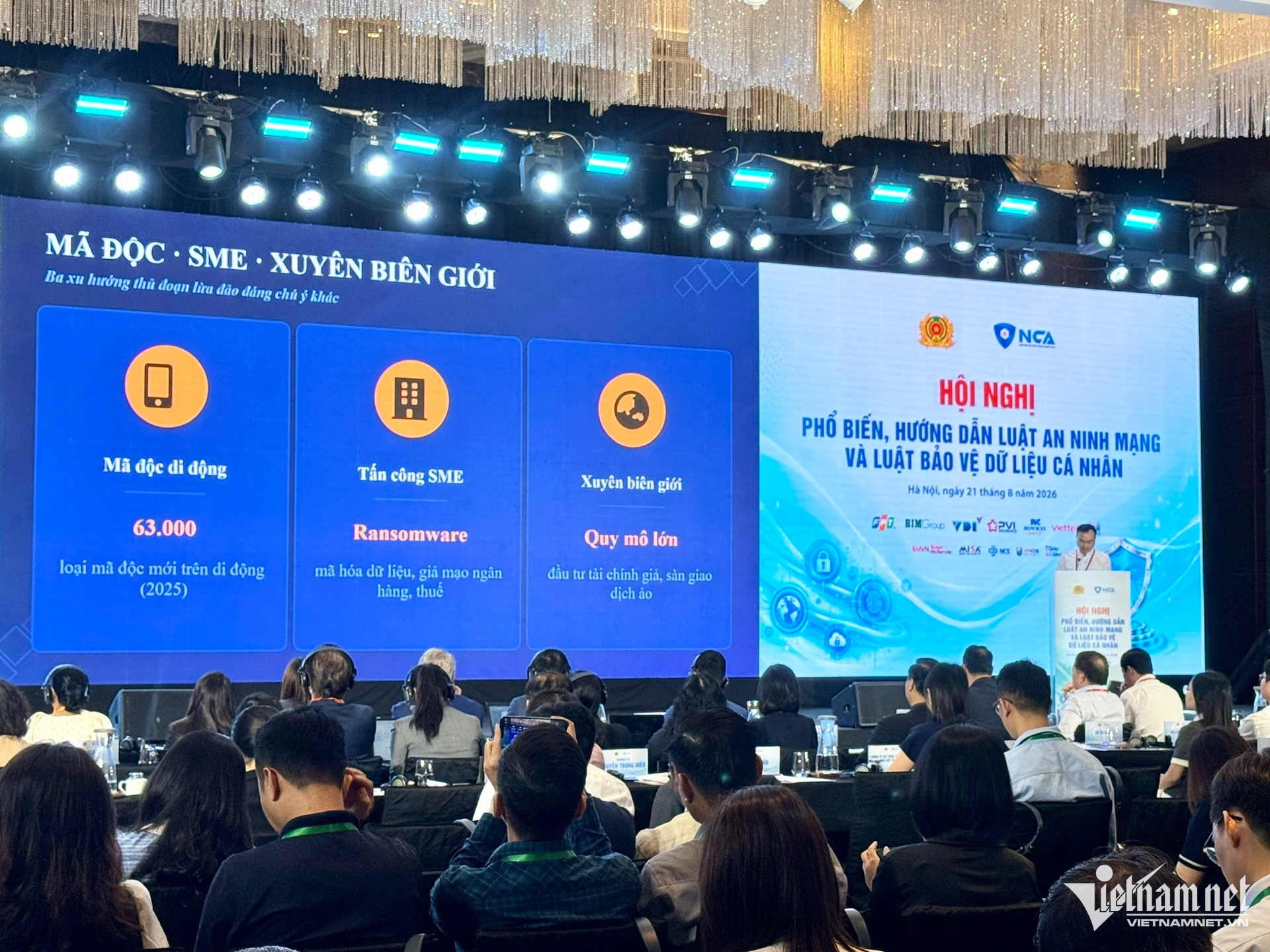
Notably, since the beginning of the year, police in several provinces and cities have uncovered groups of foreign nationals who entered Vietnam and rented premises from which they allegedly carried out scams targeting people overseas. More than 200 foreigners linked to online fraud operations have been arrested.
Lieutenant Colonel Le Anh Tuan also warned that cybercrime is rapidly shifting toward mobile platforms, where users tend to be less vigilant and are less likely to install the security software commonly used on computers.
A report from nTrust, an anti-fraud system operated by Vietnam’s National Cybersecurity Association, showed that nearly 63,000 new mobile malware samples were detected in the country in 2025.
Criminals commonly create fake versions of apps used by public services, tax authorities, electricity providers and banks, replicating legitimate interfaces to steal personal information and one-time passwords, or to gain remote control of victims’ devices.
Alongside malware, deepfake technology capable of generating AI-manipulated videos, images and voices is expected to become an increasingly powerful tool for scams involving criminals impersonating executives or family members and demanding urgent money transfers.
More concerning, according to the official, international criminal organizations have developed tools designed to circumvent biometric authentication safeguards used in online transactions.
Small and medium-sized enterprises, which often have limited cybersecurity resources, are also becoming targets. Criminals may encrypt their data and demand cryptocurrency ransoms, or use fake tax and electricity notices to steal account credentials.
Nearly $152 million in fraudulent transfers stopped
To counter the growing wave of attacks, greater involvement from Vietnam’s financial and banking system has produced tangible results in disrupting illicit financial flows.
The Payment Fraud Risk Management, Monitoring and Prevention Information System, known as SIMO and operated by the State Bank of Vietnam, currently connects 149 entities, including 99 credit institutions and 50 payment intermediaries.
Its database contains more than 688,000 records involving bank accounts, cards and e-wallets showing signs of potential violations.
As of March 23, the system had issued warnings in 3.5 million customer interactions. Following those alerts, users canceled or suspended more than 1.1 million attempted transfers after detecting suspicious signs, helping protect more than VND3.99 trillion ($152 million).
Since July 1, the State Bank of Vietnam has also required biometric authentication of legal representatives for transactions exceeding VND50 million ($1,900) per transaction or VND100 million ($3,800) per day for corporate accounts belonging to newly established companies or accounts opened less than 12 months earlier.
Going forward, the Ministry of Public Security and the State Bank of Vietnam will continue improving the legal framework for data sharing and corporate information-protection responsibilities while accelerating the development of interconnected systems between agencies.
Authorities will also strengthen inspections and oversight of compliance with information-security and biometric-authentication requirements among credit institutions and payment intermediaries.
Police have recommended that businesses proactively invest in deepfake-detection solutions, share early-warning data and expand digital-skills education for vulnerable customers, particularly older people.
Cross-border service providers, meanwhile, are being encouraged to establish dedicated coordination mechanisms that can support investigations and enable faster action against violations in cyberspace.
Du Lam
.svg)
