 Vietnamnet.vn

 Podcast


Deep inside the mountains of Khanh Hoa province in central Vietnam, hundreds of engineers and construction workers are working around the clock to build the country's first pumped-storage hydropower plant, a massive energy storage facility designed to function like a giant rechargeable battery.
At the Bac Ai pumped-storage hydropower construction site in Bac Ai Tay commune, trucks continuously transport excavated rock and soil out of tunnels while drilling machines advance deeper into the mountains.
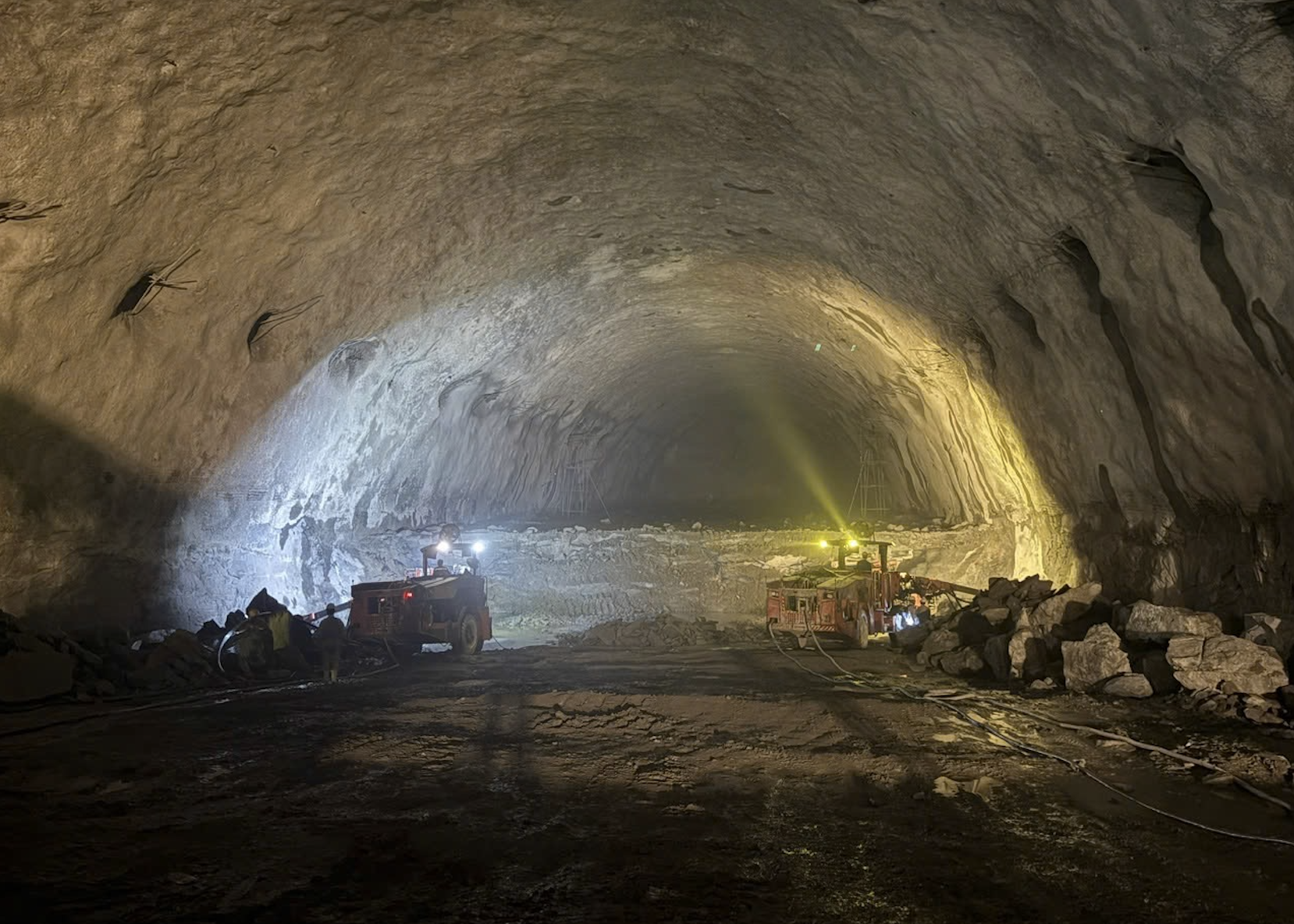
Inside the tunnels, powerful lights illuminate the underground passages, and large ventilation ducts maintain a constant supply of fresh air.
The construction site operates 24 hours a day, with workers rotating through three shifts to maintain progress on the VND21.1 trillion ($800 million) project.
Excavating 17 kilometers of tunnels through mountains
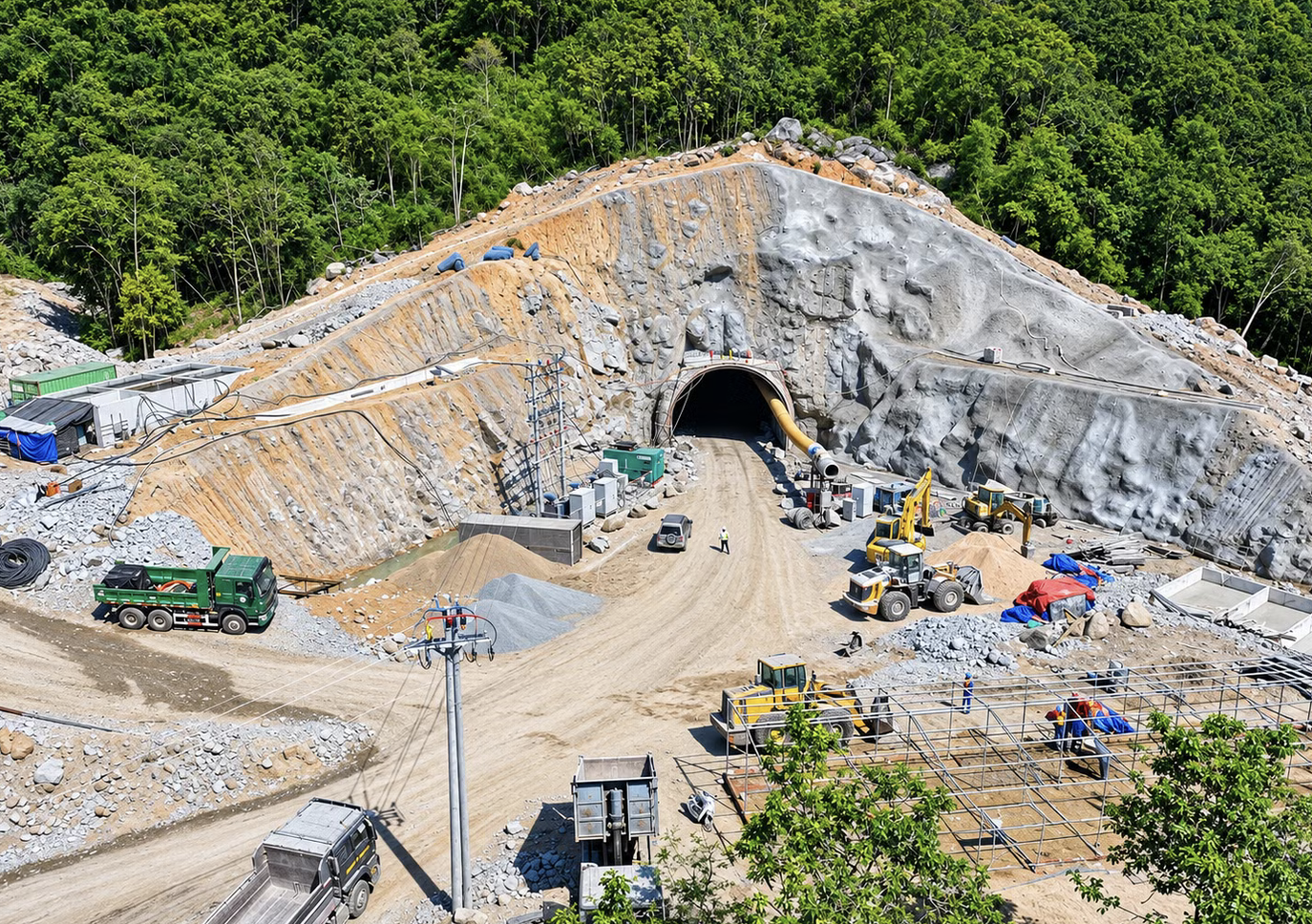
Lieutenant Colonel Le Dinh Binh, who oversees one of the tunneling operations for Lung Lo Construction Corporation, said approximately 120 engineers and workers have been mobilized for his company's section of the project.
"We work in three shifts, 24 hours a day," Binh said.
The excavation process involves drilling, controlled blasting, removing rock and transporting excavated materials out of the tunnels.
Once a section has been cleared, drilling equipment is moved forward to begin another cycle.
On average, workers complete approximately two excavation cycles per day at each working face.
One of the biggest challenges is the complicated network of tunnels running through the mountains at different elevations.
Some tunnels are located at elevations of 300 meters, while others run at 200 meters, 140 meters or 103 meters.
Several contractors must also operate simultaneously in confined underground spaces, sometimes sharing the same transportation routes.
This requires careful coordination, particularly during blasting operations, to ensure worker safety.
According to Binh, Lung Lo has deployed nine tunneling machines, including three newly purchased units worth nearly VND50 billion ($1.9 million).
The additional equipment has significantly improved construction productivity.
At peak performance, the company excavated 200 meters of tunnel in a single month, its fastest tunneling rate to date.
Pham Quoc Huy, deputy director of the project management team at Song Da 10 Joint Stock Company, said Bac Ai has presented more demanding productivity requirements than many hydropower projects his company has previously undertaken.
With more than two decades of experience in underground hydropower construction, Huy said traditional excavation rates at some earlier projects averaged only 80-100 meters per month.
"At Bac Ai, average tunneling productivity has reached 130-140 meters per month," he said.
He attributed the improvement to accumulated construction experience and the deployment of modern machinery.
Across the construction site, approximately 450 workers and engineers from various contractors are operating in continuous shifts.
The project's underground tunnel network extends approximately 17 kilometers, with some sections reaching depths of 500 meters.
According to Nguyen Duc Cuong, head of the technical department at Electricity of Vietnam's Power Project Management Board 3, contractors have completed approximately 7.6 kilometers of tunnels, equivalent to 44% of the planned excavation work.
A 170-meter geological fault zone creates major challenges
Despite extensive geological surveys and engineering preparations, the construction teams have encountered unexpected underground conditions.
Cuong described one particularly difficult section where preliminary surveys had identified a weak geological zone approximately 40 meters long.
However, excavation revealed that the fractured and unstable rock formation extended for 170 meters.
This created significant technical difficulties.
For tunneling contractors, solid and stable rock generally provides more favorable excavation conditions than weak or fractured geological formations.
In unstable ground, workers cannot simply continue drilling and blasting without additional reinforcement.
Each stage requires careful excavation, installation of support structures and stabilization of the tunnel before work can proceed.
The project developer, design consultants, supervision teams and geological specialists worked together to develop a solution, with assistance from foreign experts involved in the project.
They eventually agreed on a method combining excavation with progressive reinforcement.
As contractors advanced through the fault zone, they installed supporting frames and reinforced the tunnel roof to maintain stability.
According to Cuong, the process took three to four months.
The construction teams have now passed the difficult section, and geological conditions have become more stable, allowing excavation to accelerate.
How Vietnam's giant rechargeable battery will work
The Bac Ai pumped-storage hydropower plant will have four generating units with a combined installed capacity of 1,200 MW.
Its operating principle differs fundamentally from that of a conventional hydropower plant.
Instead of generating electricity only when water flows downhill, Bac Ai will use two reservoirs at different elevations to store and release energy according to the needs of the national power system.
Nguyen Huu Duc, deputy director of EVN's Power Project Management Board 3, explained that the facility will pump water from a lower reservoir to an upper reservoir when electricity is abundant.
For example, during midday, when solar power generation is high, the plant can use surplus electricity to pump water uphill across an elevation difference exceeding 400 meters.
After approximately nine hours of pumping, the upper reservoir can be filled.
In the evening, when solar generation declines and electricity demand increases, water will be released from the upper reservoir through turbines to generate power.
The water will then return to the lower reservoir, ready to be pumped uphill again during the next charging cycle.
The process resembles charging and discharging a giant battery.
When the electricity system has surplus power, the plant consumes electricity to store energy by lifting water.
When demand rises, the stored water is released to generate electricity and supply the grid.
Unlike a conventional battery, however, the energy is stored as the gravitational potential energy of water rather than through electrochemical reactions.
Supporting Vietnam's renewable energy transition
The project is particularly important as Vietnam expands its solar and wind power capacity.
Unlike conventional power plants, renewable energy generation depends heavily on weather conditions.
Duc noted that solar output can change rapidly when clouds pass over large solar farms.
"Solar power generation may be very high, but a passing cloud can cause output to drop by thousands of megawatts," he explained. "Meanwhile, the power system must always maintain a balance between electricity generation and consumption. Flexible sources such as pumped-storage hydropower are therefore needed to compensate for fluctuations in renewable energy."
Beyond storing surplus electricity and generating power during peak demand, Bac Ai is designed to provide several important grid-support services.
These include load leveling, frequency regulation, reactive power compensation and improvements to overall system stability.
By shifting electricity consumption from peak periods to times of lower demand or surplus renewable generation, the facility can also reduce the need to dispatch more expensive power sources during periods of high consumption.
Duc highlighted several advantages of pumped-storage hydropower compared with battery energy storage systems (BESS).
These include longer operating lifespans and the ability of conventional rotating machinery to contribute physical inertia to the electricity system.
While electrochemical batteries gradually lose storage capacity through aging, pumped-storage hydropower uses water as its storage medium and does not experience the same battery degradation mechanism.
The project was also strategically located in central Vietnam, a region with significant renewable energy potential and mountainous terrain suitable for pumped-storage development.
Vietnam's previous experience building major hydropower projects, including Hoa Binh and Son La, has helped domestic contractors develop the engineering expertise needed for Bac Ai's extensive underground construction.
First generating unit scheduled for December 2029
Construction is continuing at seven excavation fronts as contractors work toward the project's commissioning schedule.
The first 300 MW generating unit is expected to begin operating in December 2029.
The remaining three units are scheduled to enter service during 2030, bringing the plant's total installed capacity to 1,200 MW.
The entire project is expected to be completed in May 2031.
Once operational, Bac Ai will become a major component of Vietnam's energy storage infrastructure, helping the national power system accommodate greater volumes of renewable electricity while improving reliability and flexibility.
For the hundreds of workers currently drilling and blasting their way through the mountains, each completed section of tunnel brings Vietnam closer to operating its first large-scale pumped-storage hydropower facility.
Tam An

