 Vietnamnet.vn

 Podcast



The Nghi Son facility is expected to play a critical role in implementing Vietnam’s national plan for petroleum and gas storage infrastructure for the 2021-2030 period, with a vision toward 2050. Beyond infrastructure development, the project is seen as a strategic pillar for economic growth and national energy security.
As fuel demand continues to rise and supply remains heavily dependent on global markets, building a domestic crude oil reserve is considered essential to mitigating risks from unpredictable external fluctuations.
The facility will also enhance the operational efficiency of the Nghi Son Refinery, optimize supply chains and contribute to regional economic development in the North Central region and beyond.
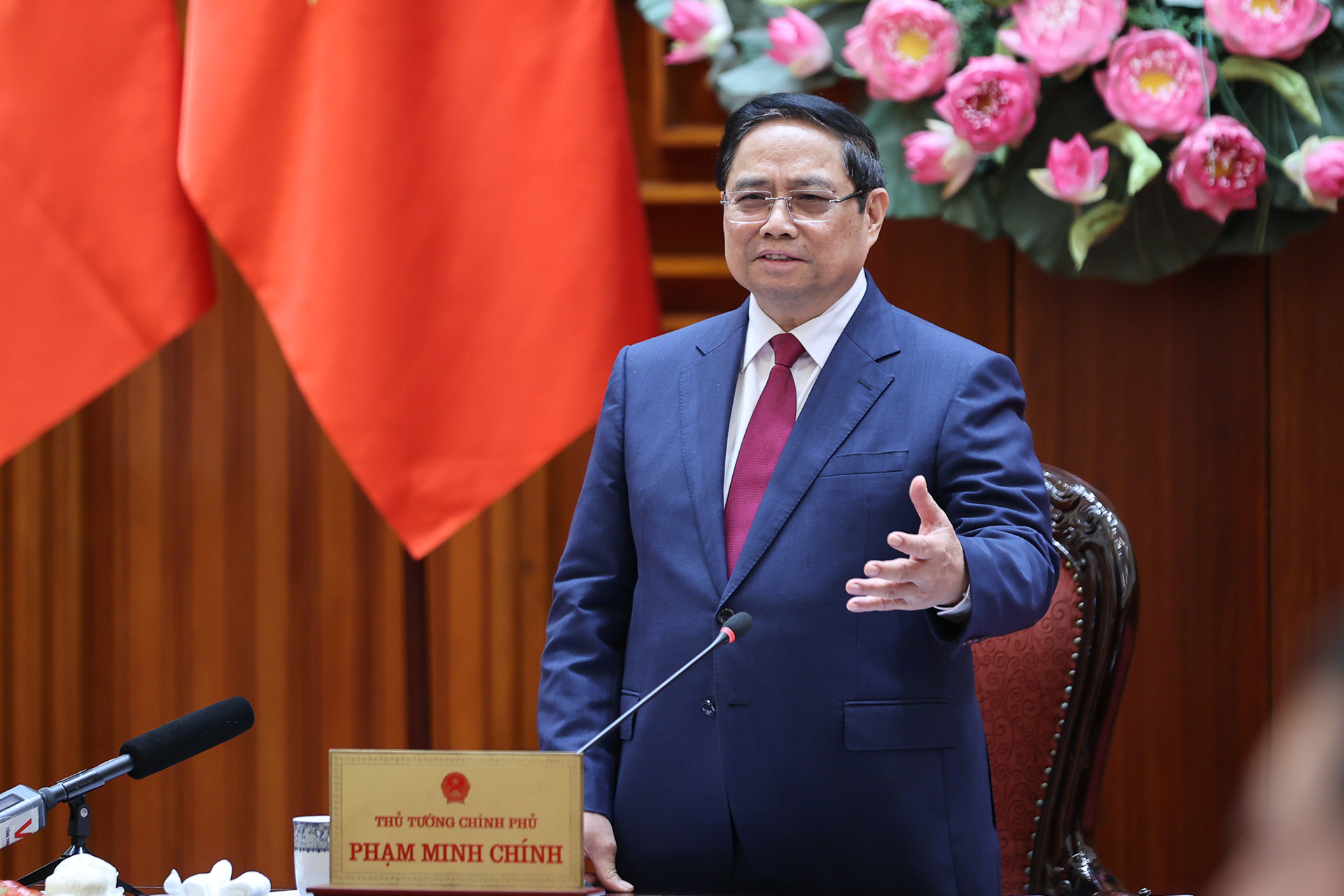
After reviewing reports and discussions, the Prime Minister stressed the need to translate directives from the Politburo and General Secretary To Lam into concrete actions, describing strategic reserves as a matter of critical importance.
He welcomed the swift preparation efforts by the Ministry of Industry and Trade, Petrovietnam and Thanh Hoa authorities, affirming that the project has sufficient political, legal and practical foundations.
“We must focus on implementation, not hesitation,” he said.
The government agreed on an investment model in which state-owned enterprises will take the lead in the initial phase, alongside the development of mechanisms to attract private sector participation. Authorities will also consider options for the State to purchase or lease storage facilities, based on the principle of balanced interests and efficiency.
Petrovietnam has been assigned to lead the project in coordination with relevant agencies and Thanh Hoa Province, ensuring that the Nghi Son facility serves both the refinery and national reserve purposes.
The group is required to quickly finalize the project proposal for approval and implementation, while local authorities will handle site clearance. Relevant agencies have been instructed to expedite procedures under emergency construction provisions.
The Ministry of Finance will continue refining regulations guiding the Law on National Reserves, addressing issues such as direct exchange mechanisms and technical norms for reserve goods. At the same time, agencies are tasked with proposing necessary policies for inclusion in a National Assembly resolution on state economic development.
Meanwhile, the Ministry of Industry and Trade has been directed to continue studying and implementing additional fuel storage projects in Dung Quat (Quang Ngai), Long Son (Ho Chi Minh City) and other locations nationwide.
The Prime Minister emphasized that all projects must ensure safety and security, including in exceptional scenarios, while maintaining overall efficiency.
Encouraging expanded international cooperation, Petrovietnam has also been tasked with working with foreign partners to implement agreements reached by senior leaders, aiming to develop fuel reserves that support economic growth of over 10 percent, strengthen national defense and position Vietnam as a regional energy hub.
Tran Thuong
.svg)
