 Vietnamnet.vn

 Podcast



The year 2025 saw a series of shocking revelations involving counterfeit and substandard health and beauty products in Vietnam. From overhyped supplements to fake cosmetics, authorities cracked down on operations that misled millions of consumers.
From Kera vegetable candies to “appetite-boosting” syrup
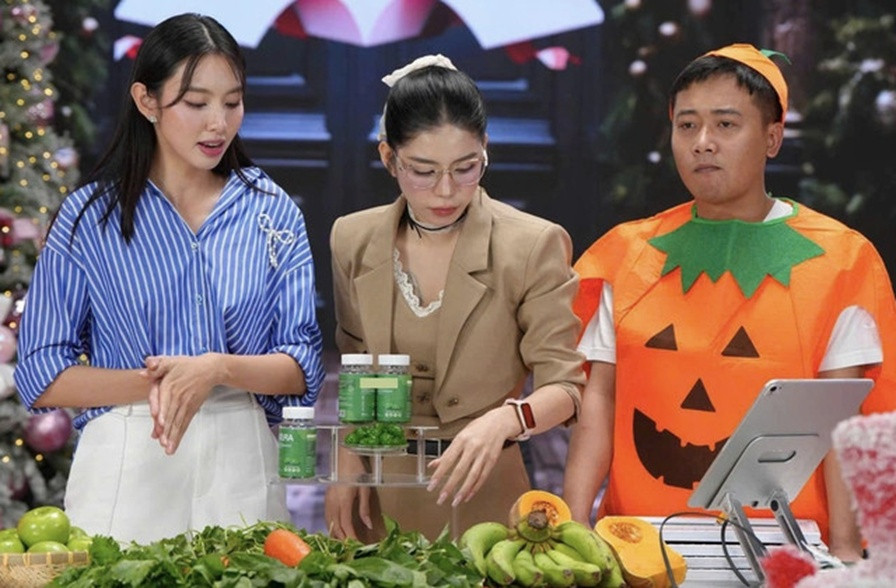
Kera vegetable candies were heavily promoted by online influencers. Photo: KeraVietnam
In late 2024 and early 2025, Kera vegetable candies drew massive public attention after being endorsed by popular figures like Miss Nguyen Thuc Thuy Tien, Quang Linh Vlogs, and influencer Hang “Nomad.”
Promoted as a healthy replacement for green vegetables - "one candy equals one plate of vegetables" - Kera candies were marketed as ideal for children and pregnant women.
However, skepticism arose in February 2025. A customer had the product independently tested and found that a box of 30 candies contained only 0.51g of fiber - contradicting the bold health claims.
By April, authorities confirmed that the vegetable powder content in Kera was just 0.61–0.75%, far from the advertised 28%. The candies also contained 35% sorbitol (a sweetener), which was not properly disclosed on the label.
On April 4, the Ministry of Public Security launched a criminal investigation for producing counterfeit food and misleading consumers. While customers believed the candy's benefits came from vegetable content, the actual laxative effect was due to synthetic sweeteners.
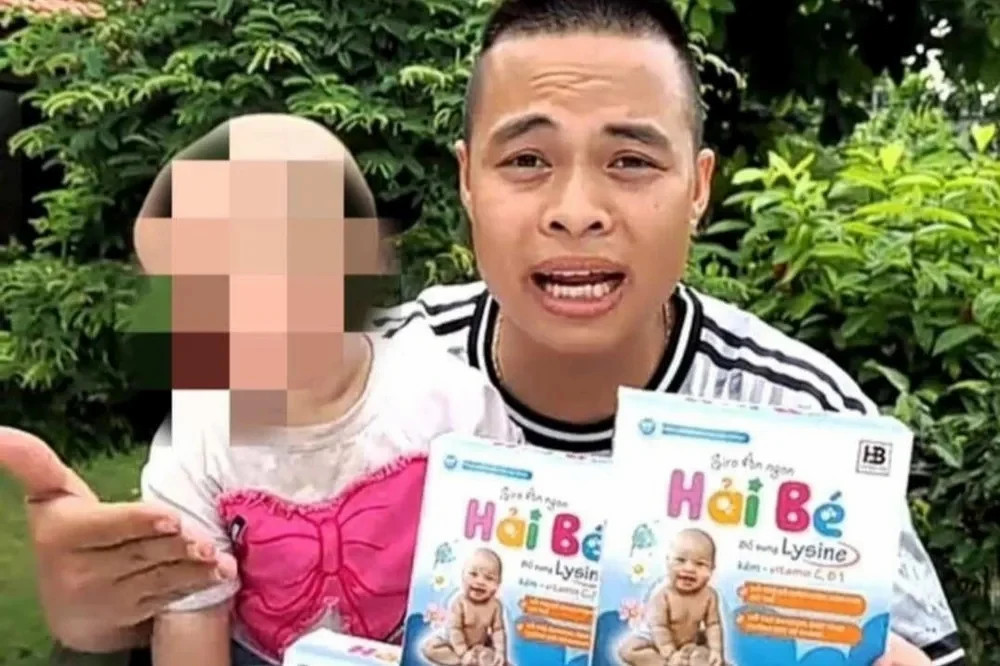
Le Van Hai promotes appetite-boosting syrup on TikTok. Screenshot.
Soon after, the public was rattled again by the “Hai Be appetite-boosting syrup” scandal. On June 16, police in Ninh Binh province arrested Tran Dai Phuc, director of Hai Be Co., Ltd., and Le Van Hai (a.k.a. Hai Sen), owner of the TikTok account “Hai Sen Family” with 2.6 million followers, on charges of selling counterfeit food.
The syrup was heavily promoted on TikTok, Facebook, and Shopee, using family-friendly images aimed at parents and children.
However, lab results revealed that key ingredients like vitamin A, calcium, and vitamin C were present at less than 70% of the declared amounts.
Vietnam’s Food Safety Authority advised the public to stop using the product while the investigation proceeded.
In October, police in Ho Chi Minh City arrested Vo Thi Ngoc Ngan (better known as Ngan 98) for producing and selling counterfeit food.
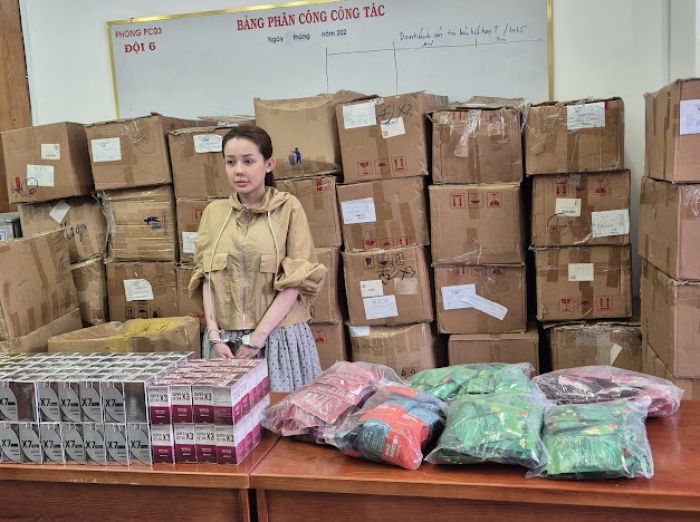
Ngan 98 arrested alongside her weight-loss products. Photo: Ho Chi Minh City Police
Her marketed weight-loss products were found to contain dangerous banned substances, including sibutramine and phenolphthalein - linked to cardiovascular disorders, hypertension, strokes, and cancer risks.
Notably, the Food Safety Authority stated it had never approved the advertising content for any of these products.
The collapse of a cosmetic empire
The beauty industry also faced multiple busts in 2025.
In early May, scrutiny began at EBC Dong Nai Medical Factory JSC.
On May 7, the Drug Administration under the Ministry of Health ordered the suspension, recall, and destruction of the Hanayuki Shampoo (300g bottle). The product had been heavily promoted online as “100% natural” and “completely safe.”
However, tests revealed high microbial contamination and the presence of 2-Phenoxyethanol, an ingredient not listed in the approved formulation.
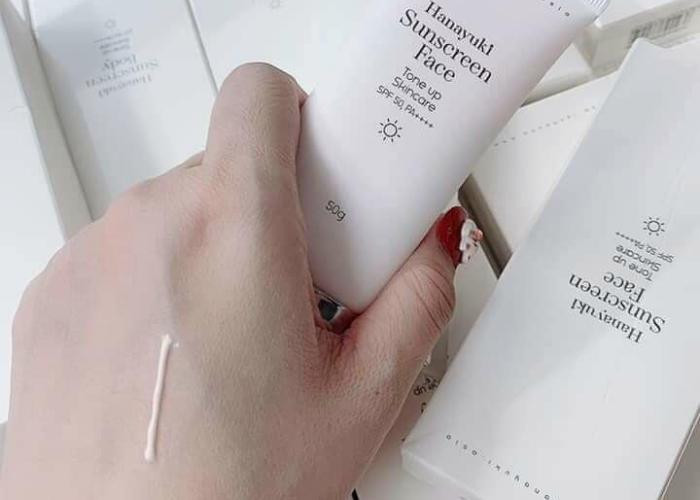
Fake sunscreen led to the arrest of Nguyen Quoc Vu. Screenshot.
Authorities ruled this a violation of cosmetic regulations, banning further sales and mandating a nationwide recall by June 8.
Further investigation led to the recall of three additional products: Hanayuki Sunscreen Body, Hanayuki Conditioner, and G-Thera Amino Anti-Wrinkle Mask.
Regulators also ordered a suspension of all cosmetic manufacturing and business operations by involved companies.
On May 29, police in Dong Nai province launched a criminal investigation into EBC Dong Nai for producing and selling counterfeit goods.
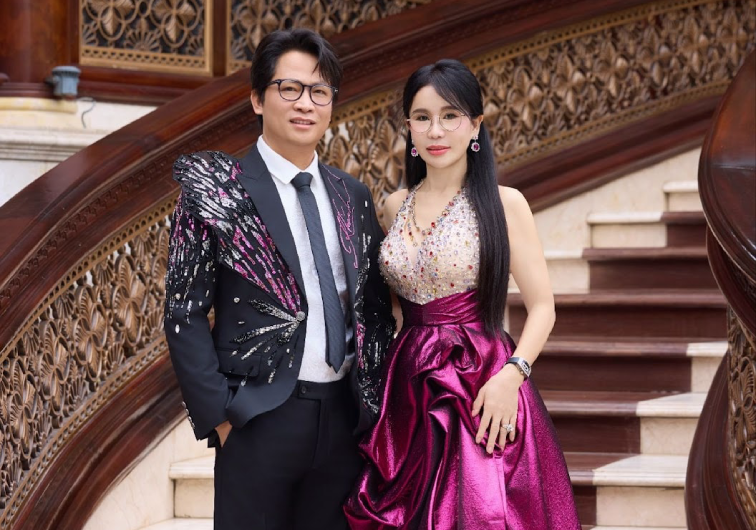
By November 5, three suspects were arrested, including Nguyen Quoc Vu - husband of singer Doan Di Bang - for alleged involvement in counterfeit cosmetic production.
Even more shocking was the fall of the Mailisa beauty chain in November.
On November 13, police simultaneously raided several Mailisa facilities in Ho Chi Minh City and other provinces, seizing large quantities of suspected smuggled cosmetics.
On November 21, the Ministry of Public Security’s Economic Crimes Division (C03) officially charged Phan Thi Mai, director of Mailisa Beauty Clinic Co., Ltd., and Hoang Kim Khanh, CEO of MK Skincare, along with six others, for smuggling.
Initial investigations revealed that between 2020 and 2024, these individuals had purchased low-quality cosmetics from Guangzhou, China, at cheap prices. These products were not eligible for circulation in Vietnam.
To legitimize the goods, the group forged documents and changed the country of origin to Hong Kong. The products were then smuggled into Vietnam and falsely advertised as high-end cosmetics, sold at inflated prices for huge profits.
After the case was opened, the Drug Administration revoked all product registrations of MK Skincare and suspended the circulation of 162 cosmetic products nationwide.
Phuong Thuy
.svg)
