 Vietnamnet.vn

 Podcast



2025 marked a dramatic reversal in Vietnam’s once-booming livestream sales industry. Several prominent influencers, once hailed as “sales titans,” were brought to justice, prompting authorities to tighten regulations around key opinion leaders (KOLs) and key opinion consumers (KOCs).
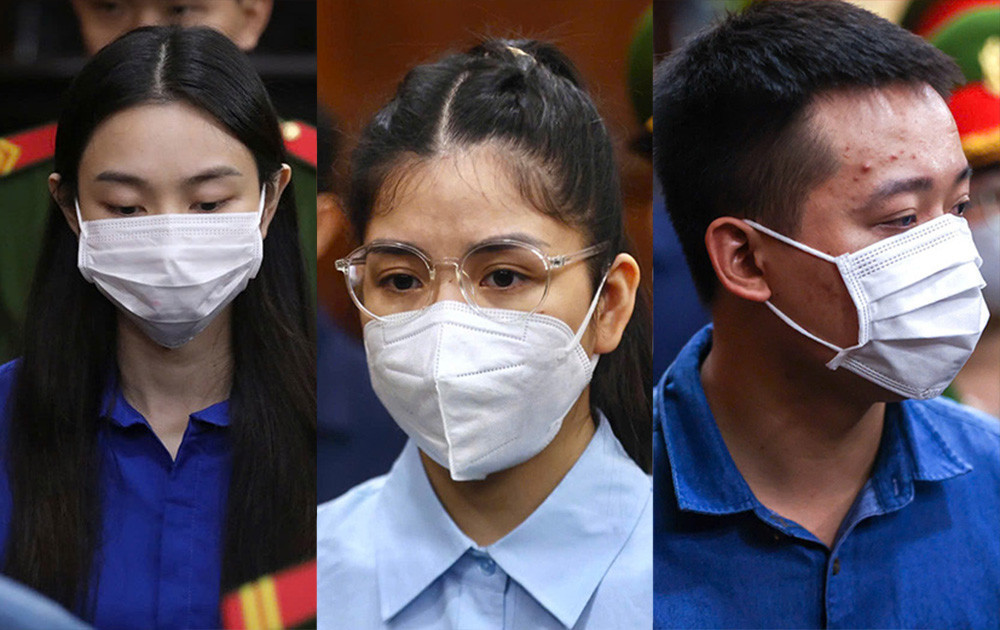
If 2024 was the year of shoppertainment - a booming trend blending shopping and entertainment - dominated by livestream stars pulling in hundreds of billions of dong (millions of USD) and attracting hundreds of thousands of viewers per session, then 2025 told a very different story. The once-vibrant scene gave way to silence as its biggest stars faced legal turmoil or collapsed under the weight of public mistrust.
The first major scandal erupted around the now-infamous Kera vegetable candy case, involving Miss Grand International winner Thuy Tien, Hang Du Muc (Nguyen Thi Thai Hang), and Quang Linh Vlogs (Pham Quang Linh).
Promoted as a revolutionary health supplement under the slogan “one candy equals one plate of vegetables,” Kera was aggressively marketed by the trio, who were also founding shareholders. Over 135,000 units were sold, generating illicit revenue amounting to tens of billions of VND (millions of USD).
However, forensic investigations revealed the candies contained no vegetable powder as advertised. Instead, the main ingredient was Sorbitol, a sweetener with laxative properties - misleading consumers about its health benefits. Once public suspicion arose, the accused allegedly forged advertising contracts to obscure their shareholder status and evade legal accountability.
In April 2025, Nguyen Thi Thai Hang and Pham Quang Linh were arrested, followed by Nguyen Thuc Thuy Tien. In November, the Ho Chi Minh City People’s Court sentenced each to two years in prison for defrauding consumers.

Another major case involved influencer couple Vo Thi Ngoc Ngan (Ngan 98) and Luong Bang Quang. They were arrested and charged for producing and selling counterfeit health supplements and cosmetics through companies like Zubu Trading & Service Co., Ltd.
According to investigators, the duo leveraged their online fame to distribute large quantities of unverified products - most notably “collagen vegetable pills” that contained banned substances and posed serious health risks. A raid on their residence uncovered multiple land-use certificates and high-value assets.
Another high-profile arrest came in November 2025 when Nguyen Quoc Vu - husband of influencer Doan Di Bang and CEO of VB Group - was charged by Dong Nai police for producing and selling counterfeit sunscreen.
The focus of the investigation was Hanayuki Sunscreen Body. Lab tests revealed that while the label claimed an SPF rating of 50, the product only offered a rating slightly above 25. This discrepancy constituted consumer fraud affecting over 1,600 buyers and potentially endangering their skin health.
Authorities raided Vu’s home and suspended numerous other Hanayuki products for discrepancies between the declared and actual formulas.
October 2025 saw yet another bombshell: Hoang Huong (real name Hoang Thi Huong) was arrested along with accomplices by the Ministry of Public Security for serious violations of accounting regulations.

Initial findings revealed that between 2021 and mid-2025, Huong’s business ecosystem had omitted nearly 1.8 trillion VND (approximately 73 million USD) from its financial records and misreported over 2.1 trillion VND (over 85 million USD) in value-added tax.
Online, Huong had become infamous for promoting functional foods like joint supplements and mouthwash as if they were pharmaceutical cures - alongside provocative and discriminatory statements that fueled public outrage.
In response to the widespread abuses and harmful consequences of livestream sales, government regulators have launched a sweeping crackdown. New rules mandate clear identity verification for online sellers and tighten legal responsibility for KOLs/KOCs endorsing products. E-commerce platforms are now required to retain livestream data for long-term inspection and investigation purposes.
Amendments to the E-commerce Law clarify shared liability between platforms, sellers, and promoters. Penalties now apply to exaggerated claims, forged documents, and the sale of unidentified goods.
The Advertising Law of 2025 is seen as a watershed moment, transforming how digital promotion is regulated. For the first time, influencers must personally verify the origins, legality, and content accuracy of any products they promote. No longer just “messengers,” they are now held accountable for the entire advertising chain.
As a result, the livestreaming market is entering a new era - less flashy, but far more transparent and accountable.
Duy Anh
.svg)
