 Vietnamnet.vn

 Podcast



Editorial note: The documents of the 14th National Party Congress mark a fundamental shift in thinking on poverty reduction. While earlier approaches focused on direct support to address immediate material shortages, the strategy has now moved toward empowering people, strengthening internal capacity, and improving the ability of the poor to adapt to market and global economic changes.
To translate these directions into concrete programs and plans, assessing the current situation and identifying solutions for sustainable poverty reduction is an urgent requirement, particularly in ethnic minority and mountainous areas. These regions remain the “core poverty” zones, where most poor and near-poor households are concentrated.
Poverty in the new phase is therefore no longer simply about support, but about comprehensive development for these core regions.
The VietNamNet series “Improving the quality of sustainable poverty reduction in the new phase” aims to provide a clearer picture of current poverty, uncover structural causes of persistent hardship, especially in ethnic minority areas, and propose long-term solutions to not only reduce poverty rates but eliminate core poverty and narrow development gaps.
Poverty rate declines, foundation for sustainability strengthens
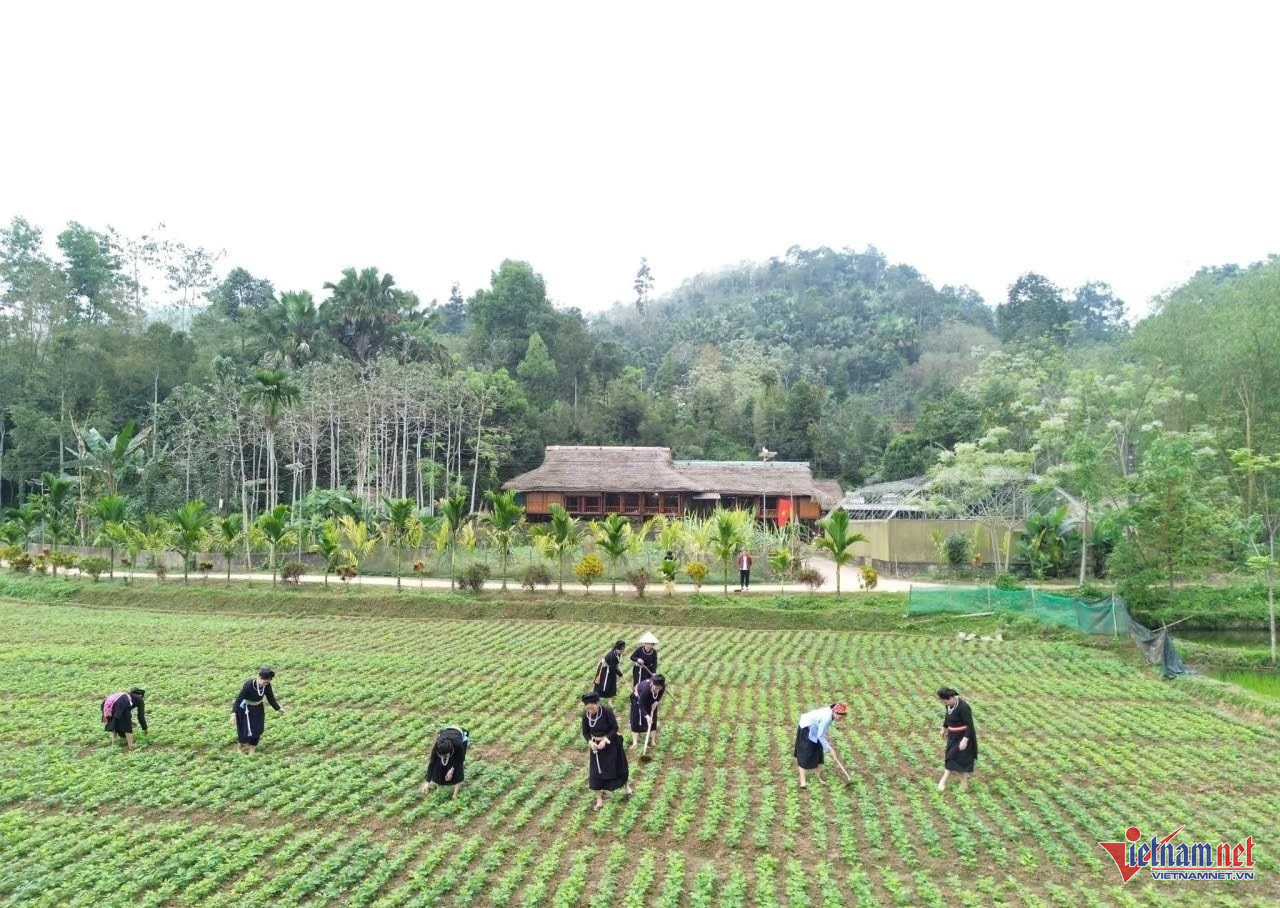
During the 13th Party Congress term, sustainable poverty reduction remained a major highlight. Efforts have shifted beyond income support to addressing shortages in basic social services such as healthcare, education, and housing, helping poor households build a more stable foundation to escape poverty.
The story of Cu A Pao, an ethnic Mong resident of Trung Thu village in Sinh Phinh commune, Dien Bien province, reflects this progress. Despite regular support from neighbors, his family remained poor due to frequent illness among children and lack of capital.
In 2023, under the national target program for socio-economic development in ethnic minority and mountainous areas (2021-2025), his family was prioritized for support in production models and access to preferential loans.
From initial livestock and crop support, combined with training, his family now raises cattle, poultry, and grows maize. In 2025, through a housing support program, he built a new house and was officially recognized as having escaped poverty.
His family is one of nearly 170,000 households nationwide that rose out of poverty in 2025, reducing the national poverty rate from 1.93% in 2024 to 1.3%. Poverty among ethnic minorities also declined significantly, from 12.55% to 9.71%.
These results demonstrate the effectiveness of government policies and the strong involvement of local authorities, particularly in ethnic minority regions.
By the end of 2025, several localities stood out. Quang Ninh reduced ethnic minority poverty to zero, while Hanoi recorded no poor households under the multidimensional poverty standard, with only 0.49% classified as near-poor.
Poverty increasingly concentrated in ethnic minority communities

Technical training helps people in remote and mountainous areas gradually access new production methods. Photo: Vu Mung
Despite these achievements, major challenges remain. The 14th Party Congress documents highlight a growing trend of inequality.
Poverty is now “shrinking” in space but becoming more concentrated in specific populations, with ethnic minority and mountainous areas still forming the core of poverty nationwide.
Vietnam currently has 480,278 poor households, including 331,002 ethnic minority households. Among 608,873 near-poor households, 301,092 belong to ethnic minorities.
Although ethnic minorities account for only 14.2% of the population, they represent nearly 69.9% of all poor households and 49.4% of near-poor households.
In many of these areas, escaping poverty remains extremely difficult. For example, in Na Bung commune, Dien Bien province, a 21-year-old woman, Sung Thi Sao, already has three children and relies solely on subsistence farming.
Similarly, the household of Giang A Denh, born in 1975, struggles to survive on small-scale farming and livestock, often facing food shortages.
By the end of 2025, Na Bung’s multidimensional poverty rate reached 73.18%, with all poor households belonging to ethnic minorities. In Nam Ke commune, the rate was even higher at 74.66%.
Persistent “core poverty” and widening development gaps
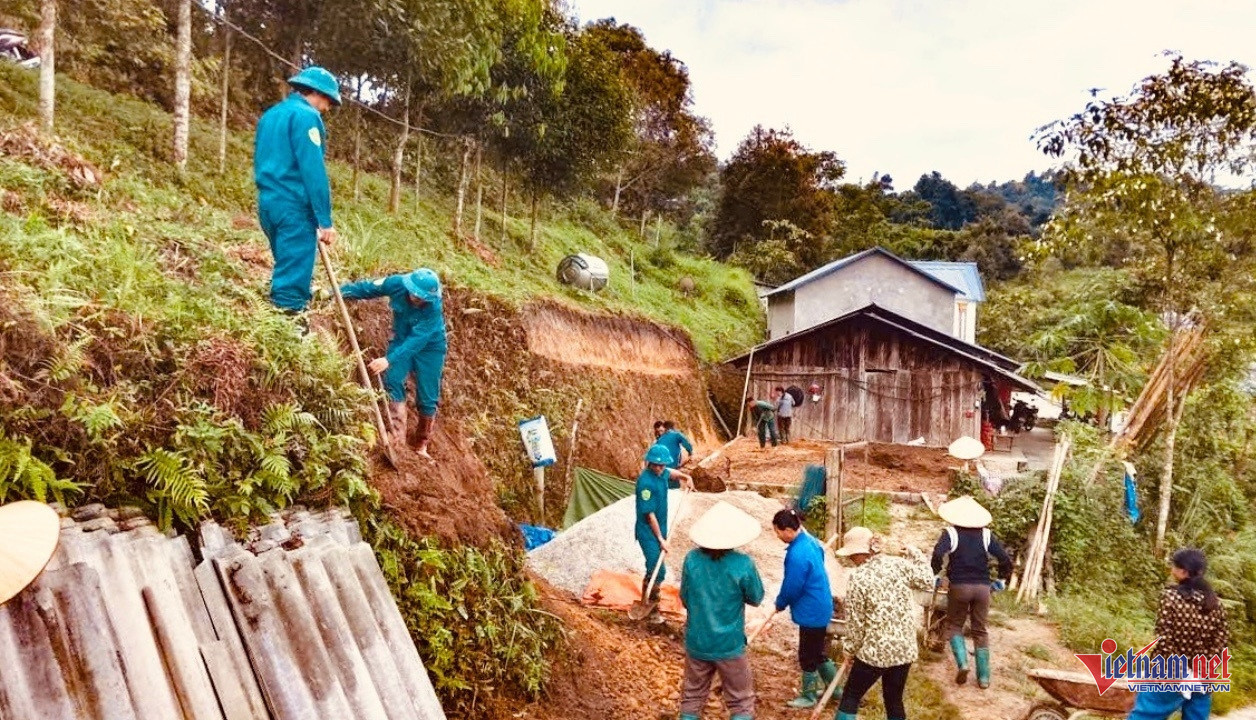
Another notable issue is the uneven pace of development across regions, creating widening gaps in living standards, access to services, and opportunities.
In 2024, the poverty rate in the northern midland and mountainous region was 14.98%, more than 10 times higher than the Red River Delta and nearly 100 times higher than the Southeast region.
By the end of 2025, this gap remained largely unchanged. The northern midland and mountainous region continued to account for nearly half of all poor households nationwide.
Disparities are also evident within regions. In the same area, Phu Tho recorded a poverty rate of 5.82% and Thai Nguyen 7.67%, while Cao Bang remained at 32.07% and Dien Bien at 30.83%.
Even within a single province, the gap is stark. In Dien Bien, while Nam Ke and Na Bung have poverty rates above 70%, urban wards such as Dien Bien Phu and Muong Thanh have rates close to zero.
Poverty is also increasingly tied to living space. In 2025, out of 480,278 poor households nationwide, 456,921 were in rural areas. The majority of near-poor households were also rural.
This reflects a deeper reality: development gaps are no longer only between regions, but between different “development spaces” within the same country.
Without strong, targeted, and sustainable policies, there is a real risk of long-term “low-development zones” emerging. As poverty becomes more geographically concentrated and socially specific, reducing poverty in the new phase requires not just isolated support, but comprehensive development strategies for these core areas.
Sy Hao
.svg)
