 Vietnamnet.vn

 Podcast



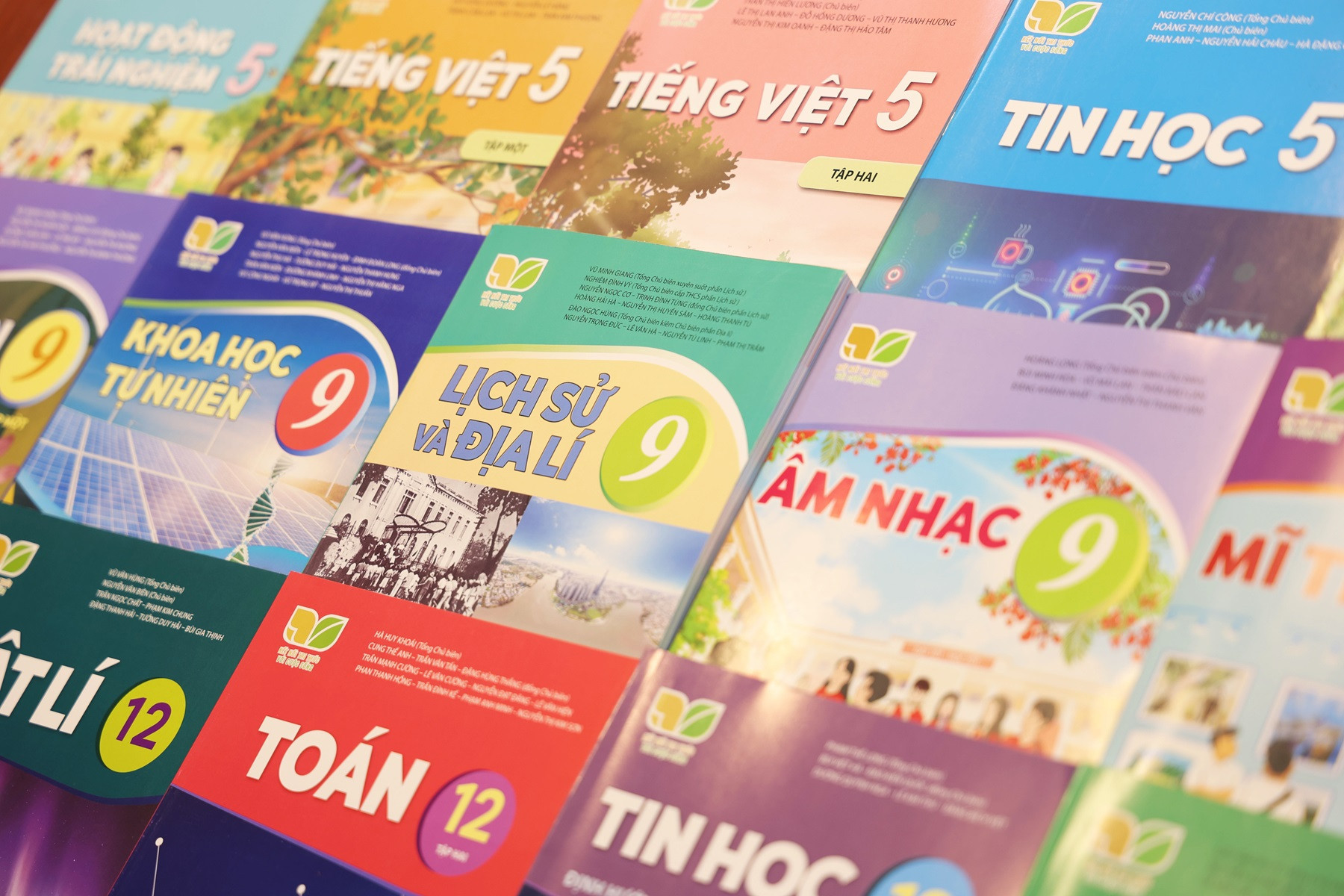
At a central government press briefing on Sept. 15, the Ministry of Education and Training said that as of 6 p.m. on Sept. 14, localities across Vietnam were still short of 3,916,370 textbooks.
The ministry said media reports had begun highlighting localized textbook shortages in several parts of the country from mid-August 2026. It subsequently issued a series of directives requiring sufficient supplies to be made available before the start of the new school year.
However, shortages persisted in some localities after the 2026-2027 academic year had begun. Against that backdrop, Deputy Prime Minister Le Tien Chau chaired a meeting on textbook supplies on Sept. 9.
Following Chau’s conclusions, the ministry issued an action plan to address the shortages. Measures included reviewing and determining the precise demand and number of books still needed; immediately transferring textbooks from areas with surpluses to those facing shortages; continuing to print and distribute titles in short supply; publishing information on sales locations, hotlines and online ordering channels; and providing free electronic textbooks while students wait for printed copies.
According to figures compiled by the Vietnam Education Publishing House, total updated demand stood at 245.94 million textbooks by the end of Sept. 14, compared with a planned print run of 228.9 million. The publisher has so far supplied about 236.6 million textbooks to localities.
On the afternoon of Sept. 14, the ministry held an online meeting with education departments from 34 provinces and cities to further review the situation and direct efforts to address the shortages. Compiled figures showed that localities were still short of 3,916,370 textbooks as of 6 p.m. that day.
The ministry instructed the Vietnam Education Publishing House to immediately continue transferring and supplying additional textbooks on Sept. 15.
Priority was to be given to students who had no textbooks or were missing several titles, particularly those at boarding schools in border areas and schools in remote and disadvantaged communities, as well as students eligible for textbook assistance, free books or loan programs.
Local authorities were also instructed to continue updating their figures and submit reports by 4 p.m. on Sept. 15 so that remaining shortages could be addressed immediately, with the goal of ensuring every student has the textbooks needed for their studies.
Ministry accepts responsibility for forecasting and assessing textbook demand
According to the ministry, the textbook shortages stemmed from several new factors affecting the 2026-2027 academic year.
For the first time, a single set of textbooks is being used nationwide. Some localities have also introduced policies to subsidize or provide textbooks, while the restructuring of administrative units and reorganization of school and class networks have altered demand.
At the same time, there was only a short window between determining the full extent of demand and the deadline for meeting it, while textbook production, printing and distribution require preparation time.
The ministry acknowledged that its own shortcomings also contributed to the problem, saying its forecasting, compilation and analysis of textbook demand under the new conditions had failed to keep pace with developments on the ground.
It also said its assessment of the Vietnam Education Publishing House’s production, management and distribution capacity had been insufficient, while efforts to address some shortcomings in supply and the allocation of available textbooks had not been fast or flexible enough.
In some localities, registration and coordination of textbook supplies were not sufficiently proactive, creating a gap between actual demand and the information used to organize distribution.
Updates on additional demand were also not timely enough, particularly following changes in the organization of schools and classes, textbook assistance policies and additional purchases by students and parents.
The ministry said responsibility for localized textbook shortages lay with itself, the Vietnam Education Publishing House and local authorities.
It described the situation as a shortcoming that must be seriously addressed and prevented from recurring in future academic years, particularly through improvements in monitoring, forecasting, data connectivity, inspections, follow-up and coordination when actual demand changes.
Over the longer term, the ministry plans to review and propose improvements to the textbook management mechanism, with textbooks to be regarded as a public product and service as well as a special category of essential goods.
It also plans to manage the entire supply chain using unified data, clearly define the responsibilities of central government agencies, local authorities and businesses, and establish contingency and flexible allocation mechanisms to ensure proactive and stable supplies from the beginning of each academic year.
What does the ministry say about textbook revisions?
The Ministry of Education and Training also said it is conducting a comprehensive review and revision of Vietnam’s general education curriculum and textbooks, with the aim of reducing overly academic content and placing greater emphasis on practical learning and experience.
The process will also seek to strengthen comprehensive education and incorporate new requirements.
According to the ministry, any proposed changes must be assessed on scientific, professional and legal grounds and against the requirements of the national general education curriculum.
The review is being conducted comprehensively and according to a roadmap, with the ministry saying it will seek to maintain educational quality while avoiding disruptions or unnecessary upheaval in teaching and learning.
Thanh Hung
.svg)
