 Vietnamnet.vn

 Podcast



Le Thi Lan Anh, the 2026 valedictorian in Materials Technology at Phenikaa University, has received a full scholarship for a master’s degree at KAIST, one of South Korea’s leading universities.
With a cumulative GPA of 3.54 and a perfect score of 10 for her graduation thesis, Le Thi Lan Anh has graduated as the 2026 valedictorian in Materials Technology at Phenikaa University.
Gifted high school student chooses engineering
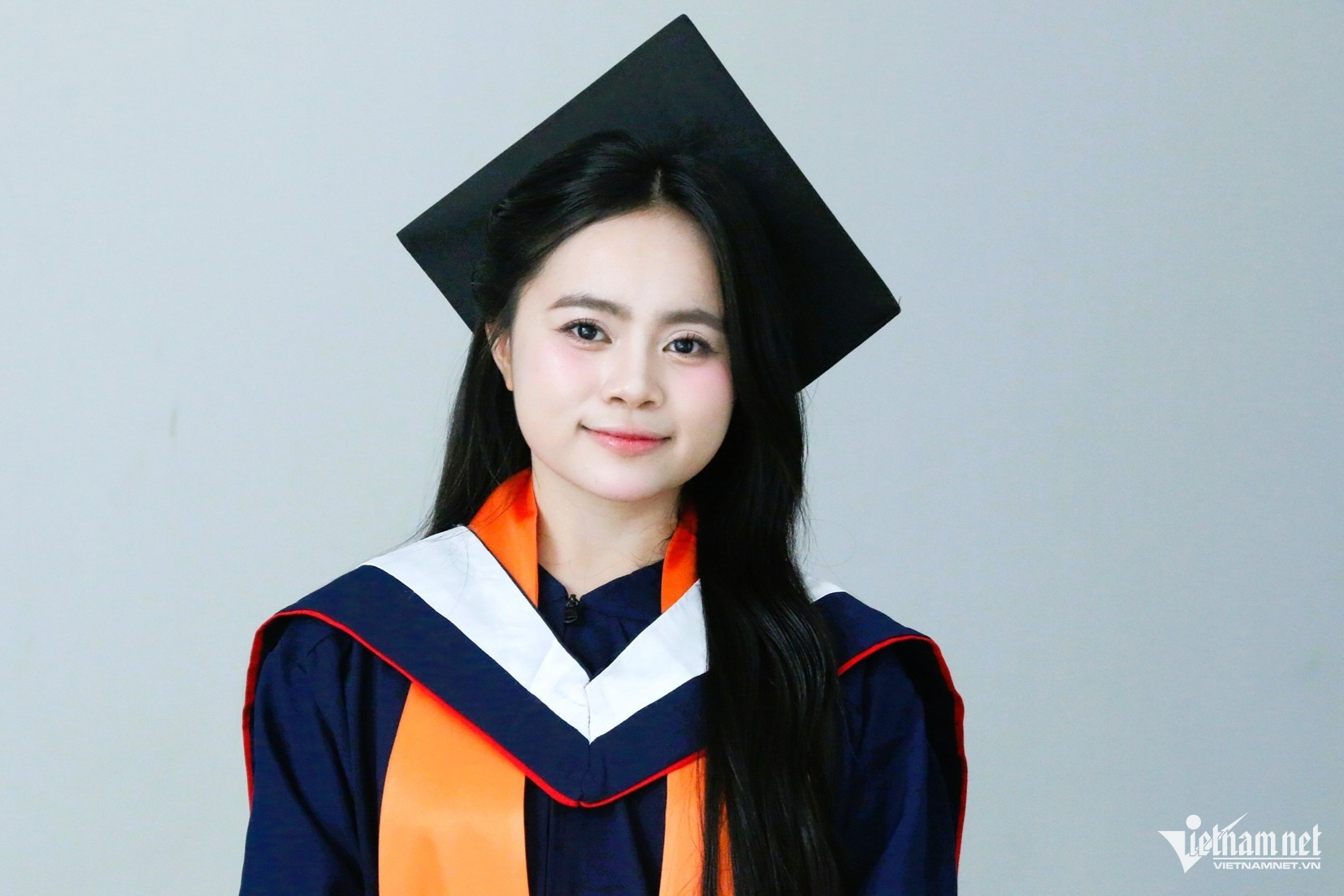
Speaking to VietNamNet, Lan Anh said she was delighted to see her efforts rewarded.
“Five years ago, when I chose this major, I was quite worried because many people did not consider it a safe choice. Even my parents had concerns, fearing that their daughter might struggle to find a job after graduation. But their trust, encouragement and support ultimately became the motivation that kept me working hard every day,” Lan Anh said.
Five years ago, as she stood at the threshold of university, the student from Lam Son High School for the Gifted in Thanh Hoa faced a difficult choice among several possible paths.
Explaining why she ultimately pursued engineering, Lan Anh recalled that in Grade 12, she happened to watch a YouTube video explaining how the chips used in smartphones work. It sparked her curiosity: How could something so tiny bring about such enormous changes in technology and even help transform the world? That question inspired her to explore the field more deeply.
Her direction became clearer after a university admissions counseling session toward the end of Grade 12. There, Associate Professor Bui Van Hao, a lecturer at Phenikaa University, introduced students to Advanced Materials and Nanotechnology, a field still unfamiliar to many high school students. He also outlined its research directions, practical applications and development prospects, explaining how materials engineered at the nanoscale could bring significant changes to technology and everyday life.
“I found the field fascinating and interesting. After learning more about it, I felt it suited me and decided to pursue it,” Lan Anh said.
Studying engineering, however, meant confronting demanding coursework in mathematics, physics and chemistry. Lan Anh said she had to devote considerable time to studying in order to fully understand the material.
She also gradually became accustomed to spending long hours in the laboratory and going through countless rounds of trial and error. “There were days when I didn’t leave the lab until 10:30 p.m.,” Lan Anh said.
For Lan Anh, the greatest challenge in scientific research was not the sheer volume of knowledge but the need to grasp concepts that can be highly abstract.
“In nanomaterials, there are things you cannot see with the naked eye or experience directly. You can only understand them through models, data and experimental results. That requires patience. You have to read more, repeat experiments more often and learn to accept failure before eventually finding the answer,” she said.
From a Q1 paper to a full KAIST scholarship
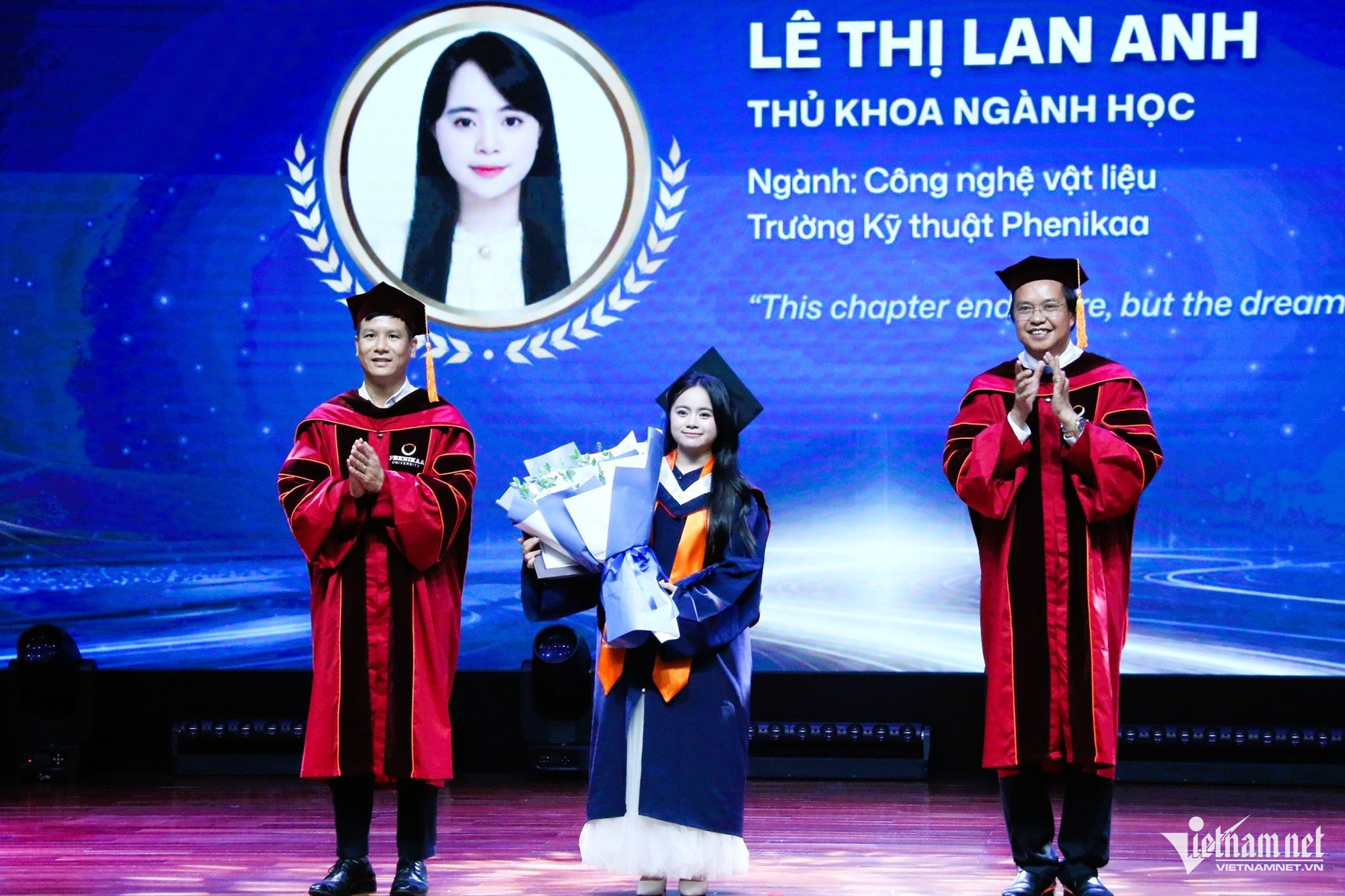
Professor Le Trung Thanh, Director of Phenikaa University, and Deputy General Director Nguyen Phu Khanh present Le Thi Lan Anh with her graduation diploma and honor her as valedictorian. Photo: Thanh Hung
According to Lan Anh, her achievements today stem not only from perseverance and a passion for science but also from the guidance and inspiration of dedicated lecturers. While Associate Professor Bui Van Hao gave her the confidence to begin the journey, Dr. Nguyen Ngoc Linh continued to mentor her and nurture her passion for research throughout her undergraduate years.
Lan Anh said her mentor taught her to approach both study and scientific research with seriousness and meticulous attention to detail. In her view, rigor in research is not intended to create pressure, but to ensure that every result has value and every argument is sufficiently robust. The process helped her develop clear scientific thinking, a careful approach to her work and the resilience needed to pursue research over the long term.
Beyond classroom hours, Lan Anh believes self-study plays an important role in developing a deeper understanding and retaining knowledge. She regularly reads additional textbooks and online materials on her own and turns to her lecturers whenever she encounters something she does not fully understand.
Through sustained effort, Lan Anh won second prize in Phenikaa University’s student scientific research competition and secured a scholarship for a research exchange program at KAIST in South Korea in 2025. She is also the lead author of a paper published in a Q1-ranked journal.
Most notably, Lan Anh has now received a full scholarship for a master’s program at the Korea Advanced Institute of Science and Technology (KAIST), one of Asia’s leading technology universities. The opportunity will allow her to pursue more advanced research in the field of advanced materials.
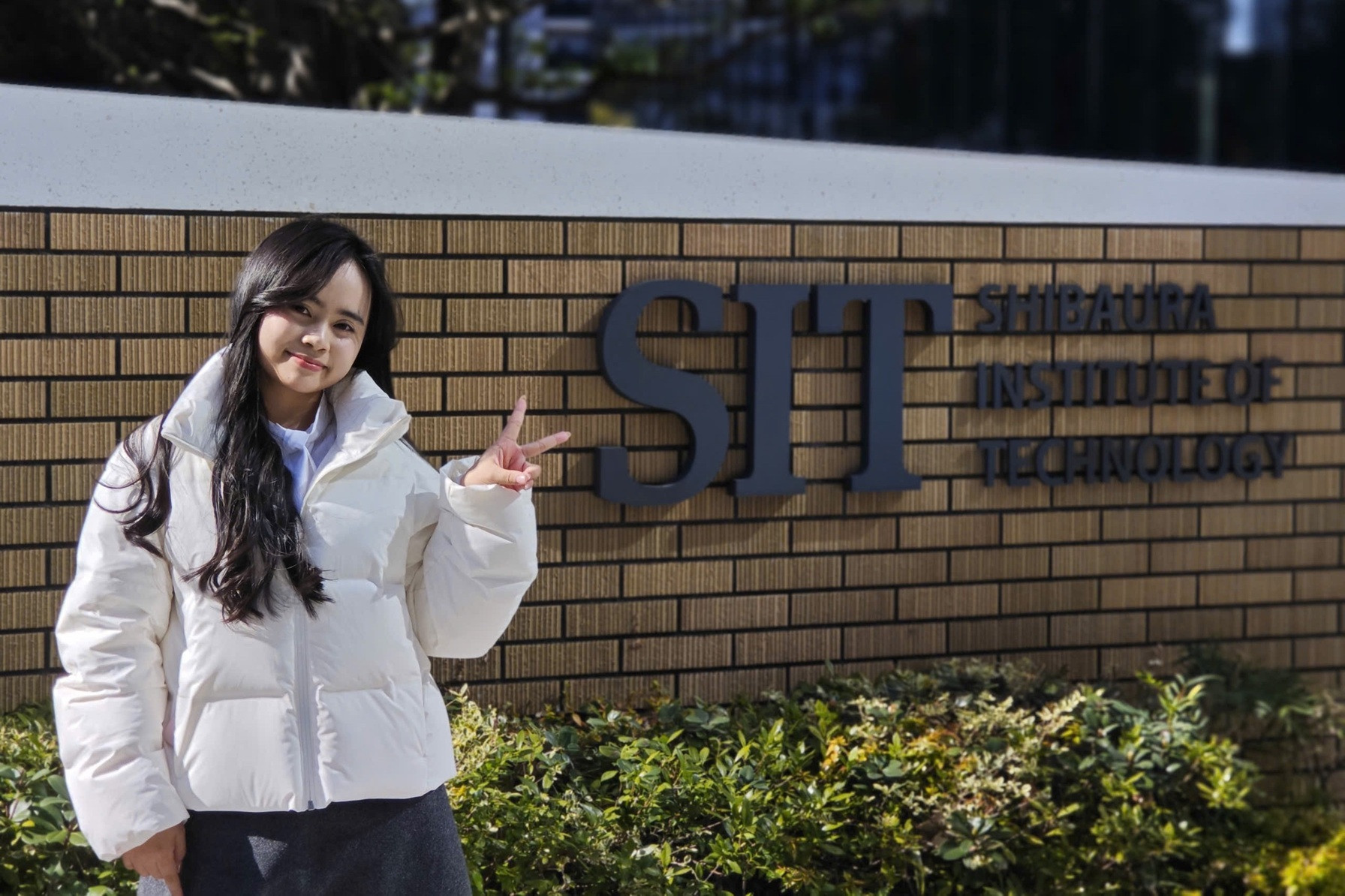
Although she had already been recruited by a semiconductor company as a process engineer, Lan Anh decided to move to South Korea in August to pursue her master’s degree, focusing on research related to semiconductor materials.
“In the future, I want to work at a semiconductor chip fabrication plant, and KAIST will provide a very strong foundation for me to turn that dream into reality. Further down the road, when I have gained enough knowledge and experience, I hope to return home and contribute to Vietnam,” Lan Anh said.
Thanh Hung
.svg)
