 Vietnamnet.vn

 Podcast



Vietnam's government has proposed recognizing publishing-media groups in a draft amendment to the Publishing Law, marking a significant step toward developing modern, multi-platform publishing organizations while strengthening oversight of digital publishing activities.
The proposal was presented on Wednesday as the National Assembly Standing Committee reviewed the draft law amending several provisions of the Publishing Law.
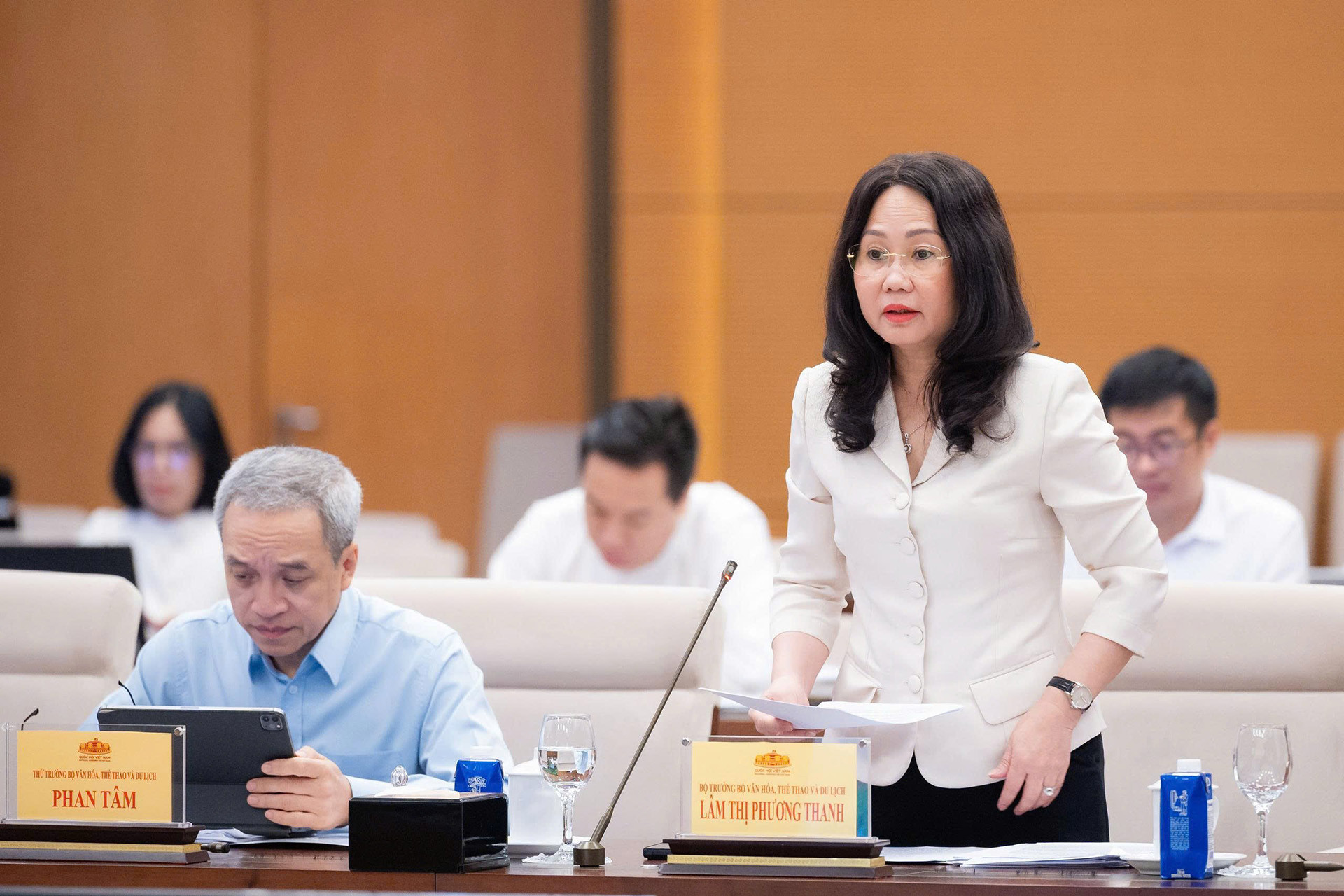
Presenting the government's proposal, Minister of Culture, Sports and Tourism Lam Thi Phuong Thanh said the amendments are intended to improve the legal framework governing publishing and state policies, while translating the Party's strategic directions on digital transformation, private-sector development, international integration, cultural industries and reading culture into legislation.
The revised law also seeks to strengthen oversight of intermediary services that distribute publications online, as well as publishing-related activities conducted in the digital environment.
At the same time, the draft introduces stronger copyright protections, particularly against online infringement. It distinguishes more clearly between unauthorized reprints, illegal printing and counterfeit publications, while authorizing the government to issue detailed implementing regulations.
The draft also introduces operational requirements for intermediary distribution services, creating a legal basis for tougher penalties against piracy, online copyright infringement and the misuse of publishing-related activities to disseminate content that violates the Publishing Law or cybersecurity regulations.
Proposal for publishing-media groups
One of the most notable provisions establishes a legal framework for founding publishing houses and introduces the concept of publishing-media groups.
Under the proposal, a publishing-media group would consist of affiliated companies operating under a parent-subsidiary structure. The group would not have separate legal personality and would not be required to register as an enterprise under corporate law. Member companies would be connected through share ownership, capital contributions or other forms of affiliation, with the parent company serving as the publishing house.
The draft authorizes the government to issue detailed regulations governing this model.
The proposal reflects the goals set out in Directive No. 04 of the Party Secretariat, which calls for the development of a streamlined, modern publishing sector by 2030, including the establishment of leading national publishing-media groups operating across multiple platforms and product categories.
Thanh also said the draft would allow provincial-level cultural authorities to establish publishing houses where provincial People's Committees choose not to do so. It also introduces additional criteria for appointing publishing house leaders.
Lawmakers call for further study

Presenting the National Assembly's review, Nguyen Dac Vinh, chairman of the Committee for Culture and Social Affairs, said the committee supports updating the organizational model and operations of publishing houses, including allowing provincial governments or provincial cultural authorities to establish publishers.
The committee also agreed that adding provisions on publishing-media groups is necessary to implement the Party's policy directions.
However, Vinh urged the drafting agency to further study the proposed model to ensure it reflects Vietnam's practical conditions, is legally workable and provides an effective framework for developing nationally significant, multi-platform publishing-media groups.
The draft also introduces new management mechanisms covering digital platforms, cross-border platforms, e-commerce marketplaces, intermediary services, electronic publication imports and publishing-related activities conducted online.
According to Vinh, the committee considers additional regulation of publishing-like activities in cyberspace necessary because it better reflects the growing range of digital content creation and distribution while strengthening oversight of cross-border content that falls outside Vietnam's traditional publishing system.
At the same time, he noted that online information and digital content are already regulated under several existing laws, including legislation governing the press, electronic information, electronic transactions, cybersecurity and intellectual property.
The committee therefore recommended a thorough review to ensure the revised Publishing Law does not create inconsistencies or overlap with other legal frameworks.
Tran Thuong
.svg)
