 Vietnamnet.vn

 Podcast



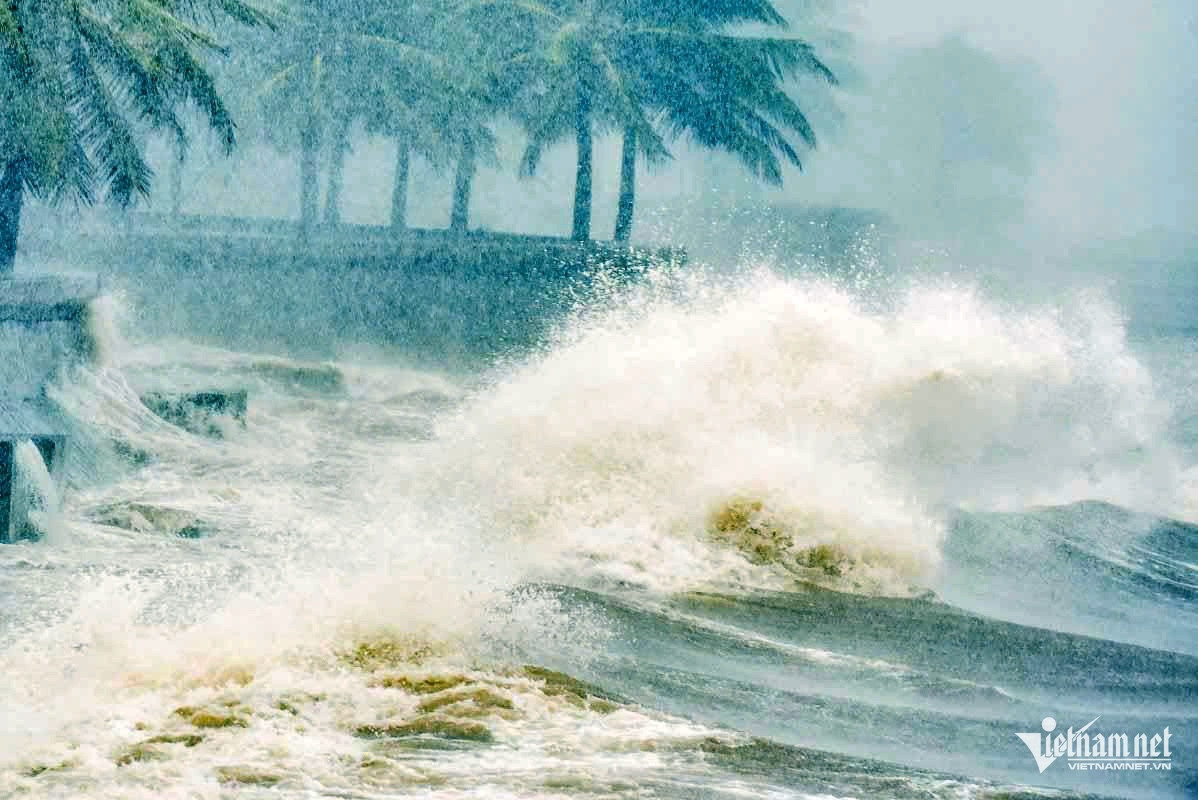
According to Vietnam’s National Center for Hydro-Meteorological Forecasting, under the Department of Meteorology and Hydrology, the 2026-2027 El Nino continues to strengthen.
By the second week of September 2026, sea surface temperature anomalies (SSTA) in the Nino 3.4 region had risen to around +2.0°C, reaching the threshold for a very strong El Nino.
The weather agency said sea surface temperatures in the Nino 3.4 region show a clear strengthening trend. SSTA stood at around +1.7°C in the first week of August 2026, then rose slightly and remained around +1.8°C over the following four weeks before climbing to +2.0°C in mid-September.
An SSTA of +1.5°C to below +2.0°C corresponds to a strong El Nino. At around +2.0°C, the phenomenon enters the very strong category.
Climate forecasts indicate that El Nino is almost certain to remain very strong from October through December 2026 and could reach its peak during this period.
From January to March 2027, El Nino is still expected to remain very strong, although its probability and intensity are forecast to gradually decline. The possibility that it could persist into the first half of summer 2027 has not been ruled out.
Vietnam could see stronger impacts in the months ahead
Meteorologists say El Nino typically increases the likelihood of higher temperatures, extreme heat, drought and water shortages, particularly during the dry season.
At the same time, changes in atmospheric circulation can alter rainfall patterns as well as the behavior of storms and tropical depressions.
From now through the end of 2026, the number of storms and tropical depressions in the South China Sea, known in Vietnam as the East Sea, as well as those affecting the country’s mainland, is forecast to be below the long-term average.
But meteorologists cautioned that fewer storms do not mean powerful storms cannot occur, just as less widespread rainfall does not rule out episodes of extreme rain.
Even during strong El Nino years, exceptionally heavy rainfall, flooding, flash floods, landslides and complex storm systems can still develop as regional weather patterns interact with shorter-term atmospheric conditions.
A warmer winter, followed by earlier heat
Cold-air activity is expected to be weaker than usual during the 2026-2027 winter, with severe and prolonged cold spells likely to arrive later and occur less frequently than the long-term average.
Average temperatures across Vietnam are forecast to be generally 1-2.5°C above normal.
By early 2027, hot weather could begin earlier than usual across the country.
During the summer of 2027, heat waves are expected to be more intense, with more hot days than both the long-term average and 2026. Meteorologists have not ruled out temperatures exceeding historical records.
High risk of drought, water shortages and saltwater intrusion
From now until the end of 2026, rainfall is expected to be below normal across much of Vietnam.
The most significant deficits are forecast for the south-central coast, the Central Highlands and southern Vietnam, where rainfall could be 20-40% below normal.
The rainy season in these regions could also end earlier than usual, with below-normal rainfall likely to continue into the first months of 2027.
At the same time, higher temperatures and an early onset of hot weather will increase water demand and evaporation.
As a result, the risk of drought, water shortages and saltwater intrusion during the early months of the 2027 dry season is assessed as very high in the south-central coast, Central Highlands and southern Vietnam.
Vietnam urged to prepare for both floods and drought
The National Center for Hydro-Meteorological Forecasting stressed that El Nino is a large-scale climate phenomenon and cannot, on its own, be used to precisely predict a specific natural disaster in a particular location.
Its impacts depend on how El Nino interacts with atmospheric and oceanic systems and with weather patterns at different times of the year.
With El Nino already reaching the very strong threshold and continuing to intensify, local authorities are being urged to prepare for two contrasting sets of hazards.
“On one hand, heavy rain, storms, floods and other extreme natural hazards may occur at specific times,” meteorologists said. “On the other, extreme heat, drought, water shortages and saltwater intrusion could persist during the 2026-2027 dry season.”
Vietnam’s weather agency is continuing to closely monitor El Nino, update international and domestic climate models and assess its potential effects on temperatures, rainfall, storms and water resources.
The aim is to provide timely forecasts and warnings to support disaster preparedness and response as the climate pattern continues to evolve.
Bao Anh
.svg)
