 Vietnamnet.vn

 Podcast



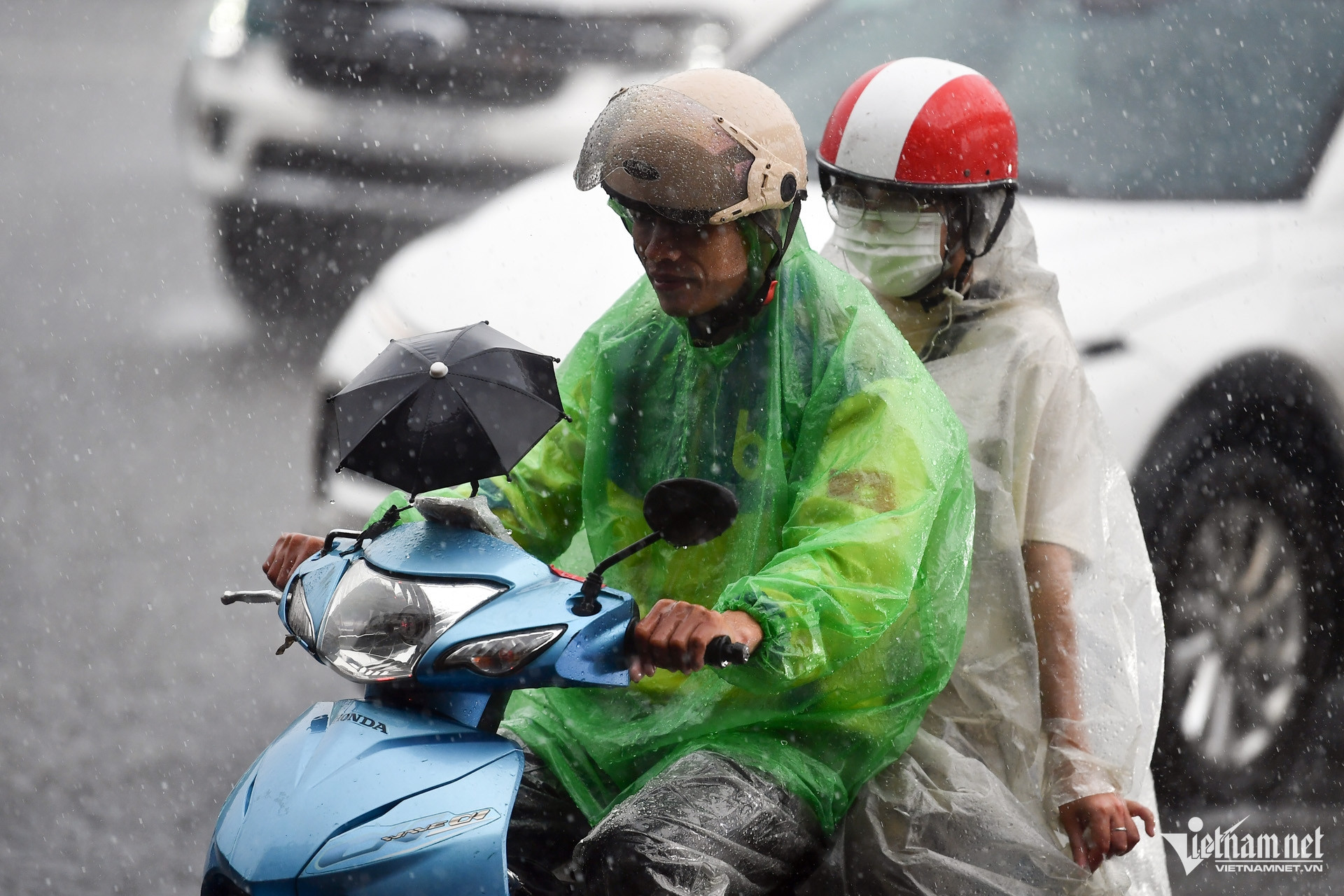
Nguyen Duc Hoa, deputy head of the Climate Forecasting Department at the National Center for Hydro-Meteorological Forecasting, said the country has experienced highly volatile weather since mid-April, with alternating cold spells, widespread thunderstorms and intense heat.
Between April 11 and May 10, northern Vietnam recorded four cold-air surges that brought scattered showers and thunderstorms.
Notably, several mountainous northern localities, Hanoi and areas stretching from Thanh Hoa to Ha Tinh experienced hailstorms, with some hailstones reportedly as large as eggs.
Northern Vietnam also saw the highest number of widespread rain events, with five separate episodes recorded during the period.
Areas from Thanh Hoa to Hue experienced four rain events, while localities from Da Nang to Gia Lai, the Central Highlands and southern Vietnam saw less rainfall.
In the south, rainfall only began increasing noticeably in early May.
At the same time, severe heatwaves affected northwestern and central regions.
Southern Vietnam endured prolonged extreme heat, with some areas recording daily maximum temperatures surpassing historical averages for the same period.
Average temperatures nationwide between April 11 and May 10 were 0.5 to 1.5 degrees Celsius higher than the long-term average.
Heat expected to intensify
According to Hoa, weather conditions nationwide will remain complicated through June 10, with increasing heat alternating with widespread thunderstorms.
In the short term, due to the expansion of a western low-pressure zone eastward, hot weather is expected to affect northern and north-central regions on May 13.
Temperatures in these areas are forecast to range from 35 to 37 degrees Celsius, while western mountainous areas could see highs of 36 to 38 degrees, with some locations exceeding 38 degrees.
Northern Vietnam is also expected to experience localized heat exceeding 35 degrees Celsius.
From May 14 onward, widespread heat is likely to expand across the north and persist in central Vietnam.
Meanwhile, southern Vietnam is currently experiencing a heatwave, with temperatures in the southeastern region ranging from 35 to 37 degrees Celsius, and some places surpassing 37 degrees.
The heatwave in the south is expected to continue until around May 15 or 16.
Meteorologists predict that during the next month, heatwaves will intensify in northern Vietnam, areas from Thanh Hoa to Hue and the south-central coastal region.
The number of hot days in northern and central Vietnam is forecast to exceed long-term averages, while heat in southern Vietnam is expected to gradually ease from late May.
Cold air may trigger thunderstorms
Despite the growing heat, another cold-air surge is expected around the nights of May 16 and 17.
Combined with upper-level wind convergence, the system is forecast to trigger thunderstorms across several regions.
From the night of May 16 through May 21, northern Vietnam is expected to see scattered showers and thunderstorms.
From the afternoon and evening of May 17 to May 21, rainfall is forecast to expand into north-central and central regions, mainly during evenings and nighttime hours.
Southern Vietnam is also expected to experience scattered evening thunderstorms during the same period.
National average temperatures over the next month are forecast to remain 0.5 to 1 degree Celsius above normal.
Rainfall in areas from Ha Tinh to Hue and along the south-central coast is expected to be 15-30% below average, while most other regions are forecast to receive near-average rainfall.
Meteorologists also warned that tropical storms or tropical depressions could form in the East Sea during the forecast period at levels close to the long-term average.
On average, the East Sea sees about 0.7 storms during this period, with around 0.1 storms making landfall in Vietnam.
The weather agency warned that widespread thunderstorms are likely across the country, particularly heavy rain events in the Central Highlands and southern Vietnam from late May and in northern Vietnam from June onward.
Dangerous weather conditions including tornadoes, lightning, hail and strong winds are also expected to remain a threat nationwide, especially in northern regions, the Central Highlands and southern Vietnam.
As weather patterns grow increasingly extreme, meteorologists urged residents to closely monitor forecasts and warnings in order to adjust production activities and daily routines, minimizing damage caused by natural disasters.
Bao Anh
.svg)
