 Vietnamnet.vn

 Podcast



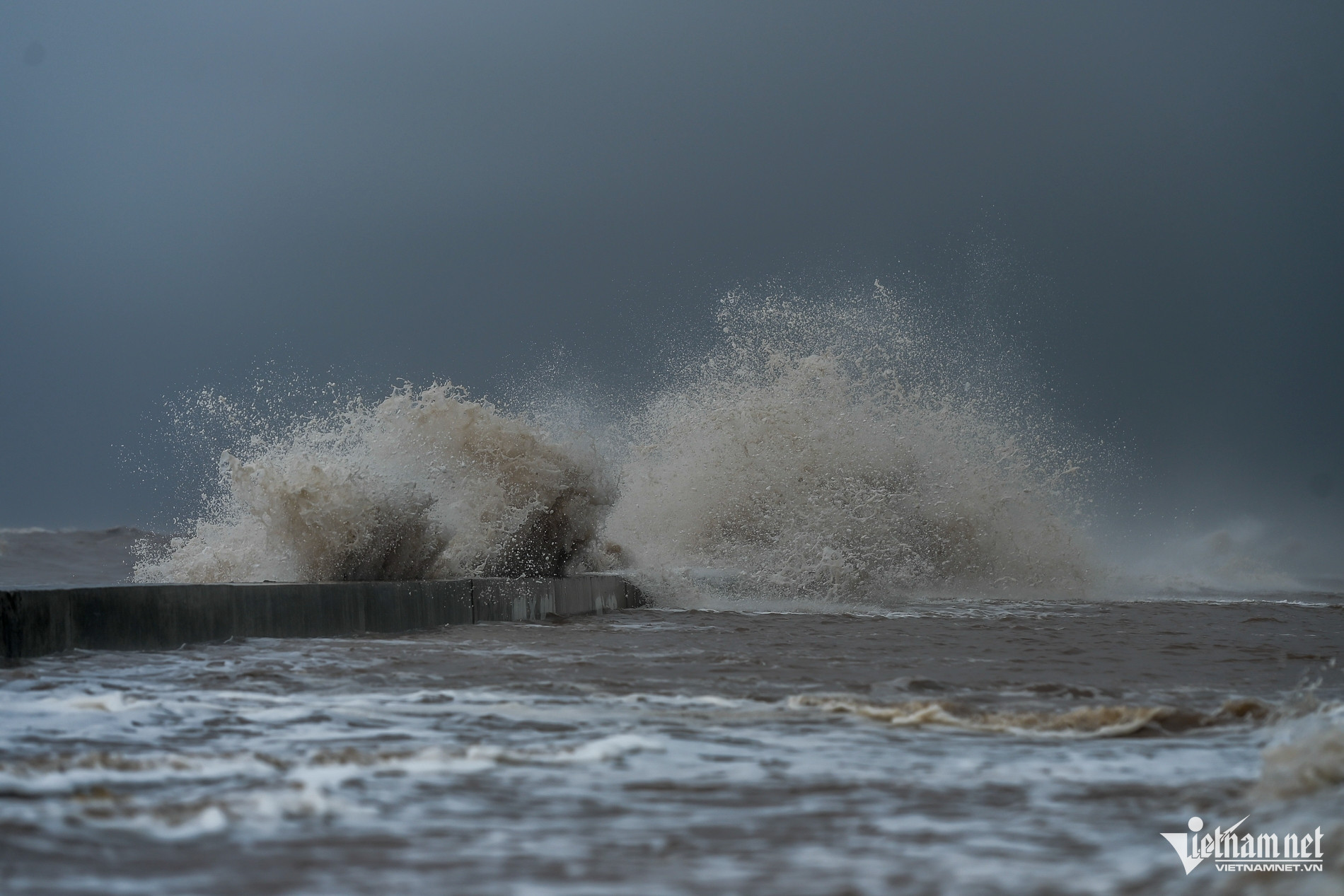
El Nino is forecast to continue strengthening rapidly and could reach very strong intensity in the coming months, while heavy rain, extreme heat and other severe weather phenomena remain complex and difficult to predict across Vietnam.
El Nino could reach very strong intensity
According to Nguyen Duc Hoa, deputy head of the Climate Forecasting Division at the National Center for Hydro-Meteorological Forecasting, weather across Vietnam was highly variable from June through mid-August 2026, marked by widespread heat, thunderstorms, whirlwinds, lightning and hail, along with tropical storms and depressions.
During this period, the East Sea recorded two tropical depressions and three storms.
Notably, Storm Maysak, the first storm to affect Vietnam in 2026, formed in early July and strengthened to Level 9, with gusts reaching Level 11 on Vietnam’s wind scale.
It later moved into the Mong Cai area of Quang Ninh Province on the evening of July 4 at Level 8-9, with gusts reaching Level 12, before weakening over land.
Northern and central Vietnam also experienced several periods of intense heat. Numerous weather stations recorded temperatures exceeding historical levels for the same period.
In June alone, 22 stations surpassed historical records, followed by two stations in July and nine during the first half of August.
Hoa said ENSO is currently in an El Nino phase. During the second week of August 2026, the sea surface temperature anomaly in the NINO3.4 region reached 1.8 degrees Celsius.
From September through November 2026, El Nino is forecast to remain strong to very strong with a probability of 100%, including an estimated 93% chance of reaching very strong intensity.
For October-December 2026, the probability of a very strong El Nino rises to 95%.
From December 2026 through February 2027, there is still a 93% probability that El Nino will remain at strong to very strong intensity.
Higher temperatures, fewer severe cold days
Vietnam’s weather agency forecasts that average temperatures nationwide in September 2026 will be 0.5-1.5 degrees Celsius above the long-term average.
During October and November, temperatures are expected to be generally 1-2 degrees above average, with some locations experiencing even greater anomalies.
From December 2026 through February 2027, temperatures are forecast to remain 0.5-1.5 degrees above the long-term average. In the Central Highlands and southern Vietnam, the anomaly could reach 1.5-2 degrees.
Cold-air activity is also forecast to be weaker than the long-term average.
During December 2026 and January 2027, severe and damaging cold spells could arrive later than usual, while the overall number of cold days is expected to be lower than the climatological norm.
That does not mean, however, that Vietnam will experience an entirely warm winter.
When powerful cold-air outbreaks do occur, severe cold, frost or ice may still develop, potentially affecting public health and agricultural production.
Complex rainfall patterns, severe shortages in some areas
In September, total rainfall across northern and central Vietnam is forecast to be 10-30% below the long-term average. Other regions are expected to receive rainfall close to normal levels.
In October, rainfall in northern Vietnam is forecast to rise to 5-20% above average, while many other areas could experience deficits of 5-20%.
The shortfall could be particularly pronounced from southern Nghe An to Da Nang and along the south-central coast, where rainfall may be 20-40% below average.
In November, northern Vietnam and the area from Thanh Hoa to Ha Tinh are expected to receive 10-30% more rainfall than normal.
In contrast, rainfall from Quang Tri to Lam Dong could be 20-40% below average, while southern Vietnam may record a deficit of 5-15%.
By December, northern Vietnam and the area from Thanh Hoa to Ha Tinh are expected to continue receiving above-average rainfall.
The south-central coast, meanwhile, could see rainfall deficits of 40-100mm.
During January and February 2027, rainfall in most regions is forecast to be 5-20mm below average, while northern Vietnam is expected to remain close to normal.
The weather agency warned that areas from Ha Tinh to Hue and along the south-central coast face a risk of rainfall shortages during the core months of their rainy season, particularly October and November.
In the Central Highlands and southern Vietnam, the rainy season could end earlier than usual.
Both regions may also experience periods of very little rain during January and February 2027, putting pressure on water resources and agricultural production.
Fewer storms, but extreme weather remains a threat
From September 2026 through February 2027, tropical storm and tropical depression activity in the East Sea, as well as the number of systems making landfall in Vietnam, is forecast to be below the long-term average.
Historically, around 7.3 tropical storms and depressions occur in the East Sea during this period, with about 3.1 making landfall.
Between September and November 2026 specifically, around three to five storms or tropical depressions are forecast to develop in the East Sea, with one or two expected to make landfall.
That compares with long-term averages of 5.9 systems in the East Sea and 2.9 making landfall during the same period.
Fewer storms, however, do not necessarily mean an absence of dangerous weather.
Moderate to heavy rain could still occur across large areas during September and October, while thunderstorms, whirlwinds, lightning and hail remain possible in many parts of the country during the seasonal transition.
The weather agency has advised residents and local authorities to closely monitor forecasts, particularly in areas vulnerable to rainfall shortages, localized heavy downpours or strong cold-air outbreaks.
Bao Anh
.svg)
