 Vietnamnet.vn

 Podcast


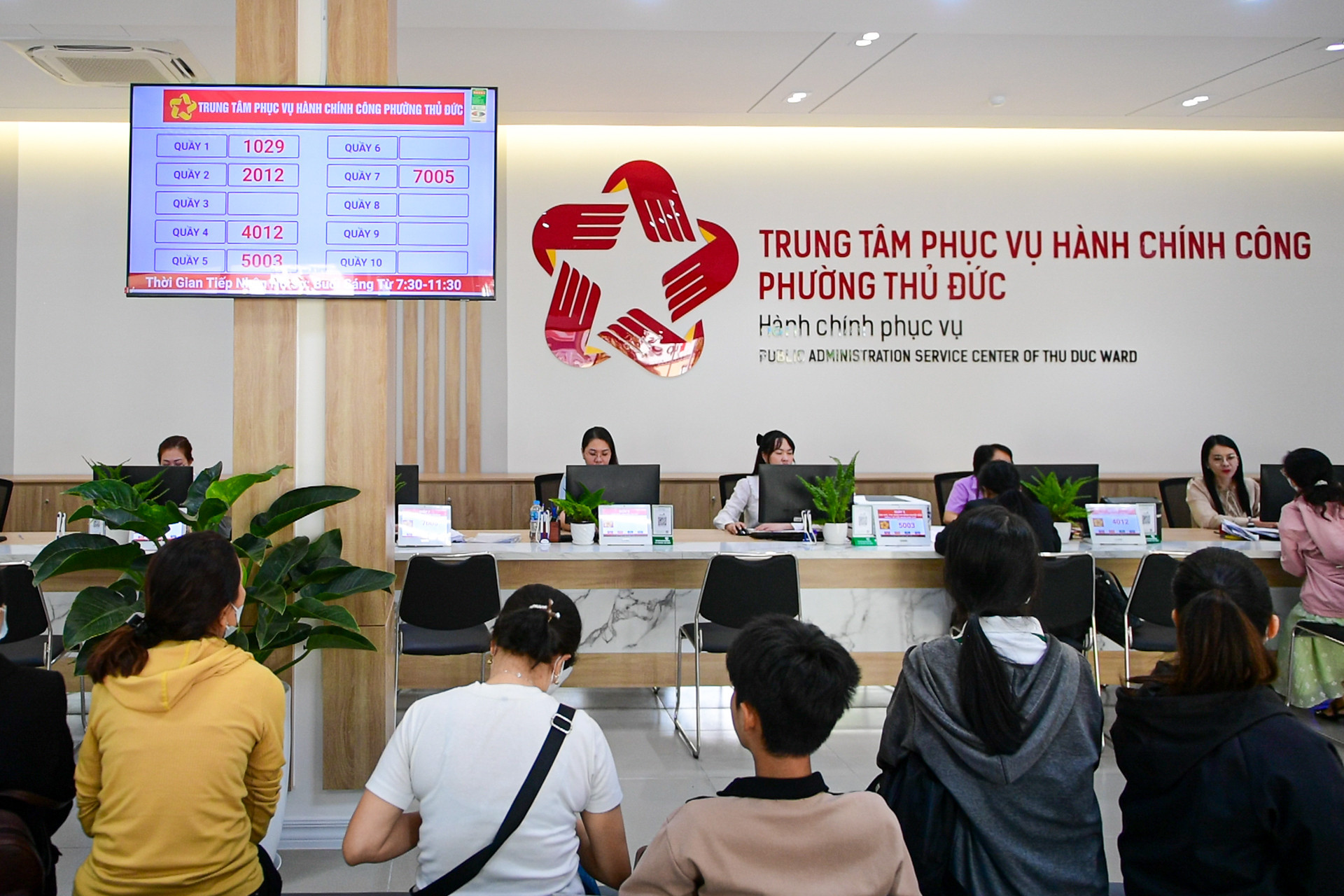
In a report responding to National Assembly deputies' comments on socioeconomic issues, the government provided updates on public sector employment positions, staffing quotas, salaries and allowances.
Progress on public sector job classifications
Regarding civil service job classifications, the government said Decree No. 361/2025 required ministries, central agencies and provincial People's Committees to approve updated job position frameworks for organisations under their management by July 1, 2026, replacing previously issued decisions.
According to the government, ministries, ministerial-level agencies and local authorities have now largely completed the approval of job positions within their respective jurisdictions.
Under Decree No. 232/2026, which regulates job positions for public employees working in public service units, ministries, provincial People's Committees and authorised agencies must approve the relevant job position frameworks by July 1, 2027.
Until new decisions are issued under the decree, previously approved job position frameworks will remain valid for the recruitment, deployment and management of public employees.
The government said public service units under ministries, ministerial-level agencies and provincial- and commune-level People's Committees are currently identifying and defining job positions in accordance with Decree No. 232.
Meanwhile, ministries and local authorities are reviewing and refining job classifications in line with Politburo Conclusion No. 107 and Guideline No. 07 issued by the Party Central Committee's Organisation Commission.
These directives cover the development of job position frameworks, assessment of workforce requirements and preparation of staffing plans across Vietnam's political system.
The review is expected to be completed in the fourth quarter of 2026.
Staffing plans for 2027-2031 to be submitted to Politburo
Regarding public sector staffing quotas for 2027-2031, the government said it had instructed the Ministry of Home Affairs to coordinate with the Party Central Committee's Organisation Commission.
The two bodies are reviewing job positions, determining personnel requirements and developing staffing proposals across the political system in accordance with the commission's guidelines.
The Party Central Committee's Organisation Commission is expected to submit the proposed staffing plan for the 2027-2031 period to the Politburo in the fourth quarter of 2026.
Salary and allowance reforms under consideration
On salaries and allowances, the government reported that it had issued three decrees, while the Minister of Home Affairs had promulgated three circulars to implement certain allowance policies for officials, civil servants, public employees and members of the armed forces.
The measures followed the restructuring of government agencies and the introduction of Vietnam's two-tier local administration model.
According to the government, these policies have helped improve living conditions for public sector personnel and members of the armed forces.
Following directions from the Politburo and the Secretariat of the Communist Party of Vietnam, the government has also instructed the Ministry of Home Affairs to work with relevant ministries and agencies on proposed salary policies.
The proposals are being developed in line with the 14th National Party Congress Resolution and will be submitted to competent authorities for consideration and approval.
During an earlier group discussion at the National Assembly, Tran Cam Tu, Permanent Member of the Party Central Committee's Secretariat, acknowledged that salary arrangements remained inadequate in some areas, with certain public employees receiving very low pay.
He noted that allowances for commune-level officials and civil servants had recently been increased to 55%, while civil servants in some ministries and sectors continued to receive basic monthly salaries of around VND10 million (approximately US$400).
The Politburo, he said, was directing relevant agencies to address these issues promptly, with the aim of establishing a clearer system of staffing quotas, salaries and allowances by early 2027.
Under a conclusion issued on October 17 concerning the improvement of job position frameworks across the political system, the Politburo identified these frameworks as the foundation for recruitment, personnel placement, performance assessment, staffing management and salary reform.
Rather than relying primarily on civil service grades, salary scales and seniority, Vietnam plans to gradually link employee evaluation, remuneration and benefits to the requirements of individual positions, professional competence, performance outcomes and the value of employees' contributions.
The objective is to move away from uniform salary arrangements that fail to adequately reflect differences in job performance and effectiveness.
Tran Thuong

