 Vietnamnet.vn

 Podcast



A 2.4-meter-long cinnamon pork roll, live cha ca cooking demonstrations, and elegant traditional feasts - these were the crowd-pulling highlights of the Hanoi Culinary Culture Festival, held over the weekend of December 19–21 at Thong Nhat Park.
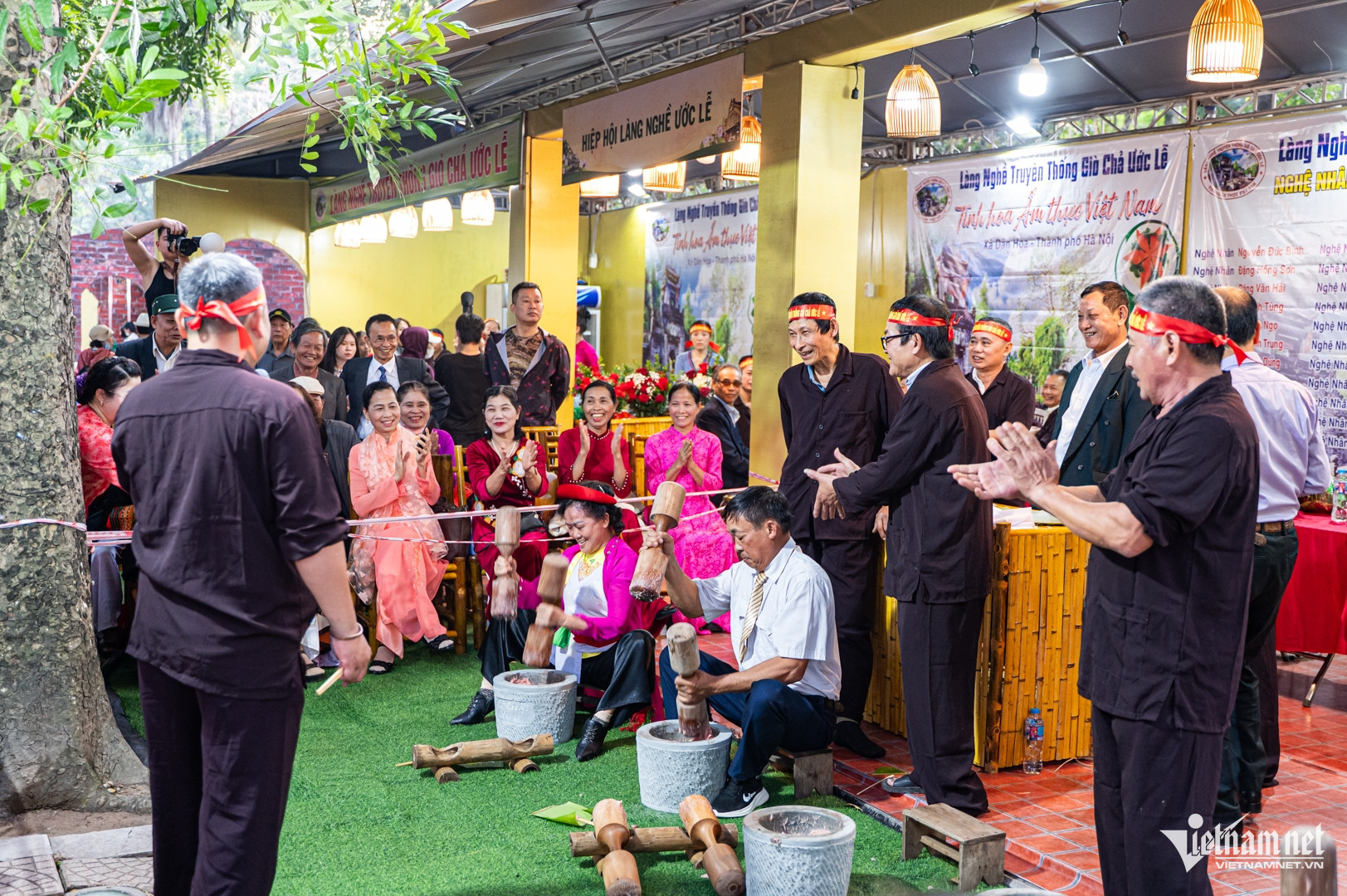
Under the theme “Hanoi – A culinary journey of creative connection,” the festival attracted both locals and tourists with 60 curated booths showcasing food from the capital and across regions, accompanied by vibrant cultural experiences.
At the Uoc Le booth - famous for traditional giò chả - visitors tried their hands at pounding giò under the guidance of seasoned artisans from the village. The process is physically demanding and requires years of experience. Each batch takes 15–18 minutes of continuous pounding: one pestle is used at first to break down the meat, followed by a two-pestle alternating motion once the mixture begins to bind.
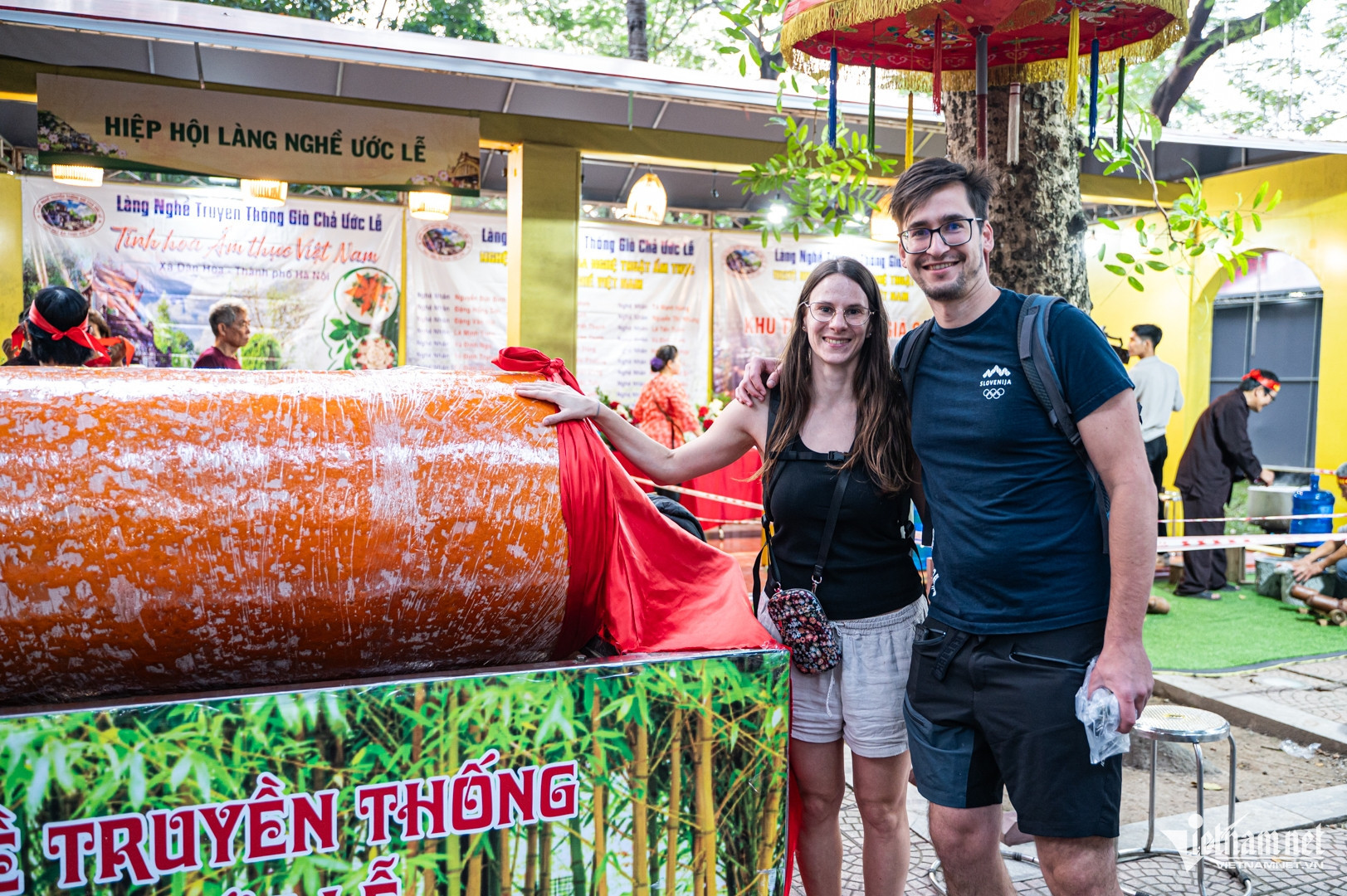
One of the most talked-about spectacles was the ceremonial procession recreating the Uoc Le village tradition. At the center of the procession was a colossal cha que (cinnamon pork roll) measuring 2.4 meters and weighing a whopping 120 kilograms - handcrafted entirely using traditional methods.
“I worked with other artisans for hours to prepare this for the festival,” shared artisan Vu Dinh Ngo, 73, who personally oversaw the giant cha que. “It’s made exactly how our village has done for generations.”
Patricia, 26, a visitor from Slovenia, happened upon the festival and was instantly captivated by its vibrant atmosphere. She was particularly amazed by the enormous cha que and the handmade cooking process. After sampling several dishes, she expressed a desire to “buy everything and bring it home to show my friends.”
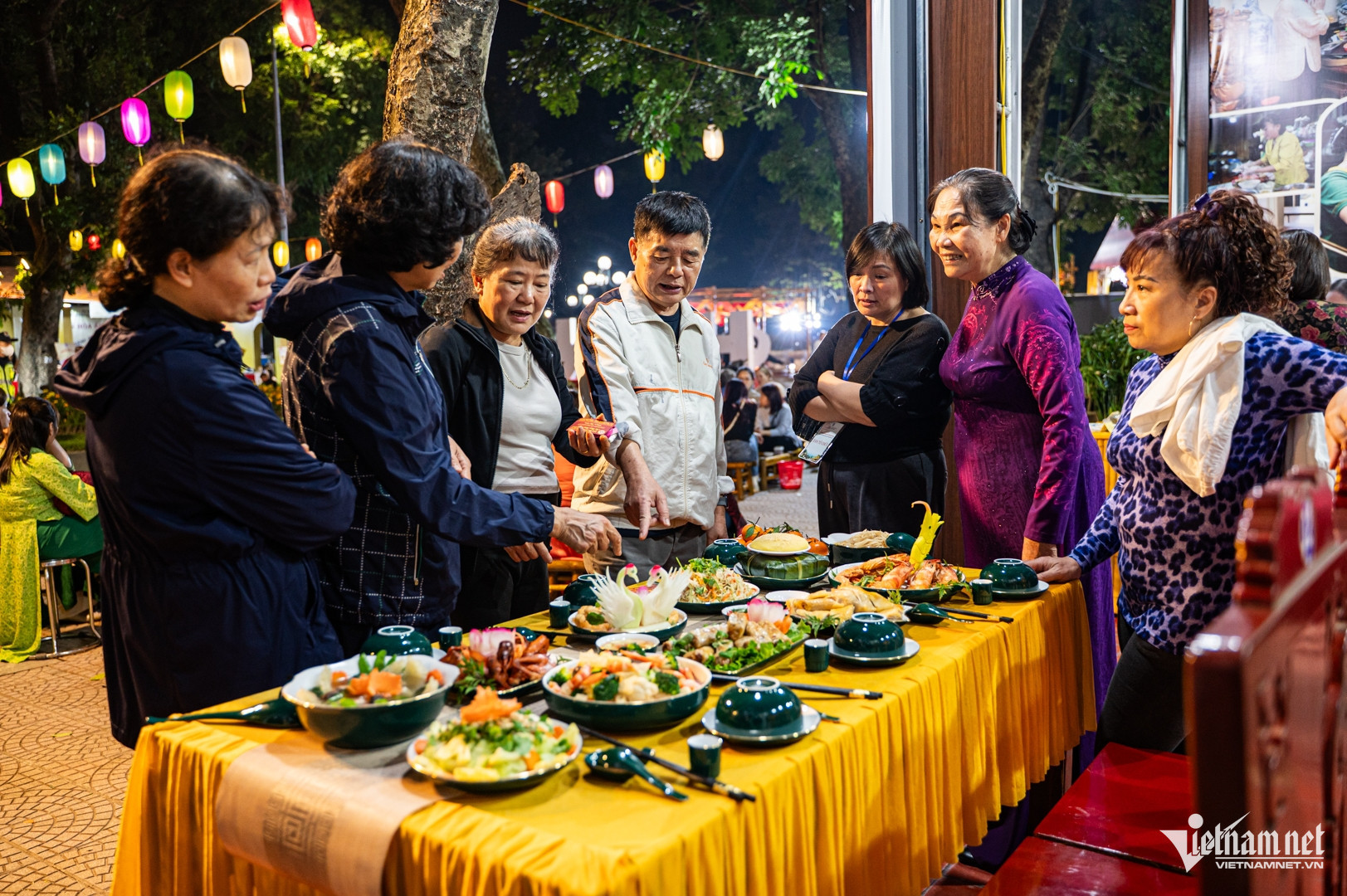
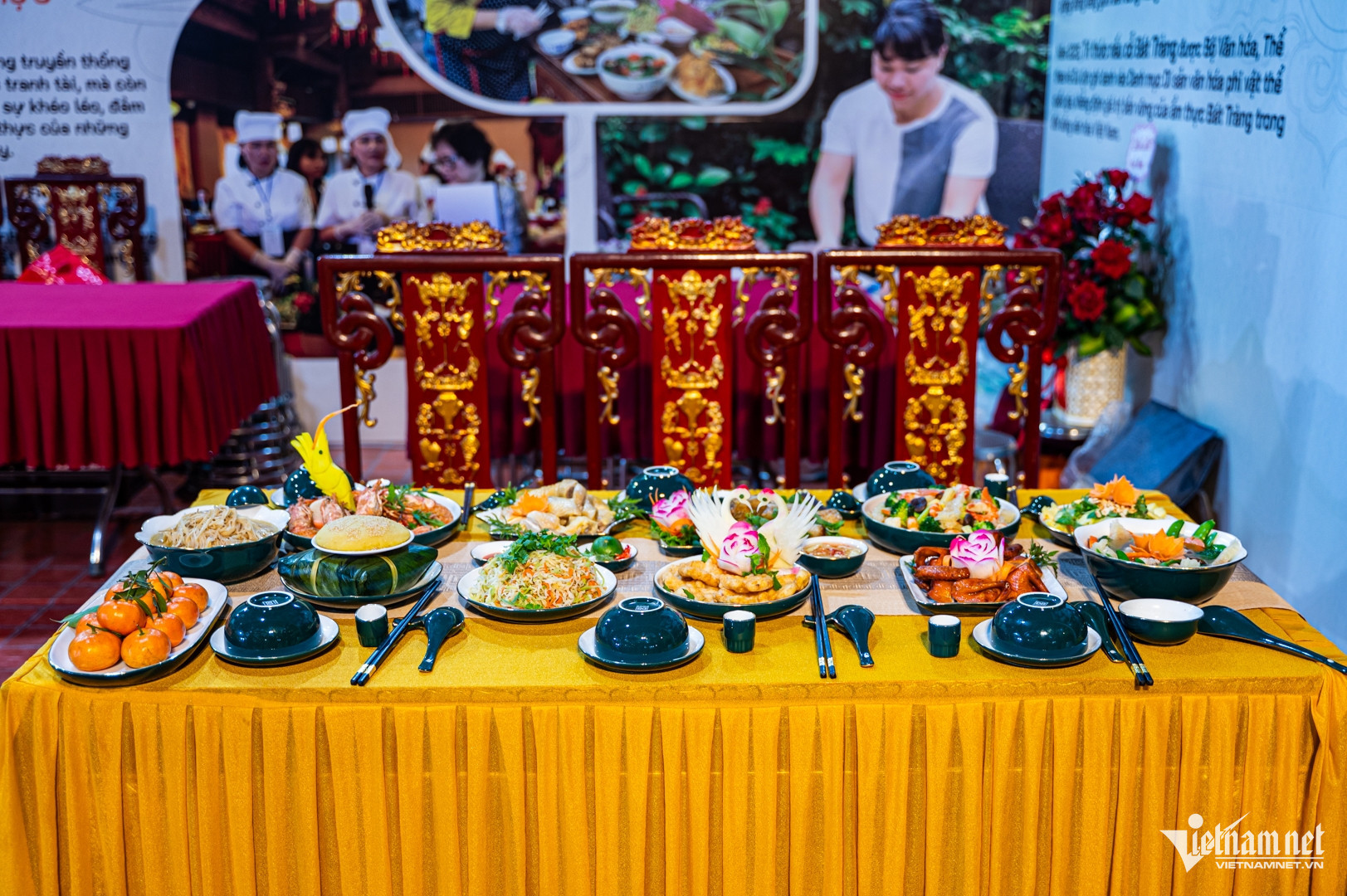
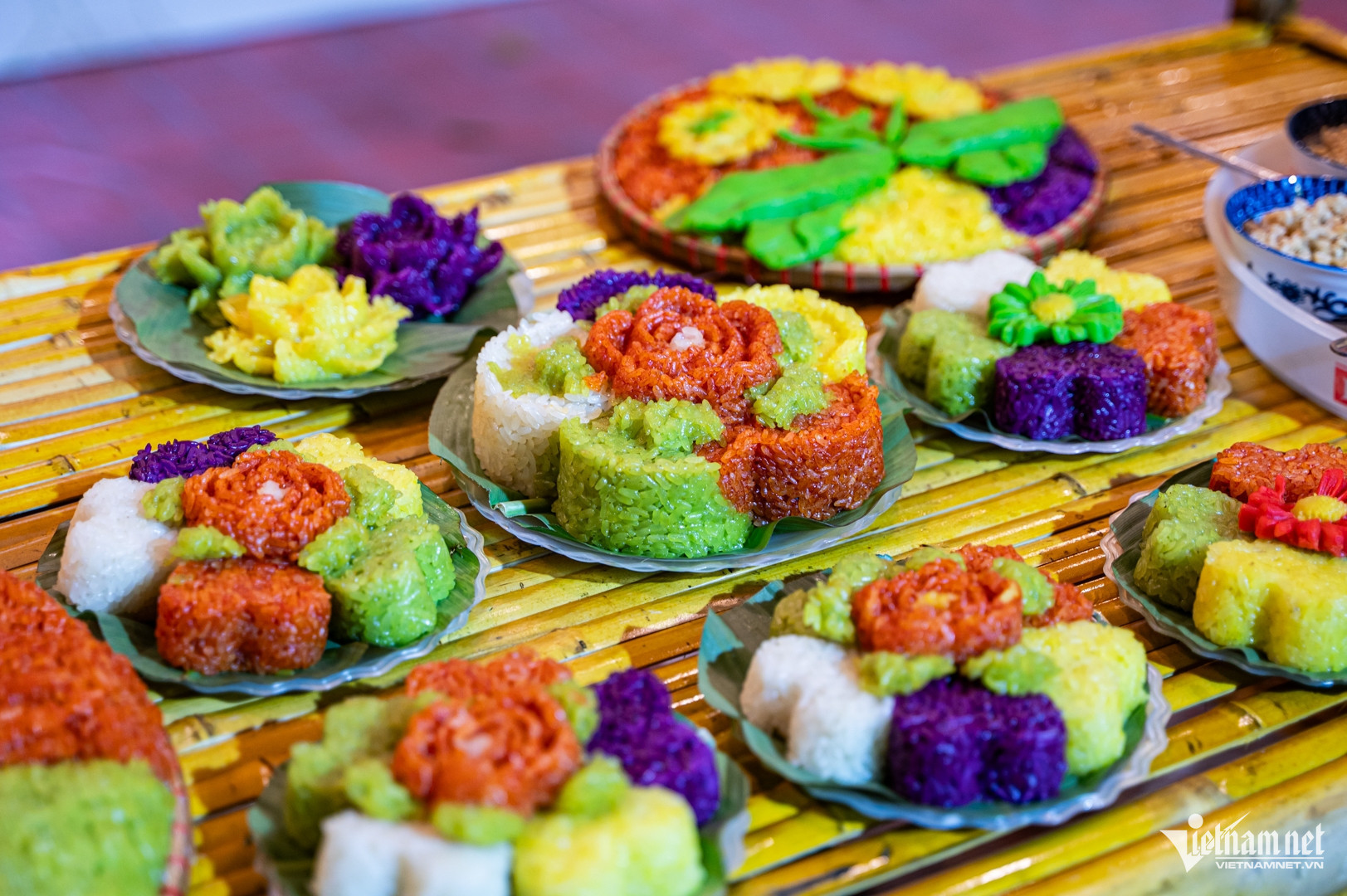
Another centerpiece was the traditional banquet display by Bat Trang, the historic ceramic village. Meticulously arranged and steeped in symbolism, this banquet space invited visitors to admire and learn about the culinary artistry behind it.
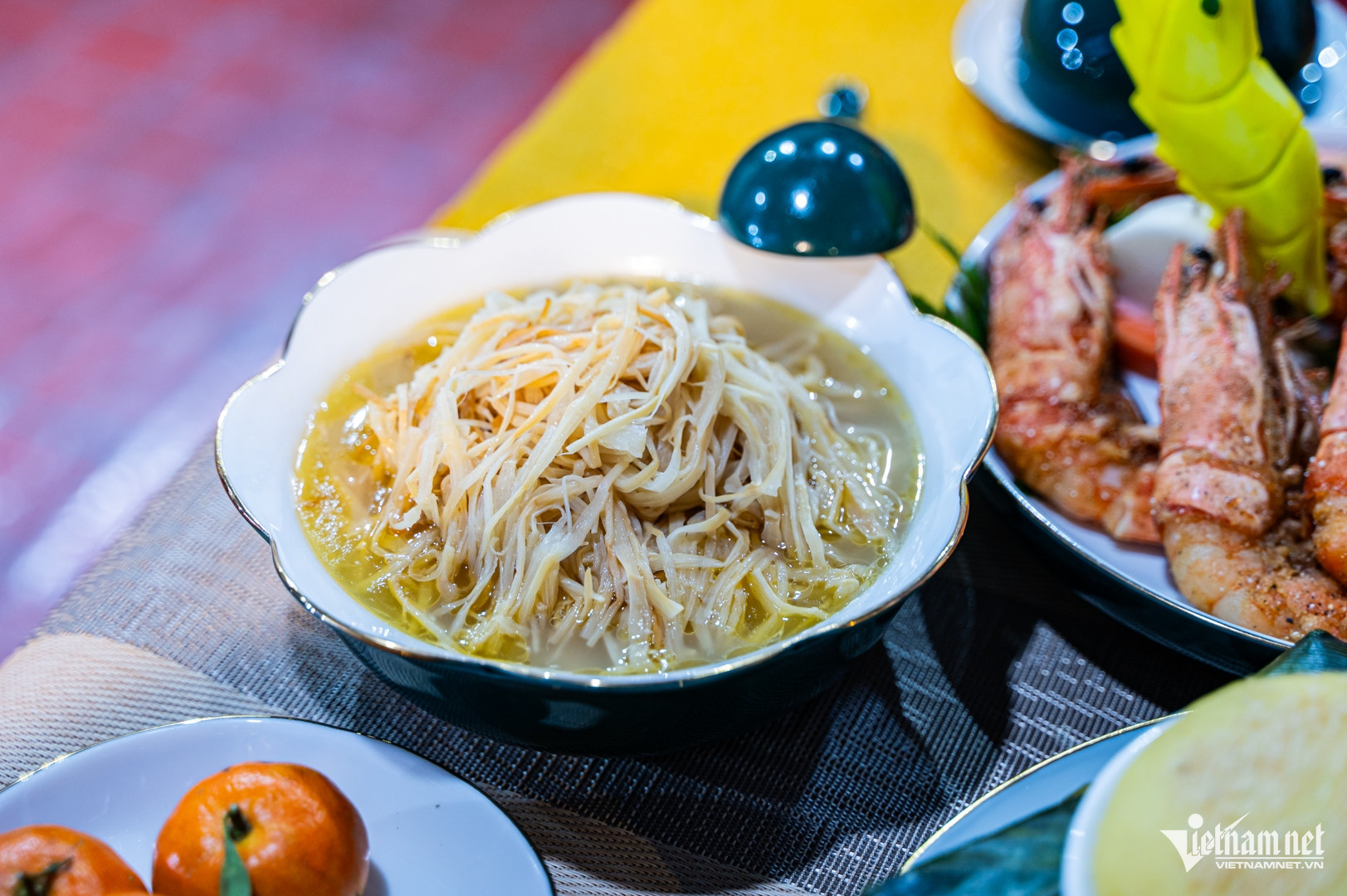
“The banquet is beautifully presented and full of authentic flavors,” said Pham Thanh Binh, 67, a Hanoi resident. “The squid-and-bamboo shoot soup was both surprising and delicious. I plan to order a full set for our family’s next celebration.”
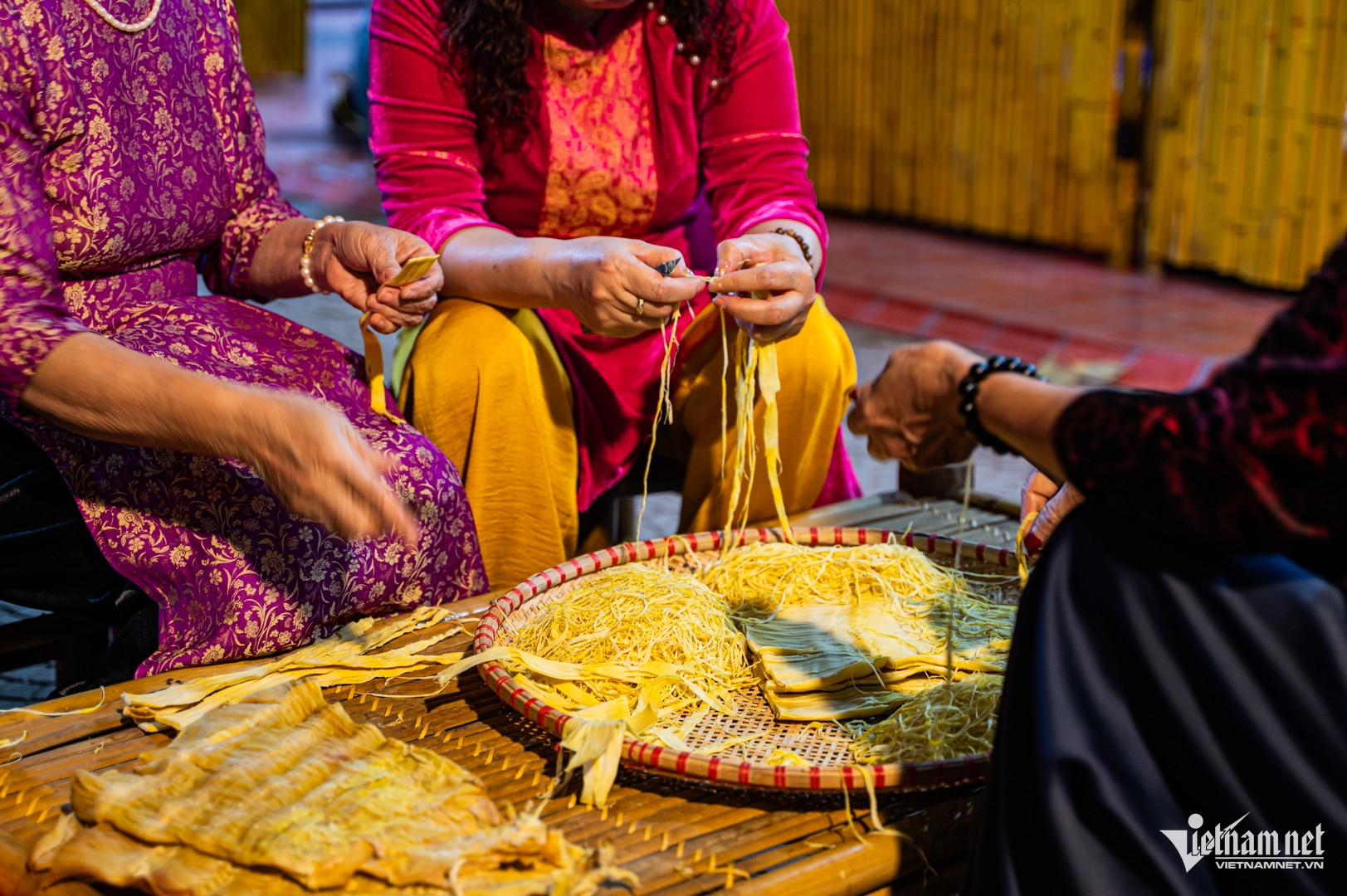
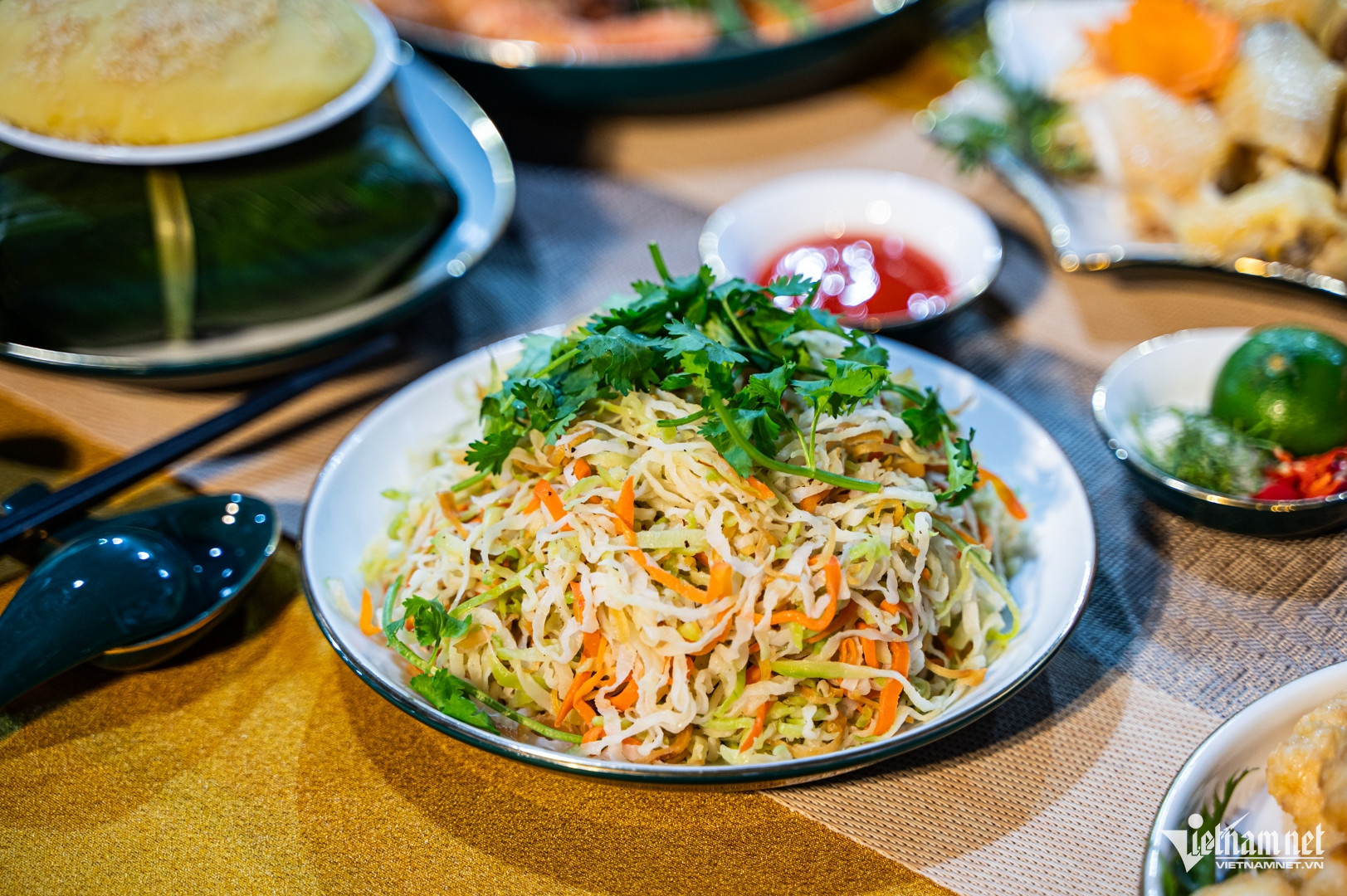
According to artisan Pham Thi Dieu Hoai, the squid-and-bamboo shoot soup is considered the “soul” of a Bat Trang banquet, showcasing the dexterity and care of the village women. Bamboo shoots are hand-shredded into fine threads to preserve crunch. Squid is meticulously cleaned and sautéed until golden to eliminate odor. The ingredients are then simmered in a broth made from shrimp stock and pork bones, creating a savory and aromatic dish.
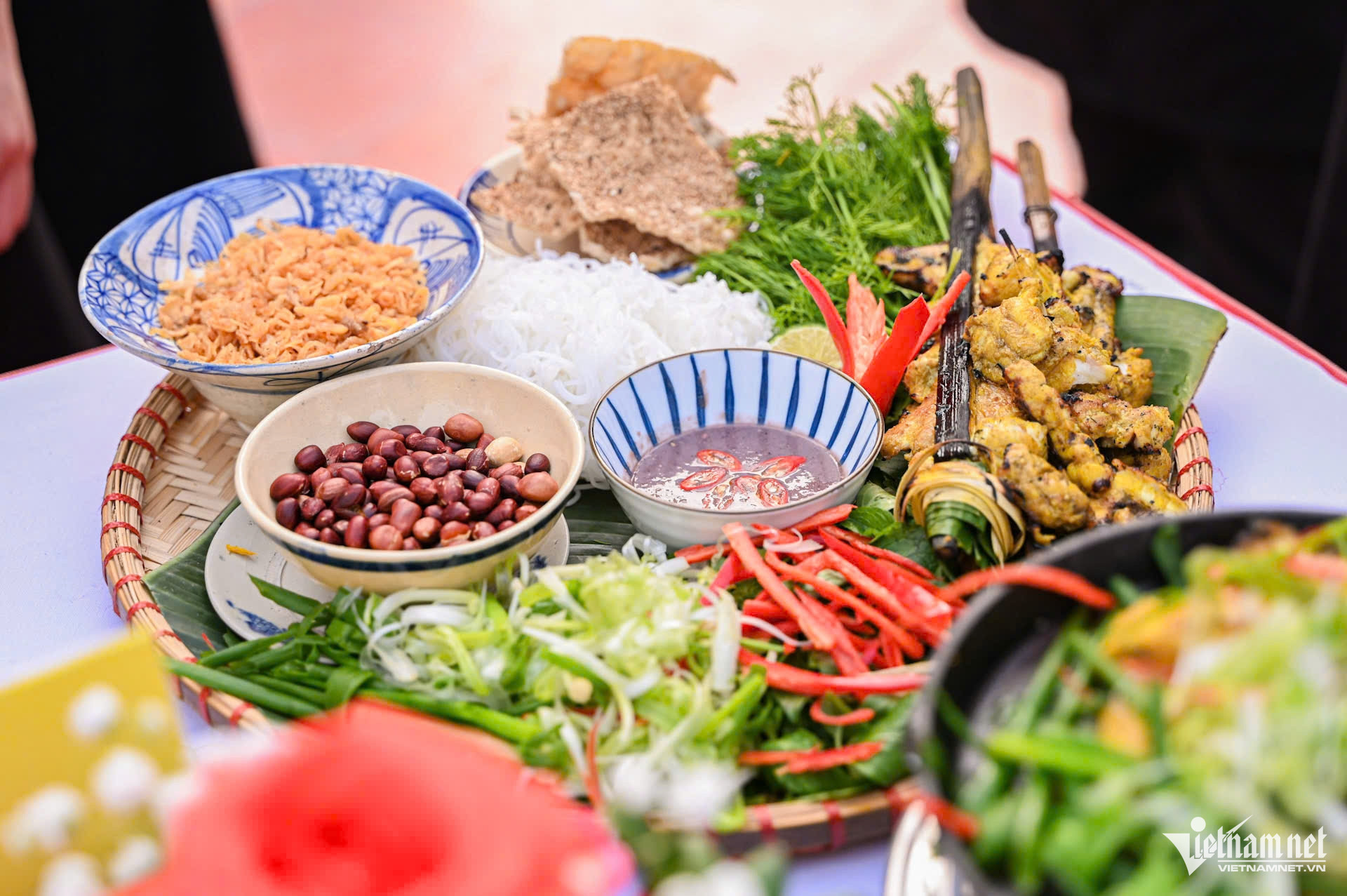
A major highlight of the festival was the announcement by the Ministry of Culture, Sports and Tourism officially recognizing the “Knowledge of making and enjoying cha ca La Vong” as a National Intangible Cultural Heritage.
This legacy traces back to the Doan family at 14 Hang Son Street (now known as Cha Ca Street in Hoan Kiem District), where the dish was first sold in 1871 by Doan Xuan Phuc and his wife Bi Thi Van. After many historical changes, the family’s fourth generation continues the tradition to this day.
Le Thi Bich Loc, 75, the family’s current matriarch and keeper of the recipe, explained that the original cha ca used the now-rare anh vu fish, prized for its firm, flavorful flesh. As the species became scarce, the family switched to using snakehead fish, which provides a similar taste.
What makes cha ca La Vong unique is its preparation. The marinated fish is grilled on bamboo skewers over charcoal. Just before serving, the golden-browned fish is transferred to a pan of sizzling oil and served with fresh dill and scallion stalks -creating a signature scent and texture combination.
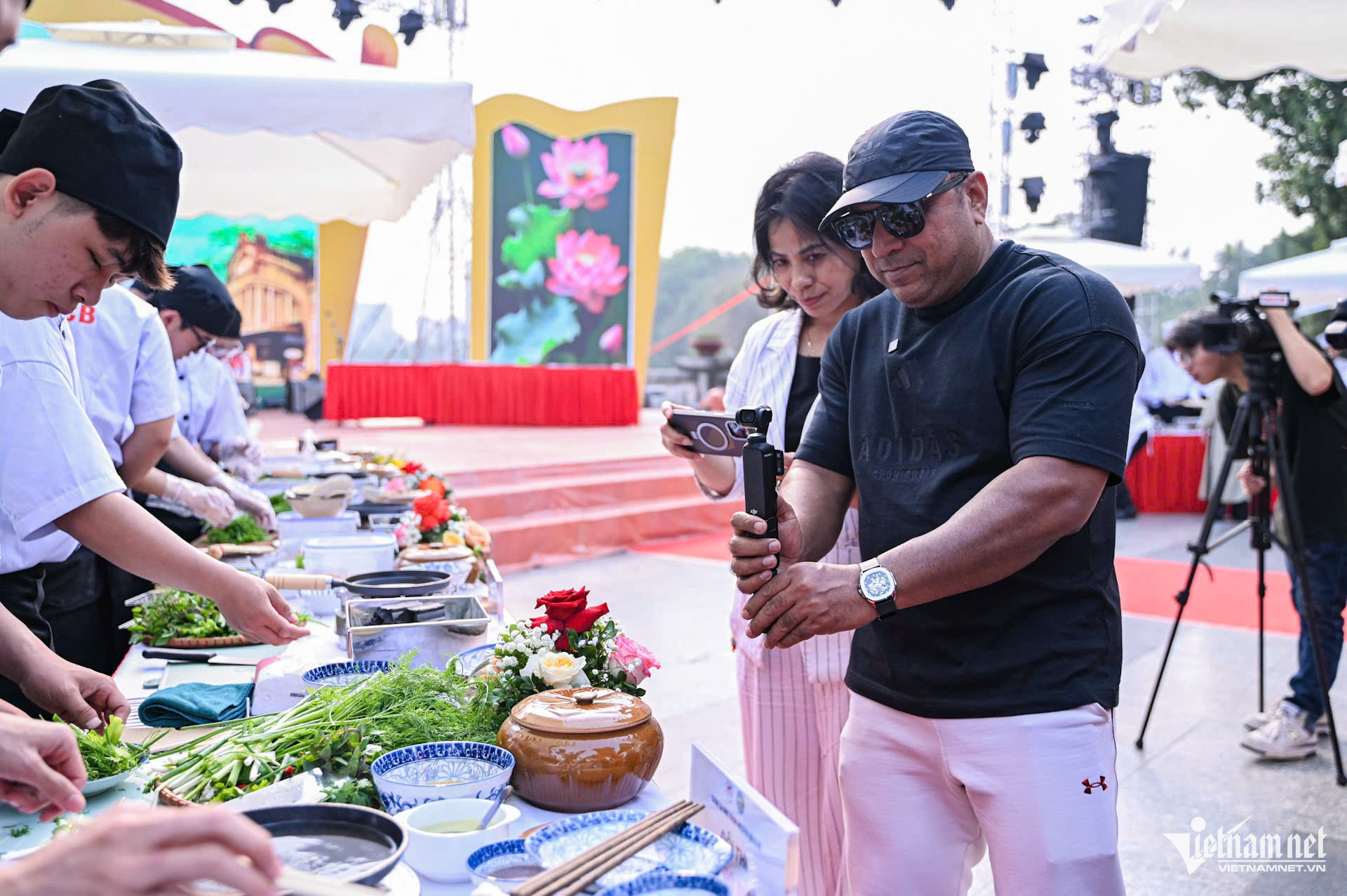
Raja Mahmood Janjua, a long-time foreign resident in Vietnam, shared his love for the dish: “Every time I taste it, I feel excited - it’s that good.”
Deputy Director of Hanoi’s Department of Culture and Sports, Le Thi Anh Mai, noted that the festival plays an essential role in honoring and promoting the city’s rich culinary heritage while affirming its status as a creative and culturally distinctive capital.
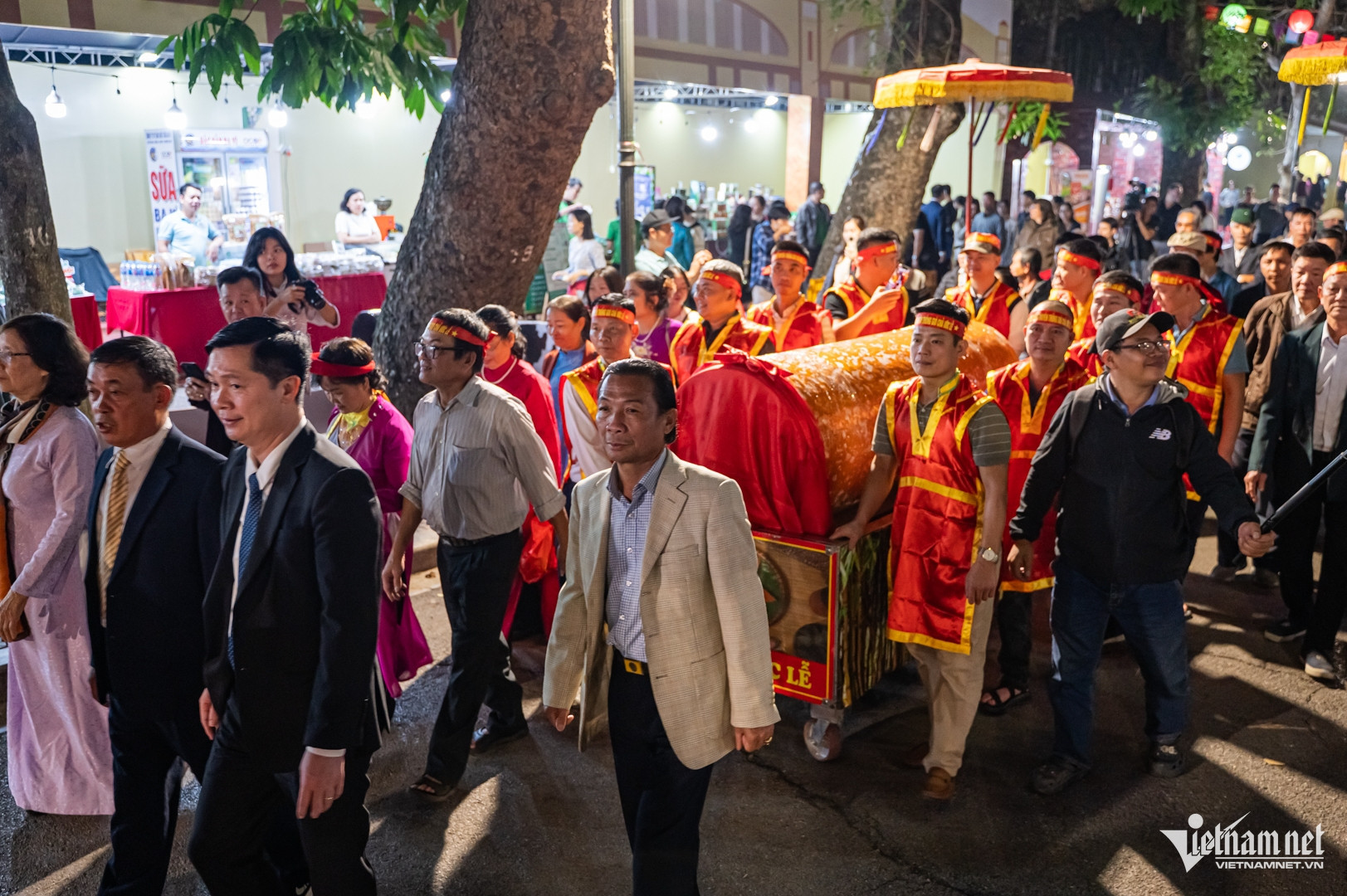
The ceremonial procession revives the Uoc Le village tradition with a giant cha que.
.
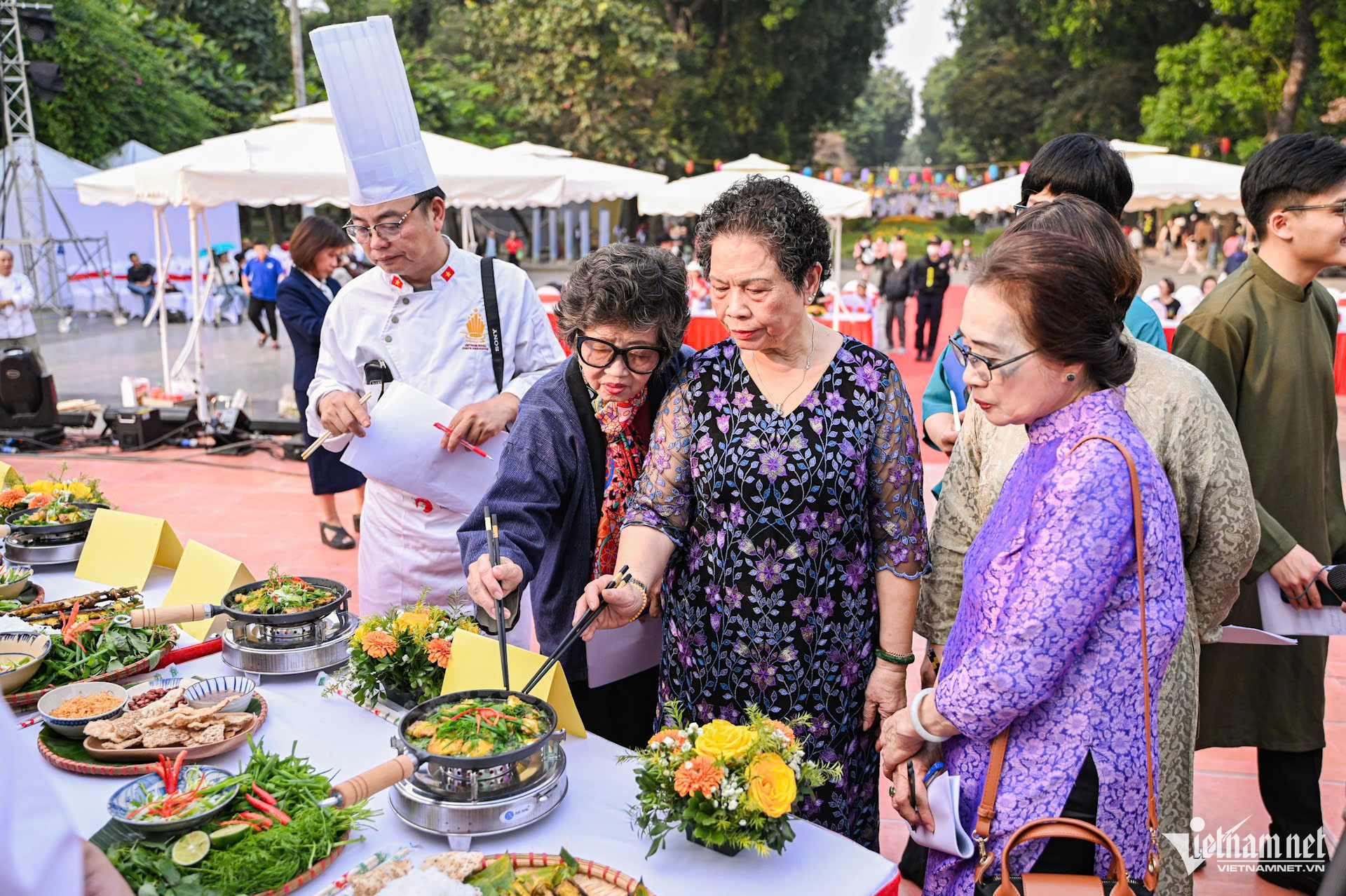
Le Thi Bich Loc (no glasses) has devoted 52 years to perfecting cha ca.
Linh Trang - Ngoc Ha - Nguyen Huy
.svg)
