 Vietnamnet.vn

 Podcast



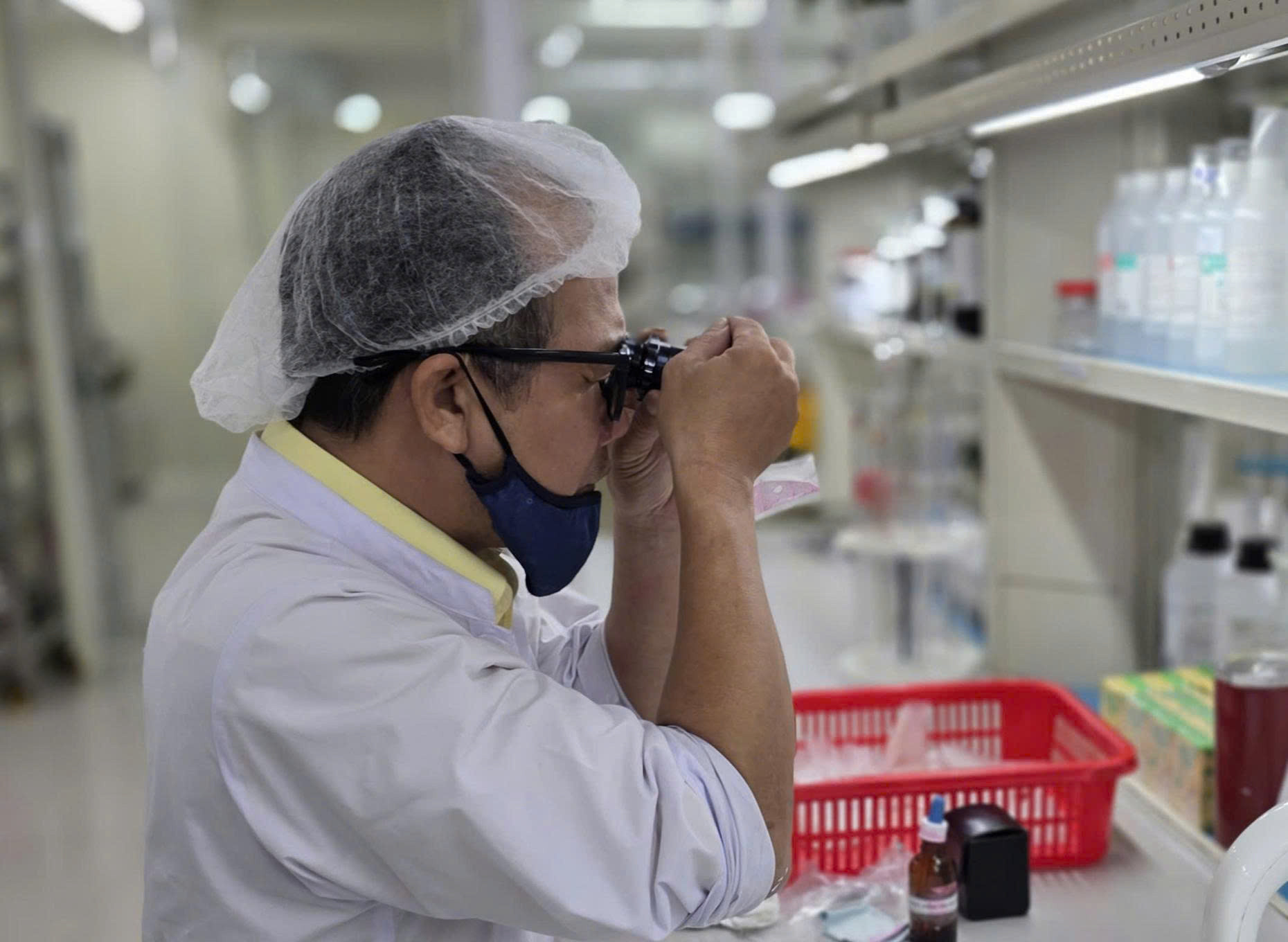
Fundamental research has long been viewed as a “quiet” field - one that rarely delivers immediate results, yet ultimately determines a nation’s long-term technological capacity.
Vietnam is now repositioning its science investment strategy with a deeper focus on strategic technologies such as artificial intelligence, semiconductors, quantum technology and advanced materials.
From fragmented funding to long-term investment in top-tier science
Minister of Science and Technology Vu Hai Quan has officially launched the Program for Excellent Basic Research (PEBR) for the 2026-2035 period.
Under the program, excellent fundamental research is defined as the foundation for breakthroughs in knowledge and technology, contributing to Vietnam’s ability to master core and strategic technologies while strengthening national competitiveness over the long term.
One of the most notable shifts is the move away from short-term, fragmented funding for individual research projects toward medium- and long-term investment frameworks. The program prioritizes research clusters and interconnected project chains to ensure continuity, knowledge accumulation and the development of leading research capabilities.
The strategy marks a major shift in Vietnam’s science and technology development mindset. Instead of allocating funding to isolated small-scale projects, the government aims to build deeply rooted “research ecosystems,” where research teams receive stable, long-term support to pursue major scientific challenges.
PEBR also emphasizes priority funding for basic research linked to strategic technology development and specific strategic technology products. At the same time, the program encourages breakthrough scientific ideas and accepts an appropriate level of scientific risk - a defining characteristic of fundamental research.
Under this approach, fundamental research will no longer be seen as detached from practical needs but rather as an integral part of the national core technology development pipeline.
The strategy reflects a broader global trend as technological competition increasingly depends on ownership of foundational scientific knowledge.
AI, semiconductors and quantum technology become investment priorities
One of the most striking aspects of PEBR is the clear identification of priority fields with the potential to drive technological breakthroughs.
According to the program, Vietnam will focus on research directions capable of generating core and strategic technologies in areas including quantum technology, artificial intelligence, advanced materials, biotechnology, new energy and semiconductor technology.
By 2030, the country aims to establish at least 10 new research directions, with a minimum of three showing potential to evolve into core technology platforms. By 2035, Vietnam plans to add at least 10 more new research directions, including at least five with core technology potential.
The initiative goes beyond academic research and seeks to move scientific outcomes closer to commercialization and strategic technology development.
By 2030, at least 10% of projects under new research directions are expected to generate results eligible for international patent registration or transition into strategic technology product development. The target will rise to at least 20% by 2035.
PEBR also aims to elevate Vietnam’s scientific standing internationally. By 2030, the program expects to establish around 30 strong research groups in the natural sciences, including at least three operating at a regional leadership level.
By 2035, the target increases to around 50 strong research groups, with at least 10 reaching regional leadership status and demonstrating clear international academic influence.
In terms of scientific publications, the program seeks to increase the number of papers published in Q1 journals and indexed within the Nature Index by around 1.5 times by 2030 and roughly double by 2035 compared with the 2021-2025 average.
Building a globally connected research ecosystem
Another major pillar of PEBR is the development of high-level scientific talent and deeper international cooperation.
By 2030, the program aims to support, train and connect at least 500 PhD holders, doctoral candidates, postdoctoral researchers and young scientists. Among them, at least 100 young scientists are expected to have the capacity to lead internationally competitive independent research groups.
By 2035, the figure is projected to rise to at least 1,000 scientists, including 200 young researchers capable of leading independent research teams.
At the same time, the program targets the implementation of at least 100 international collaborative research projects by 2030 and at least 300 projects by 2035. Each strong research group is expected to maintain at least one strategic international partner.
To support these goals, PEBR introduces evaluation mechanisms aligned with international standards, using scientific indicators such as FWCI, CNCI, the share of publications ranked among the world’s top 10% most-cited papers, and other globally recognized metrics.
The program also highlights the use of a national digital platform for science, technology and innovation management to improve transparency, accountability and research data governance.
Under the government decision, the National Foundation for Science and Technology Development will oversee implementation of PEBR, including planning, evaluation of research groups, funding allocation and monitoring of outcomes.
As global technological competition intensifies, Vietnam’s decision to invest systematically in fundamental research is increasingly viewed as a strategic move - not only to participate more deeply in global technology value chains, but also to gradually build its own core technological capabilities.
Thai Khang
.svg)
