 Vietnamnet.vn

 Podcast



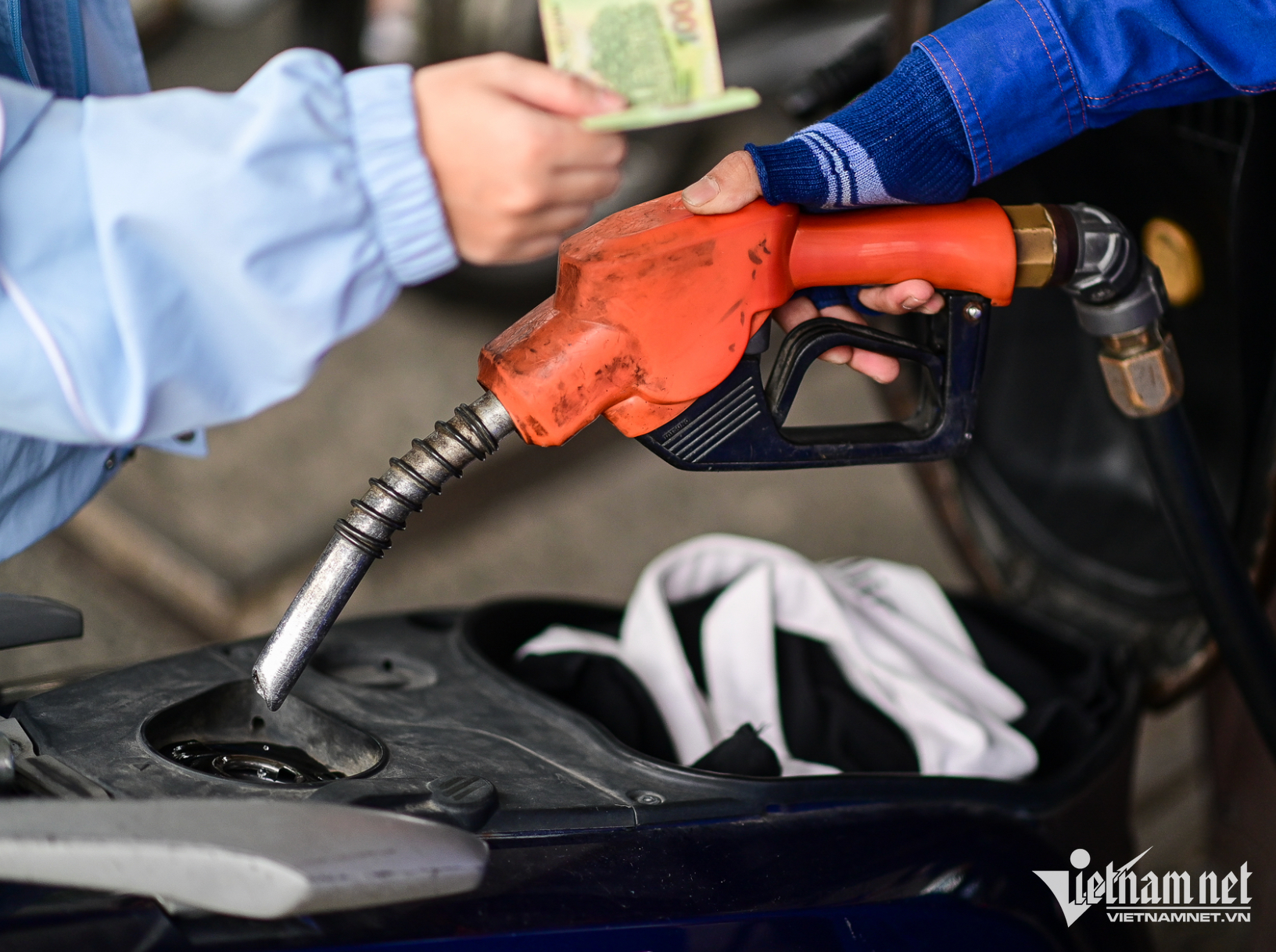
Under a draft circular detailing several provisions of the petroleum trading decree, now in its third revision, the ministry proposes that fuel wholesalers and distributors be allowed to publish and adjust retail fuel prices within their distribution systems. For mazut oil, the regulation would apply to wholesale pricing.
However, companies must declare their retail fuel prices and submit them to the Ministry of Industry and Trade - specifically the Department of Domestic Market Management and Development - as well as to provincial People's Committees or agencies authorized by provincial authorities where their distribution systems operate. This declaration must be made through an application or software system managed by the ministry.
Similarly, fuel retailers operating outside the distribution systems of wholesalers or distributors would be permitted to publish and adjust retail prices at their stations. For mazut oil, the regulation would apply to wholesale pricing.
These independent retailers must also declare their retail fuel prices and submit them to provincial authorities through the same digital system managed by the Ministry of Industry and Trade.
The ministry emphasized that the method and principles for calculating and announcing fuel prices must comply with regulations outlined in the decree governing petroleum trading.
How fuel prices would be calculated
The draft decree on petroleum trading, now in its seventh revision, specifies the formula for calculating retail fuel prices.
Under the proposal, fuel prices would consist of several components: the purchase price of petroleum products, supply creation costs, standard business expenses, profit margins and taxes.
First, the purchase price of fuel would be determined by businesses based on their actual trading conditions.
Second, supply creation costs - including those associated with imported fuel or domestically sourced supply - would also be determined by companies based on real operating conditions.
Third, standard business expenses represent the domestic circulation costs of petroleum products, including wholesale and retail costs incurred by fuel wholesalers. These expenses also include costs allocated to distributors and retailers.
The current standard business expense level would be used as the starting reference point. Once the new decree takes effect, the Ministry of Industry and Trade, in coordination with the Ministry of Finance, will publish the standard business expense level used as the baseline.
This cost will then be adjusted annually according to the average consumer price index (CPI) of the previous year, as announced by the national statistics agency.
Every three years, the Ministry of Industry and Trade will review and announce updated standard business expense levels for the next period in coordination with relevant ministries and agencies.
In cases where these expenses fluctuate abnormally, potentially affecting fuel supply and posing risks to energy security, the Ministry of Industry and Trade may report to the Prime Minister and request permission to review and adjust the baseline cost ahead of the scheduled cycle.
Fourth, profit margins will be determined by fuel wholesalers based on their actual business operations.
Finally, taxes - including import tax, special consumption tax, environmental protection tax, value-added tax and other applicable taxes - will be applied according to existing tax regulations.
Shifting to supervision and post-inspection
Speaking at a conference reviewing fuel supply management earlier this year, Tran Huu Linh, director of the Department of Domestic Market Management and Development under the Ministry of Industry and Trade, said authorities are considering granting fuel companies the right to determine prices independently.
Under this approach, ministries and government agencies would shift toward inspection and post-inspection rather than direct price regulation.
According to Linh, the ministry will issue a list of licensed petroleum traders, regulate price declaration procedures and coordinate with other agencies in managing the fuel price stabilization fund.
He noted that once the new decree on petroleum trading takes effect, the market may initially see different retail prices across fuel stations, with some higher and others lower. However, such differences would be normal under a market-based mechanism.
For that reason, publicly listing fuel prices at retail stations will be mandatory so consumers can easily compare and choose the option that best suits their needs.
Concerns from retail businesses
From the perspective of fuel retailers, some companies have expressed concerns about this proposed autonomy.
If new regulations allow independent retailers to determine their own retail prices but wholesalers continue to control or “protect” prices within their distribution systems, the market could lose its competitive dynamics.
In that scenario, independent retailers might be forced to follow the retail prices set by wholesalers or comply with a uniform price across the system.
Another concern arises if the import cost paid by independent retailers equals or even exceeds the retail price set by wholesalers. In such cases, independent retailers would struggle to compete and could face losses.
This highlights the need for greater transparency in costs and pricing throughout the supply chain to ensure fair competition in Vietnam’s petroleum market.
Currently, the price structure of gasoline includes several components such as the CIF price used for tax calculation - which combines the import price and transportation costs - along with value-added tax at 8%, special consumption tax at 10% for RON95 gasoline and 8% for E5 gasoline, and environmental protection tax at VND2,000 per liter (US$0.08).
Other components include standard business expenses - VND1,050 per liter for RON95 gasoline (US$0.04) and VND1,250 per liter for E5 gasoline (US$0.05) - as well as standard profit margins of VND300 per liter (US$0.01).
The fuel price stabilization fund contribution is currently set at VND300 per liter (US$0.01), although it can fluctuate in practice. In the most recent price adjustment cycle, about VND4,000 per liter (US$0.16) was used from the fund.
Tam An
.svg)
