 Vietnamnet.vn

 Podcast


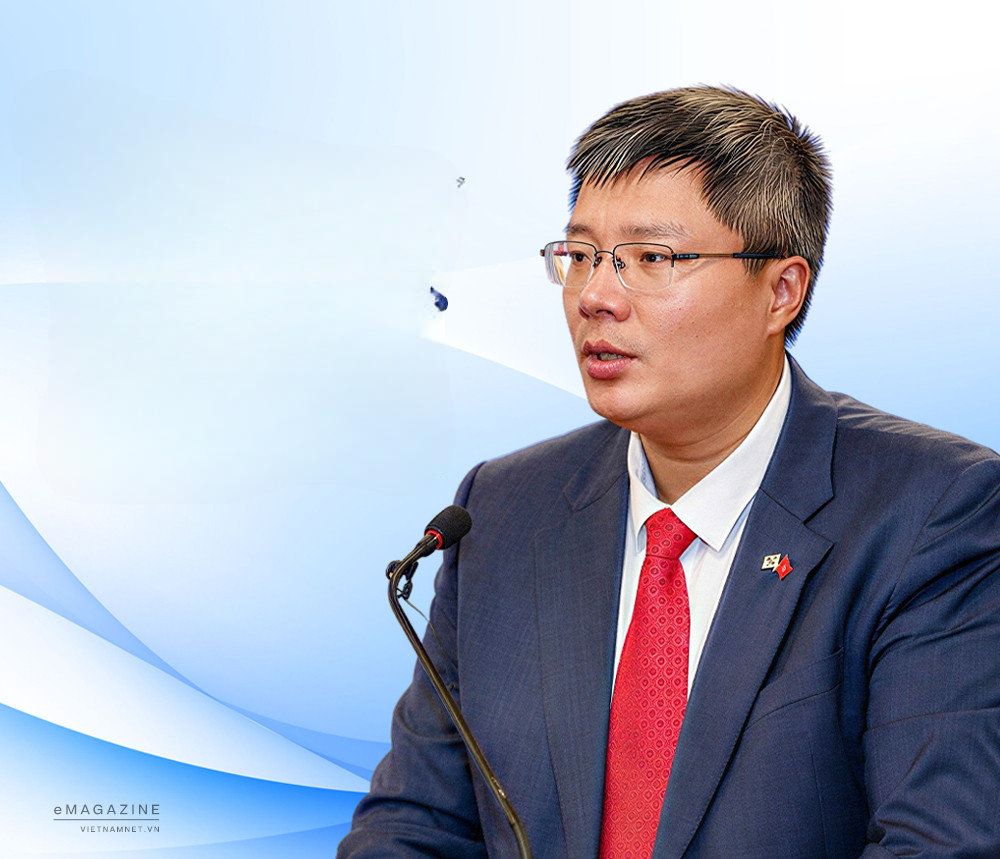
Attracting talent is an immediate mandate as well as a strategic challenge that will determine the nation's competitive capacity and development momentum in the new era.
On October 15, General Secretary and State President To Lam signed Conclusion 105 of the 4th Plenum of the 14th Party Central Committee on attracting and utilizing talent in spearhead sectors to drive sustainable national development.
Assoc. Prof. Dr. Duong Minh Hai from the National University of Singapore noted that Singapore's success stems not only from its compensation packages but from constructing an ecosystem where talented individuals can work effectively.
For a small nation with limited natural resources like Singapore, investing in people represents a long-term strategy. The vital takeaway lies in combining talent recruitment, laboratory investment, team building, and firm connections with businesses.
“In Singapore's academic environment, scientists are not only expected to publish internationally, but must also train the next generation of researchers, pioneer new research directions, and generate value for society. The Research, Innovation and Enterprise 2030 (RIE2030) plan committed SGD37 billion for research and innovation during the 2026–2030 period. What matters is not merely the funding size, but the strategic consistency and the ability to link research with national development needs,” Hai shared.
Meanwhile, drawing from experiences living and working in South Korea and connecting partners between both nations, Dr. Tran Hai Linh, Member of the Central Committee of the Vietnam Fatherland Front and President of the Vietnam-Korea Business and Investment Association, noted that South Korea’s lesson lies not in how high experts are paid, but in its ability to turn their knowledge into technologies, products, strong enterprises, and successive generations of human resources.
Vietnam needs to build its ecosystem based on its own development demands and practical conditions. South Korea built technological capability tied directly to industries with real demand, ranging from electronics, automotive, and shipbuilding to semiconductors and digital tech.
“This suggests for Vietnam that we should not recruit experts solely because of their reputation, but must start from specific problems: what technology are businesses lacking, what capacity do localities need, how should universities train workforces, and which industries can participate more deeply in global value chains,” Linh said.
In South Korea, universities, public research institutes, and technology companies maintain structured models for collaborative research, training, and commercialization. Vietnam could develop key research teams at qualified universities, institutes, and enterprises, allowing these teams autonomy in recruiting associates, accessing shared laboratories, and collaborating with international partners.
He suggested that Vietnam could develop models for long-term visiting professorships, project-leading experts, laboratory co-directors, technology advisors for enterprises, and cross-border research teams.
These models must be linked to clear missions, funding allocations, output rights, and evaluation mechanisms. This represents a direction to leverage the intellectual resources of the Vietnamese diaspora in South Korea and worldwide.
Success is long-term capability
The Party Central Committee recently set an orientation to allocate around 0.1 percent of annual GDP from total resources for science, technology, innovation, and digital transformation specifically toward talent development.
Hai observed that, if implemented, the decisive factor will not merely be budget scale, but allocation methods, oversight mechanisms, and the value generated post-investment. Investing in scientists must be viewed as a long-term commitment. A research direction in novel materials or biotechnology can take years to progress from concept to practical product.
Therefore, rather than fragmenting resources and measuring progress by disbursement rates, Vietnam should offer competitive grants to top-tier research teams over medium-term cycles, supported by clear targets and independent evaluation mechanisms.
He proposed allocating part of the funding to promising young scientists with the potential to lead research teams, and another part to shared infrastructure and the transition from laboratory research to pilot production. This stage often lacks funding even when a technology has already produced initial results.
Singapore's experience shows the need to sustain fundamental research while also promoting application and commercialization.
According to Hai, policy effectiveness should be measured by the number of strong research teams established, highly skilled personnel trained, technologies mastered, patents put to use and practical problems solved.
The same yardstick should not be applied to basic research, applied research and technology start-up activities. Investment is successful when public funding builds lasting capabilities for the country, rather than merely generating impressive figures in reports.
Tran Thuong

