 Vietnamnet.vn

 Podcast


Editor's note: In 1946, engineer Pham Quang Le left behind his career in France and returned to serve his homeland at the call of President Ho Chi Minh. More than two decades later, scientist Nguyen Van Hieu returned from the Soviet Union and, at just 31, was entrusted by Prime Minister Pham Van Dong with the task of building the Institute of Physics.
Their stories reflect not only the desire of Vietnamese intellectuals to contribute to their country but also the foresight of national leaders in identifying, bringing together and making effective use of talent.
Today, as science, technology and innovation become increasingly important drivers of development, those lessons have renewed relevance. Politburo Resolution No. 57-NQ/TW, which calls for breakthroughs in science, technology, innovation and national digital transformation, emphasizes the need to nurture and value talent while creating an environment in which intellectuals can realize their potential and contribute to the country.
From the pioneers who laid the foundations of Vietnamese science to today's researchers exploring new frontiers, one question remains: How can Vietnam attract and make the best use of talent, turning the desire to contribute into scientific achievements that serve the nation?
Through the stories of successive generations of Vietnamese intellectuals, VietNamNet's five-part series revisits lessons in talent development and explores the policies and mechanisms needed to make Vietnamese expertise a genuine driving force for national development in a new era.
From Professor Tran Dai Nghia's return to Vietnam in 1946 to today's generations of scientists, the desire to serve the nation has remained a common thread. According to Professor and Academician Tran Hong Thai, President of the Vietnam Academy of Science and Technology, attracting and making the most of scientific talent requires a supportive research environment, ambitious scientific missions and stronger connections with the global intellectual community.
Scientific talent in Vietnam: A legacy of service
Looking back from Professor Tran Dai Nghia's return in 1946 to today's generations of scientists, what do you see as the enduring connection between Vietnamese intellectuals and their homeland?
Professor and Academician Tran Hong Thai: I believe that connection is the commitment of scientists and intellectuals to the country's socioeconomic development, national defense, security and sovereignty.
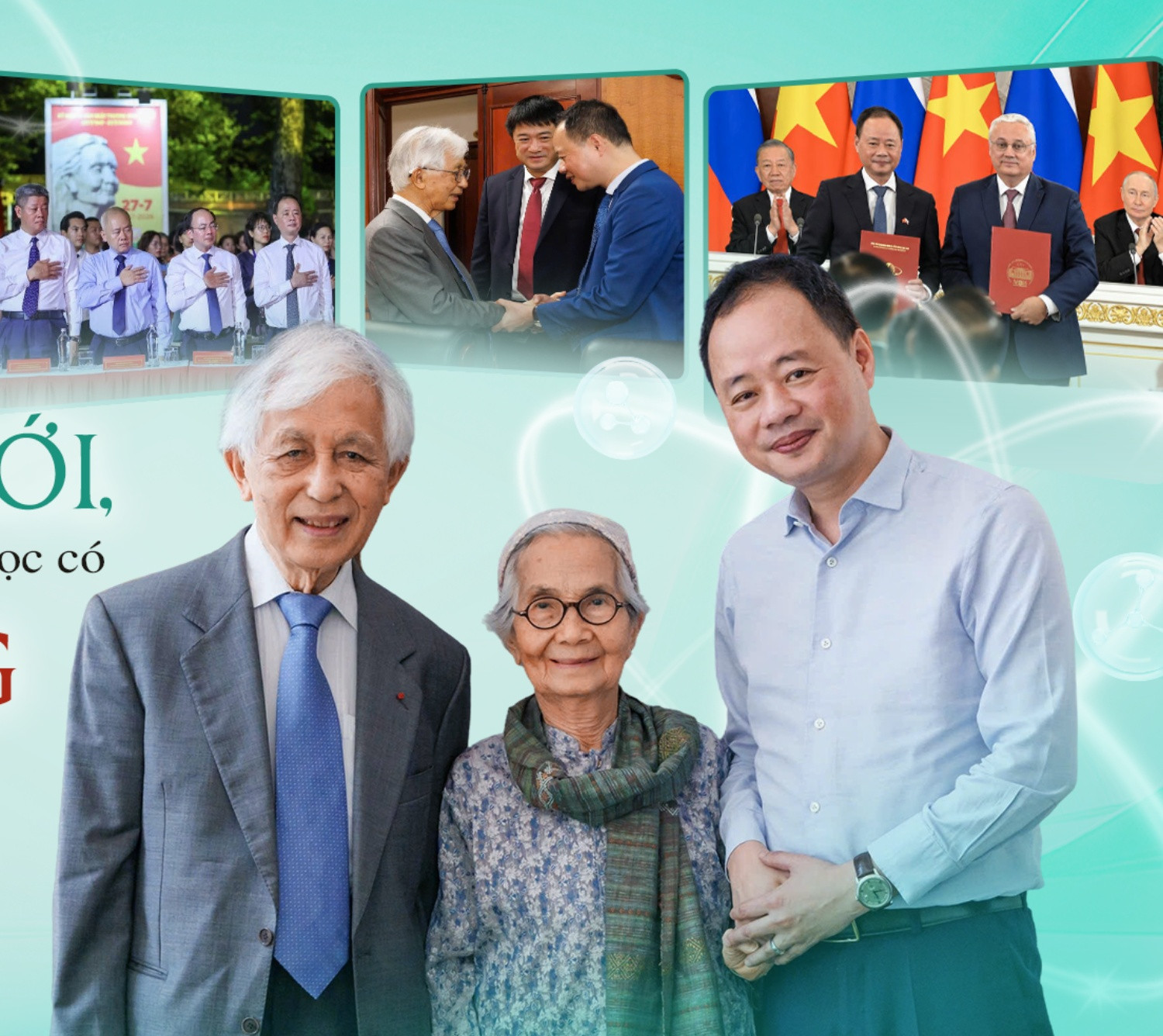
Professor Tran Dai Nghia was educated in France and returned at President Ho Chi Minh's call when Vietnam was facing extraordinarily difficult circumstances. Despite outdated and inadequate research facilities and infrastructure, he and fellow Vietnamese scientists developed practical products to support the resistance struggle and defend the country.
Following in his footsteps were generations of scientists and scientific leaders, including Professors Nguyen Van Hieu, Dang Vu Minh and Chau Van Minh, along with tens of thousands of specialists who received systematic training in former socialist countries and elsewhere around the world. Together, they helped establish the foundations of Vietnam's scientific and technological capabilities.
As Party General Secretary and State President To Lam has emphasized, the Vietnam Academy of Science and Technology is an important pillar of the nation's intellectual strength.
Today, with science, technology, innovation and digital transformation recognized as major drivers of development, the Academy's role is becoming even more significant. We must carry forward the legacy of earlier generations, bring science into every sector and field, improve productivity and contribute to national progress.
Earlier generations, including Professors Tran Dai Nghia and Nguyen Van Hieu, returned to Vietnam under very different circumstances. What inspires a scientist to devote such a significant part of their career to their homeland?
People often say that science knows no borders, but scientists have a homeland. I believe every scientist born in Vietnam takes pride in being able to contribute to their country.
A defining quality of scientists is their passion for research, exploration and creativity. When their research and scientific achievements benefit their country, serve society and improve people's lives, that brings immense personal satisfaction.
I believe patriotism, love for one's homeland and a passion for discovery are the foundations of the desire to contribute that has inspired generations of Vietnamese intellectuals.
Professor Phung Ho Hai had opportunities to develop his career abroad but chose to return to Vietnam. How do you assess the country's efforts to attract intellectuals today? What determines whether a scientist not only returns but also stays for the long term?
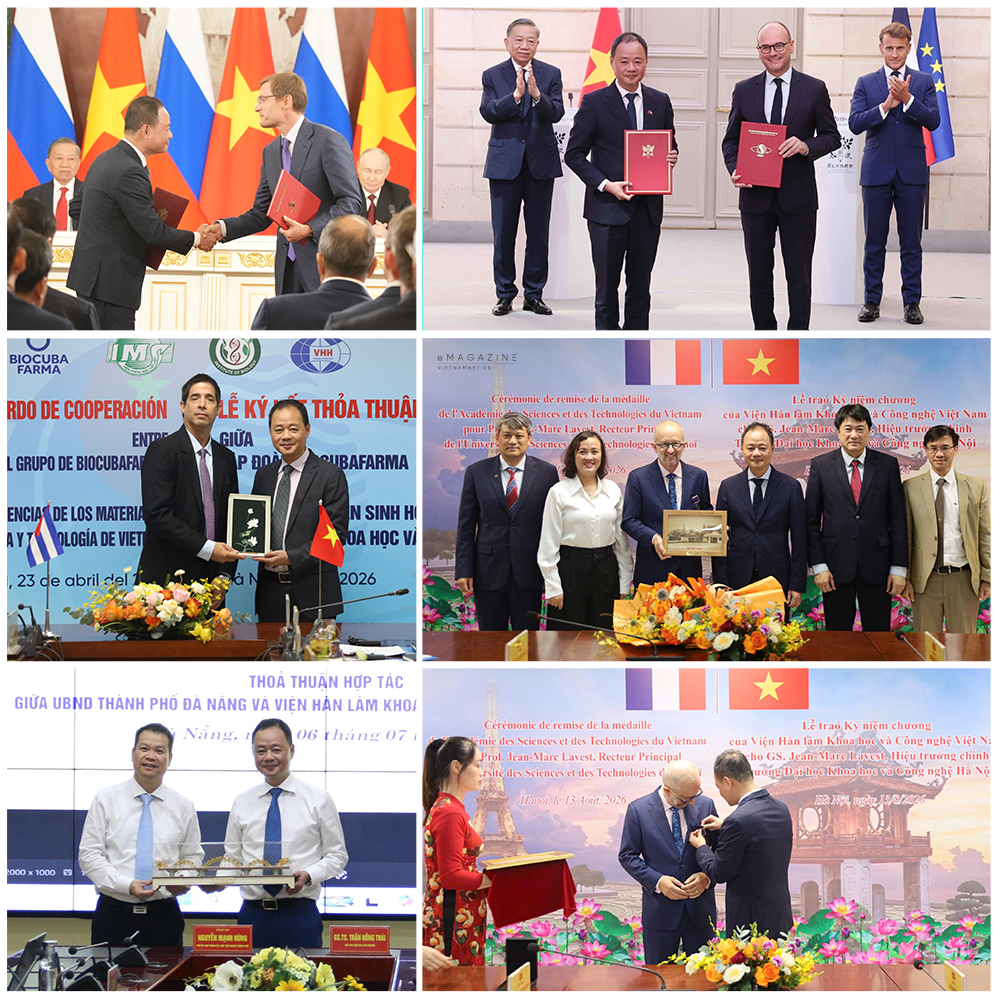
The first factor remains patriotism, a sense of attachment and gratitude toward one's homeland and the environment in which one grew up and received an education.
However, we must also acknowledge that, at certain times, research conditions, infrastructure and working environments in Vietnam have not been sufficient for scientists to realize their full potential. As a result, some have chosen to work overseas.
That does not mean they have stopped contributing to Vietnam. Many Vietnamese scientists have established international reputations and achieved recognition for their work. In doing so, they have also helped raise the profile and standing of Vietnamese science.
As Resolution 57 is implemented, the Party, State and Government are placing considerable emphasis on developing science, technology, innovation and digital transformation. We now have greater opportunities to invest in research infrastructure, improve working environments and identify major challenges for scientists to tackle.
When researchers have access to a supportive environment, meaningful scientific missions and the resources needed to realize their potential, they have stronger reasons to return, stay and contribute.
This applies beyond Vietnamese scientists. Many foreign professors and experts also have a deep affection for Vietnam and want to contribute. If we can establish sufficiently ambitious scientific forums and platforms, we can attract them to conduct research, provide training and collaborate.
The Academy hopes to help build a research environment attractive enough for scientists from Vietnam and around the world to regard the country as a scientific home.
DNA identification mission tests Vietnam's scientific capabilities
During the 500-day campaign to identify the remains of fallen soldiers through DNA technology, the government set an enormous task under a tight deadline. How did the Academy approach this special mission?
It is a tremendous honor.
First, the mission has considerable scientific significance, involving many new research challenges. For example, current technology allows DNA analysis to move beyond the maternal-line genetic comparisons used previously, expanding matching capabilities, improving accuracy and addressing more complex cases.
But the scientific significance is only part of the story. Equally important is the mission's profound humanitarian value and the responsibility to honor those who sacrificed their lives for the country.
Some families have waited decades to find their loved ones. We have always been determined to shorten that wait and give more families the opportunity to identify their relatives and learn where they have been laid to rest.
This is our responsibility toward those who served the country and an expression of gratitude to those who gave their lives for national independence and freedom.
That deeply meaningful purpose motivates the Academy's scientists to make a substantive contribution to the mission.
What does the 500-day campaign reveal about Vietnam's current scientific capabilities? What foundations has the country established in human resources, technology and international cooperation?
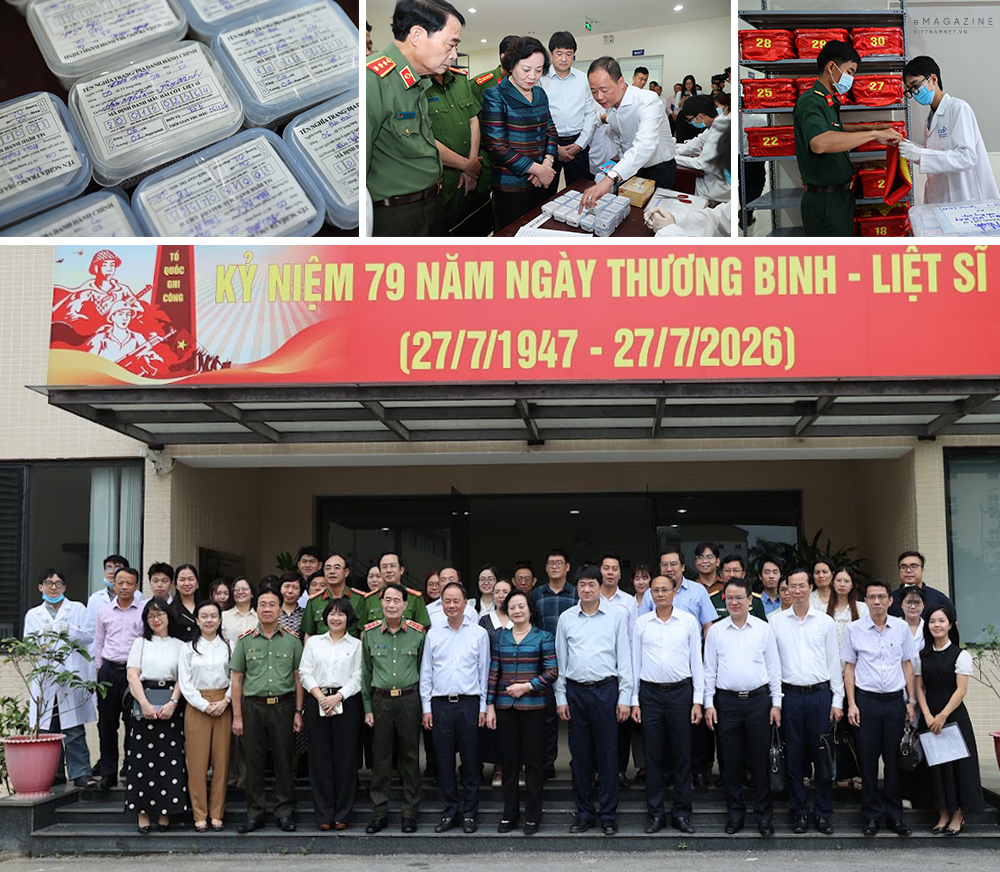
The campaign demonstrates the tremendous determination of the entire political system. It reflects not only the commitment of Party and government leaders but also the participation of scientists, institutions, organizations and businesses, bringing together resources to accomplish the mission.
From a scientific perspective, our examination of international experience indicates that the technologies Vietnam is accessing and applying, with promising initial results, are among the advanced approaches offering high levels of accuracy. Many developed countries are also researching and applying similar technologies.
In our assessment, Vietnam is among the countries that have moved relatively early to explore this technological approach.
Of course, substantial challenges remain. Following successful research and pilot implementation, we must expand applications, train more specialists and improve the capabilities and processing capacity of laboratories.
These are priorities the Academy is currently pursuing. I believe that, with the determination of the Party, State and Government and the efforts of participating organizations, we can successfully accomplish the mission.
The success of a major scientific mission depends on more than equipment and technology. How decisive is the human factor?
A laboratory can only function effectively when it has qualified personnel capable of operating it. No matter how advanced the infrastructure, it becomes truly valuable only when people have the expertise to master it.
The heart of a laboratory lies in its knowledge base and the people capable of mastering technology.
That is why human resource development is so important. Alongside fundamental and frontier research, the Academy places considerable emphasis on training specialists in fields that Vietnam urgently needs, including nuclear energy, high-speed rail, advanced materials, quantum technology and satellite technology.
Over more than 50 years, Vietnam has gradually built a community of scientific professionals. But to meet emerging demands, we must continue strengthening that foundation, using international cooperation as a bridge to bring advanced knowledge and technology to Vietnam and ultimately master core technologies.
Science must make a difference in everyday life. As Party General Secretary and State President To Lam has said, science and technology are not distant or abstract concepts. They can be found in improved plant varieties, oranges, fish and advances in agriculture.
The 500-day campaign is an important mission in the biological sciences, but biology must also contribute to livelihoods, crop productivity, better production methods and environmental protection.
That is the practical value science and technology should ultimately deliver.
Connecting Vietnamese scientists around the world
Must Vietnamese scientists return to work full-time in the country to contribute to national development? What mechanisms are needed to connect Vietnamese intellectuals worldwide?
We already have appropriate policies and strategic directions for attracting and making effective use of talent.
Talented individuals may be studying or working in Vietnam, or they may be Vietnamese professionals working in international environments.
Not every scientist needs to return and work full-time in Vietnam to make a contribution.
Some assignments require direct participation and access to local research systems and facilities. But many others can be undertaken through remote consultation, collaborative research, knowledge sharing or connections between research teams.
Vietnamese intellectuals overseas, in particular, can serve as bridges, bringing emerging scientific knowledge, new technologies and research developments from around the world to benefit Vietnam.
One important priority is to strengthen connections between the public and private sectors, as well as between researchers based in Vietnam and Vietnamese intellectuals working overseas.
Nor should contributions be limited to Vietnamese nationals. We also need to engage capable international experts and scientists who wish to participate in the country's development.
With suitable cooperation mechanisms, we can mobilize a far greater pool of intellectual resources, unrestricted by the boundaries of any single institution, organization or country.
Looking 20 years ahead, what should Vietnam do to enable science to address the country's emerging challenges?
I believe 20 years is sufficient to complete cycles of research, experimentation and technological development, and to bring the results into practical use.
The first priority is to continue developing fundamental research. As Party General Secretary and State President To Lam has emphasized, those who master fundamental research are better positioned to shape the future of their country and the world.
At the same time, we need a clear direction for applying science and technology in practice, identifying emerging challenges and the core technologies likely to shape the world in the future, and developing appropriate socioeconomic plans.
Many Vietnamese professionals working abroad possess advanced knowledge, with some holding leading positions in particular scientific fields. This is an enormously valuable resource.
The challenge is to establish overall coordination and connect these resources into an integrated value chain, from fundamental and applied research to pilot production and the practical application of scientific products.
We must go beyond publishing research findings and work toward creating genuinely Vietnamese scientific and technological products that contribute to national development.
Thai An - Van Nga - Nguyen Duc

