 Vietnamnet.vn

 Podcast



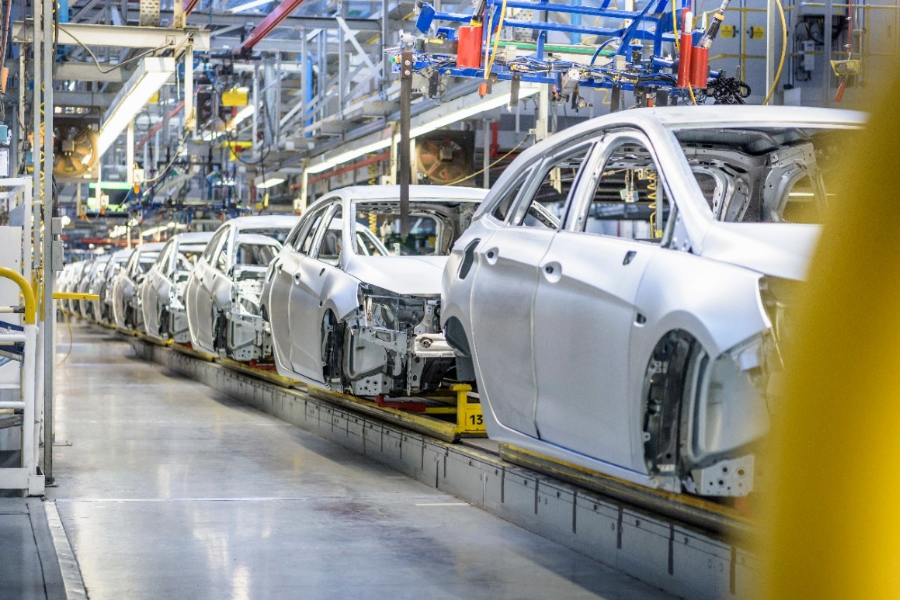
PwC’s recently released sixth ASEAN-6 Automotive Market Overview shows a striking shift in growth across Vietnam, Indonesia, Thailand, Malaysia, the Philippines and Singapore.
The six markets sold about 1.755 million vehicles in the first half of 2026, up 11.1% year on year.
Vietnam unexpectedly overtook Singapore to record the fastest sales growth in the group, rising 31.1% to around 291,000 vehicles. That growth rate was nearly three times the ASEAN-6 average.
Among the other markets, Indonesia grew 15.9%, Thailand 15.1%, Singapore 6.9% and Malaysia 2.6%. The Philippines was the only market to record a decline, with sales falling 6.1%.
In PwC’s previous reports, Singapore had ranked first for two consecutive years, in 2024 and 2025, while Vietnam came second with annual vehicle sales growth of more than 20%.
Despite selling 291,000 vehicles, however, Vietnam’s auto market remains smaller than those of several neighboring countries.
Vietnam currently ranks fourth by sales volume. Thailand and Malaysia each recorded around 385,000 vehicles, while Vietnam remained ahead of the Philippines at 226,000 and Singapore at 31,000. Indonesia is the largest ASEAN-6 market, with sales of around 437,000 vehicles.
Survey data shows that the competitive landscape is shifting alongside the electrification of transportation.
In the ASEAN-6 electrified vehicle segment, VinFast and Chinese brands have surpassed traditional automakers from Japan, the US, Europe and South Korea in sales.
Chinese brands accounted for 47% of electrified vehicle sales across the region, while VinFast ranked first among individual brands, followed by BYD and Toyota.
Electrification is also reshaping competition in Vietnam’s auto market.
The country’s strong growth was driven by three main factors: high demand from transportation companies switching from gasoline-powered vehicles to EVs, rapidly increasing demand for hybrid vehicles, and the growing availability of more affordable models.
PwC identified electrified vehicles as the most prominent growth driver.
Vietnam sold about 127,000 electric and hybrid vehicles in the first half of 2026, compared with around 118,000 internal combustion engine vehicles.
EVs and hybrids accounted for about 52% of passenger vehicle sales, up from 41% in the same period a year earlier.
VinFast was the largest contributor, selling 115,916 battery-electric vehicles in the first half of the year. That was equivalent to 91% of electrified vehicle sales and nearly 40% of Vietnam’s overall auto sales, according to PwC’s dataset.
Alongside fully electric vehicles, hybrid sales jumped 83% year on year.
Consumers now have an expanding range of hybrid options from brands including Toyota, Honda, Hyundai, Kia, Suzuki and BYD.
The trend highlights the role of hybrids as a practical transitional option for consumers seeking to save fuel and reduce operating costs but who are not yet in a position to switch fully to an EV.
Mohammad Mudasser, Deputy General Director of Deals and Transformation Consulting at PwC Vietnam, said Vietnam’s auto market was not only growing quickly but also entering a more mature stage.
“A few years ago, electric vehicles were still a pioneering choice. Today, EVs have become a practical option for consumers,” he said.
“In the next stage, market leadership will not be determined solely by the number of vehicles sold, but also by the ability to build charging infrastructure, develop financing solutions and establish trust through after-sales services. This is a more difficult challenge, but it will also be decisive for sustainable growth,” Mudasser said.
PwC forecasts that Vietnam will sell around 585,000 vehicles for the full year 2026, an increase of about 8% from 542,000 in 2025.
The total is expected to include 492,000 passenger vehicles and 93,000 commercial vehicles.
By 2030, Vietnam’s market is forecast to reach around 735,000 vehicles annually, about 26% higher than the projection for 2026.
Overall, Vietnam is emerging as a bright spot in the ASEAN-6 auto market, with rapidly increasing demand and growing adoption of electric and hybrid vehicles, even though its market remains significantly smaller than the region’s largest.
Vehicle ownership per 1,000 people also remains low, leaving substantial room for further growth.
That presents opportunities for automakers to broaden their product ranges and invest further in manufacturing and infrastructure serving vehicle owners.
In Vietnam, VinFast is the top-selling auto brand, followed by Toyota with 35,410 vehicles, Hyundai with 25,069, Mitsubishi with 21,653 and Ford with 21,232.
Across the ASEAN-6 markets, Toyota ranks first in vehicle sales, followed by Perodua, VinFast, Mitsubishi and Honda.
Pham Huyen
.svg)
