 Vietnamnet.vn

 Podcast


Tan Van Vuong, Deputy Director of the Da Nang Department of Culture, Sports and Tourism, said on October 23 that the city plans to carry out the emergency excavation of the ancient vessel discovered on a beach in Hoi An Tay Ward next year.
According to Vuong, the department advised the Da Nang People's Committee to seek approval from the Ministry of Culture, Sports and Tourism for an emergency excavation of the archaeological remains.
The ministry has approved the proposed excavation approach.
Following that approval, the department reported to the municipal People's Committee and recommended assigning the Hoi An World Cultural Heritage Conservation Center to work with relevant agencies and specialists to finalize the excavation plan.
The operation is expected to take place in 2027, when weather conditions are stable enough to ensure the safety of archaeological work, the removal of the remains and their subsequent preservation.
During a site visit in mid-October, nearly a year after the ship's hull reappeared on November 8, 2025, reporters observed that much of the vessel had once again been buried beneath accumulated sand.
The remains are now considerably less visible than when they were first exposed.
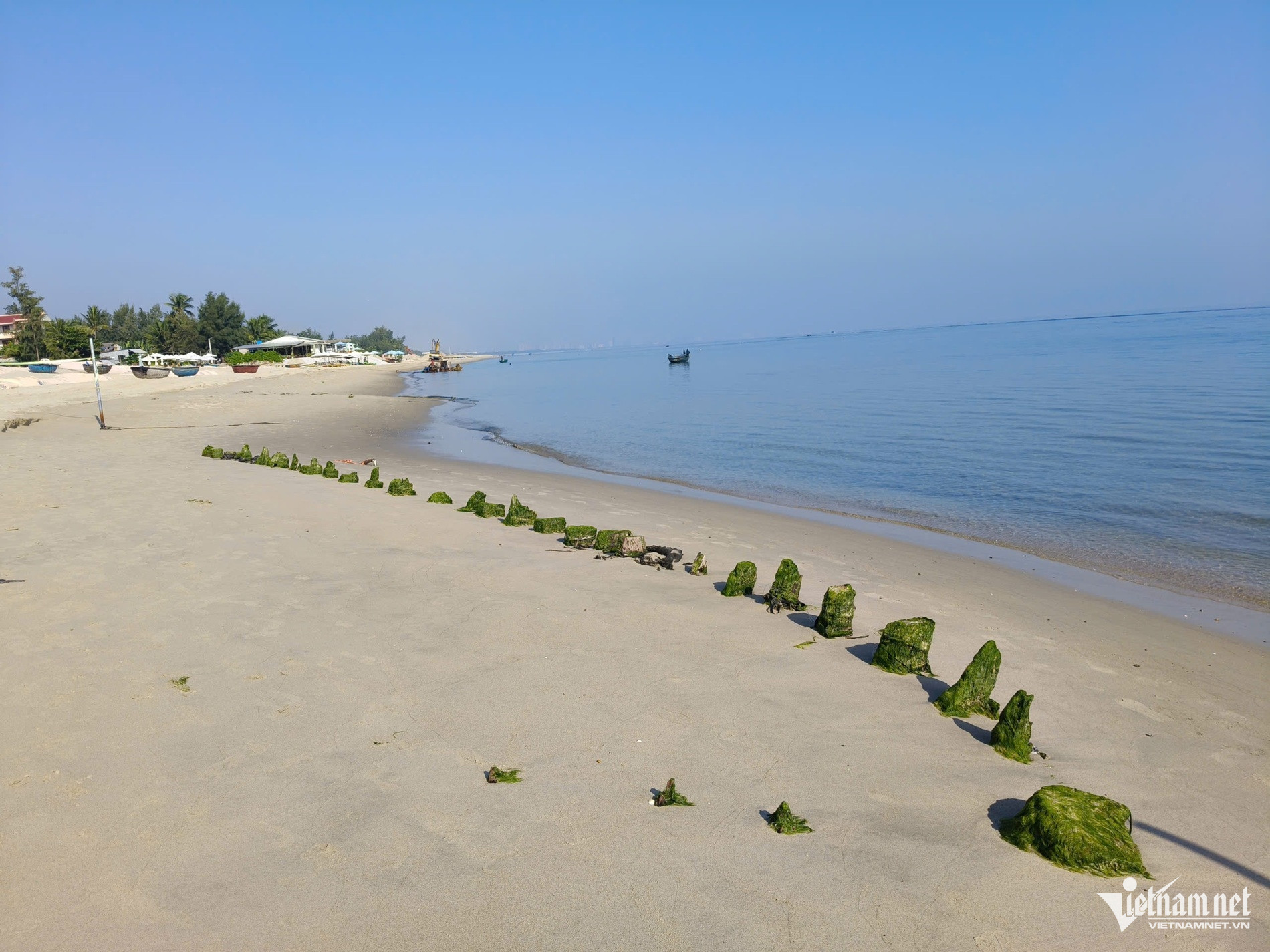
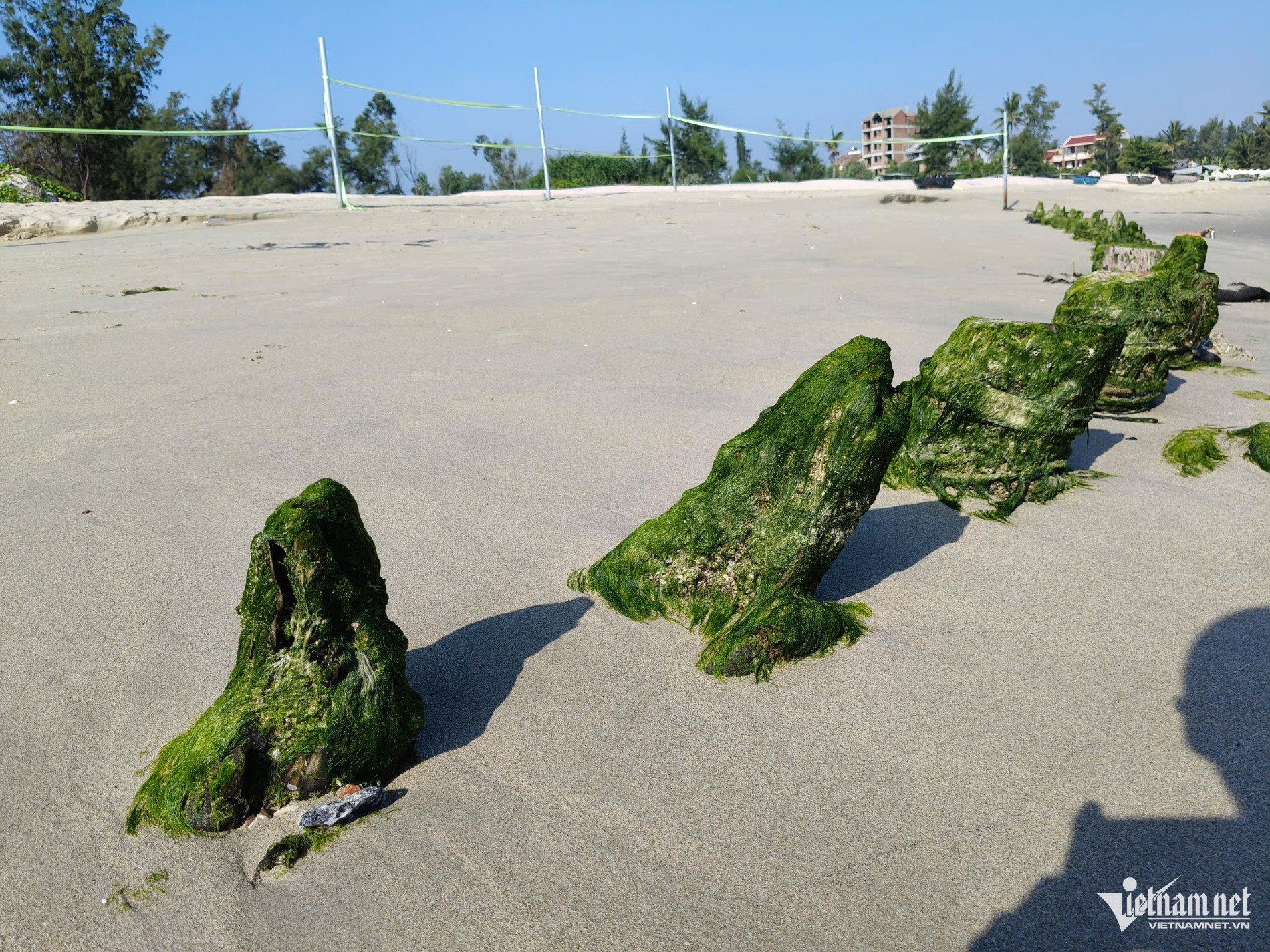
The clearest traces are several wooden posts protruding approximately 3-4 centimeters above the sand and waterline, forming a curved line that follows the shape of the ship's hull.
A coastal embankment project aimed at preventing erosion and protecting Hoi An's shoreline is also underway in the area where the wreck was discovered.
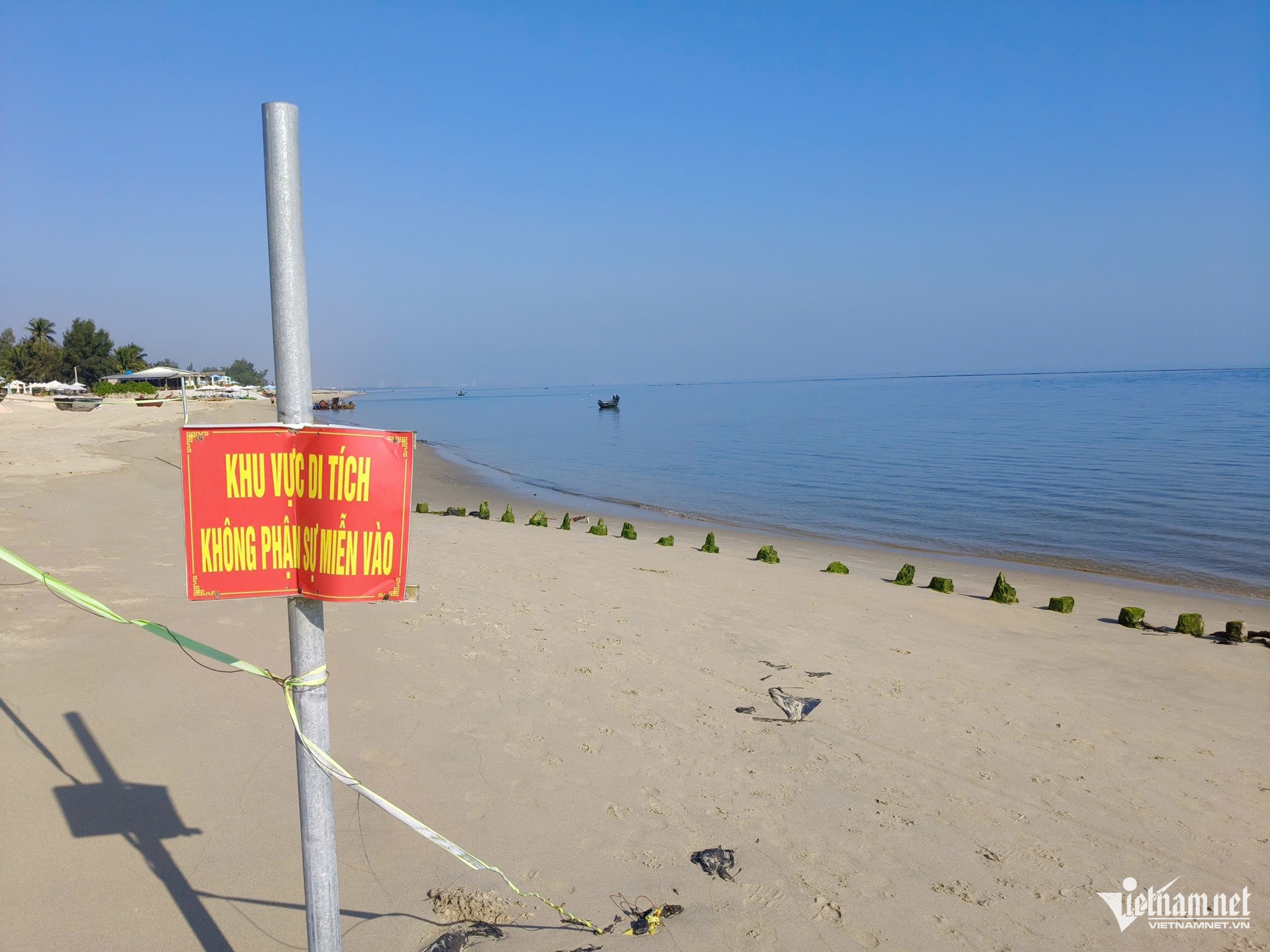
Authorities have established a protected zone around the archaeological site and installed warning signs informing the public that unauthorized entry is prohibited.
As previously reported by VietNamNet, the Hoi An World Cultural Heritage Conservation Center announced on November 8, 2025, that authorities had cordoned off the site to protect the ancient vessel.
Officials also informed local residents about regulations governing underwater cultural heritage protection and encouraged community participation in safeguarding the remains.
At the time, powerful waves had repeatedly eroded the shoreline and washed away layers of sand covering the vessel.
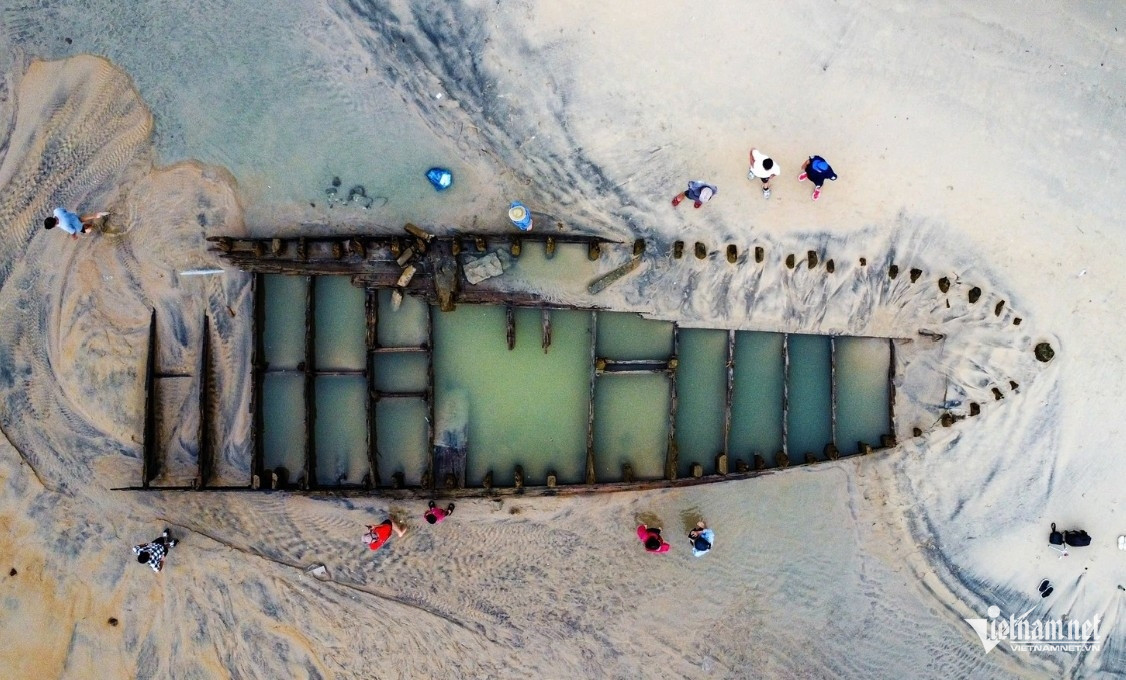
Combined with unusually low tides, the erosion exposed more of the wooden hull, which stretches for several dozen meters.
The ship lies parallel to the coastline, with many structural components still relatively intact.
Its appearance attracted considerable attention from local residents and tourists.
The wreck had also been clearly visible in August 2025.
The vessel was first discovered in December 2023 on Tan Thanh Beach, then part of Hoi An City in the former Quang Nam Province.
At that time, only a few sections of timber were visible above the sand.
Local authorities worked with specialist agencies to collect wood samples for radiocarbon dating.
However, by January 2024, high tides and accumulating sand had completely buried the hull again.
Preliminary assessments suggest that the vessel dates from between the 14th and 16th centuries.
Its construction displays a combination of Southeast Asian and East Asian shipbuilding techniques, reflecting the maritime connections and technological exchanges that characterized the region during that period.
Experts consider it one of the relatively few ancient wooden vessels discovered in Vietnam with much of its original structure still preserved.
Ho Giap

