 Vietnamnet.vn

 Podcast



The Ministry of Culture, Sports and Tourism launched the "Sounds of Vietnam - Melodies of Life" program on October 16.
The initiative aims to encourage musical creativity across communities, discover and showcase melodies, sounds, compositions and musical stories drawn from everyday life, and reflect the diversity of Vietnam's regions, ethnic groups and generations. It also seeks to bring Vietnamese musical values to a wider audience, particularly young people.
Deputy minister regrets missing out on music education
The program aims to establish an initial database of melodies, sounds and musical works to support the development of cultural industries. It will also connect creative communities, artists, composers, experts, media organizations, businesses, technology platforms and other relevant individuals and organizations.
Through the collection, identification, selection and presentation of submissions, the initiative will gradually develop a Vietnamese Melody Bank and a national music map, creating resources for cultural preservation, promotion, artistic creation and the development of cultural industry products.
Speaking at the launch, Deputy Minister of Culture, Sports and Tourism Nguyen Huy Dung shared a personal reflection. Having specialized in mathematics and pursued a career in science and technology, he said one of his greatest regrets was not having acquired a deeper understanding of music and the arts.
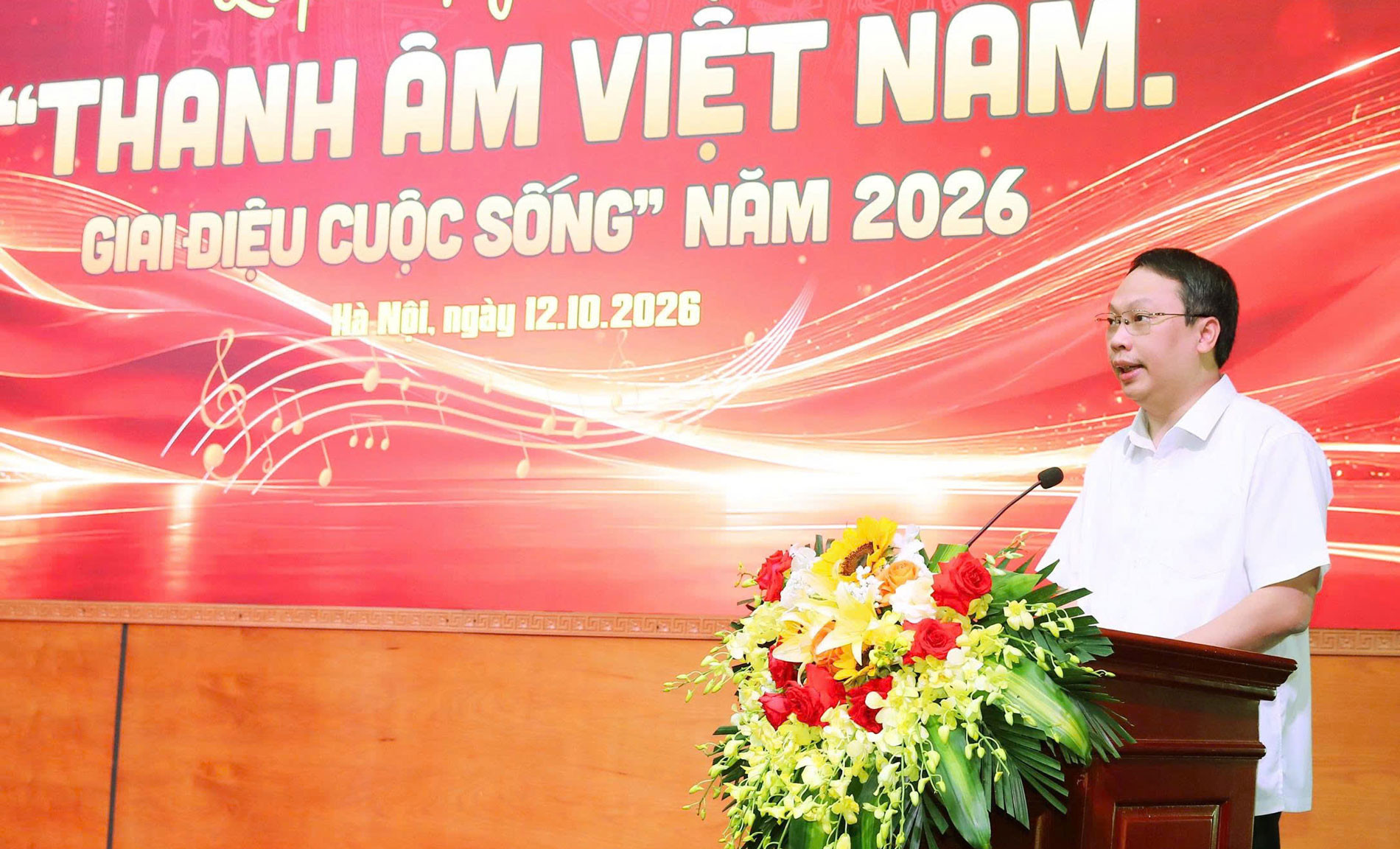
After taking up his role in the cultural sector, he realized the urgent need to learn about traditional Vietnamese instruments and musical forms, including the trong com (traditional rice drum), dan bau (one-string zither) and dan tranh (plucked zither).
"I believe this is not just my own experience but a shared aspiration among tens of millions of Vietnamese people," Dung said.
He explained that the ministry hopes to create an initiative capable of engaging people nationwide, built around three key goals: making basic musical knowledge accessible to the public, encouraging people to express and share their emotions, and developing a digital Vietnamese melody bank for the future and for artificial intelligence.
"We hope Vietnamese people will create their own digital sounds. Melodies that have existed throughout our 4,000-year history will be digitized on a much greater scale," he said.
People's Artist Xuan Bac praises the initiative
People's Artist Xuan Bac, Director of the Department of Performing Arts, described the proposal to establish a Vietnamese Sound Bank as a highly practical idea.
He noted that most people and content creators now use social media platforms to publish posts and produce videos, generating enormous demand for audio resources, including music and sound effects.
However, accessing properly licensed audio remains difficult. Creators often face high costs or must contact individual copyright holders to obtain permission.
According to Xuan Bac, Vietnam possesses an exceptionally rich and distinctive collection of sounds, ranging from traditional musical instruments to familiar noises that characterize everyday life.
Even the smallest sounds, he said, contribute to the cultural identity and daily experiences of Vietnamese people.
From an intellectual property perspective, Xuan Bac emphasized that contributing high-quality sounds that are frequently reused could generate legitimate royalty income for creators.
More importantly, collecting and archiving these sounds would help preserve and promote Vietnam's cultural heritage, transforming ordinary sounds into artistic materials for emotionally resonant music that inspires love for the country among audiences at home and abroad.
Three activities to engage the public
The program consists of three interconnected activities hosted on its official digital platform.
Vietnamese Sound Quiz: An online multiple-choice competition designed to improve public knowledge of melodies, songs, traditional musical instruments, folk tunes, musical heritage and contemporary musical life in Vietnam.
Experience Vietnamese Sounds: Participants submit short videos sharing their feelings, personal stories, memories or perspectives on a melody, song, folk tune or aspect of Vietnamese musical life.
Create Vietnamese Sounds: This activity welcomes creative works incorporating music, melodies, voices, sound effects, musical instruments, folk tunes, everyday sounds and Vietnamese cultural settings.
Participants are encouraged to compose, arrange, record, sing, play instruments, tell stories through sound or combine audio with images, videos, animation, graphics and other forms of digital art.
Eligible submissions may be featured on the program's official platform and gradually incorporated into the Vietnamese Sound Bank, accompanied by information identifying their creators, copyright ownership, related rights and conditions of use.
The program is open to Vietnamese citizens living at home and abroad, as well as foreigners interested in Vietnamese culture and music, with no restrictions on age or profession.
Submissions will be accepted until November 30, 2026.
Tinh Le
.svg)
