 Vietnamnet.vn

 Podcast



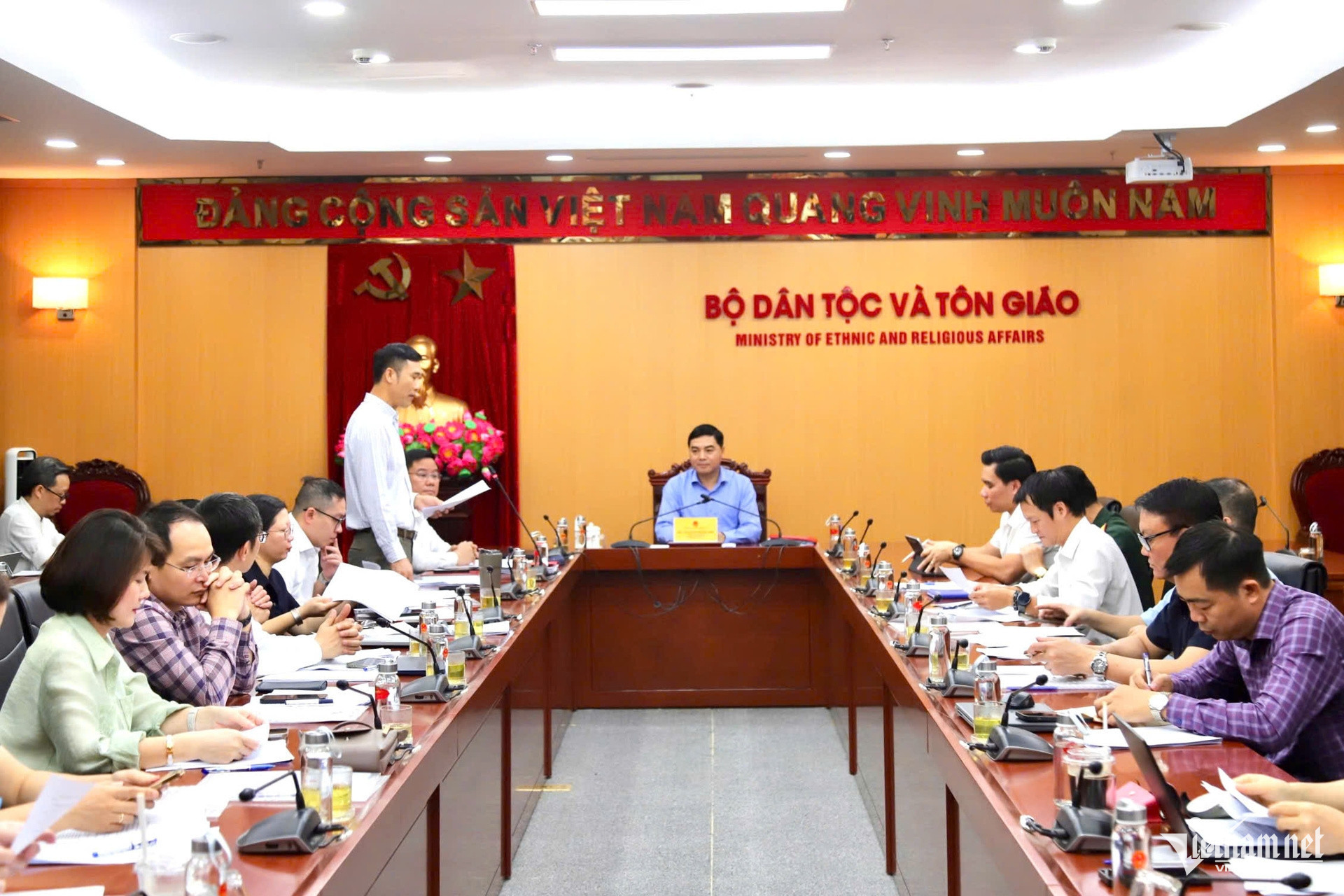
The Ministry of Ethnic and Religious Affairs holds a meeting of the editorial team responsible for the review and the proposed new resolution.
Permanent Deputy Minister of Ethnic and Religious Affairs Nguyen Hoai Anh chaired a meeting in Hanoi on October 15 of the editorial team tasked with reviewing and drafting a replacement for Resolution 24-NQ/TW on ethnic affairs, issued by the ninth-tenure Communist Party Central Committee.
Participants agreed that the review should comprehensively assess the resolution’s implementation over the past 23 years, identifying shortcomings, their causes and systemic barriers to putting ethnic minority policies into practice.
The findings would provide the basis for proposing major reforms to support development in ethnic minority and mountainous areas in the coming period.
Assessing results and identifying policy barriers
Under the outline presented at the meeting, the report supporting the new resolution would have three sections: the results of implementing Resolution 24-NQ/TW; objectives, priorities and key measures for ethnic affairs in the next phase; and recommendations and proposals.
Participants welcomed the preparatory work and broadly endorsed the structure. However, several called for a more thorough review reflecting the full 23 years of implementation, spanning different development phases and policy approaches.
The assessment should focus closely on the principles, policies and tasks set out in Resolution 24-NQ/TW while also following the Politburo’s Conclusion No. 65.
Participants said it should examine individual tasks and targets rather than offer broad assessments that failed to establish what had been achieved and what remained unresolved.
Beyond infrastructure development and poverty reduction, they called for closer examination of progress in equality, solidarity, mutual support and shared development among ethnic groups.
This would give a fuller picture of how ethnic minority policies had affected living conditions, development opportunities and access to essential services.
Another priority was to understand why some policies had fallen short of expectations. Participants called for analysis of systemic barriers and an assessment of the capacity to implement ethnic minority policies at every level, from central government to local communities.
That assessment would have practical implications for the new resolution. Policy outcomes depend not only on strategic direction and investment, but also on implementation quality, coordination between agencies and how well measures suit local conditions.
The report should therefore draw on findings from thematic interim and final reviews, adding evidence and analysis to support a more comprehensive assessment.
The scope of the review also needed to be clearly defined, focusing on ethnic minority affairs and communities to ensure a consistent approach throughout the resolution.
For the next phase, participants stressed the need for fresh thinking on development, balancing social welfare provision with investment in people’s skills and capabilities.
They also called for greater attention to training, professional development and scientific research to strengthen policy advice, formulation and implementation.
Setting 2035 targets to narrow development gaps
Concluding the meeting, Anh said the draft resolution must clearly define objectives, measurable targets and corresponding measures for 2035, with a longer-term vision to 2045.
These should be grounded in the review of the past 23 years while also taking account of the Party’s latest policies and strategic directions.
Where specific sectoral objectives and targets already existed, the draft should follow them to maintain consistency across the policy framework.
Development targets for ethnic minority areas should also be assessed against national benchmarks.
Indicators such as average income per person, GDP per capita, healthcare and access to essential services should be examined to determine how closely ethnic minority areas were approaching national development goals.
The draft should, in particular, identify decisive measures to address the barriers uncovered by the review. These would help improve policy effectiveness and support sustainable development in ethnic minority and mountainous areas.
Anh asked editorial team members and representatives of central Party bodies, ministries and agencies to review Party policies, legal provisions and targets within their respective areas of responsibility.
Drawing on practical experience and specialist expertise, they should propose tasks and measures that respond to conditions on the ground, are feasible and align with the broader policy direction.
He said the Ministry of Ethnic and Religious Affairs would incorporate the editorial team’s feedback and continue reviewing the detailed outline and the documents required for submission to the relevant authorities.
The submission package must follow the review process through the Government Party Committee, the Politburo and the Party Central Committee.
The standing office would consolidate comments, recommend specific assignments for each editorial team member and coordinate with relevant agencies to complete the proposal.
The ministry would also review and adjust the drafting committee and editorial team to reflect personnel changes at several agencies and organizations.
A detailed work plan would set out responsibilities and deadlines, enabling timely reporting and requests for guidance from the relevant authorities.
Under the schedule discussed at the meeting, the documents would continue to be prepared for submission to the drafting committee for consideration in October 2026.
Hoang Quy
.svg)
