 Vietnamnet.vn

 Podcast



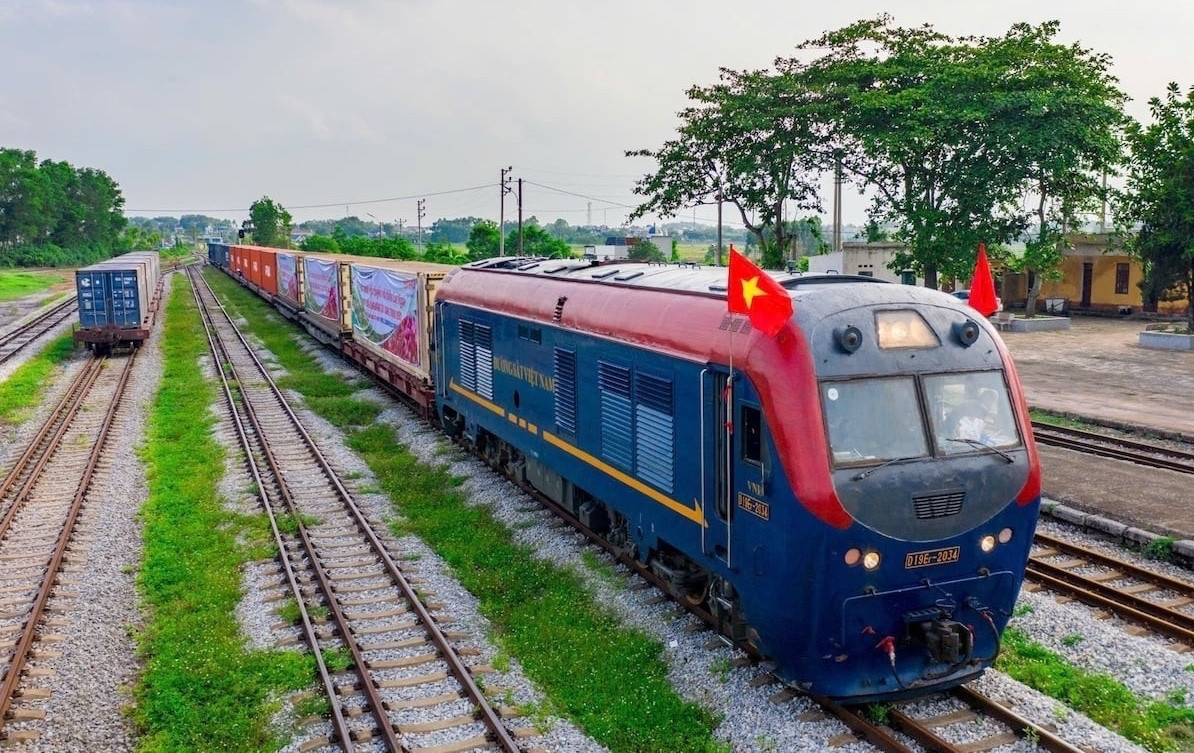
Deputy Minister of Construction Nguyen Danh Huy recently signed Decision No. 1093 approving revisions to the railway network master plan for 2021-2030, with a vision to 2050.
Under the revised plan, the Kep - Chi Linh railway has been renamed the Kep - Ha Long - Cai Lan line.
Vietnam's existing railway network consists of seven routes with a combined length of approximately 2,510 km.
Six of these routes are scheduled for investment before and after 2030. They include the 1,726 km Hanoi - Ho Chi Minh City railway, the 296 km Hanoi - Lao Cai line, the 102 km Hanoi - Hai Phong line, the 55 km Hanoi - Thai Nguyen line, the 167 km Hanoi - Lang Son line and the 108 km Kep - Ha Long - Cai Lan line.
The 56 km Kep - Luu Xa route is planned for investment after 2030.
The revised master plan also identifies 16 new railway lines to be built using the standard 1,435 mm gauge.
Sixteen new standard-gauge routes
Ten of the new routes are planned for implementation before and after 2030.
They include the 363 km Lao Cai - Hanoi - Hai Phong railway, the 156 km Hanoi - Dong Dang line, the 187 km Hai Phong - Ha Long - Mong Cai route and the 31 km Ngoc Hoi - Kim Son section of Hanoi's eastern railway belt.
In southern Vietnam, the planned routes include Bien Hoa - Vung Tau, Ho Chi Minh City - Loc Ninh, Ho Chi Minh City - Can Tho - Ca Mau and An Binh - Saigon - Tan Kien.
The central region will have the Vung Ang - Mu Gia and Thap Cham - Da Lat lines.
The remaining six routes are planned for investment after 2030.
These comprise the 555 km Da Nang - Quang Ngai - Gia Lai - Dak Lak - Lam Dong - Dong Nai railway, the 64 km Ninh Binh - Hung Yen - Hai Phong line, the 54 km Ngoc Hoi - Thach Loi section of Hanoi's western railway belt, the 61 km Ho Chi Minh City - Moc Bai route, the 114 km My Thuy - Lao Bao line and the 73 km Thai Nguyen - Tuyen Quang - Lao Cai railway.
Two high-speed railways planned
The railway master plan identifies two high-speed routes: the 1,541 km North-South high-speed railway and the Hanoi - Quang Ninh line.
The North-South route is scheduled for investment in two phases before and after 2030, while the Hanoi - Quang Ninh railway has been prioritized for development before 2030.
By 2050, the Ministry of Construction aims to gradually renovate, upgrade and modernize existing railways, increase passenger and freight transport capacity, and complete connections at major railway hubs.
Priority given to cross-border connections
The plan gives priority to routes that strengthen interregional and international connectivity.
These include the Ninh Binh - Hung Yen - Hai Phong railway, the Hai Phong - Ha Long - Mong Cai line connecting with China, the My Thuy - Lao Bao route linking Vietnam with Laos, and the Ho Chi Minh City - Tay Ninh railway, which is intended to connect with Cambodia.
The Da Nang - Quang Ngai - Gia Lai - Dak Lak - Lam Dong - Dong Nai line will connect the South Central Coast with the Central Highlands.
The Thap Cham - Da Lat railway is also planned for restoration, alongside the completion of railway lines within major transport hubs.
Vu Diep
.svg)
