 Vietnamnet.vn

 Podcast



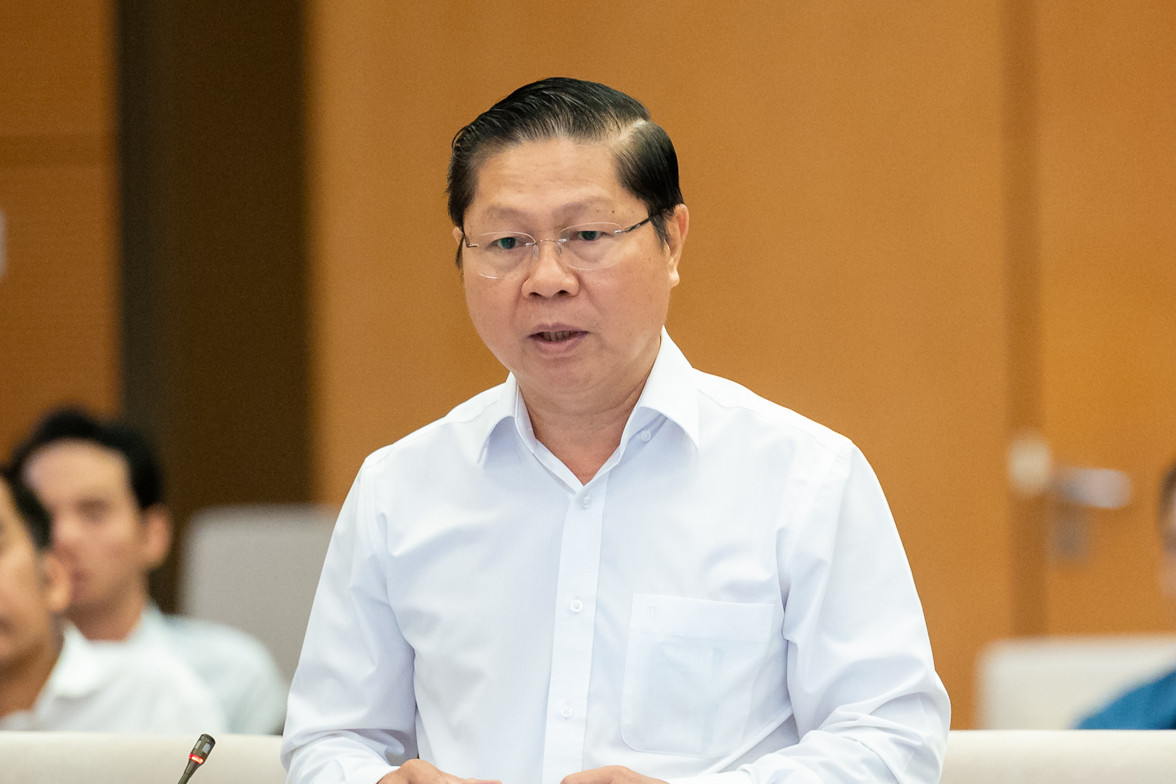
The Politburo’s Resolution 71 requires an urgent reorganization and restructuring of universities, including the merger or dissolution of substandard institutions, the removal of intermediary levels, the possible merger of research institutes with universities, and the transfer of some universities to local authorities.
Excluding military, police, and non-public universities, Son noted that about 140 public universities under various central ministries, agencies, and local authorities will be restructured.
"The approach is to significantly reduce the number of administrative units," Son said, adding that the Ministry is considering multiple scenarios.
"Some centrally-managed universities may be transferred to local authorities; local universities may be merged with central institutions; ministries may consolidate their own universities; and some local institutions may merge with one another. Certain universities that are too small and do not meet standards will be dissolved," he said.
According to Son, the restructuring, especially among institutions with similar or related fields. aims to address fragmentation and a lack of growth potential.
"The steering committee of the Ministry of Education and Training (MOET) will propose a plan to the PM before implementation. For universities that must merge, the Ministry will consult school leaders, but this is essentially a mandate, similar to recent provincial mergers," Son explained.
The ministry must also devise restructuring plans to reduce entities, strengthen institutions, and improve quality, not just cut numbers of schools. "Some institutions, though not large, may be retained due to geopolitical or strategic importance but must develop rapidly," Nguyen Kim Son said, adding that the Ministry will create tailored plans for each institution.
Currently, some university clusters train in similar or complementary fields. For example, the Economics-Law cluster includes National Economics University, Foreign Trade University, Academy of Finance, University of Trade, and Hanoi Law University.
The infrastructure-architecture cluster includes Hanoi University of Civil Engineering, Hanoi University of Architecture, University of Transport and Communications, University of Transport Technology, and Thuy Loi University. The medical-pharmaceutical cluster includes Hanoi Medical University, Hanoi University of Pharmacy, and Academy of Traditional Medicine.
No room for lobbying or favoritism in university restructuring
On October 5, at the Government’s regular press conference, the media asked the representative from the Ministry of Education and Training about plans for merging or dissolving universities. One question was about how the Ministry would restructure the system and disciplines to align training with practical needs and labor market demands, ensuring graduates find jobs while businesses can recruit suitable talent.
"This is a major Party policy that must be implemented urgently, scientifically, and decisively. The restructuring will impact many sentiments, so it must be done cautiously and methodically," Dung said.
The Ministry acknowledged its responsibility but stressed that it cannot act alone. It requires collaboration and consensus from ministries, agencies, localities, and especially higher education and vocational institutions nationwide.
Le Tan Dung noted that the Ministry is tasked with developing a proposal to reorganize higher education and vocational institutions and transfer some to local management. "Soon, we will submit it to the competent authority and the PM for approval, with implementation starting in 2026," he said.
Addressing the need for training aligned with practice, societal demands, and the labor market, the Deputy Minister recognized this as a critical and practical issue.
The Ministry will base its approach on the Party and National Assembly’s resolutions and Government directives, the approved higher education and vocational training development strategy, the network planning of higher education and vocational institutions, and socio-economic development goals for the coming period.
"Training must align with objectives, ensuring employability and market relevance. Drawing from international experience and Vietnam’s conditions, the proposal will clearly define the missions of higher education and vocational institutions," Dung said.
“We set specific, clear principles and criteria to ensure transparency and openness, avoiding favoritism, lobbying, or corruption. We firmly commit to preventing such issues," he added.
The plan is being finalized and will seek input from ministries, localities, experts, and especially higher education and vocational institutions to ensure strong consensus during implementation.
Once approved by the competent authority, the proposal will be publicly implemented and shared with the media.
Dung noted that some recent misinformation spread online was not from the Ministry. The Ministry asked organizations and individuals not to share unverified or unofficial information.
Tran Thuong
.svg)
