 Vietnamnet.vn

 Podcast


Prime Minister Le Minh Hung outlined Vietnam's economic performance, social welfare measures and development priorities before answering questions from National Assembly deputies on November 12, his first questioning session since taking office.
The Prime Minister reported strong investment growth, rising foreign direct investment (FDI), increased public investment disbursement and improvements in workers' incomes. He also pledged stricter evaluations of officials who avoid responsibility and called for more effective allocation of investment resources to sustain double-digit economic growth.
Economy records strong growth despite global pressures
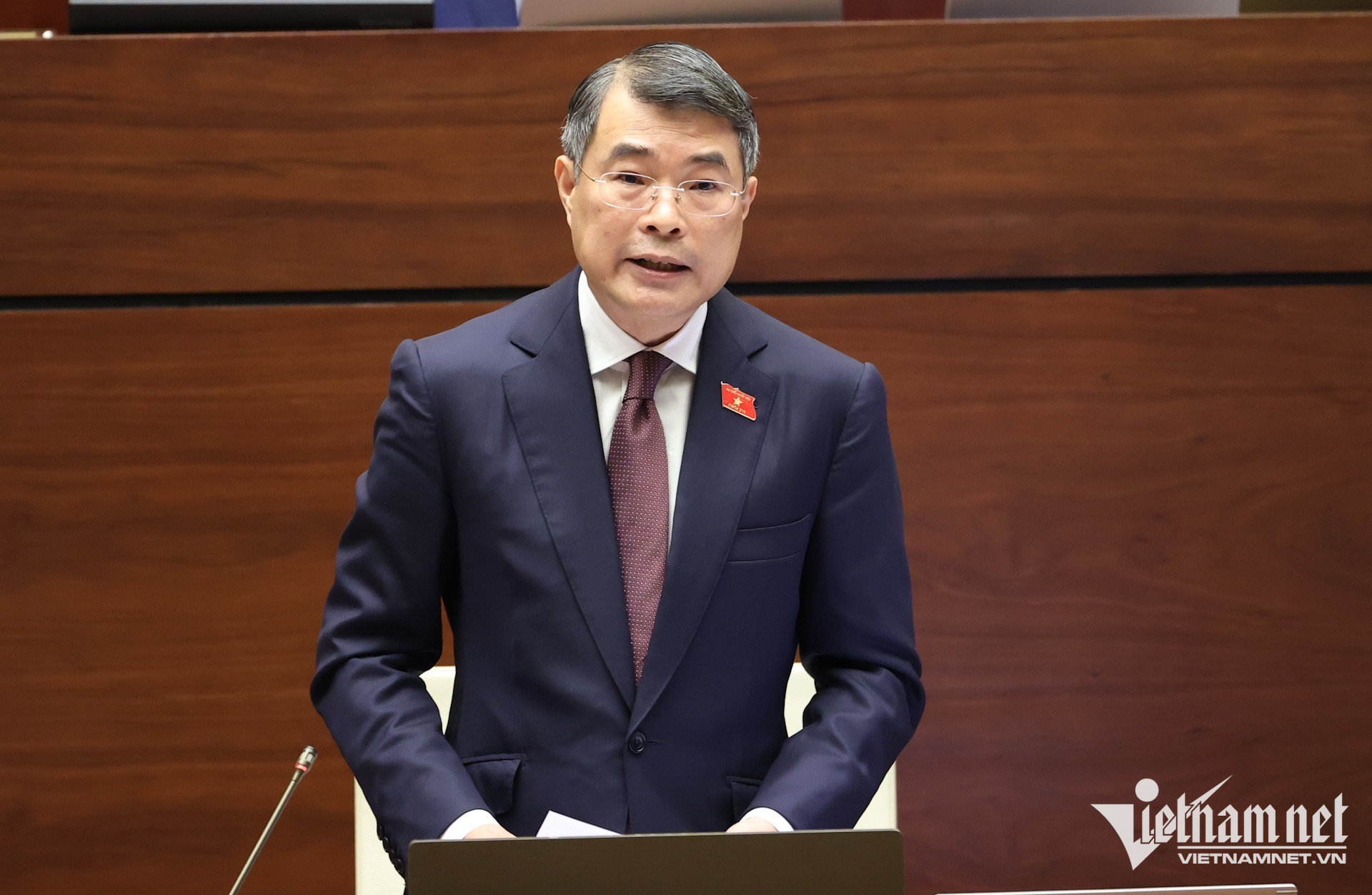
Hung said the government considers economic management a central and continuous priority, with growth expected to be inclusive and accompanied by social progress and equity.
To reduce input costs and minimize the impact of economic pressures on households and businesses, the government has implemented a series of tax and financial support measures.
These include extending the 2-percentage-point value-added tax reduction for eligible goods and services through the end of 2026, deferring payments of VAT, corporate income tax, personal income tax and land rent, and maintaining certain petroleum-related taxes at zero.
The government has also reduced special consumption tax rates on gasoline from 7%, 8% and 10% to zero and cut electricity prices by 2% after years of predominantly upward adjustments.
The tax exemptions and reductions are expected to lower state budget revenue by approximately VND256.7 trillion.
Despite global inflationary pressures, Vietnam's consumer price index (CPI) was contained at 4.57% over the first 10 months of 2026.
The Prime Minister described this as a positive achievement, particularly as global gasoline prices had increased by 76-78% since the beginning of the year, diesel prices had risen by approximately 109%, and many raw material prices had climbed sharply.
He attributed Vietnam's performance to proactive, timely and coordinated policies, including institutional reforms, administrative simplification and efforts to resolve obstacles facing businesses and public investment projects.
Government leaders have also worked directly with local authorities, business associations and enterprises to address major development challenges.
According to Hung, measures to attract investment, accelerate public investment disbursement, resolve long-delayed projects and expand markets have stimulated demand for materials and goods, created jobs and increased workers' incomes.
Total social investment reached VND3.11 quadrillion in the first nine months, up 15.1% year on year.
State budget revenue in the first 10 months was estimated at VND2.44 quadrillion, equivalent to nearly 96.4% of the annual target and an increase of 11% from the same period last year.
These results were achieved despite tax and fee exemptions, reductions and payment extensions totaling VND366.6 trillion.
Public investment disbursement reached nearly VND708.6 trillion, or 74.1% of the annual plan. This represented an increase of 19.7 percentage points in the disbursement rate and VND217.5 trillion in absolute terms compared with the corresponding period.
Foreign investment remained a bright spot.
Registered FDI reached $54.85 billion in the first 10 months, up 74%, while disbursed FDI totaled $24.08 billion, an increase of 13.1%.
Vietnam's total import-export turnover exceeded $1 trillion for the first time, with a trade surplus of $7.31 billion recorded in October alone.
The government has also accelerated efforts to resolve long-stalled projects and release resources for economic development.
"These results clearly demonstrate the economy's strong and substantive growth, underpinned by sustained macroeconomic stability," Hung said.
Workers' incomes rise as base salary increases 8%
Alongside economic expansion, the Prime Minister highlighted measures to strengthen social welfare and improve living standards.
During the first 10 months, approximately VND578 trillion in recurrent budget expenditure was allocated to healthcare, education and social security, equivalent to 72% of the 2026 annual estimate.
Workers' incomes have increased, while the statutory base salary for public-sector employees rose by 8% from July 1, 2026.
Allowances for commune-level officials and civil servants were increased from 25% to 55%.
The government has also expanded the scope of allowances for healthcare workers, with rates ranging from 30% to 80%, while advancing policies on medical examinations.
Teachers have similarly benefited from expanded eligibility and higher allowances.
Several localities have introduced free textbooks for general education students.
The government aims to implement the policy nationwide from the 2028-2029 academic year, one year ahead of the original schedule.
Hung emphasized that economic growth must translate into tangible improvements in people's material and spiritual well-being.
Vietnam aims for growth above 10% in 2026 and 2027
Although socioeconomic conditions continued to improve in October, the Prime Minister acknowledged that significant challenges and shortcomings remained.
The government will strive to achieve economic growth of more than 10% for the whole of 2026 while keeping inflation at approximately 4.5%.
These targets are intended to establish a foundation for the 2027 development plan and the broader 2026-2030 period.
On November 7, the National Assembly adopted the 2027 socioeconomic development plan, setting 45 development indicators, including economic growth of at least 10% and inflation of around 4.5%.
The plan also identifies 11 groups of priority tasks and solutions.
According to Hung, achieving the growth target will require substantial investment.
Total social investment in 2027 is expected to reach approximately 36-38% of GDP, equivalent to VND6-6.4 quadrillion.
Of this amount, development investment expenditure from the state budget is projected at approximately VND1.76 quadrillion, accounting for around 27-29%.
To mobilize sufficient resources, the government aims to increase state budget revenue by approximately 9.1% in 2027.
It also plans to save 5% of public investment expenditure and 10% of recurrent expenditure, while issuing bonds and mobilizing official development assistance loans.
The government will establish detailed growth scenarios and assign specific tasks and implementation schedules to ministries, localities and state-owned enterprises.
Priority will be given to major economic sectors, particularly those capable of generating breakthroughs in science, technology, innovation and digital transformation.
At the same time, the government will continue strengthening macroeconomic stability through flexible management of taxation, interest rates, exchange rates and other economic policies.
Hung stressed the importance of ensuring adequate supplies of gasoline, oil and electricity, reducing intermediary costs, maintaining essential goods supplies, ensuring price transparency and strictly handling violations.
PM vows to replace officials who avoid responsibility
During the questioning session, National Assembly deputy Mai Thi Phuong Hoa of Ninh Binh raised concerns about public officials who hesitate to make decisions, fear mistakes, work passively or shift responsibility to others.
She referred to Politburo Resolution 24, which promotes initiative, innovation and accountability among officials and Party members.
Hoa also recalled the Prime Minister's inaugural address on April 7, when he pledged strict action against officials who avoid responsibility or show indifference to the difficulties faced by citizens and businesses.
She asked what fundamental measures the government would take to address such behavior, particularly in sensitive and high-risk areas including finance, public assets, public investment, procurement, land management and digital transformation.
Hung acknowledged that some officials in both central and local agencies continued to avoid difficult decisions despite existing Party resolutions, government action plans and regulations designed to encourage and protect proactive officials.
He said the government was reviewing and improving the legal framework to clearly distinguish the powers and responsibilities of ministries, central agencies and provincial and commune-level administrations.
"We are reviewing all responsibilities and powers that have been decentralized to local authorities to determine which tasks provincial and commune-level administrations can undertake and which need further reassessment," he said.
He added that sufficient resources had been allocated under public investment plans to enable local governments to carry out their responsibilities.
The Prime Minister emphasized that performance evaluations must also be reformed.
"When authority, responsibilities and duties have been clearly defined, but progress, results and work quality still fail to meet requirements, officials' performance must be reviewed so that they can be promptly reassigned, replaced or supplemented," he said.
He pledged rigorous, responsible and transparent evaluations to ensure that officials fulfill their assigned duties rather than avoiding or passing them on to others.
"Alongside clearly defined responsibilities and adequate resources, evaluations must be objective, impartial and fair," Hung stressed.
Transparent institutions essential to mobilize investment
National Assembly deputies Thai Quynh Mai Dung of Phu Tho, Nguyen Manh Hung of Can Tho and Pham Duy Anh of Da Nang questioned the Prime Minister about mobilizing investment capital to support economic growth.
Hung identified institutional reform as the most important priority for attracting FDI and private investment.
He said Vietnam must establish a transparent legal framework consistent with international practices and standards to strengthen confidence among domestic businesses and foreign investors.
Maintaining macroeconomic stability and major economic balances was equally essential.
"Investors will never feel confident if the legal environment is neither transparent nor clear nor easy to navigate," he said. "If we cannot maintain macroeconomic balances, confidence will erode. Without confidence, we cannot mobilize resources."
For foreign portfolio investment and investment funds, the government will focus on developing medium- and long-term financial instruments and accelerating the establishment of international financial centers in Ho Chi Minh City and Da Nang.
Vietnam will also seek to capitalize on opportunities arising from FTSE Russell's upgrade of its stock market to emerging-market status and improvements in the country's sovereign credit standing toward investment grade.
Public investment to focus on fewer, higher-impact projects
Turning to public investment, the Prime Minister said effective capital allocation was more important than simply increasing spending.
"The most important question is where we allocate the capital," he emphasized.
He cited the Party Central Committee's Conclusion 18, which requires the number of public investment projects to be reduced by at least 30%.
During the previous term, the number of projects fell sharply to approximately 5,000.
According to the Ministry of Finance, the number of projects funded by the central government budget has declined to just over 3,000.
The reduction is intended to prevent investment from being spread too thinly and improve the efficiency of public spending.
The government will prioritize projects with strong interregional connectivity and broad economic benefits, particularly essential infrastructure such as transport networks, seaports, critical science and technology facilities, and agricultural infrastructure.
The Prime Minister said investment priorities would be determined based on the Party Central Committee's full-term program and relevant National Assembly resolutions.
Greater autonomy for Vietnam's 34 localities
National Assembly deputy Tran Hoang Ngan of Ho Chi Minh City asked how the government would harness the combined strengths and advantages of Vietnam's 34 provincial-level localities to achieve the 45 targets in the 2027 socioeconomic development plan.
Hung said the government's consistent approach was to accelerate decentralization under the principle that local authorities should make decisions, implement them and take responsibility for the results.
This policy has significantly expanded local governments' decision-making powers.
He cited the recently adopted Law on Urban Development as an example of legislation granting local authorities greater flexibility in management and development.
The Prime Minister also called for a comprehensive review of national, regional, local and sectoral planning frameworks to ensure consistency and coordination.
Such reforms would provide a stronger foundation for localities to mobilize investment and implement development projects.
Ministries and government agencies have also been instructed to complete technical standards, regulations and benchmarks to support effective project implementation.
The government will promote science, technology and digital transformation in ways suited to the characteristics and comparative advantages of each locality.
Under the medium-term public investment plan, funding will be prioritized for major interregional and connectivity projects.
"If key projects are implemented on schedule and to the required quality standards, they will unlock resources and complete essential strategic infrastructure, enabling localities to fully capitalize on their strengths," Hung said.
The Prime Minister reaffirmed that people must remain at the center of Vietnam's development strategy.
Economic expansion, he stressed, must be accompanied by social progress, equity and stronger social security so that all citizens can benefit from the country's growth.
Tran Thuong

