 Vietnamnet.vn

 Podcast


During a group discussion at the National Assembly on October 22, lawmakers examined proposed amendments to three major pieces of legislation: the Land Law, the Housing Law and the Real Estate Business Law.
Prime Minister Le Minh Hung said the three laws are closely interconnected and directly affect Vietnam's development resources, as well as people's homes, assets and livelihoods.
Although the laws took effect on August 1, 2024, amendments have become necessary following major new policy directions from the Party Central Committee, the introduction of a two-tier local government system and difficulties encountered in implementing certain provisions.
The Prime Minister highlighted the enormous demand for housing among ordinary citizens, workers, public officials, civil servants and members of the armed forces, particularly those living and working in urban areas.
He also expressed concern that property prices remain high, including prices for social housing and homes intended for low-income households.
Land reform must protect livelihoods, not just compensate for property
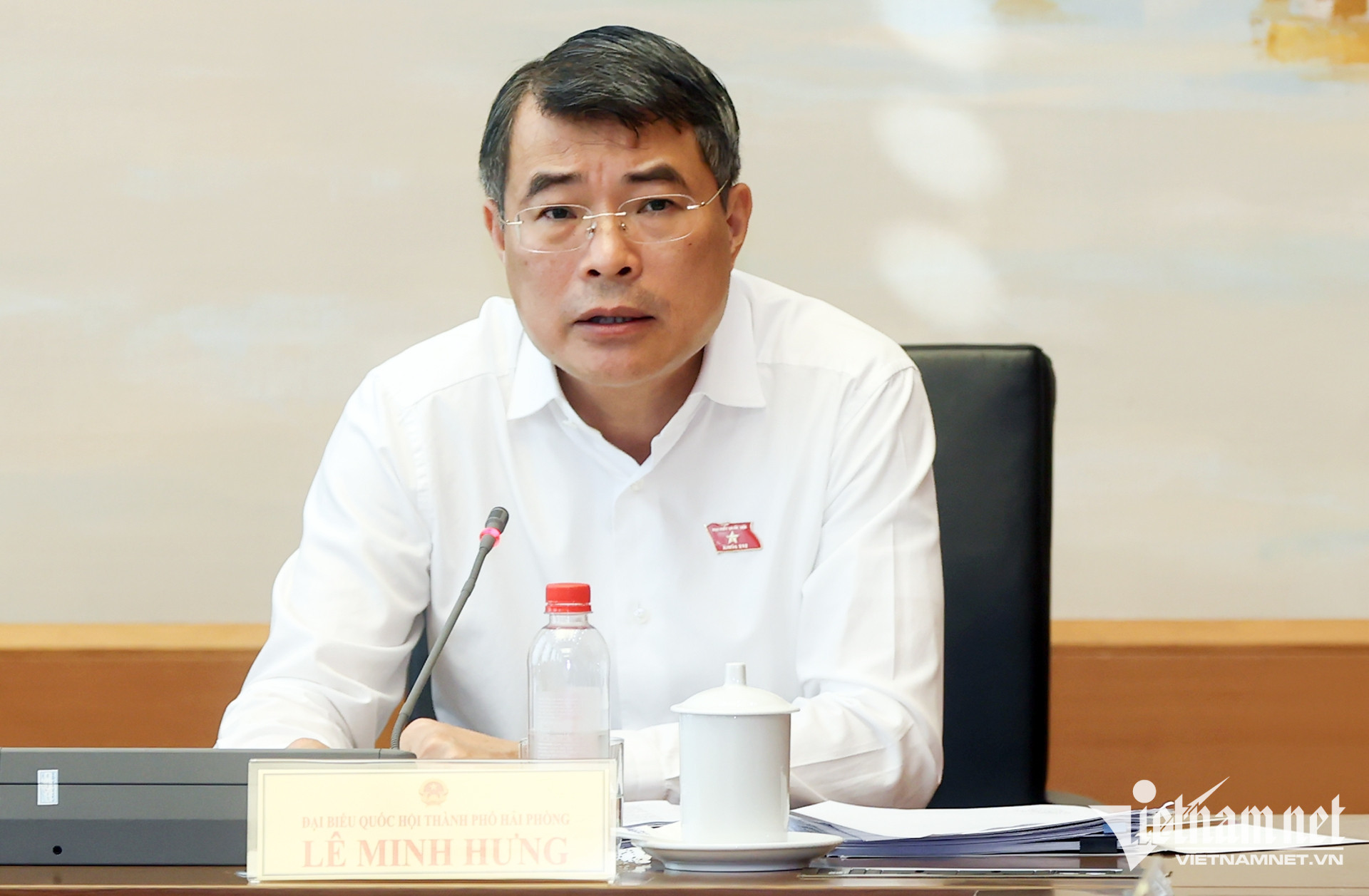
Turning to the proposed amendments to the Land Law, Hung identified land classification, land-use planning and land-use plans as the most important areas of reform.
Regarding land acquisition, he explained that the state may recover land for socioeconomic development projects serving national interests, but such decisions must strictly comply with the Constitution and applicable laws.
He emphasized the need for clear safeguards against the misuse of land acquisition powers while ensuring that legitimate local development projects are not unnecessarily obstructed.
The draft legislation sets out several categories of projects for which land may be acquired, including government offices and public service facilities, public infrastructure and technical infrastructure, social welfare projects, economic development initiatives, and urban and rural redevelopment.
On compensation, assistance and resettlement, the Prime Minister highlighted a fundamental shift in policy thinking: from simply compensating people for acquired property to rebuilding their lives when the state takes back their land.
He described this as the central principle underlying Resolution 21.
Under the draft law, affected land users may receive compensation in the form of land with the same designated use, land for another purpose, housing or cash.
For urban development projects, residents would be given priority for on-site resettlement.
The proposed provisions would also allow affected households to exchange acquired residential land for another portion of their existing plot or for land they already hold within the same commune-level administrative area.
"The most important principle is to rebuild people's lives when the state acquires their land, as the Party General Secretary and President has repeatedly emphasized," Hung said. "Beyond providing accommodation, we must consider people's livelihoods, infrastructure, cultural facilities, schools and healthcare."
Government seeks greater control over land pricing
On land valuation, the Prime Minister said the revised legislation would retain the state's authority to determine land prices, using official land price tables and adjustment coefficients.
Responding to concerns about the valuation mechanism, he said land pricing must be conducted honestly, objectively, openly and transparently, while remaining consistent with development objectives at different stages.
Valuations must follow established procedures, rely on land databases and relevant sector-specific information, and balance the interests of the state, land users and investors.
The draft law would establish general principles, leaving detailed provisions to implementing regulations.
Provincial-level People's Councils would be responsible for issuing land price tables and adjustment coefficients.
According to Hung, the proposed approach would simplify and increase transparency in land valuation while shortening project implementation times.
He argued that detailed land pricing criteria should not be rigidly fixed in legislation, allowing adjustments when economic conditions or development requirements change.
Reflecting on the previous market-based land pricing approach, the Prime Minister said high land values had driven up project development costs and, ultimately, housing prices.
Other expenses, including borrowing costs and administrative procedures, further added to the financial burden.
"High land prices may help local authorities increase budget revenue for a certain period, but the consequences for socioeconomic development are enormous if we can never solve the housing affordability problem for public officials, civil servants and workers," he said.
For that reason, Hung argued, the state must regulate and manage land prices in ways that support broader development objectives.
Rental housing to become a policy priority
Discussing the proposed amendments to the Housing Law, the Prime Minister reiterated that demand for housing in Vietnam remains extremely high, while the supply of homes affordable to ordinary households continues to fall short.
He said the existing housing structure places excessive emphasis on ownership, while different housing categories have not been clearly distinguished.
As a result, government support policies have not always reached the groups most in need, particularly those requiring social housing and rental accommodation.
To address these shortcomings, the revised law would establish four distinct housing categories.
Commercial housing would operate according to market mechanisms, allowing higher-income households to access premium properties.
The state, meanwhile, would focus on regulating rental housing, official residences and housing provided under social policies.
"The state does not subsidize housing, but neither will it leave the market entirely to regulate itself," Hung said.
The Prime Minister emphasized that the proposed reforms would prioritize rental housing development, helping to reduce the risk of real estate speculation.
He noted that commercial housing prices have risen beyond the financial reach of many households, leaving young workers facing a lengthy period of saving before they can afford to purchase a home.
"That is why we need policies that allow people to rent homes on a long-term, stable basis at affordable prices," he said.
The draft Housing Law includes a dedicated chapter on rental accommodation, covering three main categories: rental housing financed by the state through local housing funds, privately financed rental housing, and accommodation for workers in industrial parks.
Under the proposed framework, rental rates would not be allowed to exceed price ceilings established by provincial-level People's Committees.
Hung said this requirement is intended to ensure that government incentives provided to housing developers and operators are ultimately passed on to residents.
The Prime Minister also revealed that the three draft laws had undergone extensive public consultation, receiving more than 885,000 comments and submissions from citizens, experts, local authorities and other stakeholders.
Tran Thuong

