 Vietnamnet.vn

 Podcast



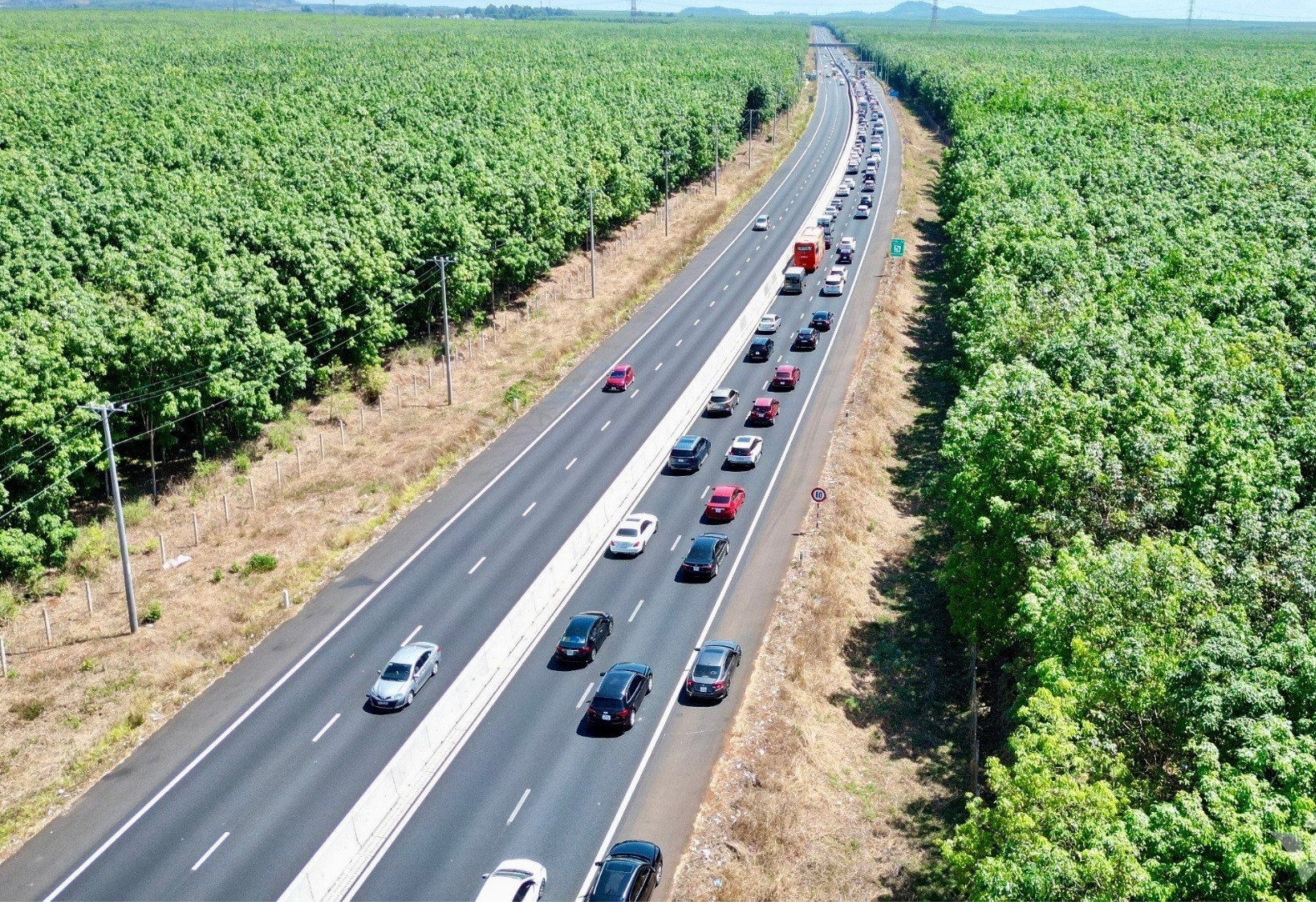
The ministry has submitted a report to the Prime Minister outlining a proposal to expand the eastern section of the North-South Expressway through public-private partnerships (PPP), including how the project would be divided and financed.
Under the proposed plan, approximately 1,144km of expressway between Hanoi and Ho Chi Minh City would be upgraded across 18 sections. The My Thuan - Can Tho and Can Tho - Ca Mau sections would be considered under separate investment projects.
The expansion would generally increase capacity from four limited-standard lanes to six full-standard expressway lanes, in line with the national road network plan.
The Phan Thiet - Dau Giay section, which already has four full-standard lanes, would also be widened to six lanes to ensure consistency with adjoining sections.
The total preliminary investment is estimated at VND178.36 trillion ($6.8 billion).
Three expressway sections currently operated by private investors under toll collection arrangements - Dien Chau - Bai Vot, Nha Trang - Cam Lam and Cam Lam - Vinh Hao - would be treated as three independent projects.
Together, these sections cover approximately 178km and would require an estimated VND27.95 trillion ($1.06 billion) for expansion.
The investment structure and level of state budget support for each section would be determined based on existing PPP contracts, traffic volumes and detailed financial assessments.
For the remaining 15 sections, which were originally financed through public investment and are now subject to state-managed toll collection, the ministry proposes grouping them into two PPP projects without financial support from the state budget.
The northern project, stretching approximately 415km from Mai Son to Cam Lo, would require an estimated VND72.19 trillion ($2.74 billion), with a projected capital recovery period of around 20 years.
The southern project, covering approximately 551km from Quang Ngai to Dau Giay, would involve an estimated VND78.22 trillion ($2.97 billion), with an expected capital recovery period of around 15 years.
According to the ministry, several major infrastructure companies have expressed interest in participating in the expressway expansion through PPP arrangements without requiring state budget support.
They include Vietnam Expressway Corporation, Deo Ca Group, Ho Chi Minh City Infrastructure Investment Joint Stock Company (CII), and Xuan Truong Construction Enterprise.
To advance the proposal, the Ministry of Construction has recommended that the Prime Minister seek National Assembly approval to include the expressway expansion in a broader resolution at the second session of the 16th National Assembly.
The proposed resolution would authorize the Government to continue studying and implementing the expansion through PPP, public investment or other legally permitted financing arrangements.
Where non-budget capital is mobilized, investors would be allowed to collect tolls in accordance with applicable regulations once construction on each expanded section is completed.
The ministry has also proposed allowing the Government to proceed directly with preparing and approving feasibility studies, without having to complete separate investment policy approval procedures for the projects or their components where such procedures would otherwise be required.
Vu Diep
.svg)
