 Vietnamnet.vn

 Podcast



The Vietnam Academy of Science and Technology (VAST) and JINR held a ceremony on Sept. 15 to mark 70 years since Vietnam joined the institute, celebrating one of the country’s longest-running international scientific partnerships.
JINR was established in 1956 in Dubna, near Moscow, and Vietnam became a member that same year.
Among the pioneering Vietnamese scientists associated with JINR was Professor Nguyen Dinh Tu, who participated in the discovery of the negative sigma antiparticle, and Professor and Academician Nguyen Van Hieu, known for research on symmetry theories of elementary particles and multiparticle production at high energies.
The first generations of Vietnamese scientists trained in Dubna went on to establish research groups and train subsequent generations of researchers in Vietnam.
48 Vietnamese scientists working at JINR
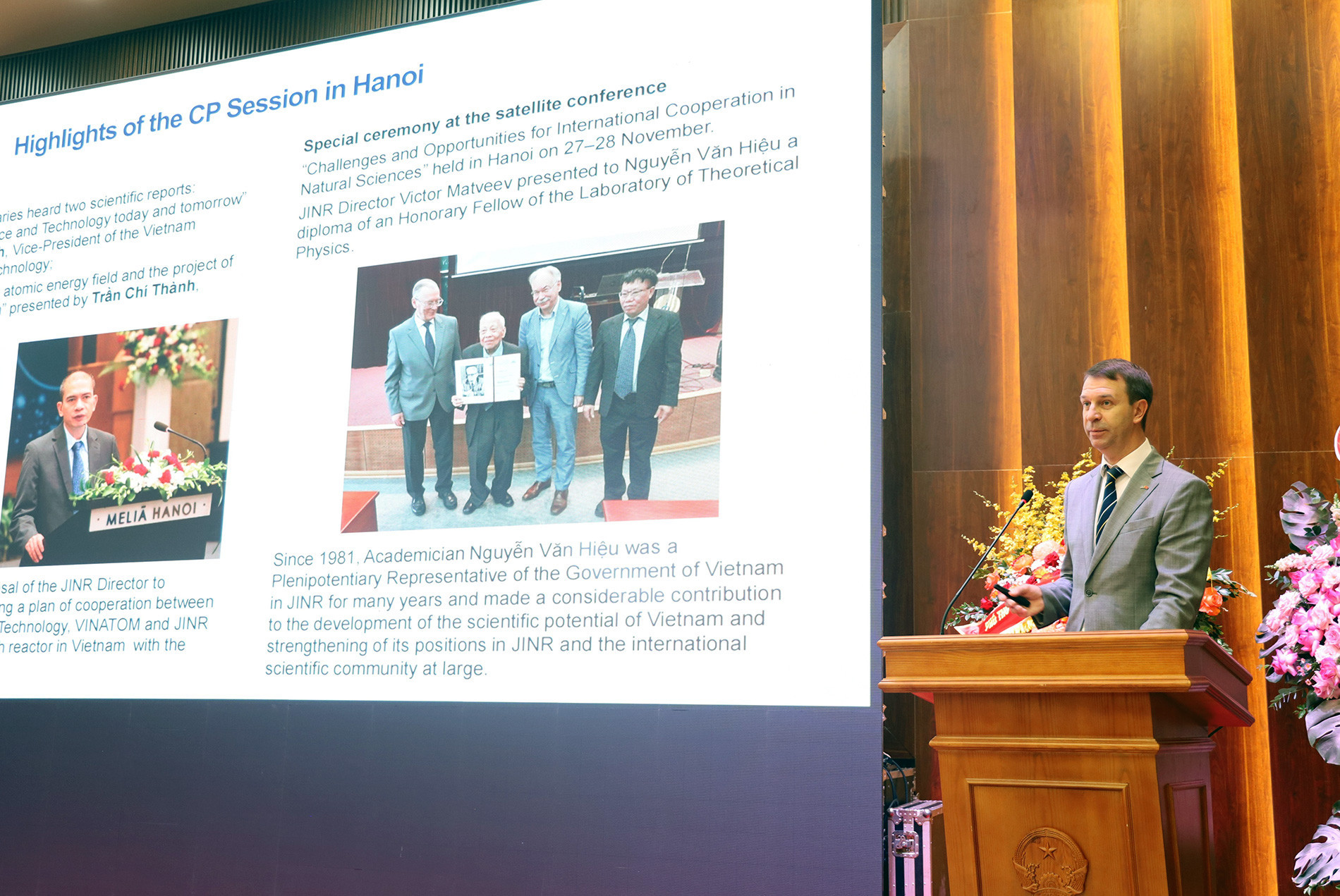
JINR Director and Academician Grigory Trubnikov.
According to Associate Professor Dinh Van Trung, director of VAST’s Institute of Physics, more than 130 Vietnamese researchers received doctoral and higher doctoral training at JINR between 1956 and 1990.
As of April 2026, 48 Vietnamese researchers were working at JINR, with an average age of 33.8.
Vietnam-JINR cooperation produced 57 international scientific publications in 2025.
Eleven Vietnamese research institutes and universities currently participate in specialized JINR cooperation programs across 10 research topics, focusing on nuclear physics, elementary particle physics, theoretical physics and radiation physics.
Vietnamese scientists also conduct research using several of JINR’s major scientific facilities.
JINR Director Grigory Trubnikov said Vietnam’s total contribution to the institute’s activities had exceeded $3 million, making it the third-largest contributor among member countries actively supporting JINR’s budget.
Trubnikov said young scientists would play a decisive role in the future of the partnership and that JINR would continue supporting the training of young Vietnamese researchers.
The JINR Information Center in Hanoi currently serves as a bridge for training, internships and research cooperation. It is the 14th JINR information center established with international partners.
Toward a joint accelerator laboratory in Vietnam
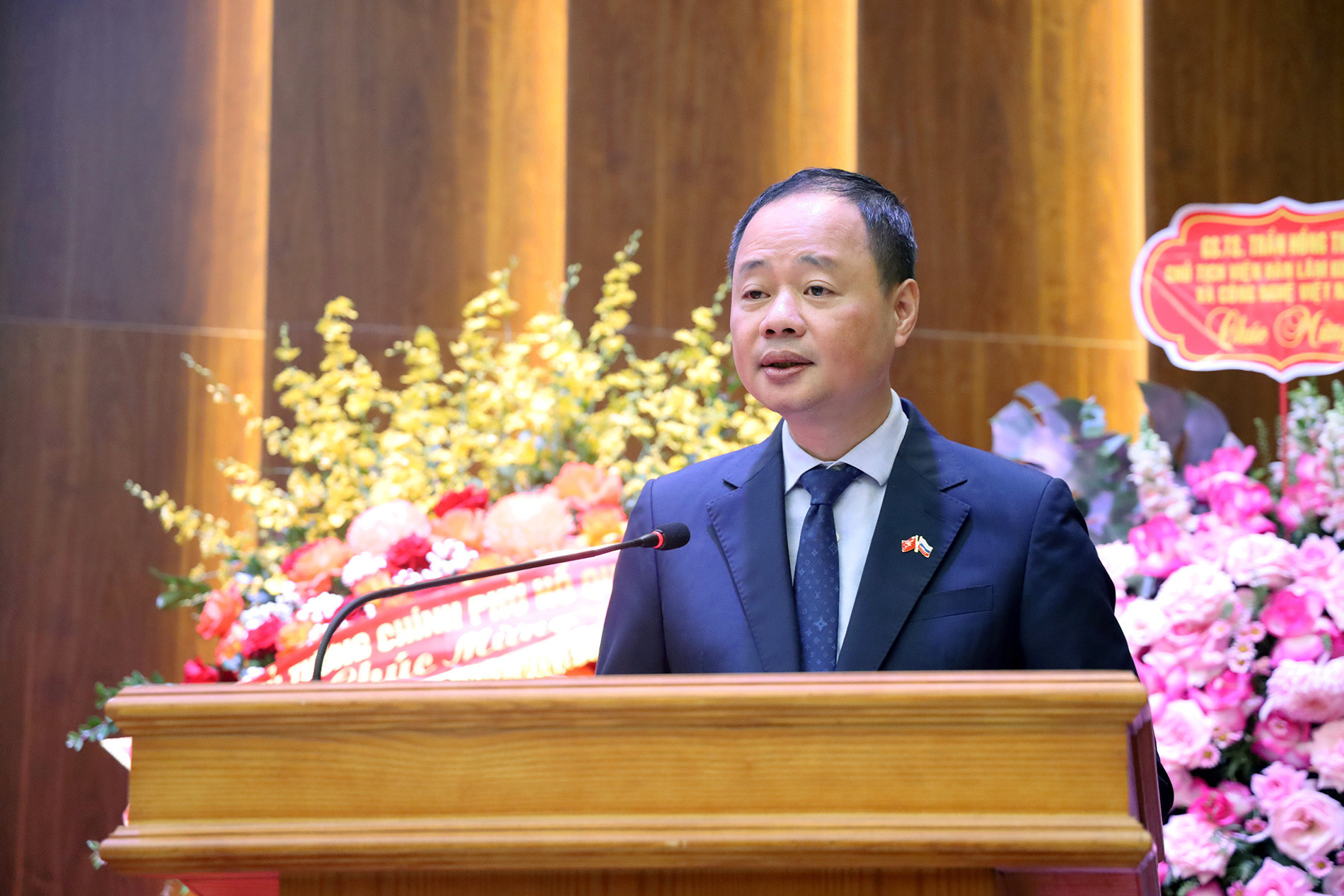
VAST President Tran Hong Thai.
One of the most significant initiatives in the next phase of cooperation is a plan to establish a VAST-JINR Joint Laboratory for Accelerator Science and Technology in Vietnam.
The two sides signed a memorandum on the initiative in 2024, opening the way for Vietnam to develop domestic research infrastructure, train specialists and expand applications of accelerator technology.
At the same time, VAST is connecting JINR with Vietnamese research institutes, universities, nuclear medicine facilities and other scientific partners to pursue research in radiation-resistant materials, nuclear medicine, accelerator construction and analytical techniques.
Between 2024 and 2026, VAST and JINR have been implementing seven priority joint research projects.
These include research into radiation-resistant materials for nuclear reactors, nuclear medicine, accelerator development and analytical technologies.
The programs are expected to connect research conducted using JINR’s major scientific infrastructure more closely with Vietnam’s own science and technology development needs.
From participation to ‘co-creation’
Speaking at the anniversary event, VAST President Tran Hong Thai said the most enduring value of international scientific cooperation lies not simply in an individual research project or technology, but in the scientists, research teams and capabilities built up over time.
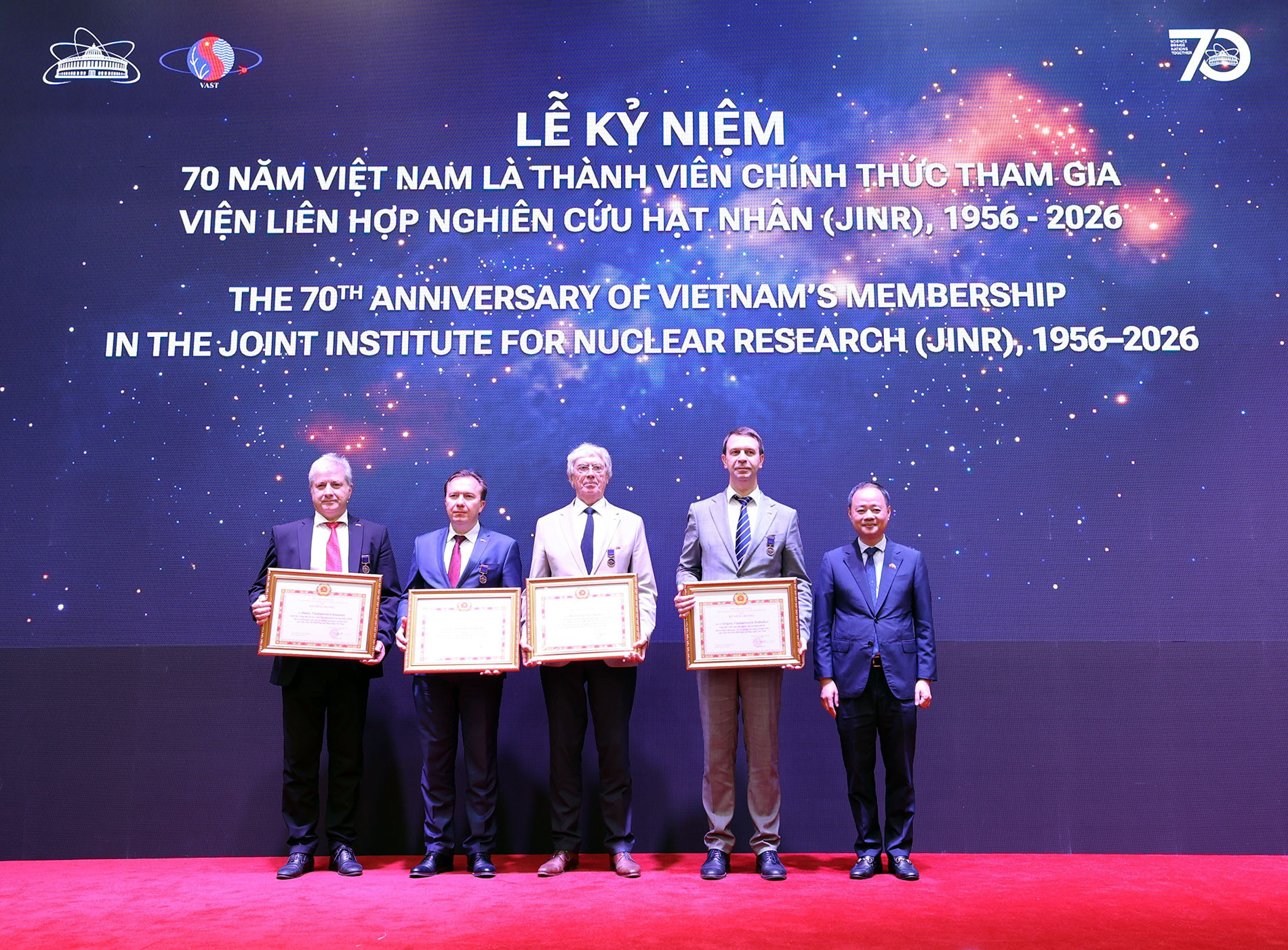
VAST President Tran Hong Thai presents commemorative medals to scientists recognized for outstanding contributions to cooperation between Vietnam and JINR.
In the next phase, he said, Vietnam should continue sending young scientists to Dubna, but their involvement should extend beyond short-term study or research visits.
The goal is for Vietnamese researchers to participate more substantially in JINR’s programs, laboratories and major research infrastructure while bringing JINR’s activities closer to Vietnam’s domestic scientific community.
“We need to continue sending Vietnamese scientists to Dubna, but not simply for study or short-term research,” Thai said. “They should participate substantively in JINR’s major programs, laboratories and research infrastructure.”
Vietnam also aims to make deeper contributions to JINR programs, from jointly identifying research questions and building scientific teams to creating new knowledge.
Another objective is to use Vietnam’s position to expand opportunities for cooperation between JINR and the wider scientific community in Southeast Asia.
Under VAST’s direction, the next phase of the partnership is intended to move beyond Vietnam’s participation in individual programs toward jointly building long-term scientific capabilities, establishing strong research teams and making more effective use of major research infrastructure.
JINR was established under a convention signed by 11 founding countries on March 26, 1956. The intergovernmental scientific research organization was created to pool the scientific expertise and material resources of its member states in support of their respective scientific development programs.
The institute is based in Dubna, outside Moscow, Russia. Vietnam became the 12th country to sign the convention establishing JINR in 1956.
Thai An - Nguyen Duc - Nga Thuy
.svg)
