 Vietnamnet.vn

 Podcast


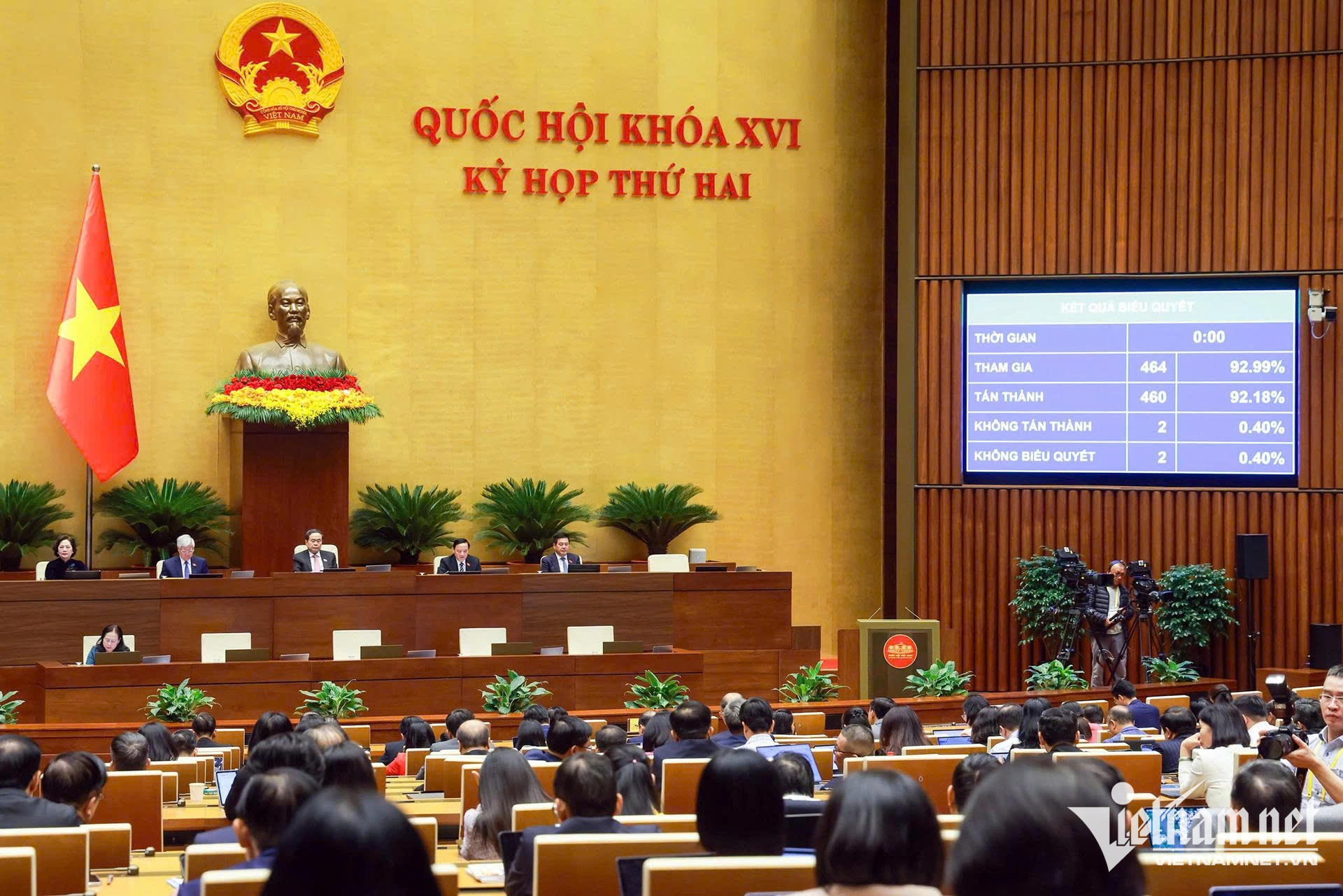
One of the most notable changes is the introduction of community service as an alternative to monetary penalties.
The measure will be available to individuals facing administrative fines of no more than VND5 million (approximately $190), provided they acknowledge their violations and voluntarily request the alternative.
The government said the provision is designed to comply with the 1930 Forced Labour Convention, to which Vietnam is a party.
The revised law limits community service to four hours per day and five days per week, with a maximum of 40 hours in total.
Once an individual completes the required work, the agency responsible for administering the measure must issue confirmation of completion.
If an offender fails to perform the assigned community service, the competent authority may terminate the arrangement and impose the original monetary penalty instead.
The measure will not apply to pregnant women, women caring for children under 12 months old, people aged 70 or above, individuals with life-threatening illnesses, or those with severe or particularly severe disabilities.
The government will issue detailed regulations governing the implementation of community service.
The revised legislation also changes the legal classification of several enforcement measures.
Temporary suspension of an individual's right to leave Vietnam will no longer be classified as a coercive enforcement measure. Instead, it will serve as a measure to ensure compliance with an enforcement decision.
It may be applied when an individual subject to enforcement, or a representative of an organization facing enforcement, is considered at immediate risk of fleeing to evade a penalty decision.
Similarly, the suspension of electricity and water supplies, vehicle inspections and registrations, driving permits, Internet access, telecommunications services and digital infrastructure services will no longer be classified as coercive enforcement measures.
These will instead be treated as preventive measures or measures intended to ensure the handling of administrative violations.
Administrative penalties can be processed electronically
The revised law introduces provisions allowing competent authorities to conduct administrative enforcement procedures electronically, from detecting and verifying violations to receiving explanations, imposing penalties and implementing enforcement decisions.
Information, images and electronic data lawfully collected through digital channels may be used as evidence in verifying and handling administrative violations.
Official records, decisions and other documents collected, created, transmitted, received or stored electronically during administrative enforcement proceedings will have the same legal validity as written documents.
Vietnam approves $1.72 billion program to combat drugs and crime
At the same November 20 session, the National Assembly also approved a resolution endorsing the investment policy for the National Target Program on Drug and Crime Prevention and Control for 2026-2035.
Total funding for the 2026-2030 phase is estimated at VND45.301 trillion ($1.72 billion).
Of this amount, VND39.676 trillion ($1.51 billion) will come from the central government budget, VND5.497 trillion ($209 million) from local government budgets and VND128 billion ($4.9 million) from other lawful sources.
The program sets several major targets for 2030, including reducing the number of crimes affecting public order by 10% annually.
It also aims to achieve annual reductions in the number of people with drug addiction and those using illegal drugs.
By 2030, at least 50% of commune-level administrative areas and 20% of provincial-level administrative areas nationwide are expected to be drug-free.
The program also seeks to expand grassroots cybersecurity warning systems to at least 70% of commune-level administrative units nationwide.
Another target is to identify, dismantle and eliminate 100% of detected criminal gangs, while preventing individuals previously involved in organized crime from re-establishing existing groups or forming new ones.
The overall crime investigation and clearance rate is expected to exceed 75%, while clearance rates for very serious and particularly serious crimes are each targeted to exceed 90%.
Prosecutorial decisions must also be issued within the legally prescribed deadlines in 100% of applicable cases.
The program calls for electronic monitoring to be applied to all eligible juvenile suspects and defendants as an alternative to pretrial detention, in accordance with the law.
Electronic monitoring will also be applied to more than 70% of eligible individuals serving criminal sentences in the community.
Notably, the National Assembly has approved the establishment of an operations center dedicated to combating online fraud during this phase.
Data analytics, artificial intelligence and other advanced technologies are expected to be deployed in 70% of criminal cases and incidents handled by crime prevention and investigation agencies, according to the requirements of relevant authorities.
Tran Thuong

