 Vietnamnet.vn

 Podcast



Prime Minister Pham Minh Chinh also attended the meeting, along with Politburo members including Central Office Chief Pham Gia Tuc and Minister of Foreign Affairs Le Hoai Trung.
The ambassadors expressed their joy in participating in the Congress and extended congratulations to General Secretary To Lam on his re-election with unanimous support from the Central Committee. They also conveyed the optimism felt by overseas Vietnamese communities in light of the Congress's success.
The diplomats voiced strong confidence in the Party's strategic direction and the decisions approved at the Congress, believing they will lay the foundation for a new development phase and elevate Vietnam’s global standing.
A congress of vision and transformation
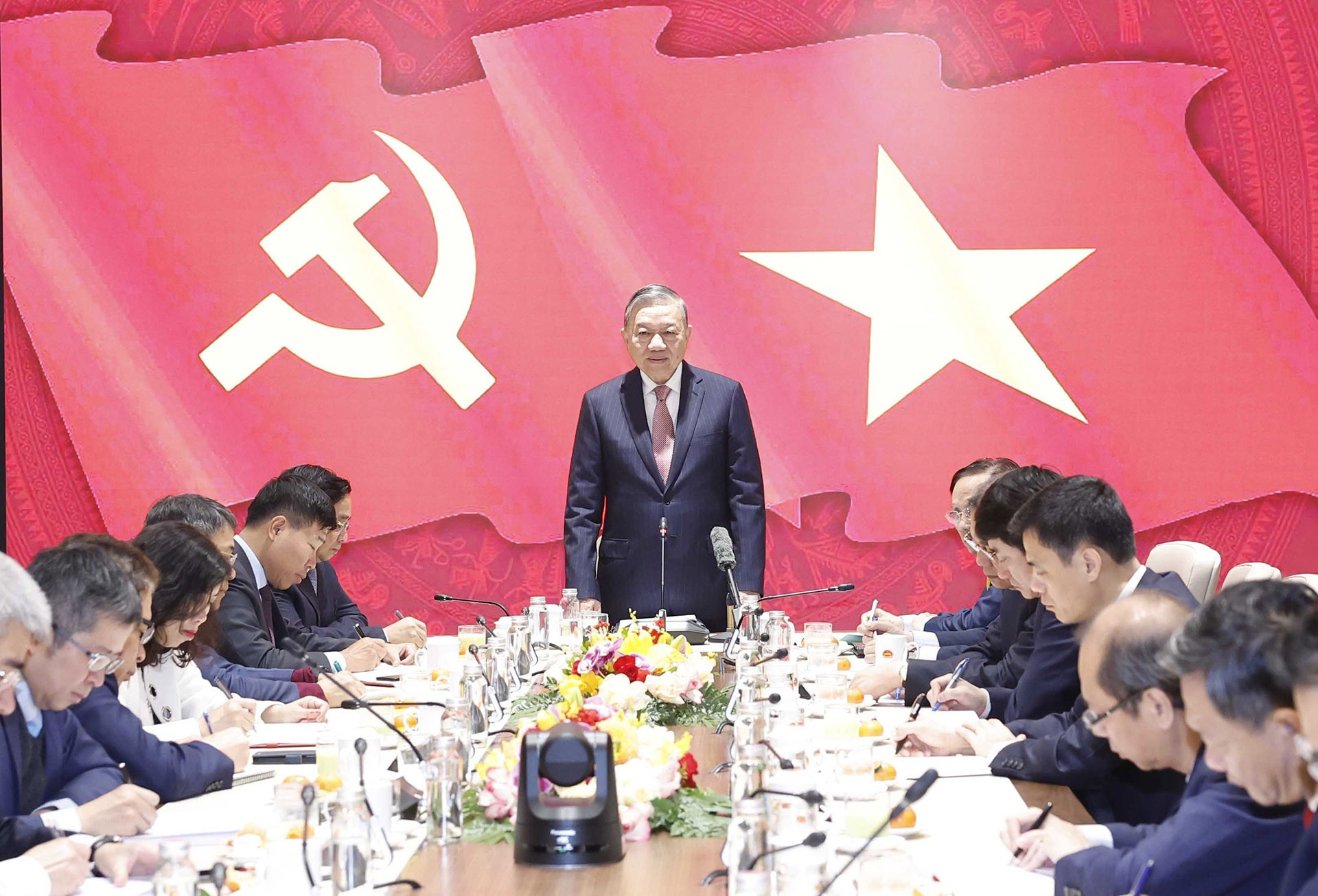
General Secretary To Lam meets with Vietnamese ambassadors and heads of diplomatic missions abroad. Photo: VNA
Summarizing international reactions, the ambassadors said countries around the world praised the 14th Congress as one of strategic vision and practical breakthroughs. They noted its strong focus on concrete outcomes and clearly defined timelines.
Prime Minister Pham Minh Chinh emphasized the Congress’s clarity of vision, actionable policies, and its strong message: placing people at the heart of development, promoting stability as a basis for growth, and fostering growth to ensure stability.
The personnel work, he added, demonstrated the Party’s unity and ability to form a capable leadership team for the new era. The organization of the Congress was methodical and principled, reinforcing public trust in the nation’s leadership.
Vietnam's growing international reputation and the high level of international attention and congratulations received, he noted, are testaments to the country’s rising global profile.
He urged the Ministry of Foreign Affairs to accelerate the implementation of Vietnam's international commitments and swiftly roll out action plans to realize the Congress's resolutions. This includes articulating the foreign policy roadmap for a new development era.
Strategic autonomy and soft power diplomacy
Speaking at the meeting, General Secretary To Lam outlined key updates from the Congress, particularly on foreign affairs and international integration. He emphasized the strategic importance of diplomacy, noting it should go hand-in-hand with national defense and security.
He reiterated the principle of strategic autonomy and self-reliance: integration without dependence, cooperation without compromise on sovereignty, and partnership without losing sight of national interests.
Vietnam’s foreign policy, he said, must match its cultural legacy, historical stature, and growing influence. It should reflect the country’s renewed spirit and ambition after 40 years of reform.
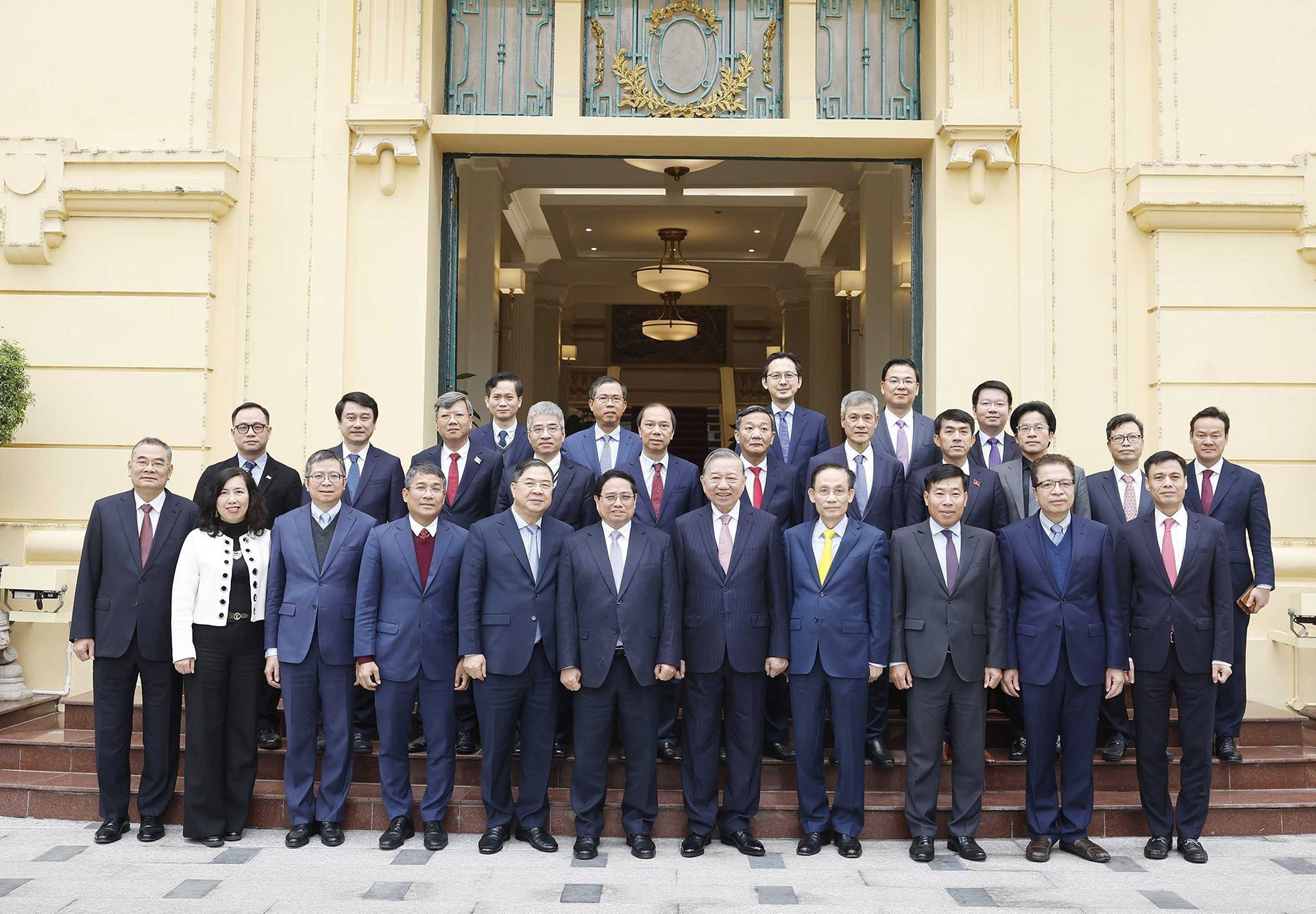
He called on all ambassadors to uphold the national interest, embody integrity and responsibility, and practice innovative, results-driven diplomacy.
They are expected to follow the foreign policy direction laid out by the 14th Congress and upcoming Politburo resolutions, such as the forthcoming policy framework on implementing the Congress's diplomatic strategy.
Ambassadors as proactive architects of engagement
General Secretary To Lam urged diplomats to enhance their capacity for early risk identification and foresight, while proactively crafting policy advice rooted in deep local knowledge.
He emphasized the need to seize opportunities for practical cooperation, avoid missed chances, and strengthen Vietnam’s bilateral and multilateral relationships.
A high priority is placed on economic and science-technology diplomacy. He urged embassies to act as connectors - expanding markets, fostering innovation, and helping to implement Vietnam’s 11 strategic technologies and major development projects.
Foreign service must serve both citizens and businesses, he said, measuring success by public satisfaction and real outcomes.
A new image of Vietnam in the world
In the new era, Vietnam must project itself not just as a beneficiary of international order, but as a contributor and leader - actively engaged in solving global issues such as sustainable development, climate action, humanitarian efforts, and peacekeeping.
He reaffirmed Vietnam’s commitment to multilateralism, international law, and constructive global citizenship.
Ambassadors are also tasked with projecting Vietnam’s soft power - promoting its culture, people, and values on the global stage.
Community engagement remains vital. He urged greater efforts in uniting overseas Vietnamese communities, safeguarding their legal rights, and helping them integrate in host countries while staying connected to the homeland.
Vietnamese intellectuals, experts, and scientists abroad should be mobilized as a valuable resource for national development.
Tran Thuong
.svg)
