 Vietnamnet.vn

 Podcast



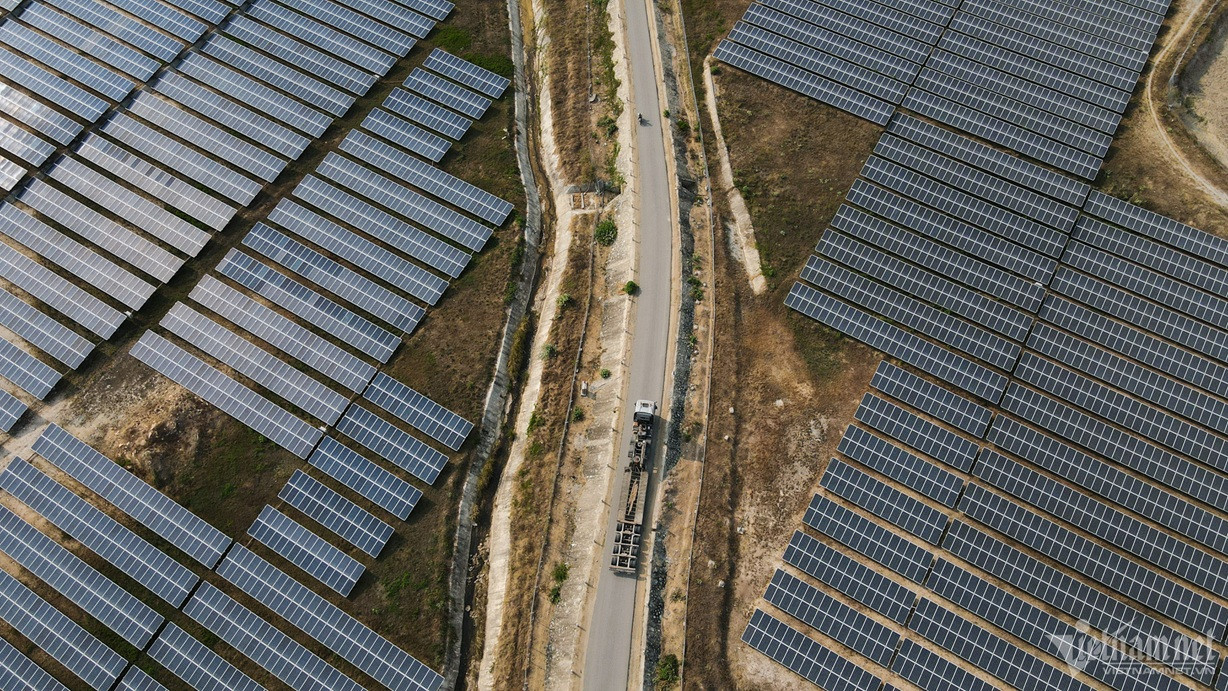
The company posted a loss of more than VND969 billion ($37.1 million) in 2025, reversing from a profit of around VND138 billion ($5.3 million) the previous year.
The result came as a major shock after earlier signs of recovery following years of losses.
The new loss pushed Trung Nam Thuan Nam’s accumulated losses to more than VND1.818 trillion ($69.7 million) by the end of 2025.
Its equity plunged from more than VND1.562 trillion ($59.9 million) to just around VND593 billion ($22.7 million).
One major reason behind the company’s struggles is that its project falls within the group of 173 renewable energy projects facing disputes over FIT pricing, leaving part of its electricity output unpaid or only partially settled.
Heavy investment and high interest costs continue to erode profits
The pressure is not limited to companies linked to Trung Nam Group.
Many solar and wind power firms are also dealing with steep profit declines or prolonged losses.
Hong Phong 1 Energy JSC reported an after-tax loss of VND180.7 billion ($6.9 million) in 2025, compared with a profit of VND71.3 billion ($2.7 million) a year earlier.
It marked the company’s largest loss since it began publishing financial statements and ended a multi-year profitable streak from 2021 to 2024.
By the end of 2025, the company’s equity had fallen by more than VND180 billion ($6.9 million) to VND1.073 trillion ($41.1 million).
Its debt-to-equity ratio climbed from 2.83 to 3.2 times, while total liabilities reached nearly VND3.439 trillion ($131.8 million).
Bond debt alone accounted for more than VND2.1 trillion ($80.5 million), placing heavy pressure on borrowing costs and long-term financial obligations.
A similar situation unfolded at Hong Phong 2 Energy JSC.
The company posted a loss of more than VND97 billion ($3.7 million) in 2025, compared with a profit of over VND55 billion ($2.1 million) the previous year.
Equity fell from more than VND1.019 trillion ($39.1 million) to over VND922 billion ($35.4 million).
Total liabilities rose to more than VND1.671 trillion ($64 million).
In the wind power segment, Hoa Dong 2 Wind Power has yet to publish full-year 2025 results, but the company already reported a loss of more than VND114 billion ($4.4 million) in the first half of the year, following a loss of more than VND120 billion ($4.6 million) in the same period a year earlier.
Cumulatively, the company has lost more than VND493 billion ($18.9 million).
Previously, it posted losses of VND229 billion ($8.8 million) in 2024 and VND159 billion ($6.1 million) in 2023.
Some companies such as Ea Sup 1 and Ea Sup 3 still remained profitable in 2025, but earnings were limited to only tens or hundreds of billions of dong.
Given the enormous scale of investment, analysts consider profit margins at these companies relatively low.
According to analysts, the renewable energy sector’s biggest challenge lies in its capital-intensive business model combined with limited revenue growth.
Most wind and solar projects operate under fixed FIT electricity pricing agreements with EVN, restricting revenue expansion across most of a project’s lifecycle.
At the same time, companies rely heavily on borrowing to finance plant construction, keeping financial costs persistently high.
Deposit interest rates at many banks have climbed to 8-9% per year, further increasing funding pressure, particularly for companies seeking refinancing or new loans.
The 2026-2027 period is expected to become a major stress test for many renewable energy firms as large volumes of corporate bonds mature.
With the credit market becoming more cautious, companies may face pressure to restructure debt or repurchase bonds before maturity, creating significant strain on cash flow.
In addition, legal bottlenecks related to project procedures, transmission infrastructure, and transitional electricity pricing mechanisms remain unresolved.
Transitional power prices are generally lower than the previous FIT rates, limiting companies’ ability to improve revenue.
As revenue growth slows while capital costs remain elevated, many renewable energy firms are coming under mounting cash flow pressure.
Although operations continue, the ability to service debt and expand investment in the coming years will be a major test for the sector.
Manh Ha
.svg)
