 Vietnamnet.vn

 Podcast



According to tradition, after the Congress elects the new Central Committee, the Committee holds its first plenary session during the Congress itself to elect the Politburo, the General Secretary, and the Secretariat. The results are announced before the Congress closes.
Decision 190: The Party’s official election framework
These procedures are governed by Decision No. 190 of the Central Committee, signed by General Secretary To Lam on October 10, 2024. The document sets out election regulations within the Party.
Accordingly, elections at the National Congress are decided by the Congress itself. Party organizations may nominate candidates for leadership positions in state institutions, the Vietnam Fatherland Front, socio-political organizations, and mass associations based on this framework.
The process adheres to principles of democratic centralism: equality, direct voting, and majority rule. Most elections - including those for the Central Committee, Politburo, General Secretary, and Secretariat - are conducted via secret ballot.
Secret ballots are also used to vote for the Central Inspection Commission, its chair and deputy chairs, and to gather input on candidate nominations for top leadership roles.
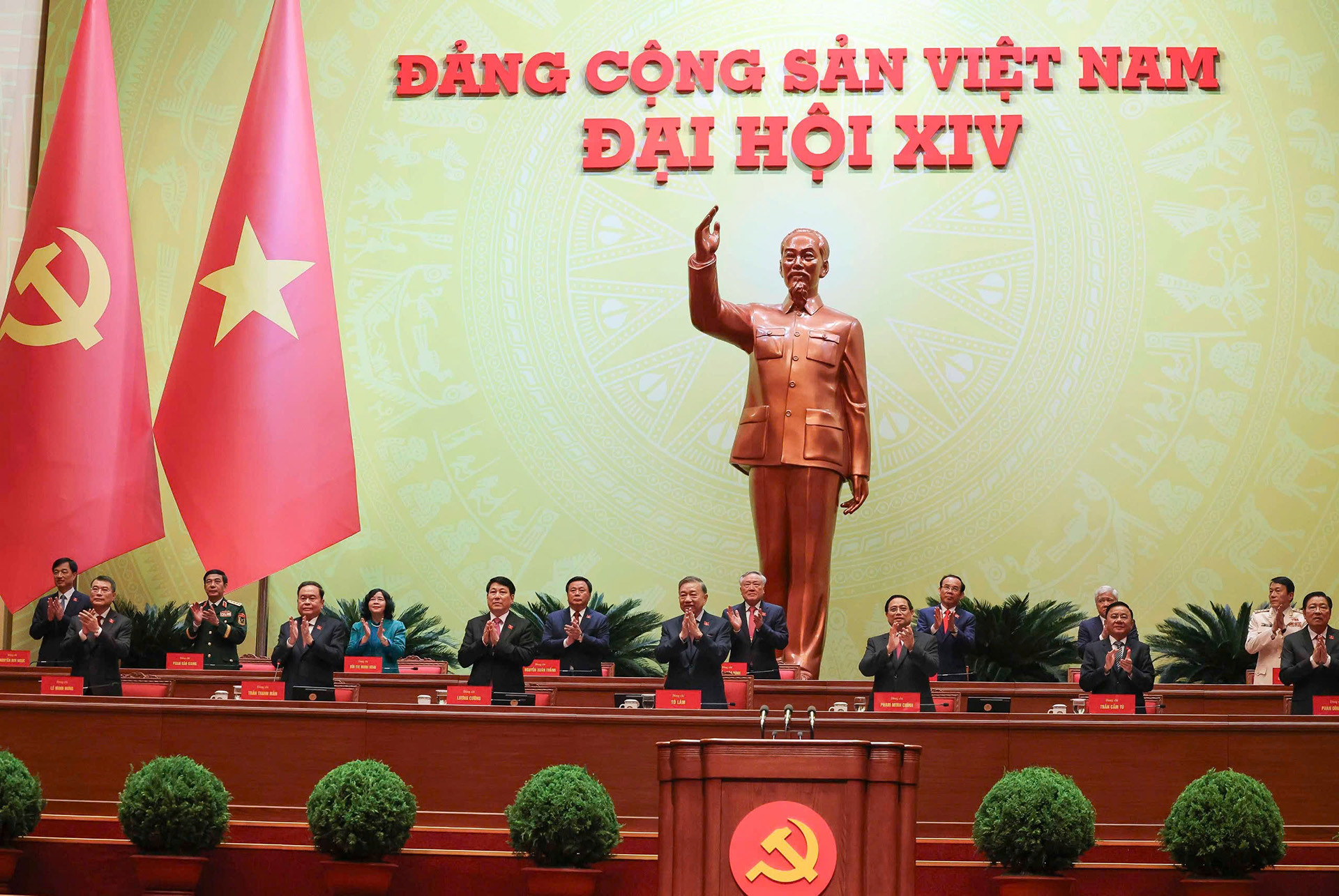
Election process for the Politburo: 9 steps
The first meeting of the new Central Committee is convened and chaired by the outgoing General Secretary (regardless of re-election). If unavailable, the Congress Presidium appoints a convener.
The Presidium presents a proposal outlining the number of Politburo members to be elected.
The Central Committee discusses and votes to approve this number.
The Presidium reports the list of candidates previously nominated by the outgoing Central Committee.
Additional nominations and self-nominations are conducted.
Delegates break into smaller groups for discussion.
The Presidium consolidates all nominations and self-nominations, proposes who may withdraw or must remain on the ballot, and - if necessary - conducts a confidence vote on candidates.
The final list is presented, and the Committee votes to approve the number and names.
Voting takes place by secret ballot, followed by vote counting and announcement of results.
Election process for the General Secretary: 5 steps
The Presidium presents the role’s requirements, criteria, and proposed candidates from the previous Central Committee and newly elected Politburo, as well as suggestions gathered during the Congress.
Delegates meet in groups to discuss and nominate.
The Presidium finalizes the list of nominees and self-nominated candidates, proposes possible withdrawals, and - if needed - conducts a confidence vote.
A final voting list is submitted, and the Committee votes to approve it.
The Committee votes by secret ballot, and the outcome is announced.
Election process for the Secretariat: 8 steps
The General Secretary, on behalf of the Presidium, introduces a proposal for the number of Secretariat members to be elected.
The Central Committee discusses and votes to approve this number.
The Presidium presents a list of nominations from the previous Central Committee.
Additional nominations and self-nominations are opened.
Delegates break into groups to discuss.
The Presidium reviews the list of nominees and self-nominees, determines which withdrawals may be allowed, and - if needed - conducts a confidence vote.
A final list is drawn, and the Committee votes to approve the number and names.
Voting takes place by secret ballot, followed by counting and announcement of results.
At the 14th Congress, there are 163 automatic delegates, 353 elected delegates, and 1,070 appointed delegates, totaling 1,534 participants. Among them are 1,285 male and 301 female delegates.
Tran Thuong
.svg)
